Significance of Space in Future Conflicts

A kind of cold war is being fought in space. Balance of Power as being maintained among states has been started in space as well in terms of technological advancement. Space power could be determined through space activities and these activities are dependent upon the leadership but the continuous change in leadership could not be in favour of a healthy space future for a state. Like the scholars of the sea and airpower, space scholars believe that “who controls space will control the world” and the US does not want to lose its hegemony. The way the US enjoyed its hegemony around the globe, it is being extended to outer space to maintain its hegemonic status.

The US is trying hard to maintain Its global dominance status in space as it dominated the other areas of defense. Space is an emerging medium of warfare and states like the US, China, Russia and other great powers are investing in it to become a space power. The land is considered the oldest medium of warfare as it is being used since the beginning of human civilization. Similarly, sea and air power were introduced with the passage of time. Initially, people were unaware of the use of the sea for military purposes especially air as a medium of warfare but these were introduced with advanced capabilities by the passage of time. 

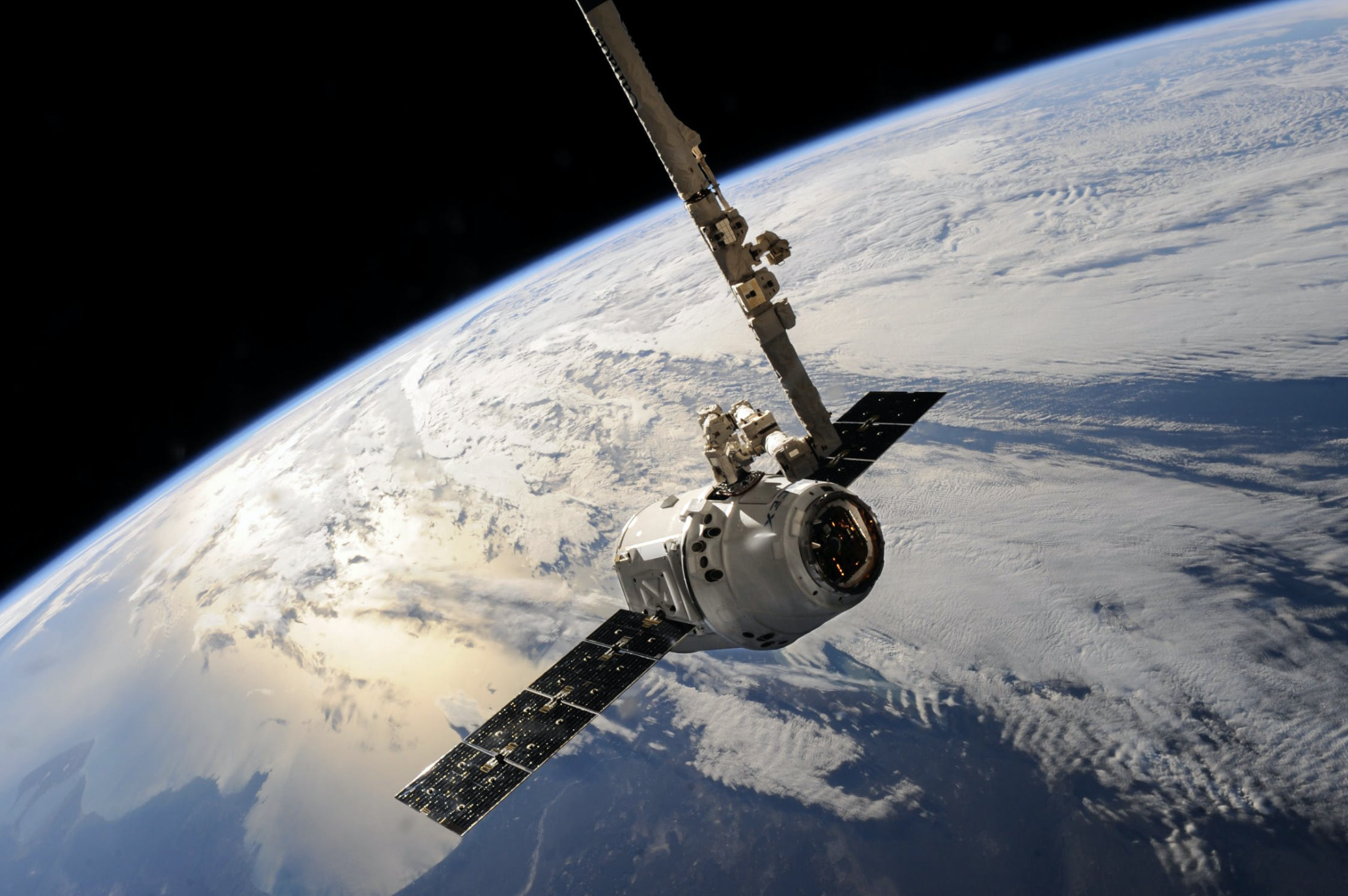
As similar to sea and air, space is now an emerging medium for warfare in the modern world. The way states especially the US is investing in space for decades, future conflicts are more likely to occur in space. US Secretary of the air force-Heather Wilson said, “We must expect that war of any kind, will extend into space in any future conflict, and we have to change the way we think and prepare for that eventually”. The first Gulf War in 1991 is considered a true application of space power in terms of policies, doctrines and technologies used like GPS and use of other satellite technologies. The US had applied its space power capabilities and space-based technologies in the first gulf war and Operation Desert Storm resulted in the destruction of the Iraqi military. ISR also reflects US space capability that allows policymakers and experts to collect information for future planning and decision making. Gulf war showed that how dependent the conventional forces are on outer space. 

The way the world is moving, the war in space is inevitable in modern times. The Dual-use of space and many of the satellites could result in armed conflict in space that might cause devastating effects on the planet’s life. The way the space race is going, would lead towards space conflicts and war easily. Ongoing arms race in space is alarming for using space as a medium of war. Competition among states in space is becoming increasingly dominant. US plans for building space force as they dominated the world by increasing their land forces clearly show the US intentions towards their hegemonic design. The United States “Full Spectrum Dominance” includes the former President Trump’s Space Directive-4, the creation of laser-armed fighter jets as space weapons and nuclear weapons to be placed into orbits. The “Full Spectrum Dominance” mission includes the military superiority over the resources of land, sea, air and the fourth medium of warfare-spec. The US had militarized the space as they use space for guiding crafts and missiles. But their new doctrine to weaponize space is to get dominance over space and satellites which is clearly a violation of the Outer Space Treaty-1967(treaty banned space militarization and weaponization). Not the only US but the British Ministry of Defence said, “Economies are becoming increasingly dependent upon the space-based system. By 2050, space-based weapons system may also be deployed, which could include nuclear weapons”.

As everybody is aware of the war’s consequences, a full-fledged war in space will be a catastrophe for modern life but it could be predicted that upcoming conflict might involve irregular attacks like cyber-attacks. There is a number of events for the hacking of the satellites including the NASA Climate Satellite in 2007 and 2008 but no significant damage was reported. In space, when a satellite attacks another satellite in the orbit, it will cause equal damage to the attacker’s satellite as well-whereas the cyber attacks and hacking satellites are effective tools for the one who conducts attacks. Cyber attacks are being used as a tool to target the adversary in space. European Space Agency’s director said, “We have to take cyberattacks seriously” for developing quantum encryption techniques for future missions to protect their satellites from cyber attacks.

Space is being used for spying as well. US, China and Russia are using spying satellites to keep an eye over the adversary in space. By the use of GPS and other satellites one state can be aware of any kind of military movement of its adversary and it helps to timely detect the upcoming threat or attack from your adversary.

In the broadest sense, Damage caused by space-based conflicts could be temporary or permanent. In the context of temporary damage, cyber-attacks and hacking satellites or hacking of satellite’s ground stations are significant. On the other hand, permanent damage includes the full destruction of a satellite by the conventional use of weapons. It could be done through space-to-space attacks and attacks conducted through the land on a satellite. By keeping in mind about the cost and effects of conventional use of weapons, causing temporary damage to the satellites system would be more useable in future than the permanent damage.


Neither War nor Peace: Grey Zone Conflicts and Outer Space

Psychological warfare, treason of political systems, covert information operations are not new to International Relations where conflict and competition prevails all the time. However, rapid technological advancement has changed the nature of tactics and strategies. Technology these days is driving strategy, resulting in a sudden surge of grey zone conflicts and subsequent development of grey zone conflict weapons. Recent developments in outer space seem to be something out of a techno-thriller novel, but it’s not fiction anymore. The ongoing activities in space cannot be separated from the geopolitical crossroads on the Earth.

States are using their space programs in order to reach their desired goals during grey zone conflicts. A Russian intelligence data collection satellite trailed a top secret USKH-11 reconnaissance satellite and demonstrated its capability during grey zone conflict. Likewise, lately Russia also demonstrated its capability of destroying satellites in low Earth orbit. Subsequently, it was reported in media that the newly established US Space Force is building weapons to block Russia and China. These new weapons systems will be capable of jamming communication satellites during conflict. The strategic chain reaction will keep on moving and will trigger a never ending and expensive arms race in outer space.

The simplest definition of grey zone conflict is that it is more than a normal competition but less than a war. The US Special Operations Command (SOCOM) defines grey zone challenges as “competitive interactions among and within state and non-state actors that fall between the traditional war and peace duality.”

Space is becoming congested very rapidly, bringing new opportunities as well as challenges for almost all states due to their dependence on outer space somehow. Many are of the view that outer space is ideal for grey zone conflicts, particularly because of dual use application and congestion. The dichotomy of stated policies and contrasting actions makes it more obvious that states are pursuing military space programs both overtly and covertly.

Outer space operations are not the same as those in the Cold War space age or the unipolar US space age; the world has now entered into a new space age commonly referred as “Grey Zone Entangled Space Age”. Space was once called the “global common” and was free from politics, however, now governments are pursuing offensive space capabilities and commercial companies are also rapidly becoming part of it, thus increasing the diversity as well as disruption. The emergence of new actors such as private firms and individuals are making the whole scenario more problematic. However, in the absence of space governance, some states are making use of it and pursuing their military objectives covertly.  Mostly, countries like India claim that their space programs are for socio-economic development, however, recent trends make it obvious that states are overtly militarizing outer space. Back in 2012, India claimed that they have Anti-Satellite (ASAT) technology and in 2019, they demonstrated it regardless of their rhetoric of having a civilian space program for socio-economic development. The ASAT test indicated the obvious shift in India’s declared space policy.

The militaries of many countries are using space for military communication, intelligence, imaging, targeting, and so on. One of the biggest challenges faced by mankind is that it is very hard to differentiate between offensive and defensive counter space weapons because of their dual application. With every passing day electronic warfare including, satellite jamming, spoofing devices, use of laser and radio frequency are becoming common and no one is talking about any precautionary measures to avoid this proliferation. These grey zone conflict weapons can cause confusion and disable satellites without leaving any mark of detection. Anti-satellite missiles designed to destroy satellites without placing the weapon system or any of its components into orbit is also worrisome. Some actors can use offensive cyberspace capabilities to engage a range of effects against space systems and ground infrastructure. Likewise, Directed Energy Weapons (DEW) including lasers, microwaves and other frequencies are also part of grey zone conflict weaponry.

Lack of outer space governance further makes it easier for aggressive states to opt for offensive military buildup in space. Creation of Space Force by the US, ASAT tests by India and Russia, diverse outer space strategies and declaration of space as an operational domain are obvious inklings of where the world is headed to in search for gaining competitive advantage.

India conducted an ASAT test in March 2019 without receiving any backlash from the international community. This will motivate others to develop similar capabilities without considering repercussions. Similarly, France and UK are also developing their space programs accordingly in view of the changing geo-political and geo-strategic landscape. The French Defence Minister has also shown an interest in developing ASAT laser technology. 

Furthermore, after the US government signed the National Defence Authorization Act (NDAA) 2020, President Trump claimed that the Space Force is the largest ever investment in the US military.

It is impossible that the US, Russia and China will hold a bilateral or a trilateral strategic dialogue on space. It seems that they have so much to achieve. Likewise, the prolonged deadlock on Prevention of Arms Race in Outer Space (PAROS) and Prevention on Placement of Weapons in Outer Space (PPWT) in Conference on Disarmament (CD) makes great powers’ ambitions more apparent.

The international community should consider these developments and pursue effective counter measures to stop this proliferation before it’s too late. The United Nations Committee on the Peaceful Uses of Outer Space (COPOUS) has developed five core space law treaties including: Outer Space Treaty (OST), Rescue Agreement, Liability Convention, Registration Convention, and Moon Agreement. These treaties have not been amended or updated as per the changing environment. The innovation of new technologies and changing military doctrines is not in line with the stated code and conduct in these treaties. There are many loopholes which need to be addressed immediately.

Outer space is a global common and should not be weaponized in any case. An arms race in outer space is no more a utopian idea; it is there and irresponsible states like India will make sure that they make the most out of the gaps in the legal system when it comes to space. India will also push other states through its actions and policies to follow suit. Once the arms race gets out of control, it will be very difficult to stop others from joining it. It is in the interest of all states to use outer space for peaceful purposes only and should not indulge in militarization leading to weaponization. In order to ensure space security, there is an urgent need to have universal and effective arms control arrangements for outer space.