The Revolutionary Impact of AI in Modern Warfare

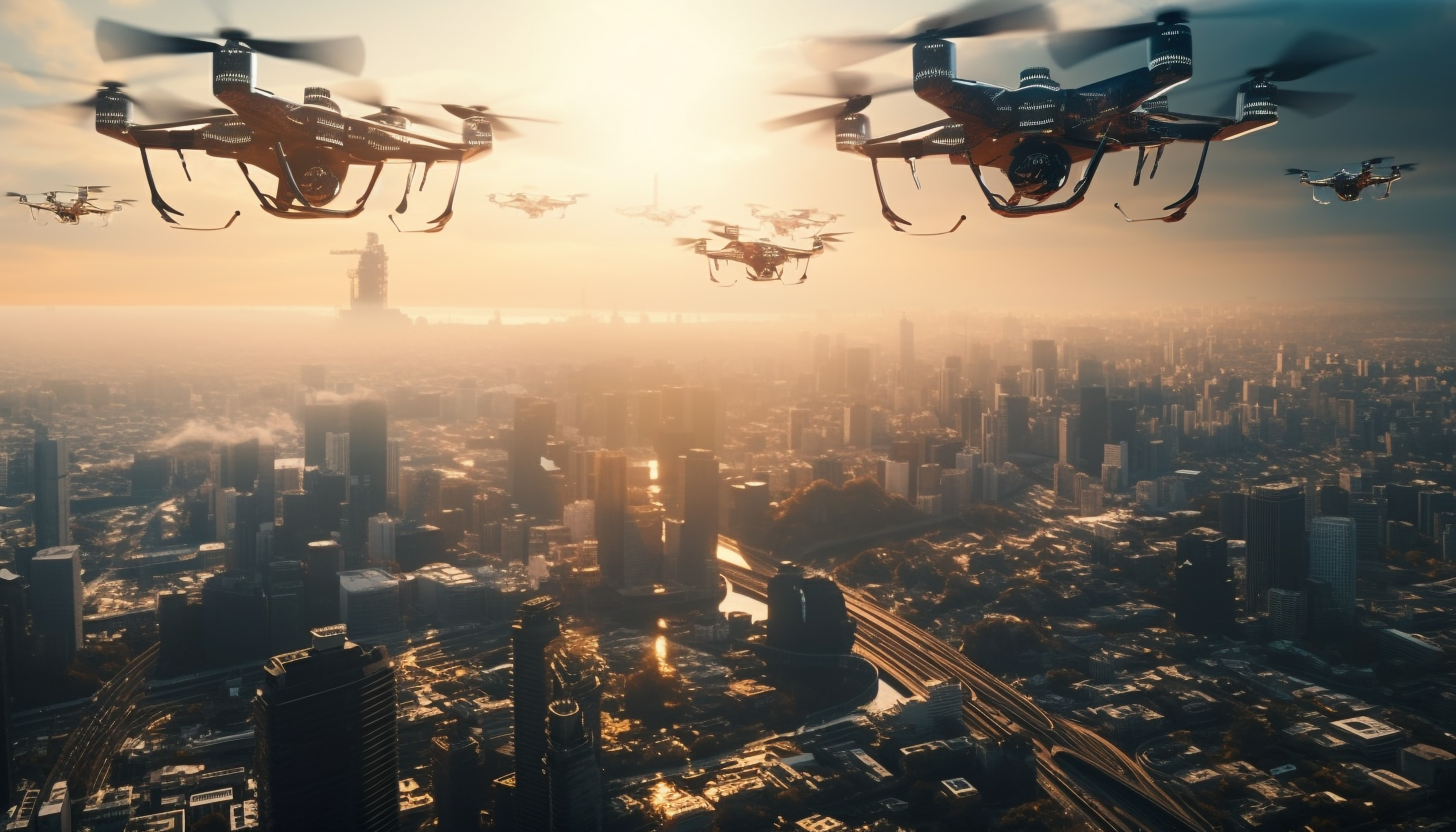
Artificial intelligence (AI) has rapidly transformed from a futuristic idea to a revolutionary power in the field of conflict. The way military organizations throughout the world approach combat and defense is changing as a result of AI-driven technologies. AI has the ability to transform perception, decision-making and action, ushering in a new era of ultra-rapid, highly automated conflict that has never been seen before. We are seeing a shift towards more autonomous, AI-powered systems that can outperform conventional human-controlled platforms as military organizations and technology businesses continue to engage in AI research and development. This has resulted in the rise of so-called “hyperwar,” a style of combat distinguished by a high degree of automation and minimal human involvement. The impact of AI on contemporary warfare is examined in this article, along with how it might change the balance of power on a global scale and upend long-standing military doctrines. We will also talk about the difficulties and opportunities that lie ahead as AI develops and changes how combat will evolve in the future.

Transcending Traditional Platforms

Military organizations have historically projected authority and kept a competitive edge using huge, expensive hardware platforms. However, the utility of these conventional platforms is being questioned more and more as AI technologies develop and spread. The emphasis is moving away from specific platforms and towards the seamless integration of AI-powered systems throughout the full spectrum of military operations, as AI-driven systems are now capable of delivering previously unheard-of levels of efficiency, precision, and adaptability. The changes it brings about have a big impact on military organizations and their procurement plans. Even the wealthiest governments find it harder and harder to justify significant expenditures in expensive, slowly evolving hardware platforms as the cost-per-capability ratio of AI-driven systems keeps rising. Instead, a combination of AI-driven systems, legacy platforms, and human operators, all working together to carry out complex, coordinated operations across various domains, will probably characterize the future of warfare.

Perception, Decision-making, and Action by AI

AI has already shown that it is capable of performing better than humans on a range of tasks including perception, decision-making, and action. For instance, it has been demonstrated that AI systems can read chest X-rays more accurately than radiologists, understand human handwriting more quickly than any human, and find extrasolar planets from enormous amounts of astronomical data. AI’s aptitude in these fields has the potential to fundamentally alter how military organizations receive intelligence, make decisions, and carry out actions in the context of conflict. AI-powered systems, for instance, can analyze enormous volumes of sensor data in real-time, giving military commanders a clearer picture of the battlespace and allowing them to make more educated judgements. Similar to AI-driven platforms, human operators simply cannot execute complicated maneuvers and actions with the speed and accuracy that AI-driven platforms can.

Increasing Impact of Autonomous Systems

We may anticipate a growing reliance on autonomous systems in the field of combat as AI technology develops. Compared to conventional, human-controlled platforms, these systems, which may run without human involvement, have a number of advantages. One reason is that autonomous systems are frequently more cost-effective than their manned equivalents since they do not need expensive human training. Autonomous systems can also be scaled and deployed in huge numbers more readily, enabling the development of strong, distributed networks of assets that can overpower and outsmart adversarial forces. Unmanned aerial vehicles (UAVs), sometimes known as drones, are one field where autonomous systems are already having a big impact. With numerous nations investing extensively in the creation and use of these adaptable platforms, drones have quickly established themselves as a standard component of contemporary military operations. Future drone generations can be expected to have even higher degrees of autonomy and capacity as AI technology advances, further confirming their position as an essential part of contemporary combat.

The Effects of AI-Driven Conflict

The widespread use of AI-driven systems in conflict has a number of profound effects on military organizations and the balance of power in the world. For starters, a greater dependence on autonomous systems may level the playing field between powerful countries and smaller, less developed ones. Even nations with minimal resources can create and deploy potent, AI-driven systems capable of competing with the supremacy of traditional military powers as AI technology becomes more widely available and more reasonably priced. A variety of ethical and legal issues about the use of autonomous systems in combat are also brought up by the rise of AI-driven warfare. It is crucial for military organizations and policy makers to establish clear guidelines for their use, in addition to ensuring that these platforms are utilized in a manner that is consistent with international law and the laws of armed conflict, particularly as these systems become increasingly capable of making life-or-death decisions without human intervention.

Getting Ready for an AI-Defined Future

It is critical for military organizations and governments to adjust to this new reality as AI continues to change the battlefield of modern conflict. This will necessitate a comprehensive reevaluation of accepted military paradigms as well as a commitment to spending money on AI-driven system development, deployment, and research. Military organizations must adopt a more flexible and creative approach to experimentation and procurement in order to fully realize the promise of AI in conflict. In order to support the quick uptake of new technologies, this may entail fostering engagement with startups and other creative businesses as well as reducing administrative procedures. Additionally, to integrate AI-driven systems into current operations and build a seamless, multi-domain network of assets and capabilities, military organizations must be willing to accept both new and historical platforms.

Therefore, AI and the revolutionary force it brings to the table will determine the nature of conflict in the future. Military organizations all over the world must adjust to this new reality as AI technologies develop and spread, re-thinking conventional wisdom and embracing the potential of AI-driven systems to fundamentally alter how they approach combat and defense. By doing this, businesses can make sure that they maintain their competitiveness and are well-equipped for the opportunities and challenges that lie ahead.

The Greece Boat Tragedy: A Reflection on the False Promises of the System

We all dream of living the best life and then finish off with an easy death. Any normal human being would want a life where they are not limited to the pursuit of needs but one where they can also fulfill their wants. We never want to die because of torment or under the effects of harsh poverty. We do not want suffering, and our entire lives are spent running away from it. Yet the essence of life is to suffer, to undergo rigorous routines fetching the necessities and requirements of a decent lifestyle. However, overshadowing all these wishes, is the towering figure of incompetence by those who take oaths of sincerity to the people and to this country.

The recent development of an immigrant-carrying ferry sinking off the coast of Greece sends shivers down one’s spine. Reports suggest around seven hundred and fifty people were aboard, approximately half of whom are feared to be Pakistanis, subject to the most inhumane treatment.

The question is, who in their good sense would depart on such a perilous journey? At least most of us have at one point in time thought of emigrating and heading to the developed world. Why? The answer lies in the human tendency to seek brighter avenues and acquire better possibilities. Moving gradually from meeting needs to fulfilling wants.

Pakistan, for the middle and lower end of the financial spectrum, is unfortunately not the best of the places to live in. Some might argue that it is not even an adequate one. There arrive instances where one may agree with such a statement: when the most desperate lot struggle to take food home and feed their families; when young bright graduates roam around the city unemployed; when thieves steal a man’s money who just returned from his job earning below minimum wage; or when poverty-stricken people lose their lives fighting for a bag of flour.

Yet packing your belongings and making a run is not the only answer. There are those who make their stand, who in all adversity decide to stick to their roots and remain. These are the people who will make a change. That change needs to be brought in the system that is running Pakistan. A systemic change if you will.

The government has assigned agencies to seek the human traffickers responsible for arranging what led to this tragedy. Yet it is important to highlight the real cause behind the deaths of those people, and traffickers are way down the list.

The government is primarily responsible for the welfare of its people. The government is to be held accountable for the availability of welfare or a lack thereof. It seems that the larger Pakistani society has always felt a lacking in this regard and rightly enough. One need not look further than the public education and healthcare sectors to gauge the government’s efficacy. The law and order situation is deteriorating on a day-to-day basis. Currency devaluation, that too for an import-oriented economy, has spelled disaster for the low earning segment of the society; even the considerably affluent seem concerned with the rate at which inflation is growing.

All of these are indicators of a flawed system. From our very inception, we had very few bright minds to rely on, and entire political and bureaucratic systems were handed over to highly unprofessional and narcissistic individuals who left no stone unturned in acquiring the riches for their own, leaving a paltry here and there for the miserable people.

Thus, there is a calling for a systemic change. It all starts with the economy. Pakistan’s agricultural produce will not suffice if Pakistan wants to compete with the rest of the world. Massive industrialization is to be focused on and wherever large-scale industry is unfeasible, priority should be given to Small and Medium Enterprises. Second, our education system must rely less on superficial notions and focus on raw, realistic, contemporary and skill-based education; this will empower the upcoming generation by helping them become independent. Third, our judicial system must correct course before it crumbles under the weight of corruption, decades-old pending cases, and a decreasing confidence in the judicial system. Wherever justice is delayed, it is considered as denied and the people of that society degenerate. Finally, we need to create opportunities for Pakistanis within Pakistan so that they are not forced to leave their country and their loved ones in such desperate circumstances. Our flawed system and its policies ultimately force people to consider gambling with their lives, as appears to be the case with the incident near Greece. It is not the drowned souls who are solely responsible for their deaths; rather the sheer lack of sympathy and sensibility of the existing system needs to be addressed.

Strategic Implications of Finland’s Membership in NATO

When Finland officially became 31st member of the North Atlantic Treaty Organization (NATO), it marked the end of Helsinki’s era of non-alignment. Article V of the treaty will provide a collective security umbrella to Finland against all foreign threats, primarily from Russia. Being a frontline ally, Finland will play pivotal role in deterring Russia in the Nordic Region. Any offense against Helsinki will be an offense against the entire alliance. Besides Finland, Sweden is also set to join NATO. But so far, the Swedish proposal is awaiting approval mainly due to Turkey’s concerns.

In the recent past, both Sweden and Finland have participated in joint NATO exercises. The BALTOPS, Northern Coasts, and Archipelago Endeavour exercises have demonstrated the military compatibility of both nations with alliance. This suggests that that the integration of these Scandinavian nations in NATO will be a quick and seamless process.

In terms of territory, Finland is one of the largest countries in Europe but has a small population of 5.54 million. Despite this, Finland provides considerable military prowess to the alliance. With a current defense budget of $5.5 billion (roughly 2 percent of the national GDP), Finland is gradually increasing its defense budget to 2.25 percent of the national GDP. This increment in defense spending is directed to support modernization of the Finnish military in order to enhance its combat potential. Finland has 21,000 active personnel and can amass 280,000 wartime troops in case of a military crisis. Its land forces are mechanized and employ a mix of modern and Cold War era systems. Finland has a defensive military posture but it has expertise in cold weather combat and littoral operations on land and sea which will augment NATO’s combat capabilities.

The Finnish Navy is essentially a littoral navy and currently lacks blue water operational capability. However, it is acquiring four next generation multirole Pohjanmaa class corvettes. These ‘blue-water capable’ corvettes will feature advanced anti-submarine warfare (ASW) and anti-surface warfare (ASuW) capabilities in addition to tactical air defense and mine-laying capacity. These corvettes with superior endurance, fire power and sensor support will significantly increase the naval prowess of Finland.

The role of Finnish air power is crucial for defending the entire Nordic region. After the Russian offensive against Ukraine, Finland, Sweden, Norway, and Denmark have signalled the creation of the joint Nordic Air Defence command for deterring Russian aggression. The Finnish Air Force operates a sizeable fleet of F/A-18 Hornet aircrafts and is in process of acquiring 64 F-35A Lightening-II stealth aircrafts from the United States. These 5th generation aircrafts will grant technological superiority over their Russian counterparts. In addition, forward employment of AEWCS and ELINT aircrafts will allow NATO to look deeper into Russia while flying within Finnish airspace.

Finland shares a 1,340 km long border with Russia. Its joining of NATO has doubled the direct land-connectivity between NATO and Russia. Extremely cold climate and challenging terrain, shaped by an abundance of forests and water bodies, provide a natural defense against Russia. Finnish Lapland is in direct connectivity with Russia’s strategically crucial Murmansk oblast; the latter in general and the Kola Peninsula in particular hold pivotal placement in Moscow’s nuclear deterrence capabilities. The Russian Navy’s largest fleet, called the Northern Fleet, is headquartered in Severomorsk in the Murmansk oblast. Similarly, bulk of Russia’s strategic bomber fleet is also stationed in Murmansk oblast. The entire Kola Peninsula is connected with rest of Russian mainland via a 700 km long Murmansk Corridor. Running parallel to the Finnish border, this single road-rail corridor is a major strategic vulnerability of Russia. From stand-off weapons to special operations, NATO will have diverse options at its disposal for cutting off the Kola Peninsula’s land connectivity with the Russian mainland.

The strategic placement of Finland in the Baltic Sea will undermine Russian influence in the region. The Baltic Sea is very important for Russia’s commercial maritime activity, and almost one-third of Russia’s maritime trade pass through it. NATO now will be better positioned to monitor and track Russia’s maritime and naval activities. In case of a crisis, NATO will be able to impose a blockade in the Gulf of Finland, essentially cutting off connectivity between Saint Petersburg and Kaliningrad. This will weaken the Russian strategic advantage regarding the Suwalki corridor, a narrow 70 km long gap between Kaliningrad and Belarus, and will thus provide additional security to the Baltic nations.

Finland joining NATO will transform power dynamics in Northern Europe. Russia has lost a significant portion of its conventional military capability in Ukraine. It no longer has the potential to redevelop its military capacity to match the balance of power in the Nordic region. Considering the intensity of strategic vulnerabilities, Moscow will be compelled to rely on non-conventional means to retain deterrence against NATO. By lowering the nuclear threshold, Russia will be forced to forward deploy its non-strategic nuclear weapons (NSNWs) to counter the conventional superiority of NATO. As a result, the region will see increased deployments of conventional as well as non-conventional arms which will increase the volatility of the entire region.

Overall, Finland membership in NATO is a significant development. On one axis it will strengthen NATO’s northern flank, and on other axis it will further elevate tensions with Russia. The counter-developments by Moscow, including potential reliance on nuclear weapons, will result in militarization of the entire region. In sum, NATO membership will augment Finland’s territorial security but would yield far-reaching consequences as far as strategic stability is concerned.