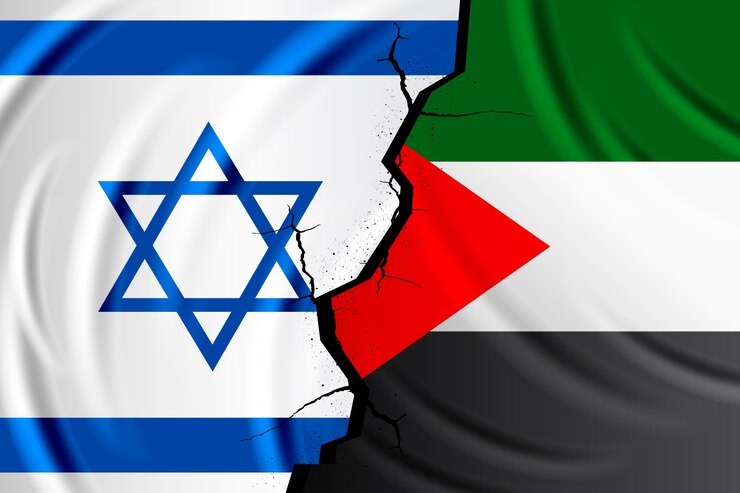
Iran – Israel Conflict: Weighing a painful response

During the Israeli war cabinet meeting, Benny Gantz reiterated that “We will build a regional coalition and collect the price from Iran, in the way and at the time that suits us.”

This sparks speculations that Israel will indeed respond to the unprecedented Iranian drone and missile attacks. If that happens to be the case, it will not affect the security of the region but will endanger global security as a whole.

Iran’s missile strikes indicated three elements. First, it showed Iranian resolve to defend their territory against aggression of all sorts. Second, it showed an existing commitment to controlled escalation. Three, it highlighted Iran’s long-range capabilities whereby it can strike targets with precision at the time and placing of its choosing. All these three elements put together compose Iran’s missile deterrent capability, and with a rich pool of targets within the range of its diverse set of missiles, it is not difficult to deduce that a massive barrage of ballistics, unlike the attacks last weekend, would certainly obliterate a majority portion of the US, Israeli, and the Western assets in the region.

On the other hand, Israel seems to be further bolstered by repeated verbal support by its main ally, the United States. Secretary of State, Antony Blinken pledged continued support to Israel’s defense especially if attacked by Tehran. In addition to this, some Western countries have protested diplomatically against Iran for its recent attacks. The US and its allies, nonetheless, helped Israel intercept a large number of missiles launched from Iranian territory, Lebanon, and Yemen. The military and diplomatic support received by Israel will not help de-escalate the situation, rather grant Israel a false invincibility aura whereby it might be forced to assess the situation to its advantage, even though it might not be at all.

In order to assess the Iranian response to an Israeli counter retaliation, one must know the political dynamics within Iran, especially in context with Israel. The current theocratic set up in Iran, to be taken in congruence with Iran’s establishment or its deep state, hinges on the singular premise that the US and Israel are the enemies of the Iranian people and the Muslim world in general. Most of Iran’s foreign military interventions, through its proxies, are justified as axes of resistance against the aforementioned. Iran’s Quds force is named after the holy sites in Jarusalem indicating an implicit desire to liberate those lands from Israeli occupation. Iran’s 40 years long streak of being under sanctions is entirely attributed to the US and Israeli enmity of the Iranian nation. Thus, another direct Israeli attack on Iran may be met with an even swifter and more severe response that has the probability of melting the entire escalation ladder itself.

To grasp the gravity, one must recall a war game conducted by Nonproliferation Policy Education Center, where Iran-Israel conventional conflict quickly turned nuclear with both Israel and Iran launching nuclear weapons on each other. What is meant here is that neither the Israelis, nor the Iranians will back down in face of further attacks. Both consider each to be an existential threat for one another. This is especially true for Iran, whose post revolution policies have entirely been centered around isolating and surrounding Israel, and undermining American influence in the region.

However, General David Petraeus, a former US Army General and CIA Chief, believes otherwise. Stating that Israel would formulate a response showcasing its deterrent capabilities while also avoiding “ratcheting up the escalation any further”.

Yet the top-level executives both in Iran and Israel can be safely classified as hawkish towards one another. In addition to that, both possess fatalist elements within their governments who have a rather insatiable desire to go to war. With Iran acquiring 85% enrichment in late 2023, it may not be a far-fetched assumption that Iran may have developed nuclear weapons covertly. They also possess the requisite delivery systems i.e. Ballistic and Cruise missiles that can be tipped with nuclear warheads. However, there is no strong evidence to this assumption.

What is left, therefore, is a spark that will set the entire region and possibly the world in flames – not conventional but nuclear. With Iran’s response last weekend, both countries can now claim victory. Iran has done enough to save face whereas Israel can claim  how it intercepted 99% of Iranian air-borne weapons.

It is up to the Israelis now to maintain the fragile peace in the region and decide against any counter retaliation which has the capacity to escalate to a point where the escalation ladder itself might disintegrate in a nuclear inferno.


INDO-PACIFIC: A NEW DAWN

“Whoever controls the Indian Ocean will dominate Asia. The ocean is the key to the Seven Seas.”

  • Alfred Thayer Mahan


The Indo Pacific, which stretches from Africa’s Eastern Coast to Australia’s Western Coast, is home to 33 countries and 2.9 billion people. To comprehend its significance and strategic advantages, consider this region as a single continuous theater that encompasses approximately 20% of the world’s ocean surface, 25% of the world’s landmass, and three-quarters of global oil reserves, iron, and tin. Approximately 80% of the world’s maritime oil and 9.84 billion tons of cargo transit through the Indian Ocean region each year.


The Indo Pacific power dynamics evolved dramatically when India decided to become an all-out pawn for the US, resulting in the term change from “Asia Pacific” to “Indo Pacific”. Partnering with the United States boosts India’s position in the face of increased regional competition, particularly from China. This has fueled the growth of “minilateralism,” in which smaller, more targeted collaborations address specific areas of concern. As a result, the Indian Ocean has evolved from a focus of primarily great power conflict to a hub for diversified strategic collaboration. With the arrival of the “Asian Century” in the twenty-first century, economic, military, and collaborative forces are swiftly redefining themselves to expand outside the framework of great power rivalry in the Indian Ocean.


DRIVERS OF NEW LANDSCAPE

Several critical factors are driving the adoption of these new mini-lateral pivots. For starters, governments are implementing “hedging strategies” to diversify their connections and minimize over-reliance on any single power. Vietnam, Indonesia, Singapore, Malaysia, Thailand, and the Philippines all have hedging tendencies. They retain commercial links with China while pursuing security cooperation with the US and other regional nations. India is rapidly losing ground to China and the United States. Second, shared concerns require regional cooperation. Critical concerns such as marine security threats (piracy, illicit fishing, and territorial conflicts) necessitate collaborative action to preserve a stable and secure environment. Regional accords such as the Combined Maritime Task Forces (TF) and SAGAR (Security and Growth for All in the Region) address piracy in the larger Indian Ocean. Furthermore, the existential issue of climate change forces governments to collaborate on clean energy solutions, disaster risk reduction initiatives, and promoting innovation for a sustainable future.

Furthermore, a developing sense of regional identity promotes collaboration on Indo-Pacific-specific issues. Regional organizations such as the Bay of Bengal Initiative for Multi-Sectoral Technical and Economic Cooperation (BIMSTEC), Mekong-Ganga Cooperation (MGC), and Indian Ocean Rim Association (IORA) reflect the Indo-Pacific region’s developing sense of identity.


EMERGING PARTNERSHIPS

The Quadrilateral Security Dialogue (Quad), which includes Australia, India, Japan, and the United States, focuses on maritime security cooperation, humanitarian assistance during times of crisis, and technology collaboration in crucial sectors. QUAD was eventually enlarged to QUAD plus (7 members). It represents an emerging regional collaboration in the Indo-Pacific area. Quad members and other countries (e.g., South Korea, New Zealand, Vietnam) discuss common concerns such as maritime security and pandemics. AUKUS is a trilateral cooperation between Australia, the United Kingdom, and the United States that intends to strengthen Indo-Pacific defense capabilities, notably in cutting-edge fields such as artificial intelligence. The I2U2 Partnership (India, Israel, the United States, and the UAE) shows modern collaboration in the Indian Ocean.  It aspires to collaborate on projects related to renewable energy, water management, and technology breakthroughs. The India-Japan-Vietnam trilateral focuses on the contested waters in the East and South China Seas, aiming to challenge forceful behavior while upholding the principles of freedom of navigation and international law. Furthermore, the Association of Southeast Asian Nations (ASEAN) is actively working on economic integration projects such as the Regional Comprehensive Economic Partnership (RCEP).

These collaborations tackle a number of serious topics critical to the Indo-Pacific’s future. Joint patrols in vital waterways, information sharing on emerging threats, and capacity building efforts for regional coast guards and navies are critical to protecting freedom of navigation, combatting transnational crimes such as piracy, and preserving a stable maritime environment. Collaboration on clean energy solutions like as solar and wind power development, energy efficiency initiatives, and catastrophe risk reduction methods are critical to the region’s long-term viability. Promoting regional commercial integration through efforts such as the RCEP, encouraging innovation through collaborative research, and developing resilient supply chains that are less vulnerable to external disruptions are all critical to achieving shared economic success for Indo-Pacific states.


CHALLENGE

However, navigating this complicated ecosystem presents its own set of obstacles. Partners in these groups have different goals and approaches to regional challenges. Resolving these differences requires ongoing diplomatic efforts to locate common ground and develop mutually beneficial solutions. Domestic political issues in each country might also influence the extent of commitment to regional cooperation. Changes in leadership or political ideology might have an impact on a country’s desire to actively participate in these alliances. Striking a balance between national interests while negotiating the difficulties of major power politics, notably the US-China relationship, necessitates strategic maneuvering.


THE ROAD AHEAD

The road ahead requires a multi-pronged approach. Cooperation must be strengthened through joint military exercises, information sharing systems, and capacity-building projects in important areas such as maritime security and disaster preparedness. Expanding partnerships to include new individuals who share similar interests and concerns promotes a more holistic approach to addressing regional issues. Maritime security requires ongoing coordination on joint patrols, anti-piracy measures, information sharing, and capacity building programs to protect freedom of navigation and battle transnational threats. Promoting global commerce necessitates building regional trade integration through initiatives and encouraging innovation through collaborative R&D activities.


The rise of collaborations beyond the US-China dichotomy portends a bright future for the Indo-Pacific. Countries may usher in a more stable, secure, and prosperous future by developing a network of alliances that address regional interests and issues. This new dynamic needs a move from a bipolar to a multipolar framework, with regional actors playing a larger role in determining the Indo-Pacific’s strategic terrain.

An Opportunist Journalist in the Judge’s Robes: Justice for Sale

By affording apt and speedy justice to the people of the country, an independent judiciary instils some semblance of security in the society that also contributes towards functioning of a vibrant democracy. Judiciary as a pillar of state is supposed to serve as an unbiased adjudicator, which guarantees upholding of the rule of law and protection of individual rights. Incidentally however, this is not the case in Pakistan, where legacy of judiciary is marred with a tainted past. Often, judiciary has been seen struggling to either preserve its independence from the influence of powerful establishment or wash the stains of intrinsic opportunism and corruption from its robes. The contest continues unabated even today.

From initial selection of judges to their  elevation to higher courts, incessant political influence and undue meddling by the external players result in shadowy nominations and often to utter surprise of many. The elevation of journalist-turned-judge Mr Babur Sattar to Islamabad High Court is a case in point. For the same defects, judiciary in Pakistan is considered as the third most corrupt institution.  As per the report of  Transparency International, Pakistan scores a dismal 31 on the Corruption Perception Index, ranking 124th out of 180 countries. The pervasive culture of corruption seem to permeate in all institutions, but the judiciary infamously tops the charts. Another study by the World Justice Project reveals that only 32% of Pakistanis have limited faith in judicial system’s ability to administer fair and impartial rulings.

In Pakistan, the scales of justice remain occasionally imbalanced. Elevation of Justice Babar Sattar to Islamabad High Court and the most controversial and politically motivated decisions  by him so far, unmistakably expose the disparity in the system. His appointment to the High Court raises eyebrows, not for his legal acumen, but for the murmurs of political influence, which cling to him like a cobweb. Is Justice Sattar an emblem of meritocracy, or an epitome of  a greater problem i.e. a court corrupted by political maneuvering?

The Ideal Versus The Reality

Pakistan’s constitution mandates an independent judiciary. Article 175A details the process of appointing judges to higher courts including the apex court. This criterion prioritizes quality, experience, and the advice of a powerful judicial commission. But the truth frequently falls short of the ideal. The martial law regimes have also played havoc with the independence of judiciary. Establishment’s direct authority over the judiciary throughout turbulent times of martial laws severly undermined courts’ ability to act as checks on the executive power. Even during democratic eras, the executive branch could still exert pressure on the courts through threats of financial probes and selective transfers/ appointments. Another concern has been the lack of transparency in judicial selections. The mystery shrouding the selection procedures fosters an environment for political favors by the judges besides the backroom deals.


Appointment of Justice Babar Sattar to the Islamabad High Court sparked controversy due to his shadowy profile and the background. With startling revelations about the judge in the media, a new pendora box has recently opened. There are reports, which claim that Justice Sattar and his family hold dual citizenship of United States of America since 2005, a detail missing from his official documents until the leaked information went public. It is also said that using influence of this appointment , the judge has built sizeable financial stakes, both inland and abroad. His being a judge with a dual citizenship of US, also instigates an alarming conflict of loyalty, in sheer disregard to the oath he took as a judge of Pakistan. Let us be reminded that he swore to uphold the interests of Pakistan. Additonally, there are ethical concerns about his allegiance, as he would be sworn to uphold interests of the US, while being a judge of Pakistan. Justice? A JOKE! But one has to stay focused as there is more to the story.

It is also noteworthy that highly lucrative and huge sum salaries and attractive perks and privileges are guaranteed to the judges in a bid to ensuring that they remain immune from external influences, but the reality seems to be far from ideal. With rise in his judicial career, there has been a corresponding upsurge in Judge Sattar’s family business too. His family’s international school business (i.e Silver Oaks International School) flourished speedily after his appointment. It has currently expanded up to 60 branches in Pakistan with ballooing into Dubai as well. Justice Sattar has been receiving dear sums from multiple other sources too. This includes salaries from a school board (i.e PTA Council), hefty sums from various telecommunication companies he remained associated with prior to becoming the judge, and stakes in a legal firm (i.e Ajurius Advocate and Corporate Council). So, the financial concerns seem to cloud his past with an enigma. Out of these, the most concerning is a potential conflict of interest. His association in the past with a legal firm, where controversial figures like Emaan Mazari and Zeenab Janjua were also partners is being viewed as really problematic. The principle of conflict of interest implies that a judge should not preside over cases involving parties, which he has previously represented or remained associated/ linked with. However, such concerns were utterly disregarded, as Justice Sattar still gives rulings on cases, pertaining to the telecommunication sector.

The Perils of Political Pawns

There can be dire ramifications, if the political motivations are involved in a judge’s nomination for the High Court or the Apex Court. A strong perception of judges’ loyalty to political interests undermines public’s confidence in the judiciary. People feel helpless and cynical, thus impairing the legal system in nutshell. Judges, especially those appointed with political agendas, often interpret the law to support their political philosophies, while disguising their actions as constitutional interpretations. Political influence on judges results in collapse of democratic institutions. A climate of impunity for powerful people emerges, akin to Turkey and Venezuela. Justice Sattar has been repeatedly giving relief to the activists and leaders of a certain political dissident party. Instead of sticking to principles of justice, he has been serving his real masters.

A Systemic Issue

A restricted perspective of the issue is presented by concentrating on Justice Sattar’s case only. Even if his circumstances are concerning, it’s important to understand that this is only one part of a bigger problem with the Pakistan’s legal system. The real issue is going to be changing the way judges are appointed here. Political maneuvering is incidently possible in the system, due to lack of openness and merit-based selection criteria. There is a need to review the selection process of judges and bring it at par with other pillars of the state. It must run through independent commissions and precise standards for judging applicants.

Holding the judiciary responsible needs approval from civil society. Transparency can be induced through investigative journalism that highlights possible biases in nominations and critical discussion of the court rulings. To further protect the system, judicial training programs that emphasize independence and moral behavior should be more frequently conducted. The idea that the judges are untouchables remains to be the greatest flaws in our udiciary. In Pakistan, where people generally remain skeptical / critics of military establishment, gross neglect of laws by institutions like judiciary, largely go unnoticed. The system of accountability should be equal for all. If politicians pay the price for their wrongdoings, the judges should be no exception and made accountable for the actions that contradicts their statements. The deviations from one’ s oath, concealment of true facts advertently, minting of fortunes and favouring of activists and leaders of a dissident political party, are the highlights of Judge Sattar’s legacy.

A Hall of Mirrors

Social media, long heralded as a revolutionary tool for connecting and communicating, has evolved into a two-edged sword. While it promotes global communities and quick information access, its underbelly hides a dark reality: the erosion of democracy. Social media platforms are fundamentally changing the way we engage with the world, frequently for the worse.


One of the most alarming trends is the rise in mental health problems, particularly among young users. The Pew Research Center found a link between increased social media usage and despair, particularly among youth. Instagram, with its crafted highlight reels, creates inaccurate depictions of reality, encouraging feelings of inadequacy and social comparison. Chamath Palihapitiya, a former Facebook executive, acknowledged the perils of the “like button,” calling it a “social validation feedback loop” that exploits a fundamental human need for approval. This continuous desire of external affirmation undermines self-esteem and promotes a reliance on the digital thumbs-up. According to studies conducted by the National Institute of Mental Health (NIMH) in the United States, there is a substantial link between increased social media use and anxiety and depression symptoms among teenagers. Our controlled, picture-perfect online lives put us under continual pressure to compete, which leads to low self-esteem.


Furthermore, social media algorithms generate “filter bubbles” that only show people information that confirms their previous ideas. Eli Pariser, author of “The Filter Bubble,” argues that these echo chambers distort reality, preventing constructive discourse and fueling political conflict. Platforms like Facebook and Twitter prioritize engagement, directing users to sensationalized information that incites outrage and fuels political conflict. This was clearly demonstrated during the 2016 US Presidential Election, when fake news and targeted advertising operations spread like wildfire on social media, affecting public opinion. As Shoshana Zuboff, the author of the book “The Age of Surveillance Capitalism,” points out, “These platforms are designed to addict and manipulate…they’re designed to erode the foundations of democratic society.”


The repercussions go beyond individual concerns. Social media has become a breeding ground for populism, with politicians using these echo chambers to propagate misinformation and foment conflict. Donald Trump’s climb to power is an excellent illustration. His bombastic tweets and divisive speech appealed to a dissatisfied audience that was already isolated online. This demonstrates a vulnerability in democratic systems: their susceptibility to manipulation by those with the authority to shape the narrative.


The impact is especially concerning in developing nations such as Pakistan, where social media penetration has reached 49%, according to World Internet Statistics, and media literacy is poor.

According to a 2019 study conducted by researchers at the University of Pennsylvania, 61% of Twitter users in the most conservative sector rarely followed accounts with opposing views. This intellectual division contributes to political polarization, as evidenced by the global rise of populism. Social media platforms are used as weapons by political parties to propagate propaganda and quell opposition. Unlike wealthy countries with established media watchdogs, these internet battlegrounds encourage a mindset of “us vs. them,” exacerbating an already divided population.


The anonymity of social media encourages negative behavior. Platforms are breeding grounds for cyberbullying and hate speech. The Anti-Defamation League’s 2022 research indicated a 34% increase in internet harassment in the United States alone. This animosity overflows into political discourse. Politicians use social media’s viral nature to propagate falsehoods and denigrate opponents. The CEO of Meta, Mark Zuckerberg, acknowledged the platform’s role in aiding the propagation of hate speech during the 2016 Myanmar atrocity.


The way forward requires a multifaceted strategy. The social media networks themselves must accept accountability. Mark Zuckerberg, CEO of Meta (previously Facebook), has acknowledged the hazards of misinformation and committed to investing in content moderation. However, some critics believe that these efforts are insufficient. Legislative measures such as those proposed in the United States, which require social media sites to authenticate user identities, could serve as a disincentive to online abuse.


Individually, developing media literacy is critical. It is crucial to educate young users on how to properly analyze internet material and spot prejudice. Schools and parents can play important roles in this process. Furthermore, encouraging good social media behaviors such as taking breaks and following a variety of sources might assist users in making more informed decisions in the online world.


The risks of social media are apparent. However, it is critical to remember that it is a tool, and like any tool, it may be used for good or evil. By recognizing the risks and taking proactive actions to reduce them, we can ensure that social media becomes a force that empowers rather than undermines democratic conversation.

A dual game by China

“China is trying to win the Geopolitical Chess Game without moving a single piece on Chess Board.”


The Central banks worry about another inflationary spike following 35% drop of traffic through the Red Sea-thanks to the Houthis attacks that have ruptured the world’s busiest and the most important shipping routes. Amidst this turbulence, four out of the five largest companies have decided to reroute their ships from the Red Sea to the Cape of Good Hope-leading to an addition of 3,200 miles with a delay of nine days at 15 knots from Asia to Europe. The addition of extra miles has not only delayed the delivery of products but escalated the costs of global shipping as well, leading to global inflation and spreading woe across the entire global community.

As the explosions of Houthi attacks echo through the shores of Red Sea, one question looms large; Why has China sealed her lips over the crisis despite being a significant player in the Red sea?

Houthis have claimed Israel and their supporters to be the legitimate targets in response to the Gaza genocide. Nevertheless, they have indiscriminately drawn everyone in the game putting global economy at stake. Although China has been exclusively shielded from the attacks, yet it suffers the economic repercussions as the different countries are shifting to the “near-shoring” approach in order to mitigate the impacts of disruption.  Beijing’s abstain from indulging into the matter despite these large economic repercussions has raised eye brows across the entire global community.

According to Pentagon’s 2023 China Military Power Report, People’s Liberation Army has the biggest navy in the world. On one side, U.S with only 293 ships has initiated Task Force to secure the passages of the Red Sea while on the other hand, China with a total of 370 ships, has not only abstained from indulging into the operation but also criticized this coalition as adding fuel to the fire.

Analysing the circumstances through the lens of hegemonic Stability Theory, Beijing’s muted response can be seen as a deliberate strategy with a goal to counterbalance America’s dominance in the region. China is actually playing a dual game to establish its own monopoly in the Red Sea fulfilling its aspirations of becoming the dominant power. On one side, it adheres to its policy of non-interference and does not get directly involved into the regional conflicts portraying itself as a peaceful nation. By doing this, China does not let its relations be exploited with Houthis and ensures a smooth flow of trade for the future.  Maintaining the diplomatic flexibility instead of expanding military presence, allows China to strengthen its ties with various regional players, including those that have an interest opposed to America.


“China is trying to win the Geopolitical Chess Game without moving a single piece on Chess Board.”


On the other side, China is acting as a free rider conserving its own resources while enjoying the security and stability maintained by the presence of American military. China’s restrained response can be seen as a strategic move to get America entangled in the regional conflicts leading to overextend of its resources and influence. Taking the pragmatic and cautious approach, China seeks to secure its economic interests while being neutral and avoids risks to its broader diplomatic goals.

Beijing’s non-interference stance stands in stark contrast to America’s historical and on-going interventions. This enhances China’s appeal to local governments as being wary of American interference. China cannot afford spoiling its relations with Iran as it not only secures its interests in the Red Sea but bolsters its geopolitical standing as well. Both countries have joined hands together by supporting Russia against Ukraine. The is one of the other reasons China maintains smooth relations with Iran as both countries have been collaborating to supress America by supporting Russia in the Russia Ukraine war.

Moreover, China garners global sympathy by using the rhetoric of Gaza genocide as the main cause of Houthi attacks, positioning itself as a human rights defender while subtly challenging American policies. This helps China create global pressure on America to cease its military actions in the Red Sea weakening latter’s influence and enhancing its own position as a dominant power.

But at the same time, China’s limited response to the crisis portrays its rhetorical posture of Global Security Initiative (GSI) as an empty slogan. By avoiding a clear declarative stance over the crisis, China positions itself as a less responsible actor as compared to America. The lack of actions, however, has exposed the limited capability of China and lack of interest in providing security and stability to the region. The crisis demonstrates that China prefers to rely on the help from other countries even if its own interests are at stake.

However this criticism has a little impact on China because U.S operation has created a win-win situation for it. If the operation gets successful, China would get its interests fulfilled by restoring smooth trade through the Red Sea while the opprobrium would be faced by U.K and U.S. If it fails, China would get a bigger share from the Red Sea as a reward for its compliance with Houthis during the crisis. The other shipping actors may face the threat of attacks or less economical route around Africa.

BRICS: The De-dollarization Efforts

The BRICS alliance, consisting of Brazil, Russia, India, China, and South Africa, has issued a call for Middle Eastern nations to cease using the US dollar for oil payments and instead utilize local currencies. This entice comes at a time of escalating tensions in the Middle East, with Iran launching missile drone attacks against Israel and Russia urging regional countries to teach Israel and the US a lesson. The BRICS alliance has been expanding its membership to include oil-producing nations such as the UAE, Egypt, Ethiopia, and Iran, and is anticipated to strengthen economic ties with China and India, the two largest trading partners of the Emirates.

The decision to abandon the US dollar for oil payments is part of a broader endeavor to decrease reliance on the US financial system and promote the use of local currencies. This move could have significant ramifications for global oil trade and the wider international financial system. The BRICS bloc, which holds a larger portion of global GDP than the G7 countries when adjusted for purchasing power parity, is expected to gain increased economic and political influence through formal participation in the alliance.

Nevertheless, the transition away from the US dollar for oil payments presents certain challenges. The US dollar is widely accepted as a means of payment for oil and gas, while local currencies only constitute a small fraction of all trade and transactions. Furthermore, the complex initiative of establishing a common BRICS currency to enhance payment options would necessitate unanimous agreement among all members regarding an exchange rate and a comprehensive set of financial regulations.

Despite these obstacles, the BRICS alliance is persisting with its de-dollarization efforts, which could have significant implications for the global financial system and US influence. The shift away from the US dollar could diminish the effectiveness of US sanctions regimes, which serve as a crucial foreign policy tool in combating terrorist networks, rogue regimes, and criminal networks.

Dollar Dominance

The US dollar’s dominance in the global economy has had significant implications for emerging markets. On the positive side, the dollar’s stability and acceptance as a reserve currency have allowed emerging markets to access cheaper financing and reduce their exposure to exchange rate risks. However, there are also drawbacks, such as the potential for indiscriminate spending and economic imbalances, which can lead to global economic instability and conflicts.

One of the most significant impacts of the dollar’s dominance is the increased vulnerability of emerging markets to global economic shocks. These countries often rely heavily on international finance, such as foreign aid and foreign direct investment, which exposes them to increased vulnerability to fluctuations in global financial markets, changes in investor sentiment, or economic downturns in major economies.

Emerging markets also face challenges with currency risk. The strength of the local currency, level of economic development, and reliance on international trade and finance are factors that determine the impact of de-dollarization on a country. Developing nations may experience currency instability and inflation, which can affect trade and investment flows, making it more challenging to access international markets.

The dominance of the US dollar in the global economy has had adverse effects on emerging markets, especially when the dollar is strong. A robust dollar can result in heightened economic instability in emerging markets due to exchange rate depreciation, restricted credit availability, and decreased capital inflows. The impact of a strong dollar is more severe in emerging markets compared to advanced economies, as these nations have limited flexibility in monetary policy and may lack the necessary resources to counteract the negative consequences of a strong dollar.

The recent drop in Taiwan’s currency to its lowest level in almost eight years underscores the challenges that emerging markets face in dealing with a strong dollar. Similarly, the record low reached by India’s rupee signifies a significant devaluation of the currency against the US dollar. Additionally, Malaysia’s ringgit is approaching its weakest point since the Asian financial crisis in 1998, underscoring the susceptibility of emerging markets to the influence of a strong dollar.

Implications

The BRICS alliance’s recent proposal for Middle Eastern nations to cease accepting the US dollar for oil payments and instead utilize local currencies could have far-reaching consequences for the global economy’s reliance on the US dollar. The US dollar is widely recognized as a reserve currency and a medium of exchange, with countries holding reserves for various purposes, including managing economic shocks, financing imports, servicing debts, and regulating currency values. The US dollar’s dominance is primarily attributed to its pivotal role in oil pricing, as more than 90 percent of transactions in foreign exchange markets are denominated in dollars.

The BRICS’ endeavor to de-dollarize the international financial system has the potential to diminish the efficacy of US sanctions, which are crucial tools in the realm of foreign policy, particularly in combating terrorist networks, rogue regimes, and criminal organizations. If more countries adopt local currencies for oil payments, the US dollar’s share of official foreign exchange reserves could further decline, potentially weakening its status as the world’s primary reserve currency.

Nevertheless, de-dollarization is not without its challenges. The US dollar’s dominance is deeply entrenched, and transitioning to alternative currencies would necessitate countless exporters, importers, borrowers, lenders, and currency traders worldwide independently opting to utilize other currencies. Furthermore, the BRICS alliance comprises diverse nations with varying economic, political, and geographic disparities, making consensus-based decision-making a formidable task.

Despite these obstacles, the BRICS alliance remains steadfast in its pursuit of de-dollarization, which could have significant ramifications for the global financial system and US influence. While the shift away from the US dollar may undermine the effectiveness of US sanctions, it could also foster greater economic and financial autonomy for the participating nations, potentially contributing to global economic stability.

In conclusion, the BRICS alliance’s proposal for Middle Eastern partners to stop trading oil in US dollars has global economic implications. If this shift were to happen, it could challenge the dollar’s dominance as the world’s reserve currency, impacting US sanctions and global financial stability. Emerging markets heavily reliant on the dollar may face currency risk, economic instability, and vulnerability to external shocks. The dollar’s dominance limits its monetary policy flexibility and affects trade competitiveness and economic growth. To mitigate these risks, emerging markets should diversify their reserves and adopt alternative economic policies.