Gold and the Silent Burden on Ordinary Families

By Muhammad Mohsin Iqbal

Gold has occupied a place of reverence in human history that few substances can rival. From the earliest stirrings of civilisation, mankind has been irresistibly drawn to its soft glow and enduring purity. Unlike other metals that demanded fire, technique, and labour to reveal their usefulness, gold appeared in nature in a ready and welcoming form—shining nuggets resting in riverbeds, untouched by rust or decay. It was perhaps for this reason that gold became the first metal known to humankind and the earliest symbol of wealth, permanence, and aspiration. Over thousands of years, its meaning has evolved, yet its power over the human imagination has remained remarkably unchanged.

Archaeology confirms that humans were not merely collecting gold as a curiosity but shaping it into ornaments and symbols of status more than six and a half millennia ago. The remarkable discoveries at the Varna Necropolis in present-day Bulgaria reveal that prehistoric societies were already crafting gold jewellery with surprising sophistication during the fifth millennium before Christ. These artefacts—beads, bracelets, and ceremonial adornments—suggest that gold was linked not only with beauty but also with authority and reverence. Soon after, ancient Egypt raised gold to near-divine status, associating it with immortality and the gods, while other great civilisations across Mesopotamia, the Indus Valley, China, and later the Mediterranean world incorporated gold into ritual, trade, and governance. When the first gold coins were minted in Lydia around 600 BC, gold moved decisively from ornament to economic anchor, shaping commerce for centuries to come.

In South Asian societies, gold acquired an additional layer of meaning rooted in family structure and social responsibility. It became inseparable from marriage traditions, particularly for daughters. For generations, parents regarded gold jewellery as a form of long-term security—an asset that could be relied upon in moments of hardship, illness, or widowhood. Bangles and necklaces were not merely decorative; they represented foresight, care, and dignity. This tradition endured even among families of modest means, who saved patiently to fulfil what was considered both a social and emotional obligation.

Today, however, that delicate balance between tradition and affordability has been deeply disturbed. The extraordinary escalation in gold prices has placed even modest jewellery beyond the reach of the middle class. Where once a bridal trousseau included substantial ornaments, many families now struggle to afford even the most basic pieces. Religious teachings impose no requirement for such displays, yet parental love and social expectation continue to exert pressure. As a result, many settle for symbolic gestures—a single ring or small ornament—offered not as a measure of wealth, but as an expression of affection and continuity.

Alongside this economic strain, a new social dynamic has emerged, intensified by the age of digital display. Lavish weddings hosted by the affluent, widely circulated on social media, have transformed private celebrations into public exhibitions of prosperity. These spectacles, while harmless in intent, often deepen feelings of inferiority among those who cannot compete with such extravagance. The comparison is relentless and unavoidable, fostering dissatisfaction and, at times, unhealthy financial decisions. In this way, gold has become a silent participant in widening social divides, highlighting disparities rather than bridging them.

Beyond social customs, the current surge in gold prices reflects deeper global anxieties. In late January 2026, gold climbed to unprecedented levels, a clear signal of widespread economic and geopolitical unease. History shows that gold’s value tends to rise when confidence in political stability, currencies, and financial systems falters. Wars, trade disputes, inflationary pressures, and policy uncertainty all drive investors toward assets perceived as safe. Gold, unlike paper currency or government bonds, carries no promise dependent on institutions; its value rests on collective trust forged over millennia.

Modern examples reaffirm this pattern. From the oil shocks and geopolitical turmoil of the 1970s to more recent conflicts in the Middle East and Eastern Europe, gold has repeatedly surged during times of crisis. Wars disrupt trade routes, inflate energy prices, and compel governments to increase spending, often at the cost of currency stability. In such conditions, gold emerges as a hedge against inflation and devaluation. In the present era, this traditional role is reinforced by aggressive purchasing by central banks seeking to diversify reserves, as well as expectations of lower interest rates that reduce the opportunity cost of holding non-yielding assets like gold.

Yet it would be simplistic to view gold’s ascent solely through the lens of profit. Its enduring appeal lies in the reassurance it offers during uncertainty. For individuals, institutions, and even nations, gold represents continuity in a rapidly changing world. Its weight in the vaults of central banks and its presence in family heirlooms speak to the same instinct: the desire for something that outlasts turmoil.

Thus, gold today stands as both a blessing and a burden. It remains a symbol of beauty, security, and historical continuity, yet its soaring price has strained cherished traditions and exposed social inequalities. For families, it prompts difficult choices between custom and capacity. For societies, it serves as a quiet commentary on economic imbalance and global instability. And for the world at large, gold continues to perform its ancient role—as a mirror reflecting human fears, hopes, and the timeless search for certainty in uncertain times.
Sacred from Slaughter, Subject to Sale

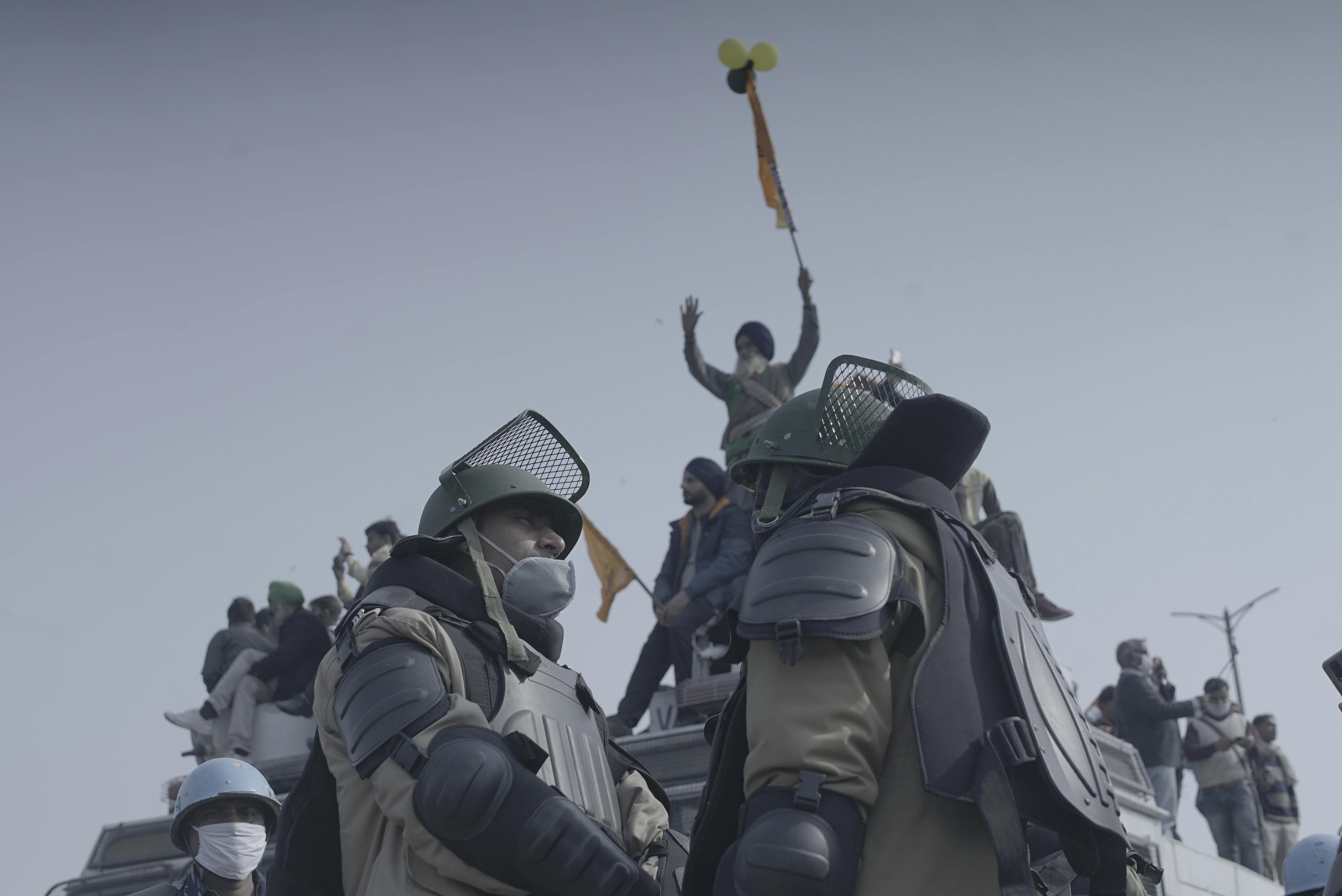
The phrase “sacred from slaughter but subject to sale” summarizes a central contradiction in the Indian context. As in India, the cow is sacred in Hinduism yet remains deeply embedded in commercial use. In recent years, Muslims and Dalits have been subjected to public assaults and, in some cases, lynching over allegations related to meat consumption, cattle trade, or slaughter. Human rights reports estimate that approximately 40 individuals have been killed in mob violence linked to such accusations. This phenomenon, commonly referred to as cow vigilantism, involves self-styled groups of cow rakshaks who assume the authority to punish individuals, particularly Muslims and Dalits. For allegedly eating, trading, or slaughtering cows, which are regarded as sacred in Hindu religious belief.

Cow vigilantism intensified after 2014, following the rise of the Bharatiya Janata Party (BJP) to power at the national level. At present, around 20 Indian states have officially banned or heavily restricted cow slaughter, shaping the legal and social environment in which such violence occurs. According to Human Rights Watch, these legal restrictions, combined with weak law enforcement, have contributed to a climate of impunity. A prominent example occurred in April 2017 in Alwar district, Rajasthan, where Pehlu Khan, a dairy farmer, was attacked by cow protection groups while transporting cattle and later died from his injuries. Despite naming his attackers before his death, several of the accused were subsequently acquitted, raising serious concerns about institutional bias, accountability, and the rule of law.

At the same time, India’s economic practices reveal a contrasting reality. In fiscal year 2024, India emerged as the world’s second-largest beef exporter, after Brazil, with exports valued at approximately US $3.9 billion. While cow slaughter is restricted or prohibited in many states and Muslim communities face constraints in performing animal sacrifice during Eid-ul-Adha, bovine meat, primarily buffalo meat, continues to be produced and sold on a large commercial scale. This paradox raises critical questions about the selective application of religious sentiment, economic priorities, and minority rights in a state that constitutionally identifies itself as secular.

Cow slaughter remains one of the most contested political and cultural issues in India. Although the cow is symbolically protected, bovines may still be slaughtered for export and industrial use under specific legal frameworks, underscoring persistent tensions between religious symbolism and market imperatives. In a landmark judgment on 26 October 2005, the Supreme Court of India upheld the constitutional validity of anti-cattle slaughter laws enacted by various state governments, affirming the authority of states to regulate or prohibit slaughter within their jurisdictions. Currently, 20 out of India’s 28 states have laws governing cattle slaughter, many of which prohibit the slaughter of cows and restrict the sale of beef. These laws vary significantly across states, reflecting India’s federal structure, as livestock preservation and veterinary regulation fall under the State List.

Furthermore, according to a 2016 review by the United States Department of Agriculture, India accounted for nearly 20 percent of global beef trade. On 26 May 2017, the Union Ministry of Environment, Forest, and Climate Change imposed a nationwide ban on the sale and purchase of cattle for slaughter at animal markets under the Prevention of Cruelty to Animals Rules. However, the Supreme Court suspended the implementation of this ban in July 2017, providing temporary relief to the beef and leather industries. In contrast, data from the United Nations Food and Agriculture Organization (FAO) and the European Union show that per-capita beef consumption in India remains among the lowest globally, but largest exporter globally.

Against this backdrop, it is reasonable to critique the contradictions embedded in public policy and political rhetoric under Prime Minister Narendra Modi’s government. Since 2014, cow protection has functioned both as a political symbol and a policy priority, with anti-slaughter laws enacted or tightened across numerous states. However, these measures have often failed to safeguard minority rights, instead contributing to an environment in which vigilante violence and discriminatory enforcement have proliferated, frequently accompanied by inadequate state response. This institutional uncertainty was reflected in the Supreme Court’s 2025 decision to decline entertaining a public interest litigation on cow vigilante violence, advising petitioners to seek redress through the High Courts.

Conclusively, India’s continued status as a major global exporter of buffalo meat and cow leather further underscores this contradiction. The same state that amplifies cow protection discourse within domestic politics also facilitates and benefits from multibillion-dollar exports of cattle-derived products internationally, an economic reality that sits uneasily with its cultural and moral rhetoric. These double standards sanctifying the cow in political discourse while enabling and profiting from cattle commerce in global markets reveals a political economy of selective cultural preservation. Such inconsistencies undermine India’s claims to secularism and equal citizenship. This illustrates how the instrumentalisation of religious symbols for political purposes can erode constitutional protections, disproportionately harm minority communities, and distort the rule of law.

Days that have passed

by Muhammad Mohsin Iqbal

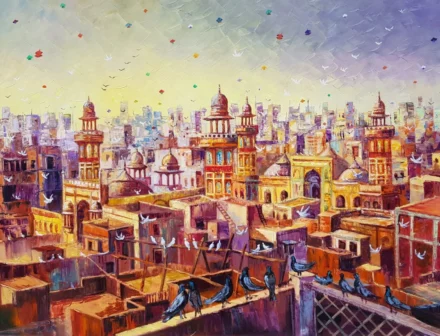
Although mid-January arrives with icy winds at their fiercest and the mercury seems to sink perilously close to freezing, it is also the season when memory awakens with unusual intensity. The chill in the air carries with it the warmth of remembrance, drawing the mind irresistibly toward the narrow, winding streets of Lahore. What the younger generation now terms the “Walled City,” what others know as Androon-e-Shehr, and what Lahoris simply call Shehr, was then a living organism, breathing history, culture, and intimacy. Winter nights echoed with the rhythmic calls of “Garam Aanday,” while peanuts and pine nuts were sold by lantern light. Afternoons were softened by sunshine and sweetened by oranges and kinnows, and mornings began with the unmistakable aromas of Siri Paye, Bong, Nihari, and Chanay, served generously with hot Kulchas or Puri Halwa, meals that nourished both body and soul.

As January waned, conversation everywhere turned toward the first Sunday of February, for Basant had already been officially announced. The mere mention of the word was enough to ignite anticipation. Those living abroad would send messages weeks in advance, declaring their return especially for Basant and urging families to fix weddings of their relatives and close friends during those auspicious days, so that marriage and Basant can be celebrated at the same time. Relatives and friends working in the Middle East were entrusted with a specific task; bringing back Nar’ra (Thread), regarded as superior and reliable. In Lahore, Kasur, and nearby towns, string-coating Addas bustled with activity. Orders were placed well ahead of time, colors carefully chosen, and once the string was ready, eager customers lined up at kite shops. It was customary to take along seasoned Ustaad (expert) who could judge the balance of a kite or the smoothness of a spool at a glance. The kites and Guddis purchased earlier were handled with reverence, adjusted, tested, and carefully set aside.

In the days leading up to Basant, Lahore itself seemed to change its rhythm. Rooftops were cleaned, parapets repaired, and ladders readied. Nights were spent tightening and stretching kites and spools under dim bulbs, hands numbed by cold yet driven by excitement. Sleep was a rare luxury on the eve of Basant. At dawn, the first triumphant cries of “Bo-kata!” pierced the air, soon multiplying across neighborhoods. As the sun climbed, the sky blossomed into a riot of color, countless kites dancing like living beings, responding to every gust of wind. Women dressed in yellow, bangles clinked, and turmeric-hued dupattas fluttered from rooftops, while traditional songs and playful taunts drifted from house to house.

By noon, special dishes marked the festivity; Qeemay Walay Naan in many homes, Gajraila simmering slowly in others, along with an array of sweets and savories shared generously with neighbors and guests. Friendly rivalries sometimes flared into minor scuffles, but elders intervened swiftly, restoring harmony with a few firm words and gentle counsel. Basant was, after all, a festival of togetherness. As evening approached, the celebration intensified rather than faded. At the end of the day, the era of giant kites would begin in the name of Sham Kalyan, which was a great treat for the eyes.

With the onset of night, rooftops and grounds were illuminated by floodlights, transforming the dark sky into a glowing stage. Night Basant had its own magic. Giant kites were launched under brilliant lights, their shadows gliding majestically across illuminated clouds, while specially prepared spools were tested in dramatic contests that drew cheers from all around. The glow of floodlights, the hum of generators, and the echo of laughter gave Lahore a festive brilliance unmatched by daylight.

In those days, Basant largely belonged to the lower-middle and middle classes, who celebrated it with sincerity rather than spectacle. Many children from elite families viewed kite flying as undignified or feared injury, and thus remained distant observers. The festival’s transformation began later, when it received formal government patronage. In Lahore, much of the credit for promoting Basant at an official and international level goes to Kamran Lashari, then Commissioner Lahore. With private-sector collaboration, the festival was reshaped, marketed, and projected globally. While this recognition elevated Basant’s profile, it also altered its character, pushing it beyond the modest means of those who had once been its custodians.

Tragedy followed when chemical string replaced Door (traditional cotton-coated string). The sky that once symbolized joy became a site of mourning, as lives were lost and families shattered. Gradually, the festival faded into silence. Today, the Punjab government has once again sought to revive Basant under official supervision, banning chemical string and hazardous practices. Whether these measures will be enforced effectively remains uncertain. God forbid, if blood again stains this celebration, not only will cherished lives be lost, but the very survival of Basant may be threatened.

Kamran Lashari remains among those still engaged with this festival, and it is hoped that lessons of the past will guide present efforts. Even now, I profoundly miss those days. Perhaps these recollections will awaken dormant memories in others as well, and in doing so, bring to mind those dear souls who once stood beside us on rooftops, eyes lifted to the same sky, hearts united by the simple, radiant joy of Basant.

Southern Transitional Council, Somaliland AND Israel Connection

2025 has been the year of conflicts. With the Russia Ukraine War grinding into its 4th year and Israeli aggression against Palestinians, Lebanon and Syria seeing no end, the world saw two nuclear powers, Pakistan and India fighting it out in a battle of wits with both claiming the upper hand. Trump, the ever glory seeker Hero, ultimately put an end to the claims and counter claims by laying down the figures of the aircraft lost by India. His claims of bringing peace to Palestine and in the case of conflicts such as Azerbaijan – Armenia, Cambodia – Thailand, Egypt – Ethiopia and Serbia – Kosovo all seem to be far-fetched as we see it today in 2026. More so, Yemen has again become a hot bed of activity with the Saudi led Arab Coalition targeting alleged supply of weapons to South Transitional Council by UAE in Port of Mukalla. This has vindicated Pakistan’s previous stance of not committing any forces to Yemen conflict during the last Arab Coalition vs Houthis conflict where Pakistan agreed to limit its role in defending Saudi Arabia but not intervening directly inside Yemen. But where does this leave Pakistan now as UAE and Saudi Arabia are both countries with close brotherly, military and economic relations. Both countries have large number of Pakistani diasporas. But the bigger question is not about UAE and Saudi Arabia, but rather the role of Israel in all of this.

Israel, since the Abraham Accords has established a very close relationship with UAE which has created a lot of discomfort for Saudi Arabia. It has increased pressure on Saudis to sign a similar agreement without resolution of the issue of Palestinian statehood which the Saudis have warded off till now primarily due to their economic strength brought to them by their influence in the global oil trade. Israel, on the other hand has recently recognized Somaliland, a territory that is internationally accepted as part of Somalia, has further raised eyebrows on Israel’s purported intentions. It is pertinent to mention that Ethiopia, a land locked country since the separation of Eritrea in 1993 had signed an MoU in 2024 with Somaliland to lease a 20km piece of coastline for trade and naval purposes while Ethiopia was to consider accepting Somaliland as a state in return. Although Turkish mediation had led it to be a tripartite agreement, with Somalia, Somaliland and Ethiopia trying to deal with the access to Red Sea, Israel’s close relations with Ethiopia and its recent acceptance of Somaliland statehood are bound to change the nature of this relationship in the future. With Egypt already fuming at Ethiopia due to construction of Grand Renaissance Dam on Blue Nile River, the lifeline of Egypt’s agriculture and critical to its water supply, Israel is playing a very shrewd hand at all ends. From UAE to Yemen to Somaliland to Ethiopia, it is surrounding Saudi Arabia from all sides through political and diplomatic influence, mercenaries and proxies. It is already believed the Yemen’s Socotra island is being used by UAE in violation of international agreements and Israel’s involvement would be no surprise considering its willingness to keep an eye on the Houthis, the only group that has targeted Israeli interests with impunity especially in the Red Sea region.

Pakistan’s recent signing of Strategic Mutual Defence Agreement (SMDA) with Saudi Arabia was an attempt to formalize the defence relationship that existed for decades. Israel’s attack on Qatar, only made it easy to give it the final touches. The fact remains that SMDA was never meant for a UAE – Saudi Arabia conflict. It is clear from the Russia-Ukraine conflict that at the end of the day nations go to war and the Ukrainian plight today tells you that despite the economic support from EU and IMF and all the arms supplies from USA and its allies to the Ukrainians, it is the people who have to fight and suffer from the consequences of war. Same applies to any other conflict in the world. Pakistan must not expect anything from its partners in its conflicts with India and Afghanistan and must be ready to fight them out alone. Having said that, participation in Gaza Peace Force in Palestine under American leadership is also a dicey affair. Muslims all over the world are very emotional especially when comes to Palestinians, the devious nature of the Israelis and lack of humility on part of the American leadership trying to bring peace to Palestine. It is advisable is that a UN Peacekeeping force or at least a OIC flagged Peace Force enters Gaza, with a clear mandate to help the Palestinians in the ordeal and bring peace to the region. This should also require a clear American assurance that no Israeli aggression would take place and boundaries of Gaza as of Oct 7, 2023, would be respected. Any miscommunication of the mandate of the force would result in devastating consequences not just for the forces but also politically for the leadership at home of the volunteer forces.

Israel is quietly increasing its footprint in the region. An increasingly close and strong diplomatic, economic and defence relationship with India, Ethiopia and UAE, and acceptance of Somaliland, its footprint in the Western Indian Ocean Region has considerably increased. This does not augur well for the security of the region. It is essential for Pakistan to play a key role in defusing the Saudi Emirati feud over the STC while staying away from the Yemen conflict in itself. It is also important to bring the MENA region on a single page in understanding Israel’s motive in the region and to use the diplomatic channels to discourage Israel from creating further instability in the region. This has to be done without stepping on an individual state’s right to have a diplomatic, economic and defence relationship with Israel.

When Presence Speaks Louder Than Words

by Muhammad Mohsin Iqbal

Today, media—especially social media—despite its flaws, has become a powerful force that shapes our reality and influences our lives. Every individual, armed with a device small enough to fit in the palm of a hand, now possesses the power to capture a moment and transmit it across continents within seconds. This unprecedented reach has altered the grammar of diplomacy itself. It has also generated myths, distortions, and manufactured narratives that often travel faster than truth. Yet within this vast digital noise, certain moments carry an authenticity so evident that they speak more convincingly than the longest speeches.

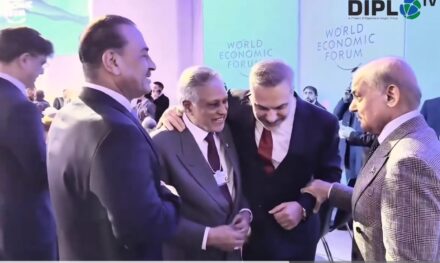
The recent gathering at Davos offered such moments. As global political and economic leaders converged once again, Pakistan’s presence stood out with unusual clarity and confidence. The Pakistani leadership appeared active, engaged, and assured, projecting seriousness rooted in purpose rather than showmanship. Prime Minister Shehbaz Sharif’s interactions with heads of state, leaders of international financial institutions, and corporate executives reflected a pragmatic, solution-oriented approach. His engagements centered on economic stabilization, investment opportunities, climate resilience, and regional connectivity, presenting Pakistan as a responsible partner rather than a passive recipient.

Alongside him, Deputy Prime Minister and Foreign Minister Ishaq Dar maintained sustained diplomatic engagement with his counterparts from Europe, the Middle East, and Asia. His exchanges reflected composure and experience, emphasizing balanced foreign relations, multilateral cooperation, and regional stability. These interactions reinforced the impression that Pakistan understands the subtleties of modern diplomacy and conducts itself with restraint and consistency.

Amid these engagements, the presence of Field Marshal General Syed Asim Munir quietly commanded particular attention. Seated without ostentation, his presence attracted visible interest from several global figures, including the President of the United States. Observers noted repeated glances and subtle gestures exchanged during the proceedings. In diplomacy, such unscripted moments often reveal more than prepared statements. They signal reassessment and recognition shaped by conduct rather than rhetoric. Honor, as faith reminds us, is bestowed by Allah upon whom He wills, and on that occasion, Pakistan appeared to stand at a rare intersection of dignity and global regard.

Equally compelling was the visual of Prime Minister Shehbaz Sharif, PPP Chairman Bilawal Bhutto Zardari, and Field Marshal Syed Asim Munir seated together. In a political environment often portrayed as fragmented, this image conveyed maturity and unity on matters of national interest. Captured and shared instantly, it achieved what lengthy declarations often fail to convey.

The positive perception surrounding Pakistan’s inclusion in peace-oriented discussions at Davos further strengthened this image. Yet it is notable that several influential countries have chosen not to formally join the Peace Board. Their hesitation reflects complex strategic calculations, domestic political constraints, and concerns about being bound by collective moral commitments in an increasingly polarized world. Even the United Kingdom, despite its long diplomatic tradition, has refrained from joining. This restraint appears particularly striking given that former British Prime Minister Tony Blair holds an important position within the Board. The paradox illustrates a broader reality of global politics; states often prefer influence without obligation, proximity without accountability.

In contrast, Pakistan’s potential association with such a forum is being viewed through a different lens. Its growing credibility, earned notably during the decisive events of May 2025 through restraint, professionalism, and strategic clarity, has positioned it as a state capable of contributing constructively to peace deliberations. The continued international visibility of the Field Marshal reinforces this perception of discipline and coherence.

At the same time, some school of thoughts suggested that if a discussion had been held in Parliament before any formal decision was made regarding Pakistan’s inclusion in the Peace Board, it would have further promoted wisdom in this move and strengthened democratic traditions. It would also provide political comfort to the government by transforming a strategic choice into a collective national position rather than an executive decision alone. In a polarized political climate, parliamentary endorsement would strengthen institutional consensus and shield foreign policy decisions from unnecessary controversy.

History offers instructive parallels for such an approach. Islamic political tradition provides enduring examples of principled engagement across faiths. There’s no denying that the Quran gives clear guidance on building relationships with Jews and Christians. Along with this, the Charter of Madinah bound Muslims and Jews into a single political community with shared obligations. Treaties with Christian communities, including that of Najran, guaranteed protection and religious freedom. Caliph Umar ibn al-Khattab’s covenant in Jerusalem and Sultan Salahuddin Ayyubi’s agreements with Christian adversaries reflected restraint, justice, and strategic wisdom. These precedents affirm that diplomacy rooted in moral clarity carries lasting influence.

In this context, Pakistan’s growing space within global peace forums enhances its capacity to advocate for oppressed peoples, particularly the Palestinians in Gaza. A credible and engaged Pakistan is better positioned to raise humanitarian concerns and protect Palestinian rights on influential platforms. Advocacy carries greater weight when it comes from a state perceived as united, responsible, and committed to peace rather than confrontation.

In an age where perception often precedes policy, images and brief moments carry extraordinary power. Objectives that once required prolonged speeches can now be advanced through seconds of authentic presence. The scenes from Davos projected unity, seriousness, and quiet confidence.

Ultimately, the significance of such moments lies not in fleeting applause but in sustained consistency. Prestige must be preserved through prudent policy, institutional harmony, and clarity of national interest. When civilian and military leadership move in disciplined coordination, the resulting image is one of stability and credibility. In a world where seconds matter and narratives shift rapidly, Pakistan’s recent projection affirms a timeless truth; sometimes, history is advanced not by words, but by presence.

Behind the Flames, Only Questions Remains

By Muhammad Mohsin Iqbal

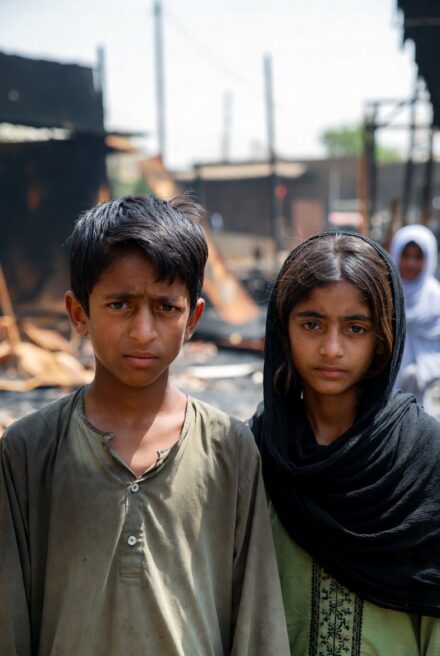
When the flames finally surrendered to smoke, Gul Plaza ceased to be a building and became a wound carved into the body of the city. The air remained thick with the bitter stench of burnt fabric, plastic, and human dreams. Charred walls stood like silent mourners, and beneath the collapsed concrete lay not only the ashes of shops and goods, but the futures of hundreds of families reduced to cinders. The fire was over, yet mourning had only begun.

Across the street, on broken steps dusted with ash, two children sat side by side. They did not cry loudly like the women gathered nearby, nor did they shout slogans or curse fate. Their grief was quieter, heavier, and far more frightening.

“My father used to open his shop early in the morning,” said Ali, his schoolbag lying forgotten beside him. “He said business was like prayer—if you missed the first moment, you lost the blessing of the day.” His eyes remained fixed on the blackened structure. “Yesterday, they told us his body could not be identified. My mother keeps asking how a man can disappear in his own shop.”

Sara lowered her head. “My father sold fabric on the second floor,” she said softly. “He promised to buy me a new uniform from his own earnings very soon. He left home saying he would be late because customers were coming.” Her voice trembled. “He never said goodbye. Now there is no shop, no cloth, no promise. They say many are still missing. Maybe some are alive. Maybe they just don’t know yet.”

Around them, the city moved on awkwardly, burdened by shame and helplessness. Gul Plaza had been more than a commercial building. It was a source of bread, dignity, and survival. With its destruction, stoves in hundreds of houses were extinguished. Kitchens fell silent, school fees became impossible questions, and debts turned into waking nightmares. The fire did not merely consume wood and merchandise; it devoured certainty itself.

Ali clenched his fists. “They say the fire spread because the building was unsafe. No proper exits, no discipline in construction, wires hanging like webs.” His voice carried a quiet anger. “If everyone knew this, why was it allowed to stand? Was it the government’s fault? The administration’s? Or ours, for accepting danger as fate?”

Sara nodded, tears slipping down her cheeks. “My father once complained that the staircases were blocked with goods,” she said. “He laughed while saying it, as if danger was a joke Karachi tells itself every day.” She swallowed hard. “Why did no one stop it? Why do we always wait for death before inspecting buildings?”

Sirens had fallen silent, but grief echoed everywhere. Names were called again and again, dissolving into smoke. Some bodies lay unrecognizable, denying families even the mercy of a final farewell. In many homes, mothers clutched shirts still carrying the scent of their husbands, inhaling memories as if breath itself could bring the dead back. Children listened to whispers filled with unfamiliar words—compensation, inquiry, relief—words that sounded hollow against the permanence of loss.

“My father’s shop fed us,” Ali said quietly. “With that money, my sisters went to school. With that money, our stove burned.” His voice faltered. “Now the stove is cold. My mother asks how we will eat. I have no answer.”

Sara stared at her ash-stained hands. “My father’s business was our future,” she said. “He dreamed of expanding it. He dreamed of my education.” Her shoulders shook. “Now even his body has not been found. How do you bury a dream without a grave?”

Officials moved through the area with notebooks and cameras, promising investigations and committees. Ali watched them with tired eyes. “They will investigate,” he said bitterly. “They always do. But will anyone be punished? Or will this fire also be buried under files and forgotten like the others?”

The questions refused to die. Who is responsible for this tragedy? The permits issued without scrutiny, the inspections never conducted, the rules bent for profit, the warnings ignored—each had played its silent role. Responsibility seemed scattered so widely that no single hand was willing to claim it.

“And what about the families?” Sara whispered. “Who will treat the burned hands of those who tried to save their loved ones? Who will heal the hearts of mothers who waited all night for sons who never returned?” Her voice broke. “Is there any alternative for us, or is grief the only inheritance we have received?”

As evening fell, lamps were lit in nearby homes—not for celebration, but for vigil. Food went untouched. Fathers were absent from dinner mats. Children lay awake, staring into darkness, learning too early that life can change in a single hour. The fire had not only taken lives; it had stripped families of dignity, security, and hope.

Ali stood slowly, lifting his schoolbag. “I am afraid of tomorrow,” he said. “I am afraid that my father’s name will fade, that his death will change nothing.”

Sara rose beside him. “I am afraid too,” she replied. “But maybe our pain should not be silent. Maybe people must remember that Gul Plaza was not an accident—it was a warning written in fire.”

Behind them, the ashes of Gul Plaza lay heavy and accusing. Until responsibility is owned, discipline enforced, and human life valued above profit, the cries of children like Ali and Sara will continue to rise from the ruins—soft, broken, and full of anguish—asking questions that time itself cannot silence.

India’s Space Launch Failures and Global Risk

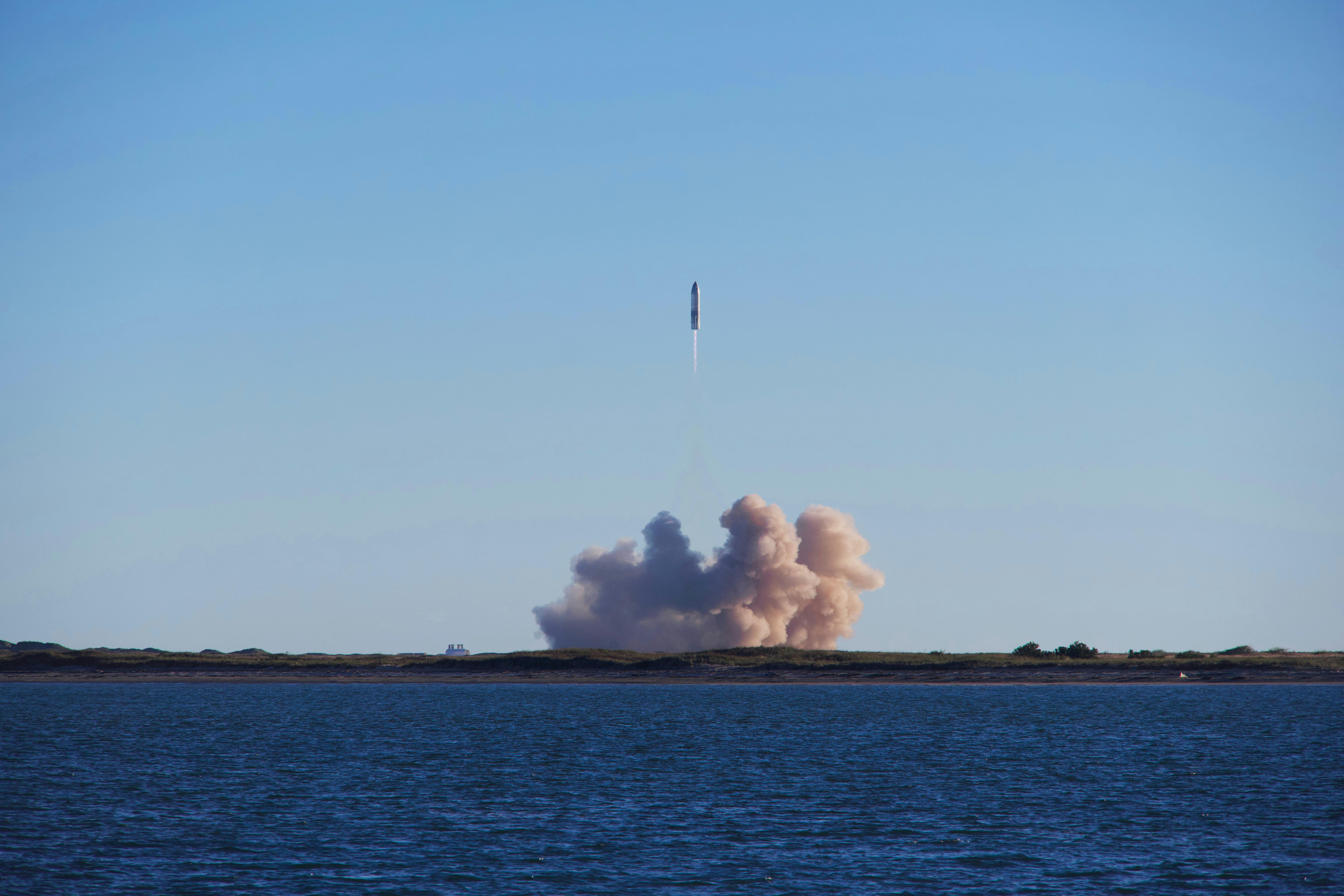
The Indian Polar Satellite Launch Vehicle (PSLV) was launched from Satish Dhawan Space Centre, Sriharikota, on 12 January 2026, carrying the EOS-N1 (Anvesha) hyperspectral Earth-observation satellite for military and strategic use. Fifteen other small satellites were also part of this mission. The mission failed because the rocket did not reach the planned orbit, and all 16 satellites are presumed lost after an in-flight anomaly. The rocket tumbled and lost all payloads. This failure followed a similar third stage “anomaly” that happened in May 2025’s attempted launch of a similar PSLV.

The PSLV‑C61, which was carrying India’s EOS-09 radar satellite for military use, failed during the third stage in May 2025. Media reports say a sudden drop in third-stage chamber pressure caused a loss of control, and thus the launch failed. ISRO, the Indian space agency, convened a failure review board, but its findings have not been published yet. This shows a trend of failed space launches by the ISRO.

India is trying to establish itself as a middle power in space technologies. To achieve this goal, India has sought international collaborations with the US, European, Russian, and East Asian space agencies to procure and gain expertise on critical aerospace technologies like propulsion systems, guidance kits, and other key technologies. The technologies used in space are inherently dual-use, and India has used all these collaborations to use the key technologies for military use. Launch failures on this scale also clearly spill into India’s strategic deterrent, not just its civilian space programme.

India’s space and missile programmes share expertise. Under the 1983 Integrated Guided Missile Development Programme (IGMDP), Agni, Prithvi, and Trishul nuclear missiles were built around space-launch technology. For example, the Agni missile’s first stage is based on ISRO’s old SLV-3 booster. Some reports suggest PSLV solid stages would be used to form a 10,000-km Intercontinental Ballistic Missile (ICBM), which is likely India’s Agni-VI or Surya Multiple Independent Re-entry Vehicle (MIRV) capable ICBM. Conversely, ISRO routinely launches satellites built by DRDO for defence, for example, EOS-N1 was developed for military reconnaissance, launched on the same launcher, blurring the lines between civil and strategic systems.

There is also a history of failure in the Indian Missile program. Multiple live tests of Indian nuclear-capable ballistic missiles failed due to issues with propulsion stages and guidance kits, which were borrowed from its civil space programmes. Missiles like Agni series, Prithvi, Nirbhay, and Akash have failed multiple times during testing.

In 2022, an Indian BrahMos cruise missile was fired into Pakistan without any warning or explanation. Pakistan handled the situation responsibly by not retaliating immediately, but India’s response was irresponsible and negligent. This shows that India has a history of uncontrolled firings of nuclear-capable missiles. In a similar yet hypothetical scenario, the Agni missile, equipped with a warhead, was produced with a propulsion system borrowed from the faulty Indian PSLV technology, and it deviates from its original pathway due to a similar kind of anomaly. Early warning (EW) sensors of Pakistan, as well as those of China, will identify the vectors; however, under the severe time constraints imposed by EW systems, Pakistan’s established emphasis on restraint and verification may be increasingly tested, even as it continues to prioritise calibrated and proportionate responses. In a real conflict, any unexplained launch or malfunction is treated as aggressive intent, not a technical glitch.

The BrahMos incident of the year 2022 has shown that such launches can happen, but not every time the results will be non-escalatory. This should be a wake-up call for the international community. Europe and the US have intensified cooperation with India’s civil space sector. The world must recognise that the dual-use technologies, which include any rocket expertise or components provided for satellites, will ultimately aid the Indian missile programme. Indeed, experts observe that slowing another country’s space-launch progress directly slows its missile development. In practice, this could mean stricter vetting of technology transfers under civil‑space agreements. Indian partners should even demand independent technical audits of dual use launch projects. Space agencies and satellite firms working with India should factor in these risks when sharing technology or ride-share agreements.

The recent failure in the launch of India’s PSLV is a worrying trend of technical inefficiency in the systems closely integrated with its strategic missile systems. When civilian and military programmes share propulsion, guidance and production chains, repeated failures cease to be minor setbacks and become sources of serious strategic risk. In the nuclear setting, there can be no room for mistakes or explanations. India’s record of launch mishaps and accidental firings reflects weak control and inadequate accountability. Unless New Delhi undertakes meaningful structural separation, transparency and restraint, its space ambitions will continue to undermine regional stability rather than enhance security.

Why Greenland Suddenly Matters

by Muhammad Mohsin Iqbal

Greenland, for centuries perceived as a silent expanse of ice at the edge of the known world, has emerged as one of the most consequential pieces on the contemporary geopolitical chessboard. What was once regarded as inhospitable and peripheral is now viewed as pivotal, even decisive, in shaping future balances of power. The renewed American fixation on Greenland, particularly under President Donald Trump’s return to office, is rooted not in impulse but in a sober assessment of geography, resources, and the profound transformations unfolding in the Arctic.

Trump’s earlier proposal in 2019 to purchase Greenland was initially dismissed as eccentric. Yet with the accelerating effects of climate change and intensifying great-power rivalry, the logic behind that idea has gained strategic coherence. The current discourse is less about literal annexation and more about leverage, influence, and long-term control. Diplomatic overtures, economic incentives, and deliberately provocative rhetoric have all been employed to signal that Washington considers Greenland essential to its national security calculus. The language of choice—suggesting an “easy way or a hard way”—is designed less to announce imminent action than to apply pressure and redefine negotiating boundaries.

At the core of this interest lies the Arctic’s transformation from a frozen backwater into a navigable and contested space. Melting ice is opening sea routes that dramatically shorten distances between Asia, Europe, and North America. Voyages that once took forty days via the Suez Canal may soon be completed in little more than twenty through Arctic passages. Greenland occupies a commanding position at the Atlantic entrance of these emerging routes, particularly near the Northwest Passage and the future transpolar corridor. Influence over Greenland would grant the United States a vantage point from which to monitor, secure, and potentially shape the rules governing these new arteries of global trade and military movement.

Equally compelling is what lies beneath Greenland’s ice. The island is believed to possess significant deposits of rare earth elements, indispensable for advanced electronics, renewable energy technologies, and modern defence systems. In an era where China’s dominance over rare earth supply chains has become a strategic vulnerability for the West, Greenland offers the prospect of diversification and autonomy. Added to this are potential reserves of oil, gas, and other minerals, whose exploitation becomes more feasible as ice retreats. For an administration intent on economic self-reliance and industrial strength, Greenland appears not merely as territory, but as strategic insurance.

Yet Greenland’s allure is not purely material. There is a symbolic dimension that resonates deeply with Trump’s political ethos. Territorial expansion, bold deal-making, and visible assertions of power align neatly with an “America First” narrative that prizes dominance and psychological advantage. In this framing, Greenland becomes a statement as much as a strategy—a demonstration that the United States intends to shape the future rather than react to it.

This ambition, however, collides with political, legal, and moral constraints. Greenland is an autonomous land whose people have repeatedly and unequivocally rejected the idea of becoming Americans. Their attachment to self-rule, cultural identity, and gradual movement toward greater independence from Denmark is profound. Denmark itself, as a sovereign state and a founding member of NATO, has made clear that any attempt at coercion would be unacceptable. Such a move would not merely strain alliances; it could shatter them, calling into question the very foundations of the post–Second World War order built on respect for sovereignty.

The repercussions of any forced acquisition would be far-reaching. NATO unity could fracture, European allies might impose diplomatic and economic penalties, and international institutions would likely condemn the act as illegal. The anticipated economic benefits of resource access could quickly be outweighed by the costs of military deployment, legal disputes, market volatility, and the long-term obligation to subsidise infrastructure and services for a small, remote population. Within the United States, such an action would provoke intense domestic division, with supporters hailing strategic boldness and critics warning of imperial overreach and constitutional crisis.

Rival powers would almost certainly respond. Russia, which has heavily militarised its Arctic frontier and views the region as central to its future, would regard expanded U.S. influence in Greenland as a direct challenge. Increased patrols, strategic signalling, cyber activity, and closer coordination with China could follow, accelerating an Arctic arms race. What is framed as a move for security could thus generate new insecurities, heightening the risk of miscalculation in a fragile environment.

Environmental and humanitarian concerns further complicate the picture. Accelerated resource extraction could worsen ecological damage, intensify ice melt, and threaten Arctic biodiversity. Greenland’s indigenous communities might face displacement or erosion of rights, transforming a strategic project into a moral dilemma with global repercussions.

Ultimately, the secrets Greenland may reveal extend beyond minerals, shipping lanes, or military bases. They speak to the nature of power in an era defined by interdependence, climate change, and contested norms. Greenland stands at the intersection of ambition and restraint, opportunity and risk. In seeking to unlock its strategic value, the world may discover that the greatest revelation lies not in Greenland itself, but in how nations choose to pursue power in a rapidly changing world.

Beyond Domestic Discontent: The U.S. and Israeli Dimensions of Iran’s Unrest

For weeks, Iran has been convulsed by some of the most intense anti-government protests in its modern history. What began in late December 2025 as localized demonstrations against deepening economic hardship rapidly spread into nationwide unrest, challenging the very legitimacy of the Islamic Republic. Iran’s current economic crisis did not emerge overnight; rather, it is the result of multiple long-term structural weaknesses aggravated by external pressures and internal policy failures. A foundational factor has been Iran’s heavy dependence on oil exports as its primary source of foreign exchange revenue. U.S. sanctions have significantly curtailed Iran’s access to global oil markets. Furthermore, the twelve-day war with Israel acted as the final blow to an already fragile Iranian economy. The protests erupted amid severe currency devaluation, rampant inflation, and widening socioeconomic inequalities, all of which fueled public anger. Many Iranians are denouncing a regime that demands continuous sacrifices from its citizens while failing to meet their basic economic and social needs. The unrest has taken the form of massive demonstrations demanding regime change, and in some instances, flags from the pre-Islamic Revolution era have been hoisted, symbolizing calls for a revolutionary transformation. According to reports by the BBC, at least 2,000 people have been killed during the demonstrations.

This situation raises the question of whether external actors, particularly Israel, have played a role in the unrest. During the protests, Iranian authorities reportedly arrested an individual allegedly affiliated with the Zionist regime’s intelligence agency, Mossad, who was identified and detained while covertly inciting unrest in Tehran. Iranian officials have cited such incidents as evidence of foreign involvement, suggesting that Israel may be supporting anti-government activities within Iran. Repeatedly, officials in Tehran have condemned the protests as foreign-backed sedition, specifically accusing Washington and Tel Aviv of fomenting unrest and providing operational support to destabilize the country. Supreme Leader Ayatollah Ali Khamenei has labeled former U.S. President Donald Trump a “criminal” for supporting protesters and for alleged external interference in Iran’s internal affairs.

Moreover, statements by former U.S. President Donald Trump have further intensified speculation regarding external interests. Trump warned that the United States would “hit hard” if Iranian authorities did not stop killing protesters. Such remarks indicate Washington’s political interest in the unfolding crisis. The United States and Israel have long opposed Iran’s nuclear program and share a history of strategic rivalry with Tehran. Additionally, U.S. interests in Iran have often been linked to energy security and access to Iran’s vast oil reserves. The enduring rivalry between Israel and Iran has also been a contributing factor behind Trump’s emphasis on intervention.

In the event of the fall of Ayatollah Khamenei’s regime, exiled crown prince Reza Pahlavi, who resides in the United States, is frequently cited as a potential successor. In a recent statement outlining his vision of a “Free Iran,” Pahlavi asserted that Iran’s nuclear program would be terminated. He further stated that relations with the United States would be normalized, Israel would be recognized immediately, and civil liberties would be restored. Additionally, his vision includes expanding frameworks such as the Abraham Accords to include Iran, Israel, and the wider Arab world. These declarations are interpreted by critics as confirmation of U.S. and Israeli interests in a regime change. Should Reza Pahlavi succeed the Islamic Republic, the strategic objectives of both Israel and the United States would likely be advanced. Statements by both Pahlavi and Trump have reinforced the perception that the protests are not solely the result of economic crisis but are also linked to broader regime-change dynamics, as the fall of Khamenei’s regime would directly and indirectly benefit Israel and the United States.

In conclusion, it would not be inaccurate to argue that the United States and Israel have played an indirect yet significant role in Iran’s economic crisis. U.S.-led sanctions on crude oil exports and financial transactions have contributed to currency devaluation, high inflation, unemployment, and a reduced state capacity to provide public services. These conditions have triggered anti-government protests that can no longer be viewed solely as an internal matter. The crisis has increasingly taken on an international dimension, with external actors perceived to be influencing events in pursuit of strategic interests. If Reza Pahlavi were to come to power, Iran’s Islamic laws would likely be repealed, and relations with Israel would be normalized. Given that Israel has long regarded the Khamenei regime as a major security threat, the removal of the current leadership aligns with both U.S. and Israeli strategic objectives. Consequently, regime change could facilitate greater Western access to Iran’s energy resources while addressing Israel’s long-standing security concerns.

When Hope Dies

By Muhammad Mohsin Iqbal

In childhood, if we stepped out of the house for an errand and failed to return at the appointed hour, the entire household would sink into a quiet unease. Mothers would begin to pace, fathers would cast repeated glances towards the gate, and when at last we returned—dusty and carefree—we were met with a barrage of questions that felt little short of a formal interrogation. Irritation often overcame us in those moments, and it was then that a grandmother’s gentle yet resolute voice would remind us that one day we would understand it all ourselves. Time, as it invariably does, proved her right. Today, we worry for our own children in much the same way our parents once worried for us.

The moment has now arrived when parents dispatch their children each morning to schools, colleges, and universities with a mingled sense of hope and apprehension. Education is still regarded as the safest path to dignity and stability. Yet a chilling fear has begun to haunt families across Pakistan; what if a child were to end his or her life within the very walls of an educational institution? For parents, no calamity is more devastating, and no silence more unbearable, than that which follows the extinguishing of a young life.

Lahore, long considered the intellectual heart of the country, has in recent years witnessed a disturbing rise in such tragic incidents, with their frequency particularly notable in certain private universities. Similar tragedies have also been reported from Peshawar, Karachi, Islamabad, Faisalabad, and other cities. In one case, a student is found lifeless in a hostel room; in another, a young soul leaps from a building after a bitter confrontation with the administration; elsewhere, a few hastily written lines are left behind, heavy with despair. Each incident briefly flashes across news screens and social media, yet behind every headline lies a family shattered beyond repair.

Credible studies and media-based analyses reveal that a significant proportion of reported student suicides occur within colleges and universities. Research drawing upon newspaper records over several years suggests that nearly half of such cases are linked to higher education institutions. Even more alarming are the findings of academic surveys; more than forty percent of university students in Pakistan exhibit symptoms of depression, while studies conducted among medical and professional students indicate that nearly one-third acknowledge suicidal thoughts. A smaller, yet deeply troubling, percentage admit to having attempted suicide at some point. These figures, frequently cited in research, almost certainly understate the true scale of the crisis due to stigma and chronic underreporting.

The tragedy assumes an even more painful dimension when the victim is a young girl. Instead of restraint and compassion, society often responds with whispers, insinuations, and merciless speculation. Her character is scrutinised, her family placed in the dock, and her suffering rendered suspect or sensational. Rarely do we pause to ask, with sincerity, what unbearable pressure or humiliation might have driven her to such a final decision.

The causes of this crisis are complex and deeply interwoven. Academic pressure stands foremost among them. Many institutions privilege grades, attendance percentages, and rigid discipline over mental well-being. Instances have emerged where students were publicly humiliated for academic shortcomings or threatened with expulsion—consequences that, for a vulnerable mind, can feel like the end of the world. Family expectations, though often born of love, can become suffocating when success is narrowly defined and failure treated as disgrace. Financial strain, fear of unemployment, and relentless competition further intensify this anxiety.

Modern life has added new dimensions to old pressures. Social media magnifies comparison and failure, exposing young minds to constant judgement while offering little genuine support. At the same time, mental health remains a taboo subject. Many students suffer in silence, fearful that seeking help will earn them labels of weakness or instability. The erosion of patience, tolerance, and empathy within society has only deepened their isolation.

A profound spiritual vacuum also plays its part in this tragedy. Growing distance from faith has deprived many young people of an inner anchor. Islam not only forbids suicide but places immense emphasis on hope, patience, and the sanctity of human life. When these values fade, despair finds fertile ground in which to take root.

If this trend continues unchecked, parents will inevitably begin to question whether universities are sanctuaries of learning or arenas of silent torment. This crisis cannot be addressed through perfunctory inquiries after each tragedy. It demands a clear, sustained, and humane course of action.

Educational institutions must establish credible and confidential mental health services staffed by trained professionals. Counselling should not be an afterthought but an integral part of campus life. Teachers and administrators must be trained to recognise signs of psychological distress and to enforce discipline with humanity rather than humiliation. Academic policies should allow room for compassion without compromising standards.

Parents, too, must recalibrate their expectations—valuing effort and integrity over mere results—and create homes where children feel safe to speak openly of failure and fear. At the national level, the state must invest in mental health infrastructure, improve the collection of suicide-related data, and ensure the enforcement of protective regulations within educational institutions.

Above all, society must rediscover empathy and restore meaning to life through faith, purpose, and human connection. Only then can parents send their children out each morning with confidence rather than dread, assured that the pursuit of education will nurture life, not extinguish it.