The South China Sea: A Powder Keg of Global tensions

Beneath the South China Sea’s tranquil waters lies a complex web of competing claims, economic interests and security concerns. As China grows in power, so does the importance of the South China Sea. South China Sea is a waterbody located in Southeast Asia which connects the Pacific Ocean and the Indian Ocean. It is one of the maritime route through which passes one-third of the world trade. The Strait of Malacca, a chokepoint, is also situated in the South China Sea. The Malacca dilemma has urged China to look for the alternative routes. South China Sea is home to eight countries: China, self-governing island of Taiwan, Philippines, Vietnam, Malaysia, Brunei, Indonesia and Singapore. All these countries have their national claims and interests in the South China Sea that collide with each other, sometimes resulting in military conflicts.


The People’s Republic of China has claimed almost the entirety of the South China Sea along with the islands and rocks present within it. China makes its claim on the basis of the nine-dash line. The nine-dash line consists of nine dashes or dots present on historical maps of China outlining its territorial waters. It encompasses the 90% of the South China Sea, overlapping with the Exclusive Economic Zones (EEZs) of other countries. One-third of the global trade traverses through these zones. China wants to control the passages and wants other countries to defer to it. Additionally, it has claims over the rocks and islands that lie on the maritime route. South China Sea is also rich in oil and gas reserves. By having a de facto control over the waterway, China could exploit these resources.


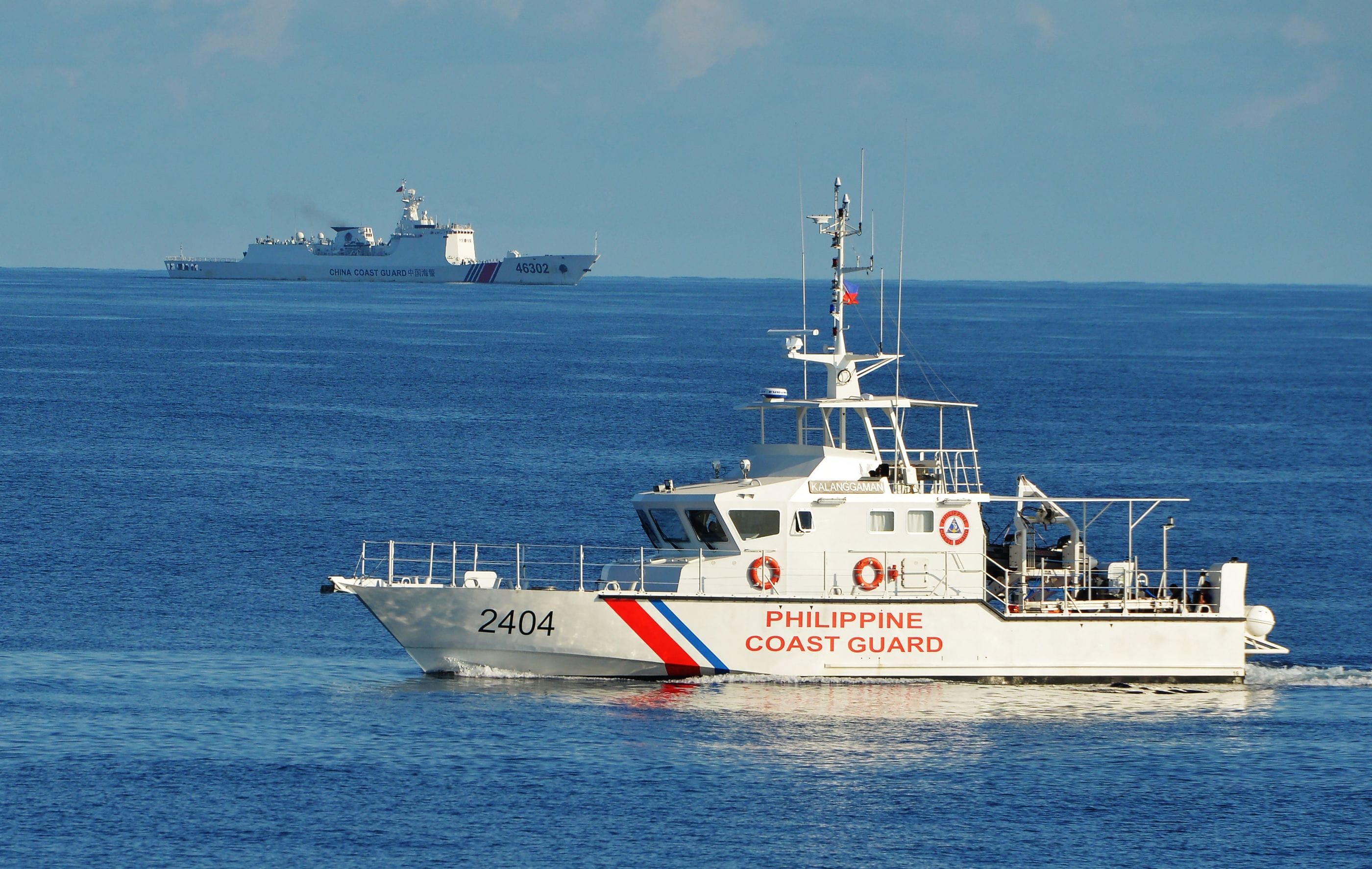
China makes it claim over Spratly Islands, Paracel islands and, Scarborough Shoals. Spratly Islands and Paracel Islands are believed to be rich in oil and gas resources. It is an attractive hub for fishing resources. Interestingly, these islands provide ideal location for military installation. China could increase its power projection capabilities. Additionally, China has territorial claim over these islands, which makes it a matter of national prestige. Vietnam has also its claim over these islands. Both countries had military conflicts over Paracel Islands and Spratly Islands in 1974 and 1988 respectively. Now, China effectively controls Paracel Islands, while different countries controlling different parts of the Spratty Islands. China and Philippines also had a military standoff in 2012 over the Scarborough Shoals. China has a de facto control over the shoals with constant coastal guard presence in the region.


With increased assertiveness from China, the US has also sought to counterbalance the state’s rising influence in the region. In 2011, Washington announced its pivot to Asia. The US has a military alliance, National Defense Treaty of 1951, with the Philippines. The alliance commits the US to come to its rescue in the event of an external attack. Though there is no formal military alliance with Vietnam, both countries have increased their defense cooperation in recent years. It is symbolized in the form of joint military exercises and lifting of the US arms embargo in 2016. Moreover, the US conducts Freedom of Navigation Operations (FONOPs) to protect the sea lanes of communication. In October 2024, the US conducted the exercise “Sama-Sama”. Japan, Canada, Australia and, the Philippines participated in the exercises. The purpose of all this is to act as a counterweight to the increasing Chinese assertiveness in the region, and protect US’s vital interests in the region.


Both the US and China have their interests over the Taiwan dispute. China claims Taiwan as its territory, drawing its claim from “One China Policy”. It does not rule out the use of force to reclaim Taiwan. The US does not have formal relations with Taiwan, but provides defense equipment and technology under Taiwan Relations Act. The US has maintained a policy of Strategic Ambiguity over Taiwan, which gives it a room for maneuver. In the final meeting between China’s President Xi and Outgoing US President Biden, the US has reiterated its respect for the One-China policy, with Beijing as the formal government.


Way Forward:

The maritime importance of the South China Sea is undeniable. Its accessibility to all countries is pivotal for the global trade lanes of communication. But the US and China need to manage the strategic competition being unraveled in the South China Sea. In the nuclear age, both countries need to carefully navigate the spectrum to avoid any escalation. Moreover, China must develop mechanisms of peaceful resolution of its territorial disputes. It can use platforms like ASEAN, Asia-Pacific Forum, to reach an understanding with the disputing parties.
Modi 3.0: Navigating Ties with Pakistan

“You can change your friends but not your neighbors.”

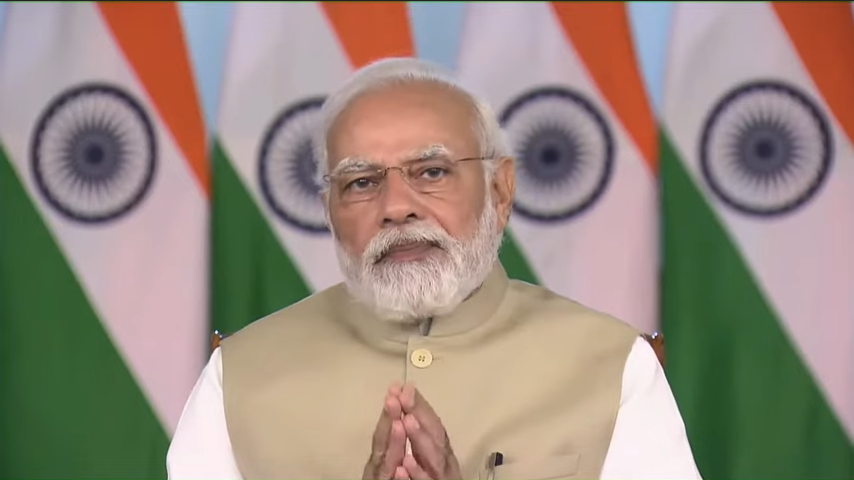
Pakistan and India never had ideal relations. Nevertheless, they were never as bad as they got under Modi since his grab of power in 2014. Recently, Modi 3.0 secured 240 seats in Lok Sabha in the general elections of 2024, short of a clear majority. The relatively weak government of Modi 3.0 raised the prospects of a humble India, ready to introspect its foreign policy behavior. Contrary to this, only Premier Shahbaz Sharif was among the neighboring countries not invited to the inauguration. Lately, Modi 3.0 reiterated the mantra of ‘terrorism emanating from Pakistan’. The Indian behavior demonstrates that New Delhi is committed to continuing its ‘Neighborhood First minus Pakistan.’ The obstinate behavior of the BJP dwindles any hope to improve Indo-Pak relations.

Indian centrism is the cornerstone of Pakistan’s policy. Since Modi 3.0 took reigns in 2014, the anti-Pakistan rhetoric has surged. This is evident from the violations of the LOC ceasefire line. In 2019, India breached Pakistan’s sovereignty by illegal incursion into Pakistan’s airspace. Pakistan responded with ‘Operation Swift Retort’. It resulted in the downing of the two Indian airplanes, with Wing Commander Abhinandan taken captive. The wreckage of one plane fell on the other side of the Indian border. However, Islamabad de-escalated the situation. Pakistan released Abhinandan as a goodwill gesture. It showed to the world that Pakistan can defend itself against any aggression, and take every step to avoid further escalation. However, the relations dipped when New Delhi stripped Jammu and Kashmir of its special status. New Delhi abrogated articles 370 and 35-A and divided Jammu and Kashmir into two union territories. Consequently, Pakistan suspended the bilateral trade and downgraded its diplomatic ties with New Delhi.

During Khan’s era, Islamabad exhausted every possible avenue to improve bilateral relations. To provide better facilities for Sikh pilgrims, Pakistan inaugurated the Kartarpur corridor. Islamabad responded as a responsible nuclear state during the Indian aggression of 2019. To de-escalate the situation, Pakistan responded with a goodwill gesture.  Pakistan unconditionally released the wing commander Abhinandan. Islamabad continuously employed all diplomatic efforts to get New Delhi on the table. Pakistan seeks to resolve all conflicts, including the unresolved issue of Jammu and Kashmir, through peaceful means. During the 2019 Indian elections, the then-Premier Imran Khan expressed the hope that Modi 3.0’s victory could improve the relations between the two nuclear states. Moreover, PM Shahbaz Sharif and former premier Nawaz Sharif congratulated Modi 3.0 on his electoral success. Nawaz Sharif expressed the hope of replacing hate with love in South Asia.

It is unsurprising that PM Modi has consistently acted in a domineering manner Contrary to reciprocating Pakistan’s endeavors, it has always deteriorated the situation. New Delhi has refrained from bilateral talks despite Pakistan’s efforts.  The BJP regime stripped the Jammu and Kashmir of its special status. It desires to change the demography of Kashmir. It is a brazen violation of the right of self-determination, guaranteed under the UN Security resolution. India wrongfully accuses Pakistan of cross-border terrorism. Pakistan is a victim of cross-border terrorism. Recently, Pakistan handed a dossier to the UN, documenting Indian sponsorship of terrorism inside Pakistan. New Delhi is also indulged in transnational Repression. Canada suspended the bilateral relations, citing Indian involvement in the killing of Hardeep Singh Nijjar on Canadian soil. India is not hesitant to silence the so-called dissidents on foreign soil. Modi 3.0 is quoted as saying “I will take account selectively and will enter the house and kill”. (Al Jazeera)

The relationship between Pakistan and India have never been good. Both fought three wars over Kashmir. These relations had their ups and downs. But the relations have never dipped to such a historic low. Owing to the possession of nukes by Pakistan and India, both countries should work together to improve their relations. But it is not possible with the BJP in power. The BJP is a proponent of an expansionist ideology ‘Hindutva’. The concept of Hindutva is a brazen security threat to Pakistan. Moreover, the marginalization of Indian Muslims further augments the argument. India has a population of nearly 200 million Muslims. The BJP government is employing the state machinery to harass the minorities in India. The U.S. State Department’s 2023 religious freedom report on India also corroborates this fact.

India and Pakistan are nuclear countries. Both are vital to maintain regional stability in South Asia The key to regional stability is bilateral talks to resolve all the conflicts including the outstanding conflicts. Finger-pointing is in no one’s favor. Both countries need to work together on matters of mutual interest. Bilateral trade is in the interest of both Islamabad and New Delhi. The recent electoral results show that the Indian system is capable of course correction. The Indian people need to get rid of the BJP’s extremist policies if they want the South Asian region to be prosperous and stable. New Delhi needs to comprehend that she cannot pursue her policy of neighborhood first without taking Islamabad into her equation. Healthy bilateral relations are in the interest of both Pakistan and India and are key to regional stability.