Will India contain China? Lessons for the US

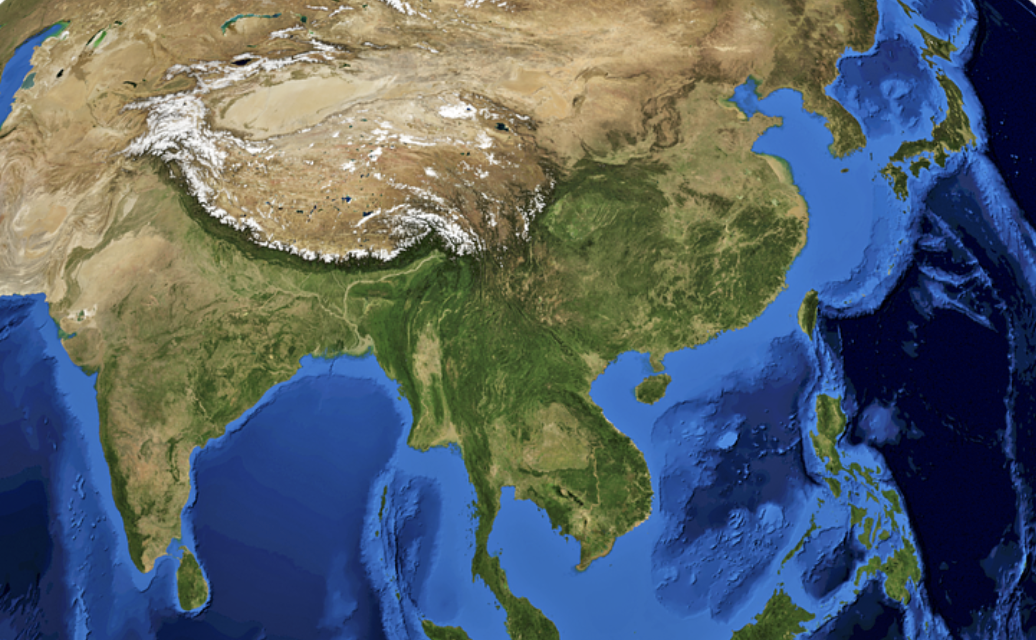
The strategic partnership between India and the United States has deepened over the years and both are now major defence partners. India is also part of the Quad along with the US, Australia and Japan which is ostensibly posed to counter a rising China.  New Delhi is also engaged in direct defence trade with Washington to enhance its military capabilities against Beijing. The US Secretary of Defence Mark Esper has gone so far as to declare that the US stands shoulder-to-shoulder with India to face China’s ‘aggression and destabilizing activities’ in the region. However, a number of recent developments have called into question India’s role in this partnership to contain Beijing’s rise.

First, India’s recent deployment of the Ballistic Missile Defence (BMD) system S-400 purchased from Russia has touched a nerve in the White House. The transfer of the S-400 came on the heels of the visit of Russian President Vladimir Putin to India in late 2021. The subsequent deployment of the system received huge traction due to the US reaction. Earlier, Washington had sanctioned its NATO ally Turkey for purchasing the same system from Russia under its ‘Countering American Adversaries through Sanctions Act’ (CAATSA). Reportedly, the US also cautioned India against going ahead with finalizing the deal, warning that a second CAATSA waiver was unlikely. But, by introducing the Circumspectly Reducing Unintended Consequences Impairing Alliances and Leadership (CRUCIAL) Act, 2021, US representatives tried to salvage India from impending sanctions. The Act seeks to exempt Quad members from sanctions under CAATSA. Notably, many in India also hoped that the US would let the issue slide, claiming that the said system would ultimately be deployed to fortify New Delhi’s defence against China. However, this claim was debunked with reports that India deployed the S-400’s first battery in the Punjab along its border with Pakistan. This leaves India’s aerial defence against China unchanged.

The deployment of the S-400 is also irksome for the US because, although the Indian military arsenal is growing, this increase is primarily coming from countries other than the United States. As the S-400 originates from Russia, it helps the country project its defence prowess which is definitely not something Americans would applaud. The system can also lead to interoperability issues with the US platforms in India’s inventory. Additionally, deployment of such systems can also cause security issues between American and Indian forces.

Similarly, questions are being raised about India’s intentions to pursue US interests in case the Sino-US trade war heats up again. In such a scenario, the US will naturally expect India to side with it, owing to their major defence agreements. The irony is that despite these military agreements worth billions of dollars, Indian military capabilities and economy lag behind China. And while India continues to beat the drums of a ‘two-front’ war scenario with Pakistan and China, this rhetoric is also believed to be a trope aimed at receiving compensation from the US as going to war against China is suicidal for New Delhi. The Indian government seems aware of this situation as it has chosen to stay quiet in the face of recent Chinese advancements in disputed territories. In fact, even the opposition leaders have claimed that the BJP Government has chosen to remain silent in response to Beijing’s increasing consolidation of its claims. This docile attitude was also visible from the overtures made by the Indian side to calm down the situation on the border, despite Chinese moves. Reportedly, India made several proposals to China to enter into talks to disengage from all ‘friction points’ at the Line of Actual Control (LAC). 

India’s capacity and capability to face China militarily came into question in June 2020 when over 20 Indian soldiers were killed in a scuffle with Chinese soldiers. Experts believe that within just one year of that clash at Galwan Valley, New Delhi threw in the towel on at least three occasions. Indian military preparedness remains primarily focused on Pakistan, as is also asserted by its military leadership.

Moreover, although New Delhi has sought to modernise its military, experts believe the country is investing in outdated war domains while China is investing in cutting edge war technologies of the future. China has a sophisticated military arsenal consisting of cyber, Artificial Intelligence, electronic and electromagnetic capabilities while India plans to resort to old, traditional ways of war fighting which will put it at odds with the People’s Liberation Army.

Given the above scenario, the situation is clear – India will always further its own interests even at the cost of US interests. It will not pick a fight with Beijing just to appease the White House as no nation would willingly go into an all-out war against a military and economic giant like China. Besides, despite importing sophisticated military technologies, India’s military is not capable of taking China head on. The US should face the reality that seeking to contain China’s influence by relying on India, a country which has neither the intent nor is equipped to perform this task, will definitely not yield desired results. While India continues to garner military dividends, stirring up a two-front war narrative to skim material gains from the US and evade its sanctions, China’s rise continues unabated, and the US policy to rely on India is clearly flawed.
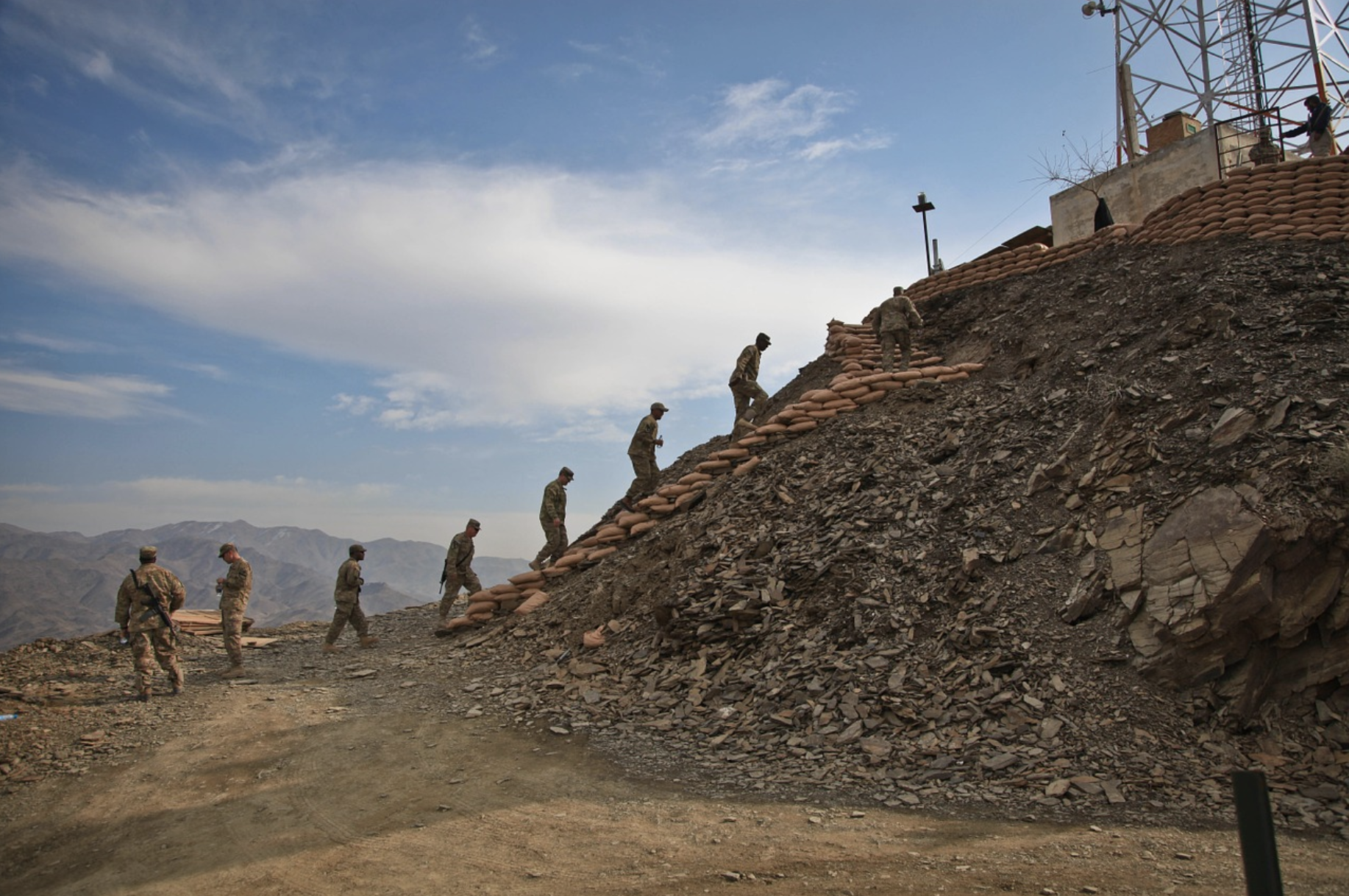
Disbanded Afghan Security Forces, Reinforcing IS-K and Regional Security

The Taliban became the de facto rulers of Afghanistan on 15th August 2021 after the fall of Kabul. Although the fall of Afghanistan did not transpire overnight, the pace at which it occurred and the defeat of the Ghani regime’s security forces surprised the US and the world alike.

Over the last 20 years, the Afghan security forces have received USD 85 billion worth of military equipment from the US. As Afghan forces collapsed, there were serious concerns about what will become of this military equipment which the US reportedly left behind and that the Afghan National Defence and Security Forces (ANDSF) gave up. While the nature of this equipment stirred heated debate, comparatively little was said about the future functioning of Afghan security personnel that the US intelligence and elite military units had trained.  According to an assessment, the number of Afghan military personnel was over 350,000. This included Afghanistan’s Army, Air Force, Special Operation Forces and a variety of police branches under the Ministry of Interior.

The uncertainty about the future of these forces presents a grave threat, as does the wrong use of the US military equipment. Overlooking this factor can yield dreadful outcomes for the region. Experts have been warning repeatedly that neglecting the battle-hardened Afghan army can lead to an Iraq-like situation, where the disbanded forces of Saddam Hussein helped in the rise of the Islamic State in Iraq and Syria (ISIS), leading to a disastrous era of violent extremism.

The feeling of abandonment, fears of being on the Taliban’s hit list, economic woes, an unfolding humanitarian crisis, poverty and hunger across the country can naturally coerce these former soldiers to clutch at straws. The dilemma here is that the latter is being extended by the Islamic State-Khorasan (IS-K), the group that shares in the Afghan forces grievances against Taliban. Former Afghan army and intelligence troops have, reportedly, already started to defect to IS-K. According to the Wall Street Journal, major incentives for these ex-soldiers include receiving ‘protection against Taliban as well as significant amount of cash.’ The experience in modern warfare and intelligence-gathering techniques that Afghan soldiers bring with them can strengthen the lethality of IS-K. Moreover, there are also reports that extremists affiliated with ISIS and al-Qaeda started to move to Afghanistan, even before the complete US withdrawal.

This development forecasts a bleak future and lays bare a daunting reality for the Taliban. All the resources spent on anti-terror efforts over the last two decades will be considered squandered if the world does not act now. IS-K’s stronghold in Afghanistan has equally irksome repercussions for the US, Pakistan, China, Iran as well as the Taliban, among other actors. The group has extreme ideological differences with the Taliban. The intensifying power struggle between these two inside the country will be chaotic for the region also, with particular consequences for Pakistan and Iran, owing to the sectarian dynamics in these two states. Furthermore, the group will reportedly also be able to launch external attacks, including on the US, within six months. Therefore, although quite disconcerting, this development serves as a unique opportunity for the concerned stakeholders to engage so as to prevent Afghanistan from becoming a breeding ground of terror.

To preserve the country against a catastrophic future, to prevent former government employees’ vulnerabilities from getting manipulated, to avoid an Afghan civil war, to avert a worsening humanitarian crisis, to prevent Afghanistan from becoming a terror base yet again, and for the Taliban to avoid a bloody power struggle with IS-K, the most viable option available with the world and the Taliban is to sit together, and talk about ending the instability in Afghanistan.  

The Taliban are more answerable for what transpires viz-à-viz the future of IS-K than any other actor. They have declined to work with the US on quelling the IS-K threat in Afghanistan. But they must realise that Afghans simply cannot afford another round of conflict and instability. The budding IS-K threat gets more concerning when coupled with the looming threat of a humanitarian crisis and with the fact that this is set to remain unresolved if the current economic woes continue and the Taliban continue to stay disengaged from the world. Therefore, the new Afghan rulers must seem open to negotiate with the international community on terrorism and make sincere efforts to establish an inclusive government in the country.

Meanwhile, the international community must also play its part to cease the suffering of the Afghan people. The US, IMF, and the World Bank must bargain the release of withheld finances direly needed by the Afghan people rather than the Taliban. This release can be conditioned on the protection of women and minorities’ rights, the formation of an inclusive government, mainstreaming former workers, as well as confronting IS-K, and many others.

But the prerequisite for this is to engage; no matter how unpleasant the fact is, it still remains a fact that both the Taliban and the global community need each other for curbing the new terror threats and for the smooth functioning of Afghanistan as a state. After all, if they could engage with each other for withdrawal of foreign forces, which served the interests of both sides, why can they not do the same for the people of Afghanistan?

Repercussions and Options for Pakistan after US Withdraws from Afghanistan

The fate of war-torn Afghanistan is perhaps at the most critical watershed moment in its modern war history. It is feared that if at this moment, the course goes even a bit astray, its effects will haunt many generations more than the current Afghan conflict has the potential to. Moreover, the reigns of the future of Afghan conflict primarily being in the hands of President Trump, driven by his great and unmatched wisdom, makes it all the more unpredictable. US President Donald Trump decided to withdraw troops from Afghanistan in late 2018, against the advice of many of his close aides.

The State Department appointed Zalmay Khalilzad as the Special Representative for the Afghan Reconciliation Process. Since then, Khalilzad has been leveraging every effort at his disposal to carve out a deal to offer the US a safe and less humiliating exit from Afghanistan, after 18 years of excruciating presence in the region. Khalilzad has been immersed in negotiating with the Taliban with paramount help from Pakistan. In fact, Pakistan happens to be the state that bears the crown of bringing Taliban leadership to the negotiating table at the request of the US. Since the start of this year, Khalilzad has been frequently flying to the regional capitals to carve out a deal which is acceptable for all the major stakeholders involved.

What came as a fatal blow to this almost concluded deal was President Trump cancelling it over a tweet, citing the loss of a soldier in Afghanistan, in the first week of September. Not only did the peace process derail, the Taliban leadership also seemed offended to the point of almost calibrating the hammering of the last nail in the coffin of the American empire and burying it in Afghanistan once and for all.  However, Pakistan again happens to be the state that has reinstated the peace negotiations and convened a meeting between Khalilzad and Taliban political leadership in Islamabad. Many are hopeful that the peace negotiations might get back on track and the meeting might decide upon the withdrawal of US troops from Afghanistan.

Pakistan’s involvement is very critical as it is among the major contenders in the conflict, because of many reasons, two of the most prominent being the long, porous border-sharing between the two nations, and the undeniable effects of the Regional Security Complex Theory. At least this is the stance propelled by the state of Pakistan, which conditions peace and stability in Pakistan to that in Afghanistan. But one wonders, if peace and stability in Afghanistan are the only outcomes Pakistan is eyeing from post-US-withdrawal Afghanistan, and whether it is prepared enough to avert the unwanted consequences from this scenario.

Pakistan will indeed reap many positive outcomes after the US withdraws from Afghanistan. Still, little attention seems to have been paid to the outcomes that Pakistan will not be able to swallow readily. Among the benefits that Pakistan will be able to garner from Afghanistan, free of any foreign presence and majorly “governed” by the Taliban, are strategic as well as economic.

First of all, for Pakistan, having a friendly regime in Kabul means having a strategic hedge against the unabated Indian involvement in Afghanistan, wrapped in the shroud of “humanitarian assistance,” but actually furthering strategic interests. Interests that include using Afghanistan’s soil to disrupt peace in Pakistan, mainly through instigating sectarian and ethnic violence, and that too while being backed by Afghanistan’s government led by Ashraf Ghani. So, once the Taliban is in power in Afghanistan, Pakistan will not have to worry about India’s malicious presence there or, more precisely, will have more options to deal with this impediment.

Among the security threats emanating from Afghanistan for Pakistan, the stationing of ISIS in Afghanistan is the newest and perhaps also the deadliest one. However, what brings a little breath of relief is the fact that the Taliban and ISIS are also holding knives at each other’s throats. It is believed that once the Taliban are in big offices in Afghanistan, a very robust and perhaps decisive assault against ISIS is guaranteed, given that the Taliban and ISIS present very divergent political and religious ambitions. Therefore having a regime in Kabul equally wary of ISIS’s presence there as Pakistan should be, gives the concerned parties the hope of joint efforts launched against ISIS.

Thirdly, as Afghanistan bridges the energy-scarce South Asia with the resource-rich Central Asia, it has great potential to alleviate the existing energy crisis in South Asia. Considering Afghanistan as the main route for energy trade in Asia is a bit of long shot, but still, Pakistan can take advantage of Afghanistan’s geostrategic position on account of having a friendly regime in Kabul and sharing a direct border with Afghanistan.

However, as mentioned before, all these benefits have been trumpeted time and again in Pakistan. What really needs to be focused on is the prior preparation that Pakistan needs to make as well as the prudent strategy for handling the post-US-withdrawal Afghanistan. It is no secret that the strategic leverage that Pakistan has with both the US and Taliban will end as soon as the US withdraws from Afghanistan. Pakistan will no longer have the US at its doorsteps with a request for a tamed Taliban force required for a safe US exit from Afghanistan; neither will the unchallenged Taliban power feel obliged to Pakistan once it is no longer fighting against the world’s mightiest military.

Furthermore, the highly feared and ever more exacerbated law and order situation after the US forces withdraw and its spillover effects in Pakistan, are not being accounted at the moment in the policy corridors of Pakistan. The vacuum left by the US forces will undoubtedly incite stronger non-state actors to fill the void, which in Afghanistan’s case would be a tussle between ISIS and the Taliban, which, consequently has the potential of plunging the post-US-withdrawal into a bloody civil war. This, among many other nuisances for Pakistan, will ignite ethnic violence in the state and can erupt new waves of refugees’ influx into Pakistan.

In this milieu, Pakistan will have to move very prudently to have current relations with the Taliban continued, as well as not to lose relevance for US policymakers. Pakistan should also emphasize the inclusion of all political stakeholders in Afghanistan, particularly the current Afghan government. This is a prerequisite for the stability of whatever power configuration that ensues after the success of the peace deal. Also, the building of a robust bilateral relationship between Pakistan and Russia is a dire need. Having a vibrant foreign policy, harbouring strong relationship with many, is the key to stay relevant in the international politics. But it should also be kept in mind that while lobbying for Russian cordiality, Pakistan shouldn’t tilt in any one direction completely, as it will harm its interests more than furthering them. Keeping a balanced and autonomous foreign policy is a must for pursuing a state’s interests independently.

The ultimate outcome that Pakistan – or any other party for that matter – should hope for and work towards is peace and stability in Afghanistan, but unfortunately the Afghan society seems as far from peace and stability as it ever was. Hence, it will only be cautious of Pakistan to contemplate every move of every party involved in Afghanistan before upping the ante to an irreversible point.

Repercussions and Options for Pakistan after US Withdraws from Afghanistan

The fate of war-torn Afghanistan is perhaps at the most critical watershed moment in its modern war history. It is feared that if at this moment, the course goes even a bit astray, its effects will haunt many generations more than the current Afghan conflict has the potential to. Moreover, the reigns of the future of Afghan conflict primarily being in the hands of President Trump, driven by his great and unmatched wisdom, makes it all the more unpredictable. US President Donald Trump decided to withdraw troops from Afghanistan in late 2018, against the advice of many of his close aides.

The State Department appointed Zalmay Khalilzad as the Special Representative for the Afghan Reconciliation Process. Since then, Khalilzad has been leveraging every effort at his disposal to carve out a deal to offer the US a safe and less humiliating exit from Afghanistan, after 18 years of excruciating presence in the region. Khalilzad has been immersed in negotiating with the Taliban with paramount help from Pakistan. In fact, Pakistan happens to be the state that bears the crown of bringing Taliban leadership to the negotiating table at the request of the US. Since the start of this year, Khalilzad has been frequently flying to the regional capitals to carve out a deal which is acceptable for all the major stakeholders involved.

What came as a fatal blow to this almost concluded deal was President Trump cancelling it over a tweet, citing the loss of a soldier in Afghanistan, in the first week of September. Not only did the peace process derail, the Taliban leadership also seemed offended to the point of almost calibrating the hammering of the last nail in the coffin of the American empire and burying it in Afghanistan once and for all.  However, Pakistan again happens to be the state that has reinstated the peace negotiations and convened a meeting between Khalilzad and Taliban political leadership in Islamabad. Many are hopeful that the peace negotiations might get back on track and the meeting might decide upon the withdrawal of US troops from Afghanistan.

Pakistan’s involvement is very critical as it is among the major contenders in the conflict, because of many reasons, two of the most prominent being the long, porous border-sharing between the two nations, and the undeniable effects of the Regional Security Complex Theory. At least this is the stance propelled by the state of Pakistan, which conditions peace and stability in Pakistan to that in Afghanistan. But one wonders, if peace and stability in Afghanistan are the only outcomes Pakistan is eyeing from post-US-withdrawal Afghanistan, and whether it is prepared enough to avert the unwanted consequences from this scenario.

Pakistan will indeed reap many positive outcomes after the US withdraws from Afghanistan. Still, little attention seems to have been paid to the outcomes that Pakistan will not be able to swallow readily. Among the benefits that Pakistan will be able to garner from Afghanistan, free of any foreign presence and majorly “governed” by the Taliban, are strategic as well as economic.

First of all, for Pakistan, having a friendly regime in Kabul means having a strategic hedge against the unabated Indian involvement in Afghanistan, wrapped in the shroud of “humanitarian assistance,” but actually furthering strategic interests. Interests that include using Afghanistan’s soil to disrupt peace in Pakistan, mainly through instigating sectarian and ethnic violence, and that too while being backed by Afghanistan’s government led by Ashraf Ghani. So, once the Taliban is in power in Afghanistan, Pakistan will not have to worry about India’s malicious presence there or, more precisely, will have more options to deal with this impediment.

Among the security threats emanating from Afghanistan for Pakistan, the stationing of ISIS in Afghanistan is the newest and perhaps also the deadliest one. However, what brings a little breath of relief is the fact that the Taliban and ISIS are also holding knives at each other’s throats. It is believed that once the Taliban are in big offices in Afghanistan, a very robust and perhaps decisive assault against ISIS is guaranteed, given that the Taliban and ISIS present very divergent political and religious ambitions. Therefore having a regime in Kabul equally wary of ISIS’s presence there as Pakistan should be, gives the concerned parties the hope of joint efforts launched against ISIS.

Thirdly, as Afghanistan bridges the energy-scarce South Asia with the resource-rich Central Asia, it has great potential to alleviate the existing energy crisis in South Asia. Considering Afghanistan as the main route for energy trade in Asia is a bit of long shot, but still, Pakistan can take advantage of Afghanistan’s geostrategic position on account of having a friendly regime in Kabul and sharing a direct border with Afghanistan.

However, as mentioned before, all these benefits have been trumpeted time and again in Pakistan. What really needs to be focused on is the prior preparation that Pakistan needs to make as well as the prudent strategy for handling the post-US-withdrawal Afghanistan. It is no secret that the strategic leverage that Pakistan has with both the US and Taliban will end as soon as the US withdraws from Afghanistan. Pakistan will no longer have the US at its doorsteps with a request for a tamed Taliban force required for a safe US exit from Afghanistan; neither will the unchallenged Taliban power feel obliged to Pakistan once it is no longer fighting against the world’s mightiest military.

Furthermore, the highly feared and ever more exacerbated law and order situation after the US forces withdraw and its spillover effects in Pakistan, are not being accounted at the moment in the policy corridors of Pakistan. The vacuum left by the US forces will undoubtedly incite stronger non-state actors to fill the void, which in Afghanistan’s case would be a tussle between ISIS and the Taliban, which, consequently has the potential of plunging the post-US-withdrawal into a bloody civil war. This, among many other nuisances for Pakistan, will ignite ethnic violence in the state and can erupt new waves of refugees’ influx into Pakistan.

In this milieu, Pakistan will have to move very prudently to have current relations with the Taliban continued, as well as not to lose relevance for US policymakers. Pakistan should also emphasize the inclusion of all political stakeholders in Afghanistan, particularly the current Afghan government. This is a prerequisite for the stability of whatever power configuration that ensues after the success of the peace deal. Also, the building of a robust bilateral relationship between Pakistan and Russia is a dire need. Having a vibrant foreign policy, harbouring strong relationship with many, is the key to stay relevant in the international politics. But it should also be kept in mind that while lobbying for Russian cordiality, Pakistan shouldn’t tilt in any one direction completely, as it will harm its interests more than furthering them. Keeping a balanced and autonomous foreign policy is a must for pursuing a state’s interests independently.

The ultimate outcome that Pakistan – or any other party for that matter – should hope for and work towards is peace and stability in Afghanistan, but unfortunately the Afghan society seems as far from peace and stability as it ever was. Hence, it will only be cautious of Pakistan to contemplate every move of every party involved in Afghanistan before upping the ante to an irreversible point.