Protecting Cash as a Public Good from Cashless Societies

The British government is under increasing pressure to finally fulfill its promise to protect access to cash. In early 2020, the UK Treasury said it would introduce legislation protecting the needs of cash users, but the pandemic took  precedence. As an alarming number of bank branches and ATMs closed in England this past year, consumer watchdog groups such as Which? have put the right to use  cashback in the spotlight.

John Glen, Economic Secretary to the Treasury and City Minister, said the government would address the issue this summer in order to ensure access to cash for vulnerable people.  The government also said that the Financial Conduct Authority (FCA) would step in if banks and ATMs close in areas where there is no other option for withdrawing cash. Martin Kearsley, the Post Office’s Banking Director urged, “Government must take action now, to bring forward legislation to protect the future of cash, monitor its effective support through regulatory oversight, and prevent millions from being cut off.”

 Cash is a public good that needs government intervention, as it does with other public goods and public infrastructure, to ensure universal access to it.  Since this only method of payment is not linked to private firms or transaction fees, cash is a safeguard of personal freedom of choice.

Defining Public Goods

Public goods are commonly defined by two main characteristics. The first is that a public good is non-excludable, meaning that people cannot be excluded from using or consuming the good. Requiring a fee to use a good would make it excludable because not everyone could pay. The second characteristic of public goods is that they are non-rivalrous.  It implies that one person using or consuming a good cannot  prohibit another person from using  the same good; two or more people can use the same good concurrently. 

Cash is a Public Good

As Professors Edoardo Beretta and Doris Neuberger explain in their working paper Institutional Hostility to Cash and COVID-19: “money […] constitutes a pure public good: money creates trust between people who do not know each other. The state establishes and supports the trust in legal tender and the official currency, making this trust a “pure public good” – non-excludable and non-rivalrous.” 

Cash is the only payment form that is non-excludable because it is the only one that does not require a fee. Online transactions and credit card payments are facilitated by private third parties that charge fees for their services, thus making them excludable to some.  However, anyone can use cash as a transfer of value and no one can be excluded from paying with it (in principle, at least).

 Cash is also non-rivalrous, since paying with cash does not preclude the person behind someone in line from paying with cash as well. While two people cannot use the same banknote or coin to purchase items simultaneously, everyone can use cash as a means of payment at the same time.

Other Public Benefits of Cash

In addition to being non-excludable and non-rivalrous, cash has other benefits, or positive externalities, for the public that do not fit into the narrow economic definition of public goods. Bill Maurer, Dean of the School of Social Sciences at UC Irvine, observes, “Cash is profoundly democratic. It can be given by anyone, accepted by anyone, settled and cleared instantaneously.”  For many individuals worldwide, cash is the primary accessible payment method and is therefore essential for their survival.

But physical cash is also a public infrastructure that creates a system of checks and balances between central banks, governments, financial institutions, and consumers. The existence of cash means the State must implement responsible monetary policies and good governance. Cash creates competition that keeps financial institutions from charging exorbitant fees for their services and acts as a safeguard against negative interest rates. Cash also protects people’s civil liberties as the only form of payment that is completely private and anonymous.

Governments Protecting Cash

In her white paper Virtually Irreplaceable: Cash as Public Infrastructure, Professor Ursula Dalinghaus states, “Cash’s status as legal tender ensures it is universally accepted, equally accessible, and free to use for consumers, making it an important public good and public infrastructure.” But, government intervention and regulations are needed to protect universal access to, and the ability to use cash. It is even more  critical  in present era, when financial institutions and certain politicians are  campaigning against cash in order to promote cashless payments and the transaction fees that come with them.

The British government is considering regulations similar to what the Swedish Riksdag adopted in November 2019. Sweden is one of the world’s most cashless economies, but the government had to intervene when it realized that many of its citizens were being financially and socially excluded. The law requires large banks to provide cash services across the country. It is designed to protect Sweden’s vulnerable populations including those living in rural areas, people without Internet access or a mobile phone, the elderly, and migrants.

This law follows a recent opinion issued by Advocate General at the European Court of Justice, Giovanni Pitruzella, in which he argues: “For these vulnerable individuals, cash is the only form of accessible money and thus the only means of exercising their fundamental rights linked to the use of money.” Pitruzella reaffirmed the status of coins and banknotes as legal tender in the EU and “the principle of acceptance of cash by the creditor for the settlement of the monetary debt.”

In the United States, there is currently no federal law requiring businesses to accept cash. With an estimated quarter to a third of Americans considered as unbanked (no bank account) or underbanked (no credit or debit card or do not use them because of fees), some cities and states have taken matters into their own hands. Cashless Economy notes that left-leaning cities like Philadelphia, San Francisco, and New York have all passed laws to protect the use of cash. In the state of Massachusetts, businesses have been legally required to accept cash since 1978. Colorado State Senators Alex Valdez and Robert Rodriguez also recently introduced a bill to the state legislature that would require companies in Colorado to accept cash payments.

Cashless Cannot Replace Cash as a Public Good

Digital payments have increased exponentially over the past few decades, but cash is still a fundamental public good. The debate over cash versus cashless does not have to be a “one or the other” argument. People choose (when they have the option) what payment method they want to use depending on the situation or what they are purchasing. But this decision should be an individual’s choice and not imposed by a third party. 

“Because of its physical and distributed form across societies, cash remains vital in a digital world – a critical public good and public infrastructure in local, national, and global monetary systems,” Professor Dalinghaus concluded. With private companies using incentives and punishments to push businesses and individuals towards cashless transactions, government intervention is  necessary to ensure universal access and acceptance of cash.
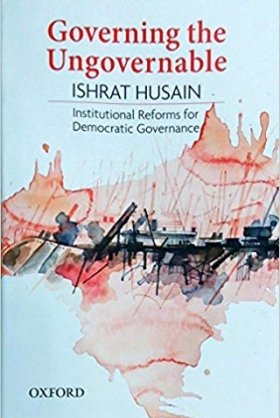
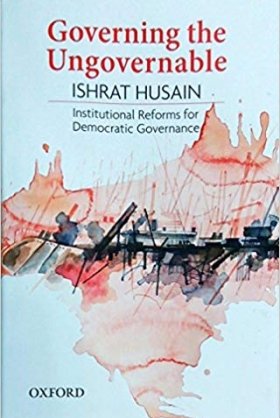
BOOK REVIEW | Governing the Ungovernable: Institutional Reforms for Democratic Governance

Governing the Ungovernable: Institutional Reforms for Democratic Governance in Pakistan

ISBN: 9780199408979

Written By: Ishrat Hussain

Review By: Bukhtawer Pervaz

Dr. Ishrat Hussain is presently serving as Advisor to the Prime Minister Imran Khan for Institutional Reforms & Austerity. He was the former Governor of the State Bank of Pakistan and also a well-known Pakistan’s Economist. Governing the Ungovernable is a befitting contribution in the present system of governance as it discusses the concept of social, economic, and sustainable development as discussed in the chapters i.e., the economy, polity, society, federal, provincial and local governments, judiciary, civil services, legislature, military, religious edifice. This book is based on complete research and rejects some hypotheses that include foreign assistance syndromes, security state syndrome, and gives a new perspective that what are the main issues in Pakistan exits related to governance.

In the international arena, states require a proper governance system but unfortunately, the governance system of states works differently. The governance system has a key role in the economic and political stability of the country. Pakistan seems to be an ungovernable state that may be due to political instability, poor economic indicators, external influence, or lack of governance. Pakistan’s governance system is inherited from the British council that has deteriorated the system over time. This book Governing the Ungovernable: Institutional Reforms for Democratic Governance, clarifies the reasons behind the failure of institutions and how the working of government influences the stability in Pakistan.

Furthermore, it has covered multiple themes of public life including  economic and civil-military relations, and also suggests that it is difficult for us to suggest ways out of the various problems that bother us and connects different topics with huge differences, brings them together, and connects them to the same main topic on which the book focuses on “Governance”. Dr. Ishrat Hussain has given two phases: the first phase from 1947 to 1990 and the second phase from 1990 to 2015, in the first phase Pakistan was in developing countries, and in the second phase the situation was in boom and bust. The first chapter gives an overview of the book whereas the second chapter briefly explains the historical background of Pakistan. The country faced six  significant setbacks during its first 40 years of history. The partition  resulted in a truncated history without any infrastructure and financial resources, which served as the foundation for this economy.

Pakistan was one of the top economic performers in the world, growing by 6 percent per annum. At that time Bangladesh was struggling and Pakistan was ahead of China and Vietnam and then Pakistan had become a legit country after 1990. In the last 25 years, the country was ruled by a democratically elected government. The economic performance in the Military rule was far better than the former one. The independent and politically neutral bureaucracy till the 1980s was the main reason for the better economic performance. Bhutto’s bureaucratic reforms, most importantly, the renunciation of security of service delivery that destroyed the country’s governance due to weak civil institutions, the politicization of government service, and the promotion of mega-corruption during institutional atrophy.

The book discloses many assumptions regarding Pakistan’s military domination, defense spending as a proportion of GDP that has been reduced since the 1990s. The budget allocation for the military was low during Musharraf’s regime but currently, the combined education and health budget allocation is higher than the military. Moreover, the author also discussed the military expanding corporate influence and it has been shown that military-owned corporations accounted for only 4.5% of the total market value of the corporate sector in 2016. Ishrat Hussain also pointed out the economic decline to an average rate of 4.5 percent at the start of 1990 and during Musharraf’s tenure 2002 to 2008 the economic growth rose to 6 to 7 percent, GDP ratio increased at 23 percent and  foreign investment reached US $5 billion. The general argument is that the United States has always provided aid during the military era in the 1960s, 1980s, and 2000s which is revealed by the author that the civilian governments also received large foreign inflow from the Gulf countries as well as from the international financial organizations. Similarly, he argues that the quality of governance is the key determinant of good economic performance, not foreign assistance. The author argues that the US not only supported dictators but always supported its interest. The author also discussed the civil-military relationship in the context of a strong executive, an activist judiciary, and a weak parliament. It is the responsibility of the civilian leadership to make parliament an effective forum to exercise its oversight powers over the executive and promote civilian supremacy. The election commission can play an important role in strengthening democracy through proper screening of electoral candidates for that it needs to be independent.

 In Pakistan, the primary reason for unsustainable economic development is a lack of governance, since governance promotes the economy, and as the economy improves, all social indices improve as well. The flaws in the civil institutions were explained in the book and proposed reform agenda for the institutions that range from civil bureaucracy to the private sectors. The author explores that  when governance is  sound, economic growth rates  are high, and the growth rate was high during the military regime due to better governance. Moreover, the  present poor performance of the education and health sector is  the result of  bad governance and this is not due to less allocation of budget.

The absence of a significant, important, and determined reform circle in the country is a major obstacle in the path of reform. After the election cycle, political parties block reforms because they involve adjustment and may take longer to reap the benefits. Dr. Ishrat Hussain is more optimistic when he points out that a civic, politically conscious, and developing middle class will be the catalyst for demanding progressive governance reforms.

The author has made some recommendations and indicated the importance of electoral reforms, democracy in political parties, devolution of power, restoration of administrative machinery, and modernization of administrative methods and practices in the government. Moreover, he suggested approaches for restructuring key public institutions that refer to accountability, security, economic growth, and equity. The book is  a great contribution to the social sciences texts that helps in justifying the drawbacks in the governance system.

Camel Library Movement in Pakistan

Mobile libraries is an old concept and had almost lost its relevance in this digital age, but the ongoing pandemic has once again brought in its utility especially for regions that were not well connected and people had to make extra effort to go to schools and learn.

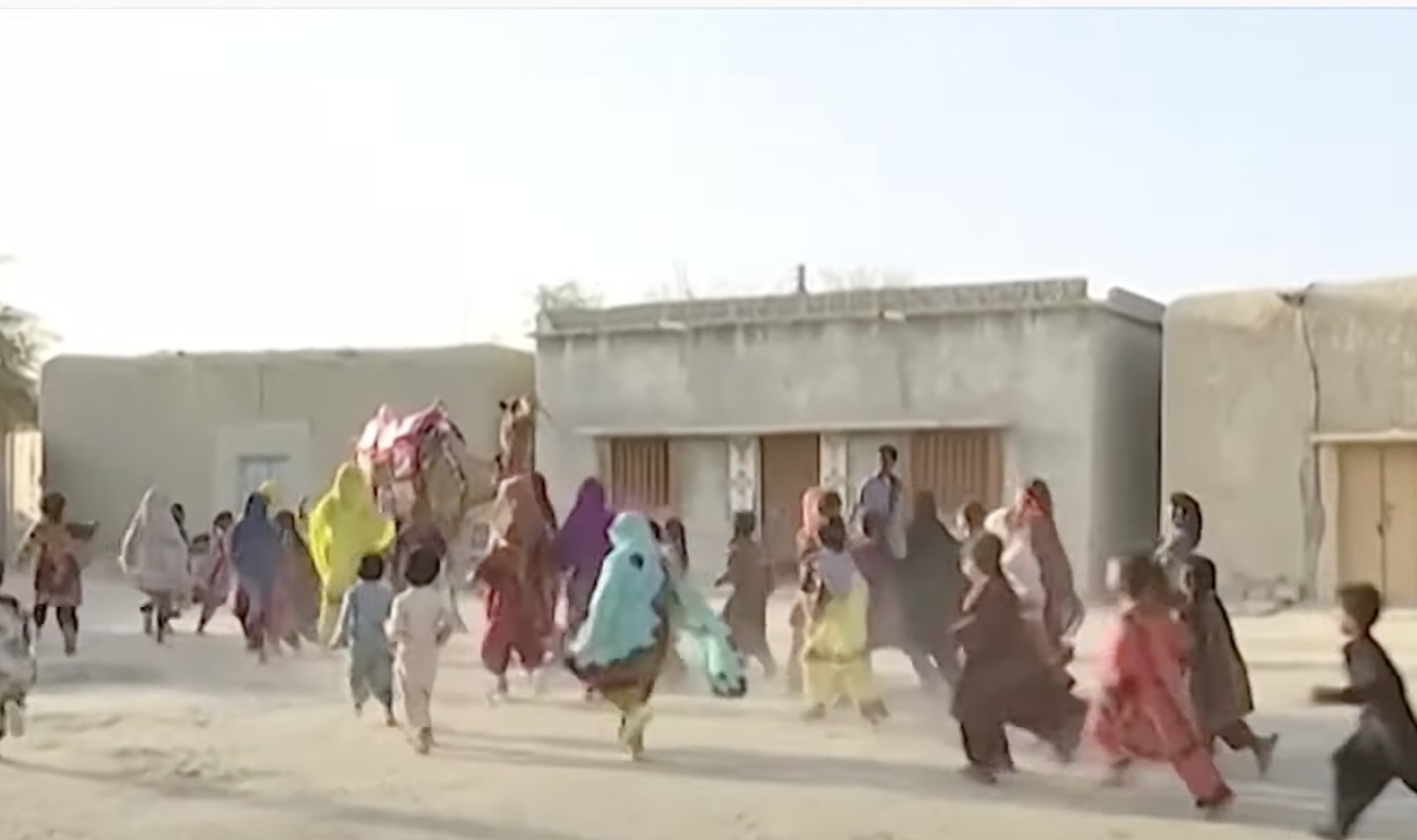
There are various names used for mobile libraries like libraries on the vehicle, wagon library, travelling library, book auto service, etc. But here, we are focussing on the mobile library on a camel. This innovative idea was started in the less developed province of Pakistan named Baluchistan. Many schools are closed in the region due to ongoing pandemics, and children were deprived of readings in such circumstances. The Principal of Zubaida Jalal Girls High School named Rahima Jalal and the Pakistani minister of Defence Production Zubaida Jalal thought that if children couldn’t go to school/libraries, why not take the books to them. The idea is an indigenous movement in the field of libraries and was experienced earlier as a successful project. Various top global newspapers like the Guardian, the Hindu (India), Al-Jazeera TV, and much more covered this successful story. Still, none has attempted to write an article on this particular issue. It has been argued that mobile library services are an education lifeline for students around the globe generally and particularly for the children of Balochistan who live in marginalized areas.

This pandemic has brought tremendous challenges for the people of Pakistan. The children in all provinces are losing their intellectual capabilities. Under these circumstances, camel mobile library is blessings for the region which benefits from it. George Bernard Shaw has rightly said that “Progress is impossible without change; those who cannot change their minds cannot change anything.” Raheema Jalal, Principal of High School at Balochistan shares lifelong services with the people of Balochistan.

Balochistan is one of the most impoverished provinces of Pakistan and is blighted by separatist insurgency for the past two decades. With the lowest female literacy rate of 24% and 56% male in the world. The sacrifices in the marginalized regions, exclusively the initiative of the camel library, is undoubtedly a good step towards reading growth.

According to Rahima Jalal, the idea was picked from Ethiopia and the Mongol camel library in the Gobi Desert of Mongolia, where children often couldn’t access the physical library where books were entirely inaccessible. Children often get an education out of playing with dirt and pebbles in a place where books are almost unreachable. Dashondog Jamba, a publisher, and translator travelled more than 50,000 miles through the arid region and shared colourful books with children. Rahima Jalal has articulated that “It suits our lonely, distant and rough terrains. We have received an enormous response that we were not expecting.”

Originally the idea was started in 1978 by Dr. Juanita Baker, an American citizen living in Pakistan. As there were no children libraries and this double-decker bus won everyone’s heart. It was symbolic of the children’s library movement in Pakistan. Some famous mobile libraries are the Alif Laila book bus society in Lahore, where books were operating with mobile rickshaw libraries in the city. With the help of the non-profit Alif Laila Book Bus Society, which has established more than 7,000 mobile libraries across Pakistan, with over 1.5 million books donated in the past four decades.

When schools and libraries were closed during a pandemic, people aspired to have some reading stuff, but they couldn’t find it. In such a situation camel library proved itself as a mercy for the people of Balochistan in the suburban areas. The exciting thing, the Camel, which carries the weight of books named Roshan. Initially, few villages in Balochistan were covered.

It is said that camel mobile library supplies books on Friday, Saturday, and Sunday, covering three different villages every week. It supplies books for two hours between 4 p.m and 6 p.m. Children choose the book they like and return them after a week.

It has been argued that children are very excited and interested in reading and borrowing books from the camel library. Many children are benefiting from these fiction and non-fiction books written in Urdu and English languages. The mission for camel library is yet confined to few villages of Ketch, but it is opined that the project will be expanded to other towns as soon as possible. The government of Pakistan and particularly Balochistan, do not invest in education and libraries. They should encourage such movements in the whole country. The government of Pakistan should definitely follow the nice saying of Swami Vivekananda that “If the poor boy cannot come to education, education must go to him.”

Pak-US Relations in the Light of the Changing Afghan Dilemma

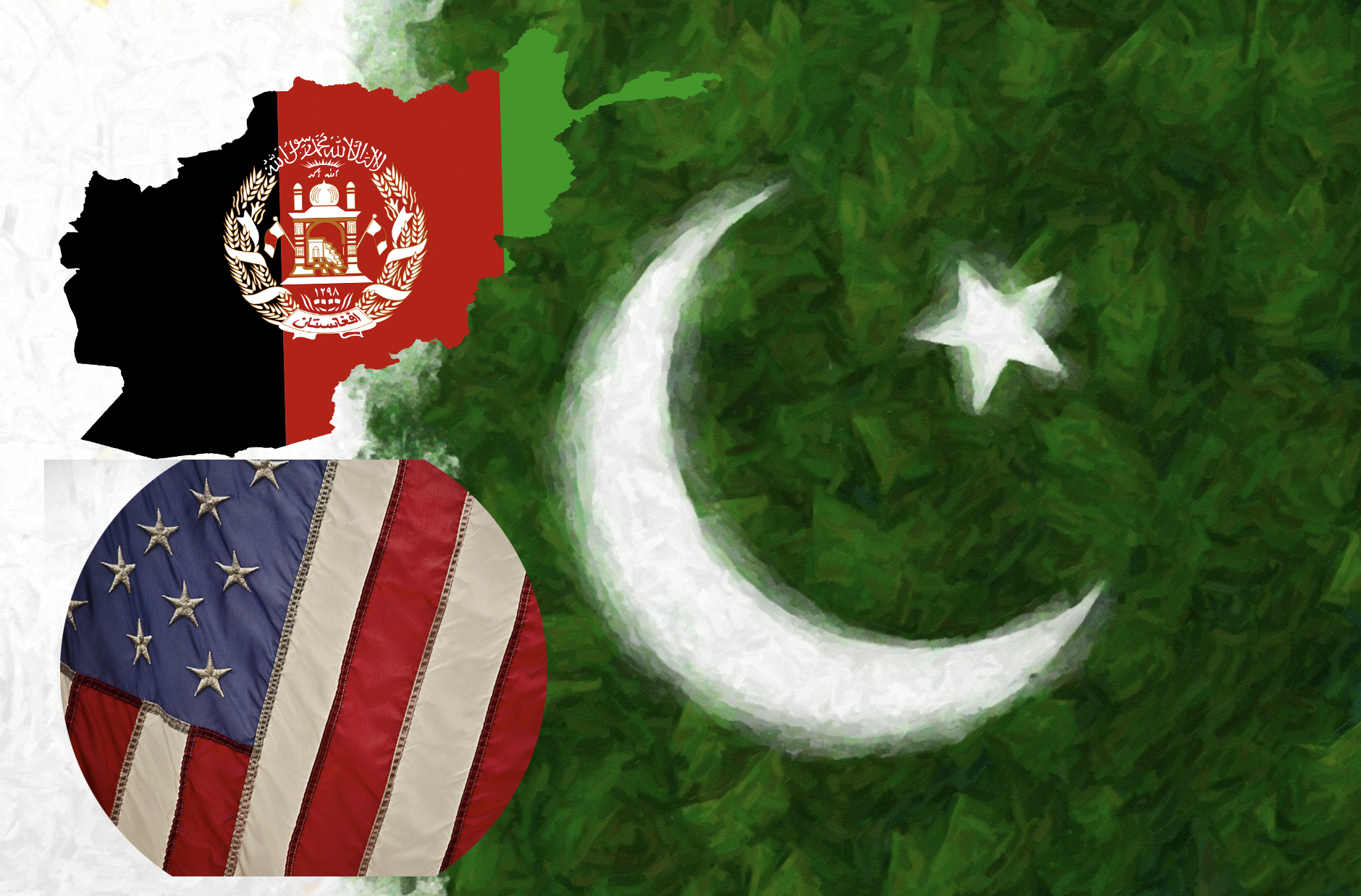
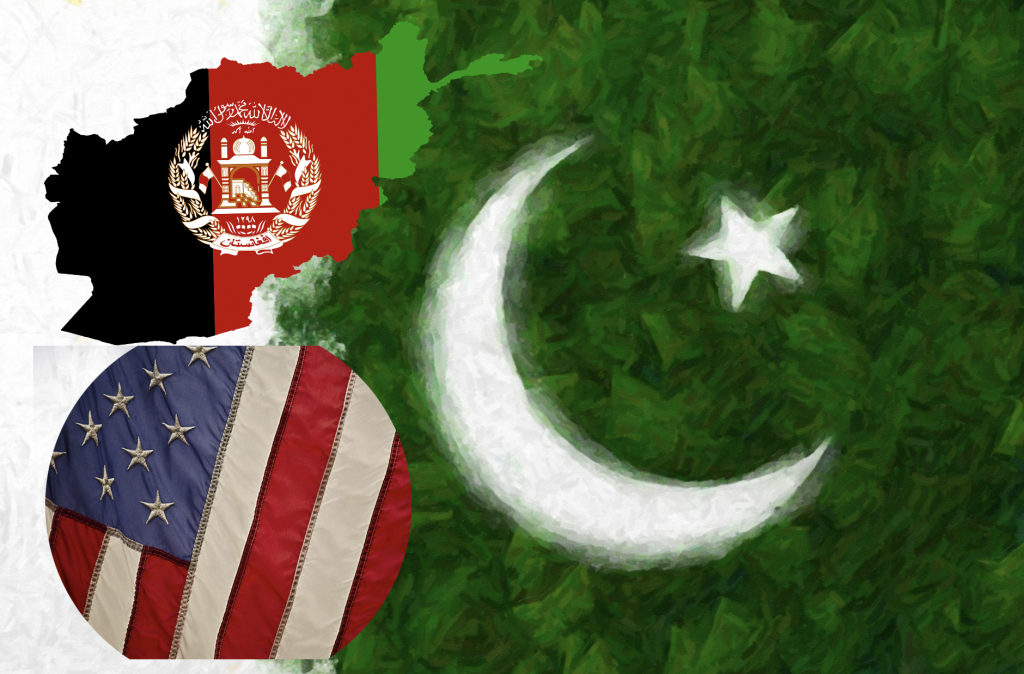
The creation of Pakistan presented the nascent state with a plethora of problems as every newly born country confronts. Pakistan has made territorial security the top most priority in its foreign policy. This was the reason why Pakistan moved towards alignment in its initial years. This was the impetus for Pakistan’s first years of alignment. The nascent state found its economy struggling as it was quite a new economic set-up. Both of these factors, among others, drew Pakistan into the Western orbit. Pakistan has remained in alliances for decades as there are a few years in its total seven- decade long history which is quoted as a non-aligned era, however, the nature of the needs of this newly born country has been so intense that it cannot remain neutral which demands a daunting homework.  When critically analyzing the pros and cons of the alliances to which Pakistan remained a signatory, one may readily conclude that the drawbacks outweigh the benefits. As Islamabad has faced a plethora of serious repercussions of the aligned period, it, finally, continues to clarify its stance that it would never become part of any alliance at the cost of its socio-economic and political instability in addition to its security dilemma. Islamabad seeks to be a peace partner in Afghanistan. It wants its efforts for Afghan reconciliation to be appreciated in lieu of being blamed for what is happening now in Afghanistan.

Pakistan and the Alliances: A Critical Analysis.        As previously stated, Pakistan adopted a policy of territorial security, national integrity, and sovereignty protection in response to the threat posed by its eastern neighbor, India, and the rapid growth of its newly established economy shortly after its existence. Pakistan remained part of alliances like SEATO and CENTO, in its early years with a purpose to achieve its prioritized objectives. Later on, Pakistan showed a bend towards the communist bloc in the 70s; but soon retreated to the west following the invasion of Afghanistan by the former USSR in 1979. The 9/11 episode resurfaced the need of Pakistan as an ally to the US in its War on Terror and Islamabad showed a nod and thus it remained a part of the said global move against terrorism.

When considering joining an alliance, a country must weigh the benefits and drawbacks and keep the regional and global geopolitical scenario in mind. Pakistan joined the capitalist bloc with a purpose to ensure security to its territory, sovereignty, and national integrity during its early years; but it totally failed in achieving the designed purpose notwithstanding the fact that it needed it badly especially when it was at war with its eastern neighbor in 1965 and 1971 – wherein the former USSR completely backed India militarily and diplomatically. Pakistan understood the costly nature of the alliance for a while and showed a tilt towards the communist bloc soon after the debacle of East Pakistan: it started diplomatic relations with Russia and strengthened its intimacy with China as well.

The Soviets came and invaded Afghanistan in 1979, which resurfaced the need of Islamabad-being a next-door neighbor to Afghanistan and its cultural and religious connection with it- for Washington. The ideological clash with communism and the mounting need for economic aid pushed Pakistan into the orbit of the capitalist bloc once again. Pakistan contributed well to the defeat of the USSR in Afghanistan; but soon after that America repeated the need-based  ties with Islamabad and  withdrew, leaving behind a  Turbulent Afghanistan   ravaged by a devastating civil war followed by the establishment of the Taliban regime in Kabul. It was a  devastating episode as it disturbed the socio-economic, political, and security fabric of Pakistan by virtue of the penetration of Kalashnikov culture, opium smuggling, and ruinous sectarianism.

Islamabad was once again asked to stand by the US and its allies in their global War on Terror. It was left with no option but simply to say yes or no to the offer. Pakistan joined the War on Terror particularly on Afghan theatre compelled by a plethora of reasons: it needed to convert its diplomatic isolation into bilateral and multilateral engagement and avail the opportunity to pose its soft image, boost up its struggling economy avoid the possibility of being rebuked for not supporting the effort against terrorism which might dumb its own cry for the settlement of Kashmir issue and the curtailment of the gross human rights violation in Kashmir at the hands of Indian troops. But, the next two decades pushed Islamabad into troubled water as the alliance caused more than $100bn damage to Pakistan’s economy and left more than 70000 people dead in Pakistan. Similarly, Pakistan suffered from a long-standing socio-economic, political, and security instability. Pakistan almost lost its international soft image. The US kept blaming Islamabad for supporting the Taliban, even the Afghan government repeating the same mantra instead of appreciating the efforts Pakistan has been playing for Afghan reconciliation, for years since 9/11, and demanded to, “Do more”, for its mission in Afghanistan. Contrary to the harsh consequences Pakistan has undergone, it just saw a transitory improvement in its economic growth from 2002 to 2007. But it was mostly economic aid in lieu of the efforts to uplift the down- sizing economy all and all gradually. It observed an amelioration in its diplomatic engagement as the ghost of isolation seemed to be disappearing by leaps and bounds.

 Finally, the experience of going through a handful of severe consequences and the blame game posed by the different aligned periods awakened the country’s top policy formulators from dormancy to devise a cost-effective policy and take decisions as per the evolution of the long history of alliances.  Therefore, Islamabad wants to renew its ties with all including Washington on an equal basis. Islamabad keeps unveiling itself as a peace partner as it wants to be mutually cooperated with for bringing peace in Afghanistan and the whole region. Prime Minister Imran Khan’s address at the South and Central Asia Conference for Regional connectivity held at Tashkund a few days ago, made the stance of Islamabad much clear that it would be a partner to Peace in Afghanistan. Pakistan wants its efforts for bringing peace in Afghanistan to be recognized and not be blamed for the ongoing turmoil in Afghanistan. It calls the regional and global powers to play a positive role in Afghan political settlement even it kept convincing the US to avoid a hasty withdrawal which might pave way for the reinstatement of the 90s civil war episode and ironically the ground realities today are unveiling the prediction coming true. Regional cooperation is the need of the hour. Therefore, Islamabad must be joined for bringing peace to Afghanistan instead of being asked for entering a new alliance whose blow for the socio-economic, political, and security fabric, Islamabad would never tolerate.

While Islamabad trying to clarify its stance regarding the US intentions of staying here in the region- especially its bases in Pakistan- that it would be a partner to peace, America would pressurize it in one way or the other soon after it completes its withdrawal from Afghanistan. Though the stance of Imran Khan is really incredible while keeping the country’s sovereignty in view, Pakistan has to struggle with a handful of issues that needs strong diplomatic support especially that of the major powers. Pakistan might be pressurized over its FATF and Kashmir issues. Pakistan might be punished via delaying or laying the bailouts in abeyance or bailing out with harsh conditions by the IMF, World Bank, and other international organizations. It may further be asked to revamp the protection  of its human rights regime. Finally, though the above paragraph unveils the harsh consequences of the ‘absolutely not’, the repercussions of the ‘absolutely yes’ are the severest. Therefore, Pakistan should stand by its stance to be an all-time partner to peace in Afghanistan. Islamabad should keep convincing the US of its compulsions for not going into an alliance anymore at the cost of its own destruction. The USA and Afghanistan must appreciate the efforts Pakistan has done so far for bringing peace to Afghanistan. Islamabad should keep highlighting the importance of a peaceful Afghanistan which is in the best favor of all stakeholders and this is a point of convergence among China, Russia, the US, and Pakistan among others, therefore, they must launch a joint effort to resolve the issue peacefully. The USA must  make an effort Islamabad’s motives and move forward to cooperate with it for a peaceful Afghanistan which will  eliminates security concerns for both countries. Mutual cooperation and coordination among the regional and global powers may facilitate the political settlement in Afghanistan.

Analyzing the Afghan War

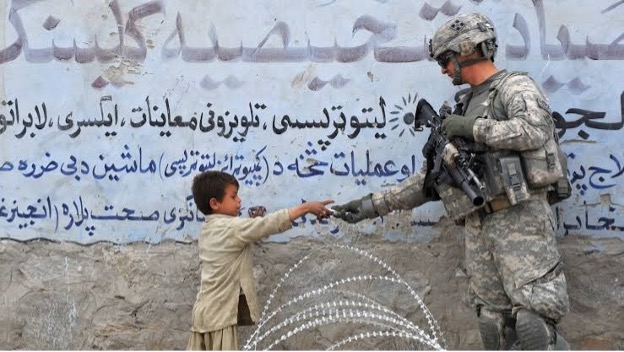
The bombing of the world trade center and the refusal of the Taliban to hand over Osama Bin Laden to the USA became the instant causes of the US war in Afghanistan. Looking back on the decades till 2001, one is justified to ask what the US and NATO forces  achieved and  squandered in the seemingly ending conflict. With the evacuation of the Bagram airbase,  the US military presence is at an all-time low. According to SIGAR, a congressional research service, the US military reached a figure of 4000 last December from the gigantic number of over 100,000 during 2011. The International forces landed in Afghanistan for the purpose of eliminating terrorism and establishing an accepted form of govt in the divided country, but it seems that they haven’t achieved their desired goals so far. Analyzing the decades-old war, it is clear that the US forces accomplished certain objectives while falling short of others.

To begin with the war gains, the first trinket that springs to mind is the education sector. Afghan’s education sector was in limbo during Taliban rule. Education for boys was not encouraged and almost no girl attended school. Fearing the Taliban, no one had tried to enroll his daughter in any school or college. On the contrary, Afghanistan s literary rate recently surpassed that of Niger, Mali, South Sudan, and many other countries. According to a USAID report, 3.5 million girls are enrolled, and 30% of women are literate in Afghanistan. This is a good score against the reports of 2001.  Several NGOs, including Sahar, UNICEF, and others, are now working in the education sector to ensure that Afghan children may enroll in schools.

Another sector where the US authorities have made progress is giving rights to women. The opposite gender was given special attention by the different NGOs after the international intervention in 2001. During the Taliban’s rule, women were not  permitted to go out of their homes without their male company. According to a report, they were not  permitted to attend schools or take advantage of the medical services offered by male doctors.  Women were not permitted to participate in politics or public life, and they were also not permitted to work outside the household. After the international intervention, their status improved to a greater extent. Today, they are given 30% in the 249 seats of the lower house which is more than significant. Enrollment of girls in schools has increased with graduate degree holders and artists. In the same manner, international aid has decreased the maternal and infant mortality rates which shows improvement in the health of Afghans’ women as well.

International forces have also invested heavily in infrastructure, peacekeeping, refugee assistance, and helping flood victims. While billions of dollars are pumped into Afghanistan, they remain unaccounted for due to widespread corruption and theft.  Afghan military and police forces are trained by the combined forces against terrorism, but they can’t save themselves against the attacks of the Taliban. Opium production is at the highest level, and most Afghans still live in poverty despite the mega economic aid annually.

The first major failure of US and NATO forces is their inability to control opium production. Poppy production is on the increase in Afghanistan ever since the international forces plunged into the war. According to a UN report, opium was almost extinct during the Taliban’s rule. On the flip side, Afghanistan is providing 80% of world opium today. Not only the Afghan people, but the Taliban are also taking interest in poppy production as it is their main source of income. This can be proved by the southern Helmond province, controlled by the Taliban which is the major supplier of the country’s poopy export. Despite the mega projects of antinarcotic, the US was unable to control the opium export and is a complete failure on its part.

Another area where the combined forces have failed is the training of Afghan defence forces. The Afghan army, police, and air force have been training by the US for the last two decades, but they don’t show any resistance to the Taliban at all. They have received help and munitions from the US  air force so far, but what will happen  when America leaves? If they can’t defend themselves, how can they defend other Afghan citizens and territories? With the clearance of the Bagram airbase, Afghan forces are crossing the international border with Tajikistan from the fear of the Taliban almost on daily basis. The hierarchy of the army is filled with rampant corruption and their morale is at the lowest. The armed forces have not visited their villages for years because of the Taliban’s control over their homes. They also lack logistics, funds and ammunition. These pictures that US forces have imitated Micky mouse and have done nothing good for the defense forces of Afghanistan.

Political instability is also a  significant issue  for Afghanistan. The US has established democratic institutions in the war-torn country, but no one can guarantee their survival. The balance of power between the different institutions and the conflict over important appointments have derailed the stability to a larger extent. The tenure of president Ahmad Karzai from 2001 till 2014 was characterized by pacts and agreements with elites and feudal lords over the use of power in their respective domains. He gave up some of his powers to the political elites but never attempted to give them substantial power lest they become too powerful.  This strategy was effective in the short term but not in the long run. The remaining time is also characterized by a constant conflict between president Ghani and Abdullah Abdullah. In the 2014 elections, both claimed their victory, and an agreement was reached, making Abdullah Abdullah the prime minister. The scenario was exactly the same in the 2020 elections and the same agreement was reached upon for the second time. With political instability at its peak, people are thrown into poverty, unemployment and their trust in government organizations  has diminished.

The reality is that the US may never disclose its human rights violations in Afghanistan. The warlords which the US had chosen turned against the innocent Afghanis. The former vice president Abdul Rahim Dostum had massacred thousands of innocent Pashtuns, and on the other hand, the Taliban had targeted the innocent Hazara community into thousands. Dostum is only one such example, and there are many other warlords who constantly abused human lives under the blanket of NATO forces.

Now, when the war is on the horizon of its ending, the US administration should bring to the public their analysis of the 20 years war. Certainly, NATO forces have achieved some gains in the decades like improvement in education, health, women rights, and active role of social media, but the causalities in the war are exceeding the gains. If studied deeply, then it is revealed that the major causes of the downfall of the NATO forces in Afghanistan are the widespread corruption and the human rights  violations  committed both by the international forces and the Afghan administration.

AirPower and the Future Warfare

There is a famous byword of field Marshal Bernard Montgomery that “If we lose the war in the air, we lose the war and we lose it quickly.” But if we retell the same proverb with a diametrically opposite approach that is “if we win the war in the air, we win the war and win it quickly.” Douhet is a strong advocate of this approach and claims that “to have a command of the air is to have a victory.” It will be a very bold statement to make because there are various ground dynamics that still can change the outcome of war, but airpower has the potential to destroy enemy’s center of gravity at a full tilt compared to ground forces.

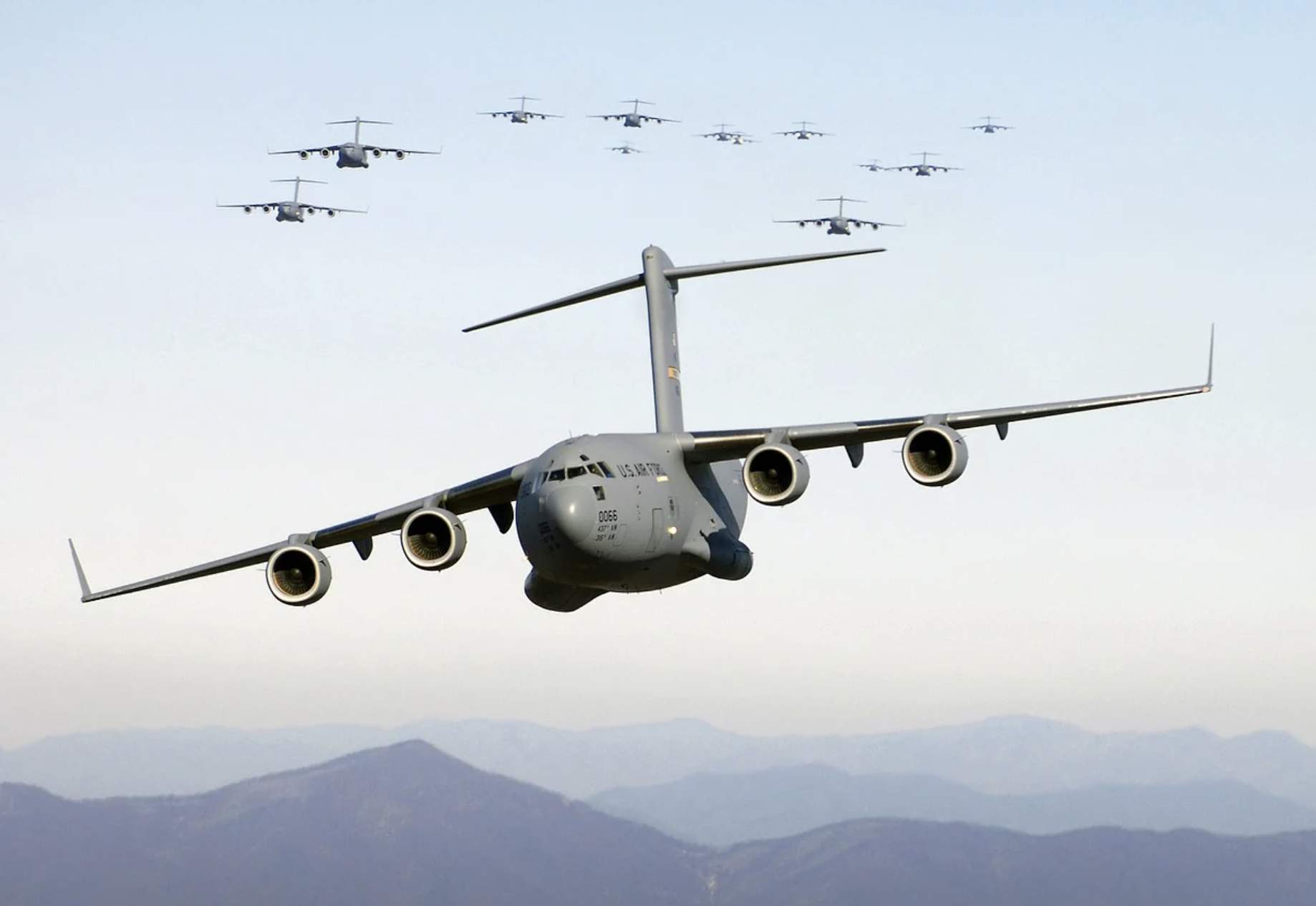
Airpower has the potential to neutralize enemy air force by achieving air supremacy and helps ground and sea forces (friendly) to proceed in ground and sea operations unhindered. Role of air power does not end here rather it exceeds in protecting its own ground forces and vital centers from enemy’s aerial attacks. It can be safely assumed that no country has lost a war if it successfully maintained air superiority. Picking an example of Germany from World War II, the ‘September campaign’ when Germany’s blitzkrieg approach of extensive bombing on air capacity of enemy, munition depot, communications lines(railroads) and infrastructure crippled Poland and it was followed by robust land invasion. Airpower paved the way for land forces otherwise the outcome might have been much different from what we know today. Some countries historically lost the control of the air and despite power they faced serious threats. Kapil Kak in his “A Century of Air Power: Lessons and Pointers” writes “when control of the air was lost to enemy air forces by Russia in July 1941, by the U.S. over Pearl Harbour, by Britain in Southeast Asia, by Rommel in North Africa and again in North Western Europe, armies and navies met with disaster.”

Ground operations become difficult to carry out if enemy controls the air. It is therefore believed that a strong military must have a strong air force. It is generally misunderstood that air power is a defensive force whereas it better serves in offensive realm too. Colonel Phillip S. Meilinger writes “American troops have not had to fight without air superiority since 1942; the last American ground soldier killed by air attack was in 1953;and our army has never had to fire a surface-to-air missile at an enemy aircraft-they have never been allowed to get that close.” Whatever American Airforce achieved in Afghanistan through air operations was not carried forward by ground forces. Taliban’s safe havens were destroyed through air bombardment. Navy operates in seas even naval operations also need an air cover for their success. That is why Aircraft carriers also need an air superiority.

Meilinger puts forth that for many years army leaderships of several nations were not agreed with the indispensability of air power, but certain incidents of war changed their perspectives about it. “Pearl Harbor and the sinking of the British capital ships Prince of Walesand Re- pulseby Japanese land-based aircraft in 1941 soon made it clear that ships required air cover to operate effectively. Aircraft carriers provided the mobile air bases for the planes that would help to ensure air superiority over the fleet, while at the same time increasing the ability to project power ashore.”There is generally a misunderstood notion that airpower is a strategic force and is used only in war whereas it performed the greatest humanitarian airlift in history i.e. ‘Berlin Airlift’ also known as Operation Vittles.

With the employment of airpower, the precision technology has dramatically increased usage of Unmanned Aerial Vehicles (UAV) has been successful in destroying underground bunkers of the terrorists in Afghanistan. Robert Pape scratches out that “This is a remarkable improvement compared to World War II, when only about 18 percent of U.S. bombs fell within 1000 feet of their targets, and only 20 percent of British bombs dropped at night fell within 5 miles of theirs.” Ground power has been considered a hammer till the 1980 but after 1980 airpower was considered as anvil, a hammer works much better with the anvil. The role of airpower is not limited to a single type of war. It is expected to remain capable of conducting successful operations in both high- and low-intensity conflicts

After the air campaign ended in Afghanistan, the Pentagon reported that approximately 75 percent of all munitions employed during ‘Operation Enduring Freedom’ (OEF) hit the intended target and achieved the desired results compared to 45% success rates in Desert Storm and Allied Force. Airpower carries the war into enemy territory and establishes control of the air. Surface forces are also aided by airpower in their freedom of action. The U.S. intervention in Libya used air power to overthrow Qaddafi regime, that was a mistake former U.S. President Barack Obama admitted that. U.S. airpower successfully countered Qaddafi’s forces by minimalizing their effect and swayed military advantage to rebel’s side. Later on, pro-Gaddafi forces were unable to withstand rebel groups which actually had a backing of U.S airpower. The role airpower can play to shape the battlespace and shift the balance is undeniable. It can be safely said that any nation without an effective airpower is at the mercy of enemy

The Politics of FATF

India’s External Affairs Minister (EAM) S. Jaishankar has recently claimed that PM Modi’s government ensured that “Pakistan remains on the Financial Action Task Force (FATF) grey list.” Addressing a training program for BJP’s parliamentarians on India’s foreign policy, Mr Jaishankar also credited his government for influencing the United Nations (UN) and other multilateral institutions to take steps that ensured that Pakistan is kept under pressure. This admission by India’s incumbent foreign minister raises several questions about the impartiality of the FATF and other multilateral organizations and India’s role in influencing the decision-making process of these institutions that claim to be treating all countries equally.

Modi government’s efforts to keep Pakistan in the grey list are not limited to the misuse of its diplomatic clout, but it has been employing all possible means to build a negative perception about its main regional rival of an unstable state. The timings and the nature of terrorist acts carried out inside Pakistan usually coincide with major international events, as was the case of bombings in Lahore which coincided with the ongoing FATF assessment, and for which Pakistan has once again blamed India. Jaishankar’s recent statement may have further endorsed Pakistan’s claim.

The FATF, which claims to have maintained neutrality in its assessment and decision-making process has demonstrated visible bias when it comes to India. Whether it is a case of a nuclear black market where Indian nationals were caught smuggling uranium, or EU Disinfolab scandal, or the funding and sponsorship of terrorist entities like the Baluchistan Liberation Army (BLA) to create unrest inside Pakistan, India has remained immune to the kind of scrutiny by the international institutions which is otherwise reserved for Pakistan and few other countries.

The EU Disinfolab report that was published late last year revealed that India was running a fake international network of over 250 media outlets, multiple and dubious think tanks, and NGOs, supported by entities connected to India to undermine Pakistan’s image at the international level. Since such malicious campaigns are often sponsored by illegal resources and money the FATF must investigate these revelations while keeping in view the admission of India’s foreign minister about his country’s efforts against Pakistan.

In another major scandal that remained unnoticed by the FATF, at least 44 Indian banks were flagged in September 2020 in connection with suspicious transactions by Indian entities and individuals. The Suspicious Activity Reports filed by the US banks with the Financial Crimes Enforcement Network (FinCEN) revealed that over 2000 transactions valued at over $1 billion were carried out between the period 2011 to 2017. It is not yet known where and for what purposes this money was used and why international institutions like the FATF did not demand an explanation from India.

India has also been using its influence in various international think tanks and academic institutions to develop a negative perception about its regional adversaries, especially Pakistan. Almost all the major international think tanks and institutions have a South Asia section mainly staffed by Indian-origin scholars or like-minded western scholars. Sponsored and commissioned studies on South Asia are generously sponsored through business houses that are funded and owned by Indian entities.

It is not uncommon for countries to use some of these means to promote their legitimate interests in foreign capitals, but when a senior Indian government minister openly engages in blusters to please PM Modi, the legitimacy of international institutions and other entities engaged in propagating India’s narrow interests becomes questionable. Countries that are adversely affected have the right to demand explanation and review their engagements with such entities.

Review Pakistan’s Engagement with the FATF.        Pakistan had earlier objected to India’s involvement as the co-chair of the Joint Group for assessing Pakistan’s credentials in the FATF. Reacting to the recent statement by India’s EAM, Pakistan’s spokesperson for the Ministry of Foreign Affairs stated that “while Pakistan has been sincerely and constructively engaged with FATF during the implementation of the action plan, India has left no stone unturned in casting doubts on Pakistan’s progress through disgraceful means.” Pakistan is also considering approaching the FATF President for appropriate action and bring the recent confession by India’s EAM to the notice of the international community. 

The statement from the Foreign Office spokesperson indicates that Pakistan will continue to bring necessary reforms and implement the remaining agenda item of FATF’s Action Plan, but it needs to be realistic in its expectations from the FATF’s review process.

At the domestic front, Pakistan also needs to tone down the debate on the issue of FATF grey listing to prevent unnecessary hype and expectations before every FATF session. Knowing the political compulsions and flawed working of these institutions it is unlikely that Pakistan will be taken off from the grey list in the immediate future even though Pakistan has achieved more than many other countries that have not been put on the grey list as yet.

The changing geostrategic environment, deteriorating security situation in Afghanistan, and Pakistan’s stand not to get unnecessarily embroiled in Afghanistan’s internal situation would most likely be used by Pakistan’s adversaries to foment more trouble inside its territory, as a means to keep Pakistan under the negative spotlight and to prevent a favourable decision from the FATF. Other influential members in the FATF, especially China may need to shed its ambiguous neutrality and use its economic clout to ensure that FATF and other international organizations are not misused for the short term political objectives of a select few. This is necessary for the credibility of these institutions and China’s global image of a rising power. 

Pakistan has been on the FATF grey list earlier and had survived since it is not an existential issue, contrary to the perception generated by extensive media debate. The more focus and energy spent on meeting FATF’s unreasonable demands and to meet its shifting goalposts, the more leverage Pakistan would afford to the external powers who would continue to use it to extract political concessions. Pakistan must therefore do what serves its interests without having unrealistic expectations from the FATF or other major powers. 

Finally, the FATF may have further strengthened the basic principle of statecraft that international relations are not driven by geo-economics alone but primarily by geo-strategic considerations. Since Pakistan continues to remain a pivotal state in the region, it cannot completely remain immune from the adverse effects of the emerging great power rivalry between the US and China as it impacts Pakistan’s future choices as well. The challenge for Pakistan would be how not to get distracted in tactical battles like the FATF while using its geostrategic location to safeguard its national security interests without getting excessively embroiled in the emerging great power competition.

U.S Exit and Impending Chaos in Afghanistan

After spending two decades on the rugged terrains of Afghanistan, another superpower has edged close to making its final exit from the often denominated ‘graveyards of empires’ that is Afghanistan. The U.S’ association with Afghanistan remains decades old, where it first entered into the battleground albeit not directly (and with the support of so-called mujahideen) in 1979.

The U.S initial forays into Afghanistan were premised to oust its main Cold War rival, the USSR. After concluding the Geneva Accords of 1988 and in the aftermath of the unraveling of the USSR and the winding of the Cold War, the U.S fled from Afghanistan, only to return a decade later.

Nobody knew the new re-engagement with Afghanistan, coming on the heels of widely derided 9/11 events and the subsequent declaration of War on Terror would only bode one of the U.S longest war of this century. Not even the acclaimed political pundits and military hawks occupying the Pentagon and the State Department would have envisioned such a flawed and indecisive end to their longstanding military engagement to the Afghan battleground.

The U.S has drawn closer to making its final exit in the backdrop of hastened U.S and NATO troop pullout from Afghanistan. The specter emerging from the vacated Bagram Airfield -the epicenter of the U.S counterterrorism and war activity to outdo the Taliban – is speaking the truth of this matter. Bagram Airfield has been officially handed over to the Afghan National Security and Defence Force in its entirety.

In the flurry of events, the news dominating the official quarters is yet limited to only troop withdrawal and the surging violence in Afghanistan. All attempt to break the deadlock on peace talks has gone to naught. The deep introspection on the matter gives rise to the question of whether this would be the end to the war or is just a harbinger for a new civil war? The looming scenario points towards the latter option.

Since the U.S announcement of the final withdrawal, the Taliban’s offensives have picked pace. Although 2020 was the deadliest year in the history of the Afghan war, the signing of the Doha pact in February 2020 had spurred hopes that this violence would be tamed to facilitate the prospective peace talks between the Kabul government and the Afghan Taliban.

As no build-up on talks could be made, the position of the Taliban group seems to have hardened. The group has readily captured more than a hundred districts of Afghanistan. Sheer fighting is going on in 26 out of 34 provinces of Afghanistan. Recently, the Taliban has advanced its footprints across the northern frontier and seized one of the main trade artery linking to Tajikistan. The heavy fighting and escalated violence describe the picture of Afghanistan.

Anticipating the Taliban’s advancements, the Kabul government has ratcheted up its efforts to withstand the Taliban onslaught. Afghan President Ashraf Ghani and the Chief Executive Abdullah Abdullah are in the U.S to devise some kind of strategy. Additionally, the Kabul government is increasingly looking towards the regional militias of different provinces to aid in the fight against the Taliban. Also, it is contemplating having newer recruits to sustain the momentum. The defections from the Afghan National Security Forces are adding worries to the government’s efforts.

Altogether, the emboldened Taliban insurgency is a worrisome factor for not only the Afghan government or the U.S, but for the wider region and Afghanistan’s immediate neighbors. The apprehension on the Taliban’s renege of its promises is griming the prospects of a peaceful Afghanistan. The group promised in the event of the inking of the Doha agreement that it would cooperate in charting out the peace plan for Afghanistan’s future. To chalk out such a plan, agreement necessitated talks with the Kabul leaders.

After several botched delays, talks began in September 2020, however, the endgame is still elusive with no concurrence for the interim government or any joint proposal. The future government setup too remains out of the sight with no unanimity for a republic or Islamic emirate type of political dispensation.

Reports increasingly suggest that the Taliban are mulling an armed capture of Kabul in the wake of U.S retreat.  A U.S intelligence report says the Ghani government in Kabul could collapse within six months of the U.S withdrawal, revising previous estimates for two years.

The deadly rise of violence, the increasing footprints of Taliban across the country, the power vacuum caused by the U.S flight from the Afghan battlefield, the reinvigoration of local and regional militias, and the weakening authority of the Afghan government paint an ominous picture for the future of Afghanistan.

The resurgence of intense fighting, exploitation of the murky situation by Islamic State militants, and the demonstration of Taliban’s intransigence on breaking the political impasse augur the future that would be mired into conflict, chaos, and more anarchy. Afghanistan’s slide into chaos seems imminent considering the forceful resistance that would be presented by Afghan people, Afghan security forces, the peppered warlords, and their militias to any attempt by Taliban to override the country this time. This can ensue a new civil war in the war-wracked country for a foreseeable future.

In the aftermath of incessant bickering between mujahideen fighters in the 1990s, the Taliban had a literal walkover in Kabul. Besides, they strongly pulled their regime by way of the strict enforcement of the Islamic Shariah, curbing all forms of dissent and secluding their emirate. This is not in congruence with contemporary Afghanistan, which has seen spaces for human rights, women’s rights, education rights, and more efforts to orient the Afghan polity on lines of new international values.

The security outlook is gloomy and unpredictable as the Afghan Security forces would not be able to sustain the heavy fighting given that U.S airpower support and logistics will be absent from now on.

Afghanistan’s descent into chaos would not only be threatening for the Afghan nationals but will have a spillover effect on the region. The Afghan instability has been the predominant source of the geopolitical crisis encapsulating the entire region, where terrorism and extremism have become one of the defining elements of the societies. Any new war or crisis thus diminishes the prospects for connectivity and economic integration of the region.

Pakistan on FATF’s Grey-List: India’s Role

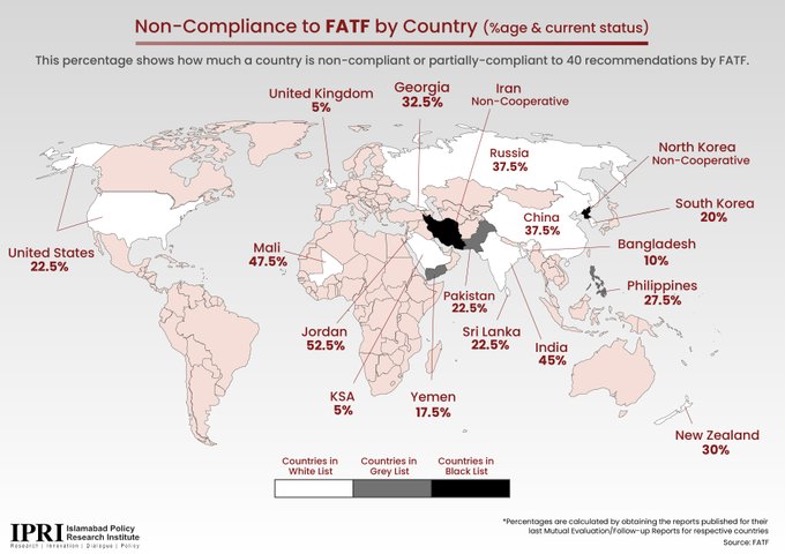
In the past, terrorism and money laundering have become threats to global peace and security. Therefore, to counter this threat the Financial Action Task Force (FATF) was developed to combat the crimes that set the standards and promote the implementation of legal and regulatory measures for combating money laundering, terror financing. FATF ensures that countries follow the rules, if not then they are added to the grey or blacklist. As there are two kinds of lists in FATF:  Greylist and Blacklist. Grey list referred to as “Jurisdictions under increased monitoring” such as the countries on the FATF grey list have a much higher risk to fall  on the blacklist but these countries are committed to working with FATF to develop a complete action plan that will address their AML/ CFT deficiencies. The grey list  serves as a warning to  countries that  may be added to the blacklist. Furthermore, the FATF increases its monitoring of the countries that are placed on this list. As the countries complete their action plans, they are removed from the grey list. The FATF blacklist is known as “High-risk Jurisdictions subject to a Call for Action” that identifies the countries with serious strategic deficiencies to prevent terror financing and money laundering. The blacklist countries are also known as non-cooperative countries or territories. The FATF updates the Greylist and blacklist regularly, adding or removing countries from the list. 

Interestingly, it has been few years since Pakistan’s rise to fulfill the commitments of FATF by improving its security. Though being on the grey list is the biggest challenge for Pakistan as the organization sets some standards to control money laundering and terror financing that is challenging for the country to implement or follow all the rules.

In 2008, Pakistan was first added to the FATF’s grey list and after one year the country was removed from the grey list after the country adopted the anti-money laundering legislation. Moreover, in 2010 Pakistan committed to working with FATF and Asia Pacific Group to sort out the issues but afterward, it showed no progress. Pakistan was placed again on the FATF Greylist in 2012 and remained till 2015 for which it was globally acclaimed. During this time, Pakistan faced international pressure being on the Greylist but again in 2018 for the second time Pakistan was put on FATF’s Greylist. The FATF has issued a 27-point action plan for its implementation, after which it will be removed from the grey list. This plan is given by FATF with a warning if the country fails to implement then it would lead the country to blacklist and so far Pakistan has completed 26 points out of 27. Even then, the country is still on the Greylist, thus this decision points towards the  partiality of the committee. The government of Pakistan tried its best to save the country from being blacklisted and remove itself from the grey list but unfortunately the decision was beyond expectations. 

Until now, the country encountered many challenges but apart from this the major hurdles and challenges for Pakistan are not other than India which is using all its power to blacklist Pakistan. As Pakistan and India have a long history of rivalry, India has always tried to create propaganda against Pakistan through the use of spreading fake news. Moreover, India is lobbying with the international community to push Pakistan into the FATF blacklist. The Prime Minister even highlighted in an interview that India wants to see Pakistan bankrupt and push us into FATF’s blacklist. Even the Indian media run a campaign against Pakistan in an attempt to influence the FATF deliberations before the FATF plenary meeting held in October 2020. Similarly, behind the recent bomb blast in Lahore, India was involved. Even Islamabad has repeatedly urged the International Financial watchdogs to take notice of India’s innumerable malicious campaigns against Pakistan and its efforts to politicize the FATF’s further proceedings. India has repeatedly carried out terrorist attacks in Pakistan, but no actions have yet been taken by the FATF. 

Traditionally, as the FATF meeting approaches, India will try to provoke Pakistan, which will affect Pakistan’s status on FATF. Terrorist attacks have been taking place in the country a few days before the FATF plenary meeting and such incidents shortly before the FATF plenary meeting show how India is interested to see Pakistan on the FATF blacklist and for that India can do anything. Therefore, India might take more encroachments in the country before the next FATF plenary meeting because India would never want Pakistan to be removed from the FATF grey list. Thus, when the FATF meeting is about to take place, India may start some kind of riot in Pakistan such as any terrorist activity, Balochistan conflict, and Shia-Sunni conflict. In the current situation, the United States is moving out of Afghanistan and in a recent interview with the Prime minister of Pakistan, the US asked for bases. But Pakistan has clearly banned the United States from providing bases; this is also a setback for Pakistan to still stay on the grey list. Subsequently, the RAW has carried out bomb blasts in Pakistan.

 Pakistan should emphasize the Indian lobbies and RAW’s involvement in the FATF plenary meeting and also participate pro-actively through its diplomatic channels, as India is a significant impediment to Pakistan. Additionally, accountability and institutional improvements are needed, and severe sanctions against prohibited entities are necessary to obstruct money laundering and terrorist funding routes. Pakistan hopes to be removed from the FATF grey list by the end of 2021 as it has made significant progress in implementing the FATF criteria. The government is putting efforts to stabilize the economy of the country for which it needs to remove itself from FATF’s Greylist. It is not new to Pakistan to be in FATF’s grey-list so, there is a need for a proper fund transfer system and its accountability as FATF introduced a recommendation that ensures the consistent AML/CTF anti-money measures are imposed on all forms of money transfer services. To implement this, the policymakers must provide rules and regulations so that the jurisdiction is not considered soft by the ones who transfer money. 

Moreover, in the future India might take place some more terrorist activities in the country to divert the world’s attention towards Pakistan to hide their internal issue that is farmer’s protest. As a result, Pakistan needs to be defensive and the government of Pakistan needs to step up its efforts to create a proper legal framework as per FATF requirements and must ensure transparency in it.

Book Review: Homefire by KAMILA SHAMSIE

FICTION: HOME FIRE

AUTHOR: KAMILA SHAMSIE

BLOOMSBURY PUBLISHING PLC 50

ISBN: 978 93 86606 65 6

264 pp

Fiction: The Polarized World

Homefire is a reimagining of Sophocles ‘Antigone’ play, belonging to the Greek tragedy of the Hellenic era. The epigraph of the book picks the famous saying of the play: “The ones we love… are the enemies of the state”. Like Sophocles, the novel traces back to the complex interplay of conflict between the law of the state, religious law, and society. Antigone, the protagonist buried her traitor brother in defiance of the State’s edict because it is commanded by religious gods. In addition, the novel introduces various themes to its readers and puts open the dilemmas faced by Muslims in the Western world due to their identity.

The true colors of Homefire were put into words by Sarah Sands, chair of judges that voted Homefire as the women prize-winning novel of 2018. Sands said the panel “chose the book which we felt spoke for our times. Homefire is about identity, conflicting loyalties, love, and politics”. The identity that remains blurred and disputed as the protagonists struggle to prove their British credentials on the verge of an imminent onslaught of State on citizenship and immigration rules.

Homefire begins with tragic, intrusive, and hours-long interrogation of Isma at the Heathrow Airport where she has to board her flight to the USA. It ranges from browsing her internet history to friskily examining her clothes and suitcases. The officers ask her ‘But do you consider yourself British?’ and evaluation of her views regarding Shias, homosexuals, the Queen, democracy, the Great British Bake Off, the invasion of Iraq, Israel, suicide bombers, dating websites.

The book comprises five parts, each of which separately deals with the novel’s characters; revolves around their life and dwells on their fears. The main story circulates around three siblings who are of half-Pakistani and half-British descent. Their life haunted by the jihadi background of their father and struggles to keep this identity hidden. The eldest Isma gets her Ph.D. scholarship and leaves for the Amherst, Massachusetts USA. Aneeka, the younger and twin of Parvaiz, however, is a more bold character of the novel, gets a scholarship to pursue her Law studies at the London School of Economics (LSE). Orphaned at an early age, the twins were tendered by Isma who became their guardian, when she was only twelve herself.

Parvaiz is only nineteen years old when he comes across a guy who tricks him, extols his father’s jihadi feats, and portrays the Bagram abuses to recruit the young lad. The novel lays the perfect picture of the manner the recruits are brainwashed, coaxed, and entangled in the web of extremism. It sketches the entire paradigm from displaying beautiful pictures, imparting selective information to promising better futures that Farooq uses to beguile parvaiz. Parvaiz, however, gets disillusioned as he reaches Caliphate and wants to come back home. The plot is set on this one question.

Determined to bring back her brother, aneeka falls into an affair with Eamonn Lone, son of Home-secretary Karamat Lone, who himself is a past Muslim. Signified as ‘Lone Wolf’, half-Pakistani, half-Irish; loathed by Pakistani British community for his diatribe against Muslims and a conservative member of Parliament who denounces “backwardness” of Muslims. Karamat Lone endeavors hard to prove his loyalty and accrue the best slot for himself in the Parliament. He is, however, the most sophisticated character of the novel with his switching moods and characters. Most often maintaining a strict British personality, Karamat Lone becomes another person on occasions of Muslim’s Eid festivals. The fierce struggle of the novel operates between Karamat and Aneeka in the climax.

The paths cross between Eamonn and Isma in the USA, where a budding infatuation erupts; soon to be watered down by Eamonn’s return to home, where he meets Isma’s younger sister aneeka and falls in love with her. Aneeka is the most furious and risk-taking character of the novel.

Homefire is grounded in extreme suspense which makes the story more exciting. Despite aneeka’s best efforts, Parvaiz gets murdered in Istanbul while en route to British Consulate by IS’ man who finds out his infidelity. His body is dispatched to Pakistan and he’s proclaimed a terrorist by British media. It goes in tandem with the unfolding of love affair. Aneeka heads to Pakistan to bring back the body of his twin and fight for justice.

The story throws light on the citizenship rules, immigration problems, identity crisis, and stereotyping of Muslims in the West. The stringent regime and questions circulating on the citizenship of the individuals who leave their homelands to join terrorist networks are put into the spotlight. It equates the customary unburials and tortures on prisoners of Guantanamo with the afflictions imposed by ISIS. It presents a picture of West where a Turban or scarf-wearing girl is looked inquisitively. As Eamonn asks Isma about her turban to which she answers ‘people in Massachusetts who have ever asked me about it both wanted to know if it’s a style thing or a chemo thing’. From Preston Road, London to Raqqa, an interval at Istanbul to the heart of Pakistan, Karachi, it is a cinematic novel. Shamsie documents every little moment and fills life in the novel. Her description of grief and terror captures the mind of readers who begin to feel it on a personal level. “Grief manifested itself in ways that felt like anything but grief; grief obliterated all feelings but grief”. The personal, political and religious interplay and fluctuations in the novel keep its readers adhered to the story. Homefire bears significance to the world which is divided between liberal powers and fanatics.