Foreign Policy Changes in the UK and their Effects on Southeast Asia

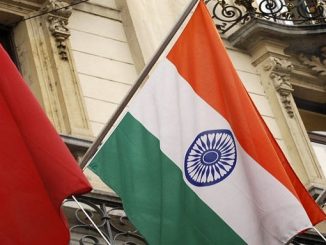
Following Liz Truss’ resignation on October 25, 2022, Rishi Sunak was elected as the leader of the United Kingdom’s Conservative Party and the Prime Minister. Under the premiership of Rishi Sunak, according to the 2023 refresh version of the 2021 integrated review of security, defence, development, and foreign policy, the UK will increase its military spending by £5 billion (with £3 billion committed to the nuclear enterprise AUKUS and £2 billion targeted at boosting the UK’s munition stockpiles); work with like-minded partners to achieve the world they seek; and sceptically pose China as the epoch-defining challenge to global politicisation. The logical response is that it is what the nations do to survive in international politics and protect their national interests, but it still begs the question of why, at the urging of a select few culturally homogeneous governments, the rest of the states are accused of being significant offenders. In addition, should the world, especially China, be concerned about the cultural symmetry between the Prime Minister of the UK and the people of India?

The role of Prime Minister Rishi Sunak is essential in determining the foreign policy of the UK and its position on international issues such as security, defence, development, and foreign policy as the head of state. The Prime Minister has to closely collaborate with his administration and other nations that share their values in order to accomplish their common objectives, which include fending off the perceived threat that China poses. Managing the UK’s relationships with other nations, conducting diplomacy, and directing the nation’s reaction to international crises all fall under the purview of the Prime Minister.

Overall, the UK Prime Minister has a key role in the nation’s foreign policy, and their choices and deeds have a big impact on the UK’s relations with other nations and its reputation in the international community. A substantial divergence from the UK’s prior strategy towards China, which was defined by an emphasis on economic and commercial relations, can be seen in the policy pivot towards competing with China. This change is in line with the UK’s overarching strategy, which prioritizes security and defence, while uniting it with other like-minded nations in reaction to what it sees as a rising threat from China. Although the UK’s strategy has changed to resist China’s influence, it is still in the early stages of development, and it is unclear how far the UK will go in terms of its interaction with other nations to curb China’s influence.

In recent years, notably since the 2020 border conflict in Ladakh, India has adopted a considerably more confrontational approach toward its neighbour, China. To counter China’s expanding influence in the region, India has raised military spending, participated in joint military drills with other like-minded nations, and taken a number of other measures.

Indo-China ties may be impacted by the UK’s assistance to India in its fight against China, but this would depend on the precise measures the UK takes and the scope of its involvement in the region. Given the complex nature of the relationship between China and India, which is characterized by a combination of collaboration and rivalry, any outside influence could be viewed with mistrust or as meddling in the region. Being the youngest prime minister appointed since 1812 and the first person of colour to hold the position, Sunak’s adherence to Hinduism and his Indian descent may culturally influence his foreign policy decisions in the Southeast Asian region. It is possible that his Hindu heritage may indirectly affect UK-India ties, and he may be more sensitive to India’s opinions and concerns.

The UK’s foreign policy has not altered overnight; rather, it has evolved steadily over time. In Clash of Civilizations, Samuel Huntington made the prediction that global politics would change in the ensuing years. He anticipated that nations’ long-standing rivalry would soon resurface, in an article published in the summer of 1993 by the Council on Foreign Relations. Disputes would start to occur, but they would not be largely motivated by ideologies or economic factors; instead, culture would be the driving factor.

Furthermore, Rishi Sunak’s role is crucial in guiding these policies’ execution and ensuring that they are in line with the UK’s strategic objectives, particularly in light of the country’s increased military spending and emphasis on national security. To increase support for these policies and assure the public that they are essential for the nation’s security and prosperity, the Prime Minister also needs to engage in communication with the people.

With that said, fostering regional peace and thwarting shared dangers like terrorism and piracy are in the mutual interests of India and the UK. It may not have a big effect on India-China ties if the UK is regarded as supporting India in a way that advances these objectives. Nevertheless, if the UK’s participation is interpreted as posing a danger to China’s interests, it may potentially escalate hostilities between India and China. On the other hand, it demonstrates the premise of Samuel Huntington’s clash of civilizations theory, according to which the UK Prime Minister’s interest in the region, which is linked with that of India, can cause significant changes in the policy stance of regional countries.

The Death of Merit in the Educational System of Balochistan

The ancient Greek word Méros’ (Merit)means asset or qualification. In terms of education, merit can be defined as ‘worthiness or excellence’. Merit, particularly in the education sector, not only defines a society but also strengthens the socioeconomic or sociopolitical structure of any society. However, in the educational system of Balochistan, merit seems to be proportionately missing. Therefore, the province is still deprived of excellence and quality in every sector. Also, merit is not only violated in terms of fake degrees and paid cheating but it has also allowed undeserving people to possess responsible positions which resultantly leads to corruption, and the political and tribal influenced employment of professors/teachers. Due to this, economic inequalities are expanding; the gap between the poor and rich is widening and, regrettably, the hope for a better future is becoming blurred for the youth in particular.

Article 25A of the constitution endorses free education for all children aged from 5 to 16. However, instead of its implementation, the existing education system has become vulnerable because of the compromise on merit, the absence of which is decreasing the public’s trust in institutions. There are implementable models for checks and balances. However, in Balochistan, political and tribal influence are so entrenched that even remedies are not put into practice. It is crucial to understand how the province’s violation of merit is affecting its socioeconomic structure. Therefore, this opinion piece aims to illustrate the impact of the violation of merit and the political elite’s role in strengthening favouritism and nepotism at the cost of competency in the province’s educational system. Such an approach ultimately results in lowering the standard of education in the province.

First, the province’s education governance has been damaged by both internal flaws and an external political context that offers little support and a lot of destructive intervention in administrative decisions. In Balochistan, largely, teachers are hired based on their political or tribal allegiance. Even the former Chief Minister, Jam Kamal Khan Alyani asserted that the positions were being sold, claiming, that the government departments sell seats, ranging from 1.5 million to 4 million rupees depending on the scale of the job. Another instance is that a case was filed by Muhamad Asif Jan and other petitioners in the High Court, challenging the legality of the appointed people in the education institutions. They also made several objections regarding irregularities and improprieties that point to corruption, nepotism, and favouritism.

Not only this but also, the merit system has been badly affected by the tribal and political elite. Jobs are provided in violation of merit, depriving deserving people of such opportunities. This dominating behavior is used to make people more and more dependent on the elite, as those employed in this way are often obligated to repay the favours by crossing legal boundaries.

Another example of political backlash against a university in Balochistan came to light when an instructor was appointed on the basis of her affiliation with the provincial minister, leading to her promotion from a scale of 17 to 19 overnight. This case involved mismanagement, corruption, and substantial political involvement. Empirically, these reasons seem to be the drivers of underlying factors for the low literacy rate and substandard education in Balochistan. Therefore, it can be said that the employment structure is exposed to such corruption, substantial political involvement, and mismanagement that it is resulting in an education crisis in the province.

Second, political and tribal influences are causing havoc in primary, secondary and higher education. While, theoretically, the literacy rate in Balochistan is less than 43.58 %, in terms of progressive human capital, literate, operative and efficient people hardly make-up about 10 % of the population. In that way, 43.58 %, not only comprises of intelligent and progressive people but also those who have earned degrees by bribing. For instance, a corruption case of Rs. 60 million was registered in the BA and B.Sc. exams alone, further demonstrating how the exams are rigged in favour of those with connections and money to bribe.

In Balochistan, it is impossible to ignore the lack of merit at administrative levels, the lack of availability of teachers, and the low standard of education. The ghost schools and teachers who are paid about 400-500 million rupees without carrying out their duties violates merit. As a result, the budget, which is split between 10 % for school maintenance and 90 % for the salaries of the teaching and admin staff, goes to such ghost teachers, creating strain on the provincial economy. However, it was discovered during the verification drive that hardly more than 42,000 of the 58,000 registered teachers were present in the classrooms; even the Ex-Balochistan Education Minister, Abdul Rahim Ziaratwal, did not deny this data.   

On the other hand, due to this political influence in the institutes, people are not only facing economic but also psychological repercussions. For instance, Sakiba Hakeem, who was a student of intermediate in Government Girls Degree College, Muslim Bagh, committed suicide when the principal of the college refused to send her application form for the Intermediate examinations, countering her active participation in the protests against political elite. Resultantly, such practices lead to social deformity, adding more problems in society. This is only an instance of a registered case; the number of unregistered cases of such nature causing psychological issues is far greater, and frustration is visible among youth.

To summarize, it is empirically proven that power is being abused in the province that is already struggling in education. Therefore, employment, education, hope, and chances for a better future in the province are in jeopardy. To avoid further deterioration and violations of merit, the model given by Raza Shah Pehalwi of Iran to enhance the accountability of the departments can be applied here as well for effective checks and balances. The province’s administration should have accountable platforms for checks and balances to prevent political and tribal influence over educational institutes in order to build a hopeful and dependable atmosphere for Balochistan’s youth and meritorious teachers.  

Moreover, professionals should be selected through proper procedures. The recruitments of bureaucrats through CSS examination can be taken as a model; even though hardly 2 to 3 % pass the examination every year, it is a trusted mechanism to get the right person for the right job. Together with checks and balances, more funding should be allocated for education, particularly for research. Finally, ghost teachers should be sent home without perks and privileges and ghost schools should either become operational or be closed entirely to manage the budgetary deficit due to them.

Nuclear Nationalism, Nuclearism, and Deterrence


The US Central Command (CENTCOM) Chief General Michael E. Kurilla in his recent
testimony before the Senate Arms Services Committee stated that he is “confident in
[Pakistan’s] nuclear security procedures.” The remarks made in the backdrop of the ongoing
economic and political crisis in the country coincided with another statement by Pakistan’s
Finance Minister, Ishaq Dar where he had asserted that “nobody has the right to tell
Pakistan what range of missiles it can have and what nuclear weapons it can have. We have
to have our own deterrence.”
The two statements given in a different context with distinct objectives triggered an
unnecessary debate in the country. On one hand, the US CENTCOM Chief’s remarks were
being projected as an endorsement of Pakistan’s security credentials, but on the other hand
the Finance Minister’s statement at the floor of the Senate created an impression that the
ongoing negotiations with the International Monetary Fund (IMF) are being deliberately
stalled at the behest of the US, to coerce Pakistan to curtail its nuclear and missile
programs.
Bringing the focus on Pakistan’s nuclear program by the Finance Minister was disingenuous
and may have intended to divert the focus away from continued failure to conclude an
agreement with the IMF. This triggered unnecessary controversy in a country where
nuclear program remains a sensitive issue and is often exploited by various elements for
their own interests.
The IMF was quick to refute the claim made by the Finance Minister, forcing him to clarify
that his statement was taken out of context and “neither the IMF nor any other country has
made any demands regarding Pakistan’s nuclear capabilities.” Notwithstanding this
clarification, appearing to falsely accuse the IMF, not only brought a negative focus on the
type and ranges of Pakistan’s missiles inventory but it may have further complicated the
work of the government team negotiating an agreement with the IMF.
There is a possibility that Finance Minister Dar’s remarks may have been intended to
deliberately scuttle the negotiations with the IMF. The government knows that it may not
be in a position to steer the country out of the current economic crisis even with the IMF

bailout package. To shift the blame from abject failure to achieve progress, Dar may have
indulged himself in a ‘nuclearism’ behaviour with an intent to exploit public sensitivities and
blaming the IMF for demands that were never made.
This is not the first time that the ‘nuclear nationalism’ has been used by the political leaders
for their personal and political interests. It had been exploited by various governments to
build their nationalist credentials, to blame others, or to signal to the outside actors. The
excessive politicization of country’s nuclear program has its own demerits as it heightens
the public sensitivities that are easily exploited – both by the external as well as internal
elements.
Finance Minister Dar’s reference that “nobody has the right to tell Pakistan what range of
missiles it can have…”, was most likely a reference towards Shaheen-III ballistic missile that
has a declared range of 2750 km. The specific range of 2750 km had two purposes – to signal
that Pakistan’s nuclear capability covers the Indian landmass; and secondly, that it is not
intended towards any other country, including Israel.
Since Pakistan’s nuclear capability has a singular focus of deterring its major rival India,
therefore limiting the missile range to 2750 Km was deliberate and intended to pacify
concerns of some of the countries that might otherwise feel insecure. Pakistan does not
have any ambition to emerge as a regional hegemon, and neither it has the resources to
build an expansive nuclear posture that could threaten countries in its distant
neighbourhood.
The out of context statement by a member of Pakistan’s National Command Authority
(NCA) may have raised unnecessary alarm about Pakistan’s nuclear program, and is not
likely to be helpful in the ongoing negotiations with the IMF. It was also intriguing that on
one hand the Finance Minister Dar made this ill-advised statement but at the same time he
was pleading a relatively junior US official of the rank of Deputy Assistant Secretary Level to
show leniency towards Pakistan.
Nuclear nationalism is a result of sustained efforts by the national leadership to assert
nuclear identity, in addition to the collective sense of shared history, language, culture,
religion etc. Once nuclear weapons are made part of the national identity, it becomes easier
to manipulate public sentiments and exploit it for political objectives. Successive leadership

in Pakistan has been exploiting it for political objectives that has led to heightened public
sensitivities on the nuclear issues.
Over the past many years nuclear nationalism has also emerged as a tool used by the
external powers as a leverage to extract concessions from Pakistan. Therefore, the
statements such as the one made by the US CENTCOM Chief need not be celebrated, as
these are politically oriented and mainly to address the US interests. These could change
with the shift in US priorities towards the region.
In view of these known sensitivities and the challenges that Pakistan continues to face
internally as well as external, it is imperative that the national leadership must exercise
restraint in their public utterings and need not indulge in nuclearism behaviour. The
statement such as the one made by the Finance Minister could lead to unwarranted
controversies, and brings into question the credibility of the leadership, which itself is vital
for the credibility of nuclear deterrence.

Effects of War on Nuclear Facilities

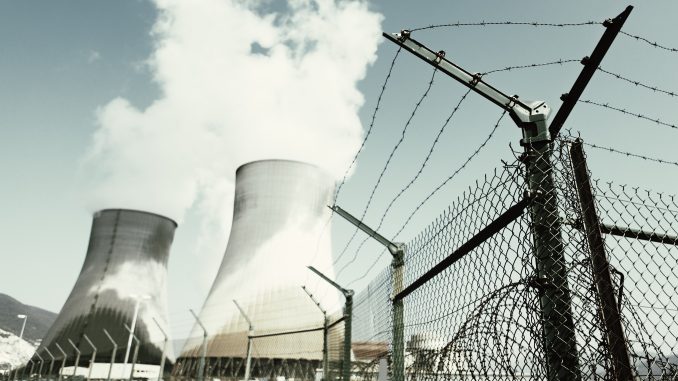
The constant struggle to ensure an energy supply to Zaporizhzhia nuclear power plant during the Russia-Ukraine war has highlighted a number of the risks to nuclear facilities during the conflict. Due to power outages, the Zaporizhzhia nuclear power plant has depended on a limited supply of backup diesel generators. This risks the safety of people, plant and cooling systems, and the longer these power outages last, the higher the chance of a nuclear accident. This makes it vital that nuclear facilities carry out adequate risk assessments to analyse the possible effects of war. Such an assessment will support the facilities and states in devising an updated nuclear security plan according to the Design Basis Threats and Beyond Design Basis Threats.

So far, the nuclear facilities have been preparing to detect, delay and respond to a threat of sabotage from terrorism, extremism, or insiders. These could be groups, individuals or non-state actors targeting the nuclear facility. However, the changing threat environment reveals that nuclear and radioactive facilities must be adequately prepared for war and violent civil unrest. Although international humanitarian law protects such facilities, the incidents from the Ukraine war have highlighted the urgency of addressing the matter. Nuclear facilities are critical infrastructures of a country. Therefore, a state’s primary responsibility is to secure such facilities in case of war or violent civil unrest. Under such undesirable conditions, nuclear and radiological facilities can have two types of impacts.

First, a war directly impacts nuclear and radiological facilities in terms of the security and safety of facility infrastructure, nuclear material, employees, society and the environment. In case of bombing on or near a facility, the operations would be dismissed. Such an event could lead to radiation exposure, contamination, as well as misplacing or loss of material which brings the threat of exploitation and proliferation. The direct impact of the war could also be the abandonment of the facility and material as a result of lack of access to the facility due to curfew, blockage or attack. Under such conditions, the facility would be unmanned, which risks the malfunctioning of machines. Facilities can also be impacted by emerging technologies used in war, such as drones hovering over a facility. It could also be under a cyberattack to take control of the operations. Although such threats persist during peacetime, the perplexing circumstances to tackle such situations during wartime could be challenging.

Second, the war indirectly impacts nuclear and radiological facilities, which endangers safety and safeguard measures. Nuclear facilities can be indirectly affected if a power outage or other supplies such as water or gas are disrupted. Such energy shortages become the reason that nuclear facilities are caught in the crossfire. A war also weakens the regulatory and legislative control over the facilities. Due to an active war in the country, the regulators cannot perform necessary inspections; nor can the International Atomic Energy Agency (IAEA) inspectors reach the facility to ensure that safeguard seals are intact. This risks involuntary carelessness on the part of operators due to constrained conditions.

A war or violent conflict also risks the material that is in transport. For example, an armed attack on a truck or train transporting the material is a great possibility during a war. This could lead to losing track of or contact with the transporter, which endangers safety, security and safeguards. In addition, recovering material from such an incident would be challenging in an ongoing war. Similarly, low-grade facilities such as research institutions, universities or medical sites need adequate security and safety measures to protect the radiological material during a war.

Before Ukraine, many countries at war struggled to ensure the safety and security of nuclear and radioactive material. Afghanistan, for example, uses radioactive material for medical, teaching and oil exploratory purposes. However, due to civil war, the radioactive material facility became inaccessible because of road blockages by the Taliban and other tribal groups. Similarly, Nigeria uses radioactive material for research, oil and gas exploration and agriculture. Civil war and armed groups such as ISIS and Boko haram significantly threatened radioactive material under regulatory control.

A national threat assessment is critical to determine how a country would respond to war and civil unrest. The IAEA has a Convention on Early Notification of Nuclear Accidents and a Convention on Assistance In Case of a Nuclear Accident or Radiological EmergencyHowever, these conventions do not mention a system of notification and assistance in case of a war situation where access is limited, and any incident can have multiple chances of recurrence. Member states can report any accident or emergency that has happened or could possibly happen, which could release radioactivity across the border. The IAEA also has an Incident and Emergency Centre, a 24/7 coverage and on-call system. In addition to this, the IAEA has a website called the Unified System for Information Exchange in Incidents and Emergencies (USIE) for the exchange of information and follow-up of an accident during an emergency. However, it remains uncertain how contact can be established under war conditions. Therefore, there is a need to reconsider how support would be provided by the IAEA during the constrained environment of war.

At the national level, coordination and communication centers must be well-equipped to expedite war contingencies and assistance to nuclear facilities. Such centers need to have an effective coordination mechanism involving national stakeholders such as the police, military and security forces. All stakeholders must collaborate with operators to ensure the technical and logistical aid and guidance required during the war. These efforts include devising plans that function during war, emergency contingency plans, contact points, transport security plans, etc. These plans would need clarity on the roles and responsibilities of various stakeholders. To ensure a practical outcome, it would be important that adequate training and drills are done periodically. It will also be essential to update and revise the plans of action as per need.

During a war or violent conflict, strong coordination and communication between the regulators and security operators will be needed. This will assist in enhancing the emergency operational capacity of nuclear facilities. A responsible emergency committee of operators and regulators would be required to deal with war. The facility also needs security awareness programs informing employees of the on-site war evacuation and emergency plan. All facilities must have bunkers and underground compartments to store radioactive material. In case of war, it is also essential to have offsite monitoring systems so that people outside the facility know the facility environment. Being innovative with physical protection measures and sharing risk information will be the key to ensuring the safety and security of the nuclear facility. In the commercial sector, risk information sharing is not a common interest. However, it is vital to remember that human safety and nuclear security is the primary goal of risk information sharing, rather than achieving business interest. Collaboration rather than competition can ensure nuclear safety and security during a war.

For the security of a nuclear facility, it is also essential to have a good connection and communication with the local population. During war and civil unrest, locals can act as intelligence gathers or reporters of any security sabotage. In addition, they can be the first resort for rescue and assistance in case of an attack. Society must understand that the security of nuclear power plants is everyone’s responsibility. War is the most detrimental event for the country; therefore, we must learn from others and plan together to overcome difficult times.

Strategic Communication and Counter-Disinformation Insurgency in Pakistan

Strategic communication requires a comprehensive strategy to achieve national goals. It refers to building a ‘common mindset’ in all sectors and supporting institutions that may generate a proper flow of desired common ends. Unfortunately, the establishment of a strategic communication culture in Pakistan has been neglected while dealing with national and international objectives that provided a huge space for the external powers to implant their narrative and to distract from our social, economic, and political dimensions.  One of the most important elements in strategic communications is its deliberate posture, as it is not something in a vacuum. The strategic portion involves the proper systematic description of a policy or the aims at the national or international level. Whereas the communications portion involves the supporting agents that disseminate information and promote and support actions to achieve the objective. To consolidate the objectives, words generate a narrative that is always dependent upon strong and credible action.

Pakistan has been facing a massive ‘disinformation insurgency’ in the post-global war on terror (GWOT). This disinformation insurgency has been armed through social media tools to spread hatred, disorder, lawlessness, and foul language culture with the aim of creating unrest. The most dangerous side of this type of insurgency is its self-destructive nature, once it crosses the threshold. By and by, the disinformation insurgency is a bigger challenge than zoonotic disease and terrorism that needs immediate securitization.     

There are five attributes of this disinformation insurgency in Pakistan. First, to create and fuel political polarization which results in immature and hatred-based political communications among the leadership. The second is the fragmentation of institutional reputation to fracture constitutional balance. Third, crippling the defense regime of the state through an aggressive narrative based on false information. The fourth, and most dangerous, is to challenge the ideological foundations of the state through the insertion of buried philosophies.

To counter this dis-info insurgency, Pakistan needs a counter strategy based upon well-defined ‘strategic communication’. This includes a systematic understanding of the problem, description, and proper action of relevant portions of statecraft. To change the direction of the affected society, strategic communication also demands a two-way process based on target responses. It also includes assessment of damage, execution of communications, and then analysis of response.

The 21st century is the century of ‘information warfare’ and nuclear capabilities have reduced the risk of traditional warfare between or among the states. The states are now less frightened of traditional external attacks and thus need a ‘new army’ with ‘new arms’. This new army must be equipped with the ability to counter psychological operations, social networking tactics, countering propaganda, strategic negotiation techniques, diplomatic channeling, and information technology understanding. This will ultimately increase the efficiency of strategic communications and provide safeguards to national security.

The US military science group suggests four possible ways to enhance the impact and process of strategic communications to meet the challenges. First, to understand the identity, approach, and behavior. Second, the trends of media (including all social media types i.e., Facebook, Twitter, WhatsApp, etc) and flow of information. Third, the motivations of leading personalities from all targeted sectors. Fourth, possible engagements of decision-making bodies including politicians, bureaucracy and the military, in dialogue. Fifth, relevant target audience engagement in social, economic, and political activity.

In short, public opinion management is part of state security and requires special attention, particularly during disinformation warfare. A massive dis-info attack demands massive retaliation as well, based upon proper strategic communications which is an obvious expression of the state’s power. The relevant decision-making bodies in Pakistan should take this issue as an existential threat and must respond via both offensive and defensive approaches. Pakistan defeated terrorism and has the ability to defeat this disinformation insurgency.

Dr. Shahid Hameed is Director Research at CISS AJK.

The views expressed in this article belong to the author and do not necessarily reflect the position of Strafasia.

Iran and KSA: From Confrontation to Cooperation and Regional Prospects

Historically, the Middle East has been dominated by the rivalry and conflicts between two regional powers of Iran and Kingdom of Saudi Arabia. Ideological differences may be one of the major root causes of their tensions; however, power politics in the region is also a prominent factor in their hostile bilateral ties. Conflicting interests of the two regional States in the civil and proxy wars in the Middle East, such as those in Syria, Yemen and Iraq, are also a major source of contention between Iran and KSA.

Keeping such rivalries and confrontations asides, the recent positive developments have been declared as a game changer for the region.  With the help of China’s mediation, KSA and Iran have agreed to resume their diplomatic ties, which were cut off in 2016. This agreement has several important aspects and will have some significant regional as well as bilateral implications.

The agreement between KSA and Iran is likely a foundation for starting a new era of dialogue and trust. Both nations have likely realized the fact that hard power and military solutions are not the only way to achieve their foreign policy goals. In this regard, long-lasting talks, peaceful coordination and cooperation on various economic, social, cultural and strategic issues may be more fruitful in terms of pursuing their long term interests. More importantly, this is a significant step for Asian states in deciding their own fates by themselves, and the role of the West is decreasing in this regard.

China leading the initiative is the most pivotal factor in the whole process, demonstrating the significant role and ambitions of the economic giant in the region. China is pursuing its grand geo-economic agenda under the banner of the Belt and Road Initiative across the world, and the Middle East is extremely important in this regard as the region is oil sufficient and an economic hotspot. Thus, this mediation role, as well as China’s previous 25 years deal with Iran, show China’s future intention towards the region. In addition, China is proving itself as a peace and power broker globally as well as regionally, one that really believes in peace, multilateralism, cooperation and economic and political integration.

It is too early to say anything definite but it is hoped that this will be proven as a milestone in the reduction of tensions in the whole region. Both powers might get some control on the conflict in Yemen. Similarly, in future, there are chances of some consensus on political instability in countries like Syria, Lebanon and Iraq, if KSA and Iran move forward smoothly on the recent agreement. Overall, the deal is a strong initiative and foundation of negotiation, peaceful dialogue and rational debate over several issues in the region. For Iran, the deal especially holds immense importance, as the country faces severe economic and political isolation; thus, the deal may be a fresh air of cooperation and engagement.

The United States has welcomed the recent developments between KSA and Iran. However, it is a major setback for the US and its western allies, who always want Iran as a wrecked, neglected and isolated state. The Abraham Accord was one of the important initiatives of the US to shape regional politics according to its desires. The ultimate goals were to normalize ties between Israel and Arab countries and push Iran to further isolation. Similarly, the key role of China in the recent deal is also a sign of worry for the US. For last few years, the US and China have been involved in tremendous economic and strategic competition; therefore, China’s increasing role in the Middle East will definitely challenge US interests in the region.

This deal also clarifies a few significant things regarding Saudi Arabia’s foreign policy. It reflects the vision of Muhammad bin Salman, who aims to revisit KSA policies on several fronts. The KSA intends to adopt a more rational, interactive and pragmatic approach towards regional issues. In this regard, it not only wants to search out peaceful means for the settlement of the Yemen crisis, but began a comprehensive dialogue with Iran as well.  More importantly, the recent developments show how KSA is shifting its foreign policy towards independence and one which is east-centric, unlike the past.

Pakistan should also consider this deal highly optimistic and a valuable opportunity, as Pakistan’s foreign policy is greatly dominated by KSA-Iran tensions. On one hand, Saudi Arabia is one of the most trusted economic and strategic partners of Pakistan; on the other, Iran is an important neighbor. Thus, this is the point where Pakistan needs to adopt a more practical and proactive approach and shape long-lasting ties with both regional powers.

10 Downing Street – The New Home for Indian National Interest

The Indian-origin British Prime Minister Rishi Sunak announced the commitment of an additional $6 billion to the UK’s existing military expenditure. This signals towards an increase in the British threat perception regarding China. In the words of the Prime Minister himself, China poses an “epoch-defining systemic challenge” to the UK and its allies. The recent AUKUS deal, under which Australia is to receive technical nuclear assistance, especially in the domain of nuclear submarines, marked the beginning of a new policy undertaken by the British government which perceives China as a core threat to the Western dominance of the so-called existing World Order.

China has emerged in the past three decades as a power to be reckoned with, especially in the economic arena. Deng Xiaoping’s policies of the gradual opening of Chinese markets to the world sowed the seeds of Chinese economic predominance in the region and turned China into the largest producer in the world. With its renewed glory, China now seems to be expanding its influence on the realms of diplomacy and security. Last week, it brokered a deal between arch Middle Eastern Iran and Saudi Arabia, in what was considered a shocking development for the world, and signifies the increased diplomatic role of China around the world. It also signals to the fact that contrary to other powers that be, China holds not just the capability but also the will to act on regional and global imperatives.

This is an imposing circumstance for China’s competitors. India, which shares a long non-porous border with it, seems to be threatened the most. India’s inclusion in the Quadrilateral Security Dialogue (QUAD) and its frequent joint naval exercises with the US and other allies project this threat perception of China. These alliances and military exercises are aimed at signaling a strong message to China of the possibility of a head on collision if China refuses to cease expanding its sphere of influence. The minimum, India and its allies would attempt to do is to cut off China’s sea lines of communications which are disproportionately dependent on the South China Sea and Indian Ocean routes. It is therefore a well-established thesis that the China-Pakistan Economic Corridor would serve as a bypass and an alternative route for China’s expanding trade volume, making it less vulnerable to any naval blockades it may have to suffer in the future.

India, under superpower tutelage and the discriminatory support of international organizations, has been able to amass considerable diplomatic influence. One of India’s mainstay diplomatic tools is its diaspora which is spread across the globe. The Indian diaspora occupies crucial spaces in the political and business community globally. From CEOs of tech giants to Prime Ministers and other influential political positions, these individuals of Indian origins possess a subtle yet deep connection with their origin – and they cannot help but take decisions, which may ultimately advance the greater Indian designs globally.

Such is the case of the British Prime Minister’s decision to ramp up British military expenditures while keeping China in focus as the core of the issues. Yet China’s advancement needs not be taken as a threat by other major powers, least by the United Kingdom Additionally, Britain’s traditional policy making has been based on liberal values – Rishi Sunak’s recent decision and outlook tends to threaten the whole basis of British political culture. On the other hand, China has historically remained content with what it had and it has never launched conflicts for expansion, conquest and annexation of foreign lands. China’s supremacy, both historically and contemporary, has been economic – it would prefer subduing its rivals through trade rather than using sheer force to overcome. Thus, the British threat perception of China and its assumption that an increase in the military spending and enhancing its nuclear deterrent will help in containing China vis a vis the UK is based less on pragmatism and more on emotions and sentiments.

There exists a mutual threat perception between China on the one hand and the Indo-Western alliance on the other hand. With a similar population composition, India aspires to compete with China and spares no chance to contain it. It is a competition of attaining regional dominance and hegemony. India alone cannot counter China by any means; thus the recent British announcement must have been received with great joy in Indian power corridors.

The UK’s recent measure may only help Indian designs to contain China and constrict its mobility. It may drag the UK into a direct conflict with China which would only serve the national security interest of India in the long run and would prove detrimental to Britain’s foreign policy. The UK’s apprehensions about China, as mentioned earlier, are pragmatically unfounded. Notwithstanding that, China has become too powerful to be countered or deterred effectively by military means. If the current projections sustain, China is likely to surpass the US as the strongest economy by the mid-2030s.

It would be wise, in the longer run, if the UK establishes cordial terms with China rather than pitting itself deeper into arm flexing. Failing to do so will only prove detrimental to the overall British foreign relations and ultimately benefit a third-party state.

The writer is currently working as an Assistant Research Fellow at Balochistan Think Tank Network

Changing Global Order in Middle East

Saudi-Iran relations have been in hot waters since decades due to various political, religious, and economic factors. However, in the recent history, the two longtime great oil-producing rivals, who had been fighting a protracted proxy war in the Middle East, have reached at a major diplomatic breakthrough through Beijing. Both countries decided to re-establish their diplomatic ties and defuse tensions. The deal comes as Iran accelerates its nuclear program after two years of US failure to revive a 2015 deal aimed at preventing Tehran from building a nuclear bomb. In recent times, there have been some indications of a possible thaw in Saudi-Iran relations. In September 2021, reports emerged that Saudi Arabia and Iran had held talks in Baghdad, the first direct talks between the two countries in over four years. The discussions reportedly focused on regional security issues, including Yemen and Iraq. Since then, there have been other signs of a possible rapprochement between the two countries, including the exchange of messages between the two countries’ leaders.

These efforts have been complicated by a crackdown by Iranian authorities on protests and harsh US sanctions against Tehran over allegations of human rights abuses.  This state of affairs played a significant role in strengthening Beijing-Tehran bilateral ties. Riyadh’s move toward reconciliation with Iran is also being driven by the Crown Prince’s Vision 2030, which envisions diversifying the kingdom’s oil-dependent economy by attracting foreign investment and eventually leading to the cultural openness.

Meanwhile, bilateral ties between Beijing and Tehran have strengthened in recent years due to increased US sanctions against the Islamic Republic. China sees Iran as strategically important in the changing regional politics. In 2021, China agreed to invest more than $40 billion in infrastructure development in exchange for oil. The Iranian president received an enthusiastic reception when he visited Beijing earlier this year.  The détente occurs at a time when America and China, the world’s two superpowers, are growing more competitive, raising the possibility of a new Cold War. The accord shows how China is mainlining influence more and more in one of the most unstable parts of the world. It also emphasizes how the world order is altering, with China taking center stage.

The deal that the two parties struck last week in Beijing is viewed by many analysts as a reflection of the US’s waning influence in the area. Though on one hand, it can be anticipated that the Chinese diplomacy has greatly benefited from the unexpected warming of relations between Saudi Arabia and Iran; yet it is nigh difficult to predict the future of US dominance as it is just one of many complex factors at play. If Saudi-Iran relations were to improve significantly, it could potentially lead to a more stable and cooperative Middle East, which could indirectly benefit US interests. But the deal could affect US-led efforts to economically isolate Iran through sanctions. It is a big diplomatic setback for US, as American policy was to bring Israel closer to Saudi Arabia but China has entered the Middle East as new player. If one reads and analyses Saudi foreign policy, it is moving towards an independent direction which might not need any more dictation from the US. Since America’s interference has reduced in the region, it has created an opening for China to step in. It is important to note that US dominance is not solely dependent on its relationship with Saudi Arabia or Iran, but rather on a variety of economic, political, and military factors. While the US has been a dominant global superpower for many decades, the rise of other major powers such as China and Russia could also impact the future of US dominance.

The deal does not necessarily mean a change in Saudi Arabia’s approach to the Palestinian conflict, which Israel has been warned is heading towards fomenting dangerous bloodshed.
However the deal will worry many Israeli politicians who have sought global isolation for Iran. Former Israeli Prime Minister Naftali Bennett called the deal a “serious and dangerous” development. It said it was a “fatal blow to efforts to build a regional alliance” against the Islamic Republic. The reality is that Saudi Arabia and Iran cannot change their status as neighbors in the region and must find a way to live together and respect each other’s red lines. The agreement may not put a stop to the two regional powers’ bitter rivalry, but it can certainly put an end to strife and pave the path for peaceful conflict settlement in the area. While it is too early to predict the outcome of these developments, it is important to closely monitor the situation and its potential impact. Any significant changes in these relations can have far-reaching implications, both positive and negative for the Middle East, such the de-escalation of the history-long conflicts across the region, a lessening of sectarian strife, the stabilization of oil prices, and a shift in regional alliances.

The Saudi-Iranian rapprochement could also bring peace to Yemen, while also helping to stabilize Lebanon and Iraq, since both the former have influence in the latter two. It is hoped that the Islamic internal relations would also greatly benefit from improved links between the two. 

The Balloon Incident and Evolution of Espionage

Espionage, or the practice of gathering information covertly, has been around for thousands of years. However, it has evolved significantly over time, particularly with the advent of new technologies that have made it easier to gather and transmit information. Balloons have been one such technology that has been used in espionage. One of the earliest known uses of balloons in espionage occurred during the Napoleonic Wars in the early 19th century. French balloonist François Arban used a hot air balloon to conduct aerial reconnaissance of enemy positions, allowing French troops to better plan their attacks. This was one of the first instances of aerial reconnaissance being used in warfare.

During World War I, both the Allies and the Central Powers used balloons for aerial reconnaissance. The balloons were tethered to the ground and used to observe enemy troop movements and artillery positions. However, they were also vulnerable to attack, and many balloonists were killed by enemy fire.

In the Cold War era, balloons were used by both the United States and the Soviet Union for espionage purposes. The US used balloons to conduct surveillance of the Soviet Union, particularly in the early days of the Cold War before satellite technology was widely available. The most well-known of these balloon programs was the Project Mogul, which was a top-secret US government program that used high-altitude balloons to detect sound waves from potential Soviet nuclear tests. In the Soviet Union, balloons were used to transport spies and equipment across borders. For example, during the 1960s, the KGB used balloons to transport agents and equipment across the Iron Curtain into West Germany.

The United States shot down a Chinese spy balloon earlier this month after it had flown over a significant portion of North America. America has been mesmerized by the case of Chinese surveillance balloons and mysterious objects circling the country’s skies for several weeks. Some of these items are still unknown in terms of their origin and use. Yet regardless of how they end out, they have already set up a crisis in ties between the United States and China. The possibility that Chinese balloons may be spying on key military facilities has received the majority of attention and worry. Nevertheless, there is a more disturbing, more painful reason why covert high-altitude balloon flights are so unsettling: they have been used to attack America in the past, and they very well may do so again. This sordid past serves as another evidence of the urgent need for both the United States and China to reduce tensions, particularly in the area of aviation.

About 9,000 high-altitude balloons fired from Japan during World War II were used to launch successful, widespread attacks on the American mainland. Japan’s Fu-Go balloons used the same jet stream winds that carried China’s surveillance balloons over America to deliver a small explosive payload deep into the heart of the country. Just modest damage and regrettably a few deaths were brought on by these balloon explosives. But, the US administration was concerned that they may spread panic and lower morale, so they banned mention of the bizarre new weapon, which is one of the reasons they’ve been virtually forgotten. The leaders of China and the United States can learn three crucial lessons from the past of the Fu-Go balloons as they handle the current issue.

 First of all, despite the fact that they pose no direct threat to national security, invisible, high-altitude objects raise panic levels that are unjustified. The military utility of China’s spy balloons appears to be negligible, similar to the Fu-Go balloons. Nonetheless, it’s difficult to overstate how they affected the general public’s perspective and concern.

The second thing to learn is that balloons make surprisingly sneaky weapons. It took US investigators several months to put Japan’s balloon bomb operation together. China’s high-altitude balloons, on the other hand, seem to have taken advantage of what a senior Air Force officer called a “domain awareness gap,” passing through gaps in American air defense. Such gaps are particularly alarming if, like in the 1940s, they open up fresh entry points for enemies to strike American territory. Furthermore, The Fu-Go balloons taught us that crisis and conflict can be transformed into cooperation and the story of the Fu-Go balloon bombs had a happy ending due to the actions of individual Americans and Japanese who worked to transform wartime tragedy into postwar partnership. We must hope that the most recent crisis in US-China relations resolves similarly.

Regardless of the differences between the two countries, leaders in Beijing and Washington must create the conditions for this exchange to flourish. For its part, China needs to start by avoiding any more airborne intrusions into American airspace. The history of the Fu-Go balloons most importantly demonstrates that nations must use people-to-people interactions to better anchor their troubled relationship when tensions are as high, as they are between the United States and China — or risk causing the world to experience much greater instability.

Nuclear Technology: A Contributor to Increasing Productivity and Sustainability in Pakistan’s Agriculture Sector

Being an agrarian economy, Pakistan holds 62.56% of its population in rural areas, which are associated with agriculture in one way or another. The agriculture sector of Pakistan contributes 22.7% to the GDP and employs 37.4% of the country’s labor force. Owing to this, the country has been facing a downward trend for more than a decade due to the rapid change in global climate conditions, leading to an increased frequency of extreme weather situations that impact agriculture. So, there is a dire need for Pakistan to make the agricultural system more resilient and sustainable to achieve improved quality in production and food security. Therefore, in the quest to make its agricultural system more sustainable and productive, nuclear energy can play a vital role in the development of high-yield seeds, effective pest control, climate-resilient varieties, and the preservation of food. Thus, it will improve agricultural production by extending the use of nuclear technology and will lead to an increased farm income, a decline in the price level, and an enhanced diverse food supply, which is an integral part of the development-driven growth of rural societies all around the country.

As a developing country, it struggles to meet its local demand for agricultural commodities. The rapid climate change has aggravated the intensity of abrupt temperature variations due to which wheat production has shown a drastic decline in 2022. Normally, it takes 10-12 days for the maturity of wheat grain, but the rapid imbalances in the temperature in agricultural areas have caused the time to be reduced to four days. As a result, a reduction in both the weight and size of the wheat grain is observed. As an important staple crop, wheat is vital in fulfilling public demand. Another study has pointed out that by 2040, agricultural productivity will decrease by 10%, and declared wheat as a major crop affected by climate change. Therefore, with the help of mutation breeding, a new climate-resilient variety of wheat–durum breed has been introduced, which is not only a drought-resilient variety but also has a high yield capacity. In addition, with the use of nuclear technology, experts in Pakistan have developed 100 new crop varieties, which have helped the country add $7.4 billion to the national treasury. 

Pakistan is the 5th largest producer of cotton in the world, and cotton production plays a vital role in exports. This commodity contributes 0.6% to the GDP and 2.4% to the value-added products. During the past decade, there has been a decline in both the area sown and production of cotton due to abiotic stresses, climate change, extreme weather conditions, and heat stress followed by heavy rainfall. The following graph portrays the production with respect to years. This shows a very bleak picture of the decline in the production level of cotton since 2017.

Source: Pakistan Economic Survey 2021-22

In recent years the International Atomic Energy Agency (IAEA) and the Food and Agriculture Organization (FAO), in collaboration with local partners, have developed new varieties of cotton through mutation breeding techniques that are more climate resilient and better adapted to the hazardous effects of climate change. As a matter of fact, these new varieties now account for 40% of all the cotton produced in Pakistan. As a result, the cotton yield has increased in 2021-22, despite the decline in the cultivated land under cotton production, it has increased from 7064 thousand bales to 8329 thousand bales of cotton which reflects that nuclear technology can play a significant role in the agriculture sector if given proper attention and investment. In the following graph, an increase has been observed in production despite a decline in cultivated land, reflecting the improved yield due to the application of nuclear technology.


Source: Pakistan Economic Survey 2021-22

Soil salinity is one of the prominent problems affecting the irrigated agricultural system of Pakistan. Lack of proper irrigation practices and inefficient drainage have resulted in the accumulation of salt concentrations in the soil, which is hazardous to the crops. In addition, 20.8 million hectares of the country’s land is cultivatable, out of which 5.33 million hectares are severely affected due to salinity. The total loss due to the issue of salinity is estimated between Rs 15 billion to Rs 55 billion and this is in addition to the estimated loss of Rs 15 billion due to the land that has been considered unproductive due to salinity. Thus, salt-tolerant plant breeds through mutation breeding techniques will help to stabilize this highly salinized soil, which helps in mitigating the losses due to salination. Moreover, with the utilization of saline agriculture technology, uncultivated land due to salinity can be used for cultivation and increasing the productivity and sustainability of crops in saline land.

In developing economies, the indiscriminate use of pesticides has been observed, which is a significant issue with broader health effects, both on local and global environmental conditions. Recent pieces of evidence have shown that food crops comprise significant pesticide residues, which lead to several heinous diseases, pose a serious threat to human health, and result in unwanted environmental conditions. Worldwide data has shown that approximately 52% of the world’s pesticides are being consumed in Asia which is shown in figure-3. Almost 6 billion pounds of harmful chemicals are utilized in agriculture around the globe.

Figure 3: The percentage share of Pesticides

Source: Food and Agriculture Organization

In this regard, Pakistan used 14848 metric tons of pesticides in 1987, 78132 metric tons in 2003, and 206,730 metric  tons in 2017, which portrays an increase of several folds in the use of different pesticides. Using such pesticides costs us economically, environmentally, and health-wise, which reflects multifaceted costs. In the US, Guatemala, and Mexico, the governments are using a nuclear-derived sterile insect technique that suppresses and eliminates the existing pests and averts the introduction of new destructive insects. Therefore, the application of this technology to controlling pests in the agriculture sector of Pakistan will not only allow the reduction in the use of these perilous chemicals but also provides the capability to decrease the environmental and health costs associated with them.

Around 821 million humans across the globe go to bed hungry every night, and approximately 3.1 million children die annually due to malnourishment. The Global Hunger Index has ranked Pakistan 92 out of 116 nations, which portrays that the country is unable to provide sufficient food to 40% of its population. In addition, according to a report from a reliable source, 40% of the food is wasted and food loss during the supply chain is a primary contributor to this wastage. This is the result of using ordinary practices of preservation. In this regard, nuclear irradiation of food improves the safety of food and prevents the inception of microorganisms that reduces the shelf life of food. Currently, 50 food production institutions are working on the application of Nuclear Techniques for food preservation, which will not only allow them to reduce the wastage of food by preserving it, but also make it capable of meeting international standards, which is beneficial for increasing exports. Pakistan, being an agrarian economy, is faced with several issues related to agriculture and increasing food insecurity due to the increased intensity of climate change. Thus, serious shortages in the agriculture sector are observed. In this context, nuclear energy is playing a vital role to mitigate the negative effects of soil salinity, low productivity, wastage of food and yield. In recent years, with the peaceful uses of nuclear energy, it has introduced hybrid breeds of wheat and cotton that are climate resilient and have comparatively higher yields than ordinary seeds. The sustainable and ideal agriculture system is the one that preserves the environment by sustaining and improving human health and profits consumers and producers both economically and environmentally. Pakistan has been prone to climate change risk, so there is a dire need for increased investment in nuclear technology in the context of agriculture; this is beneficial for both sustainability and increased productivity, which are prerequisites for the production of a surplus of exports that can help us increase our foreign exchange reserves.