Kashmir Issue: A Looming Affair for Nepal

The issue of Kashmir has remained the most important geo-strategic issue of the region, and because it challenges regional peace and stability, every nation of South Asia has its eyes on it. The notion of trespassing the nuclear threshold between the nuclear-armed neighbours has increased its significance.

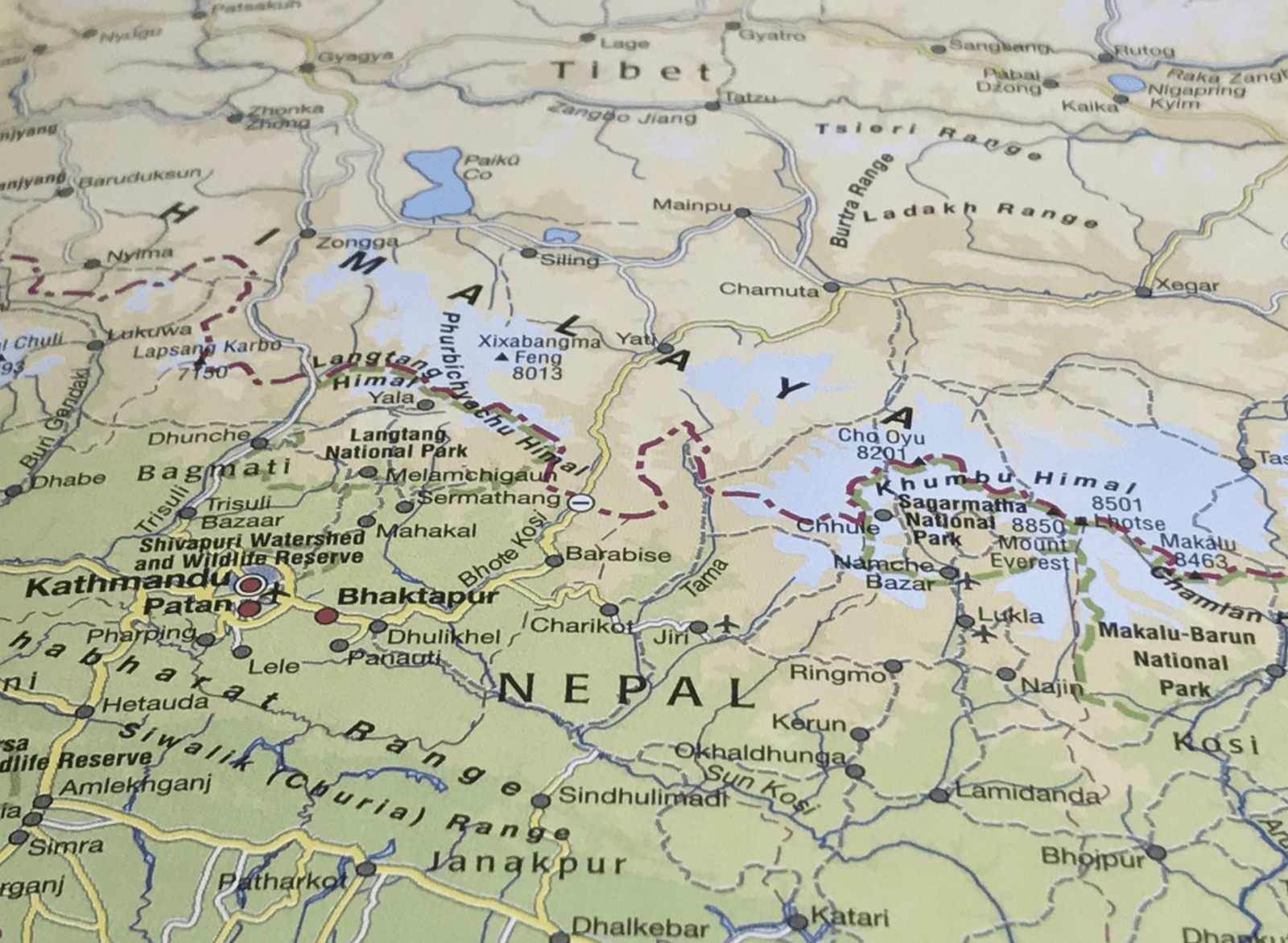
Nepalese, having the same religious ties, are also the followers of Kautaliya who coined the saying, ‘the enemy of your enemy is your friend’. Since 2015, Nepal has been working to improve its ties with Pakistan despite facing consequential threats from the Indian side. Especially after the abrogation of Article 370 and 35A, Nepal’s foreign office has issued many statements which focused on the resolution of Kashmir dispute through talks. They also offered to fulfil the role of a mediator to resolve the dispute between India and Pakistan. The Indian attempt which led the two South Asian neighbours to part ways was the building of the Himalayan link road over a disputed area between the states. Nepalese view this illegal construction as a stark example of bullying by its giant neighbour. According to data available online, the views of Nepalese people over the issue of Kashmir is such that they want local Kashmiris to come to the front and decide what suits them, as its their inherent right. To secure its strategic interests, Nepal declared the revocation of Article 370 and 35A as internal matter of India, but protests and demonstrations took place in Nepal against the Indian decision. Multiple talks have been held on diplomatic grounds between Nepal and Pakistan to discuss the issue and highlight the Indian atrocities in Kashmir.

Refraining from issuing an official statement, Nepal has tried to bring neutrality in its relations with India and Pakistan. The India-Nepal dispute on the territory of Kalapani has somehow contributed to their diverging paths. The layman thinking in Nepal has been supportive towards the Kashmir struggle. The population recognizes India’s intent and its capacity to subjugate their individual rights, however, like every other state, Nepal has its own interests which drive its foreign policy. Nepal has been vigilant since its clash with India over the disputed territory and they have clearly conveyed to India that their autonomy is of foremost importance through official statements.

The issue of Kashmir has its relevance with the Nepalese as many of them are working in Kashmir and Ladakh in the tourism industry. There are many Nepalese serving in the Indian army as well. It’s in the best interest of Nepal that any warmongering attitudes over Kashmir should be given talked down, as a war in Kashmir would be lethal for Nepal as well.

Another important factor to note here is the fact that if the Nazist Modi along with his team can change the special status of Kashmir, they can also pursue a reversal attempt on Nepal’s secular constitution. BJP has outspokenly reiterated that Nepal should become a Hindu state and pushed it to revive the Hindu monarchy again, which was abolished in 2008. Nepal has adopted a secular constitution as a solution to its internal conflicts and to evade any chance of instability. Indian intentions are clearly against the vision of autonomous and secular Nepal. Supporting the issue of Kashmir could strengthen the locals’ trust in the Nepalese government, as it would show that the government is against demolishing provincial autonomy. This move from the rulers of Kathmandu could help them enhance the ties between the people and the government.

The aforementioned facts prove that Indian plans for Nepal were far from well-intentioned, and that they wanted to hijack its autonomy for their strategic aims. Nepal being a sovereign state should realize that temporary economic assistance should not restrict them from taking decisions which have international importance. The issue of Kashmir has ties to Nepal on both humanitarian as well as strategic grounds. Nepal was chairing SAARC when the Indian government removed the special status of Kashmir. Considering Kashmir a vital issue for regional stability, it was Nepal’s responsibility as it held a position in the regional co-operation regime, which they tried to manage by maintaining equilibrium. The stance of the government officials was careful, after learning a lesson from the Venezuelan affair which led to a diplomatic fallout with the United States of America. While the government of Nepal was planning to issue a statement on the situation, India put diplomatic pressure on Nepal through government officials and Nepal’s ambassador to India. Though the offer of mediation was an overwhelming response from Nepal but being the chair of SAARC, they should have taken a more robust stance to preserve the rights of Kashmiris. The Indian aim for an Akhand Bharat is detrimental for the Nepalese. In fact, Indian motives for a greater India are a threat to every state in the South Asian region. Nepal should learn from the past and try to formulate policy measures which suit their interests rather than continuing collaboration with India. A neutral stance in any regional issues is no doubt a good way to escape from any conflict, but an issue like Kashmir which has direct political and strategic affiliation with Nepal should be dealt with a broader approach. Nepal should strengthen its ties with states like Sri Lanka, Pakistan and Bangladesh on equal terms. It need to get out of diplomatic influence if it want to enhance its power status in the region, and the Kashmir issue could be an opportunity for Nepal to abnegate Indian intransigence.
Indian Policies: A Stumbling Block in the Rise of South Asia

“Every neighbouring state is an enemy and the neighbouring state’s neighbour is a friend.”
 ― Kautilya, The Arthashastra

South Asia is one of the most important regions of the world. It is home to one-fourth of the human race, has a vast reservoir of talent in many fields, and two of the countries of the region are nuclear powers. Most significantly, the countries of South Asia, since they achieved independence, have not been able to forge a cooperative framework that can match the European Union or Association of Southeast Asian Nations (ASEAN). The South Asian Association for Regional Cooperation (SAARC) remains dormant. While regionalism has taken roots in every corner of the world, South Asia lags behind because of lack of trade and interconnectivity between regional countries. The major liability for this state of affairs rests on Indian intransigence and stupor. There is no doubt that Indian policies, inspired by Kutilya’s Doctrine, have made the region face a formidable set of challenges from within. Indian policies in the region have missed out on several potential gains: trade and investment could have been expanded and countries could have united around common regional problems that could finally unlock the region’s potential.

Like previous governments, in 2014, PM Modi managed to conjure up his image as proponent of good relations and peace by propagating “Neighbourhood First policy” within South Asia to signal India’s commitment to regional connectivity. Despite such extraordinary claims, Delhi’s regional activism and ambitions have also been victims to its own policies, exposing serious implementation deficits resulting into regional displacement. Six years on, from Modi’s “neighbourhood first” promises, there have been no real advances, while, relations with most neighbours have worsened. Indeed, “dis-connectivity” remains the default state of affairs between India and its neighbours. The risk side of this ledger sheet will surely keep the South Asian region’s progress on pause. The sorry state of connectivity that India actually follows reflects its actual intentions. New Delhi must learn to live in co-existence for enduring peace and growth of the region.

Unfortunately, India’s relations with each of its neighbours are in shambles. Kautilya’s Rajamdala (Circle of States) can be seen in action today in India’s foreign policy. It sees Afghanistan as a natural ally against Pakistan. Similarly, it sees Japan as a natural ally against China. History proves that India has continued interventionist policies vis-à-vis her neighbouring countries to pursue its hegemonic ambitions. Such steps were taken by India either through its military or it’s intelligence agency RAW. Besides supporting separatism in East Pakistan, which resulted in dismemberment of Pakistan and continued assistance to the separatist elements of Pakistan’s Balochistan province, New Delhi occupied Sikkim and subdued Bhutan. It particularly employed long history of supporting, which still continues in Sri Lanka.

Recently, India has unilaterally abrogated Articles 370 and 35A of its constitution in order to annex the disputed territory between India and Pakistan. This shows that Modi government has hegemonic desires beyond the borders, after the illegal alteration of disputed J&K status. This development combined with other reasons that have led to recent China – India border standoff, is further pushing the region towards instability.

India and Pakistan being two nuclear weapon states in the region have always been in continuous tension in one way or another. Due to New Delhi’s aggressive prospects of Kashmir policy and a hot border with Pakistan, all the old instincts and animosities were constantly kept alive. Ever since independence, the relationship remained a game of snakes and ladders, with more snakes than ladders. Clearly, all civil and military leaderships which came to power in Pakistan have been eager to improve relations with India. Latest in the series has been the recent public declarations made by PM Imran Khan to resolve all disputes, including the “core issue” of Kashmir, through talks. Whereas, India has frustrated every Pakistani move for regional peace and stymied regional cooperation with its obduracy.

Added to this, in May 2020, a dispute between India and its neighbouring country Nepal escalated into a full-blown diplomatic crisis. Similarly, relations with Pakistan have plummeted dramatically. India’s controversial move to pull the autonomy of the disputed region of Kashmir marks a major moment in the regional politics of South Asia. In this context, Islamabad has been repeatedly sensitizing the world about Indian nefarious designs against Pakistan. Recently, PM Imran Khan accused that India is attempting to create an opportunity to conduct a false-flag operation against Pakistan by alleging that Islamabad was supporting terrorism in Kashmir.

As unfortunate as it is, India’s irrational anger and divisive regional strategy has all but killed SAARC. The 34-year-old organisation has a symbolic value for regional cooperation and the bloc hasn’t made any significant progress to boost trade in South Asia.  All in all, SAARC is being held hostage by tensions created due to non-settlement of contentious issues between its member states. India’s trade with Afghanistan is hampered because of the prevailing tensions between India and Pakistan. Similarly, Pakistan’s trade with Bangladesh and Nepal depends on its good relations with India.

Moreover, to fail and hijack the SAARC, and to distance other SAARC members from China, India is now focusing on sub-regional organizations like the Bay of Bengal Initiative for Multi Sectoral Technical and Economic Cooperation (BIMSTEC) and the South Asian Sub-regional Economic Cooperation (SASEC). But the fulcrum of such alignments over the grave of SAARC is both illogical and contrary to the founding principles of these organisations.

In fact, the last SAARC summit, which was to be held in Pakistan in 2016, could not materialize as some member states led by Indiaboycotted the event. Pakistan’s recent efforts to host a ministerial meeting on COVID-19 and its decision to contribute to the emergency fund reflect seriousness, which Pakistan attaches to SAARC. The intention behind such a move is Islamabad’s vision where it sees SAARC as a foreign policy tool to rebuild its ties with South Asian countries for region progression as a whole.

India needs to project itself as a good neighbour to other countries of South Asia rather than a regional hegemon. While New Delhi must go on with efforts to solve specific differences with its neighbours, it has to look for a sea-change in its overall attitude. Given this, it is manifestly in the interest of New Delhi and the region at large, to forge a relationship of peace and amity with its neighbours, which will indirectly lead the region towards progression. To prove this point and for the larger good of approx. 1.9 billion people of South Asia, India has to create a lasting environment of mutual trust coupled with freedom from fear.