Kashmiris are Living in a Constant Fear of Demographic Change

August, a month of powerlessness and repression, has indeed been unwieldy for the people of Kashmir valley since 1947. A year ago, on 5 August 2019, an ugly development took place when India scrapped Jammu and Kashmir’s unique status, as given in the Indian Constitution’s Articles 370 and 35(A). The dissolution of these constitutional articles was another step towards the full annexation of Kashmir, a development that was used at the detriment of Kashmiris to obtain widespread support in India.

In order to change the demographic position in Jammu and Kashmir, India took measures in reverse to fill the Muslim majority valley with non-Muslims. In terms of the citizens of Indian Illegally Occupied Jammu and Kashmir (IIOJK), the Hindu nationalist government in India is completing violating political and democratic rights. Long before the surge of COVID-19 pandemic, Kashmir was lockdown for all social and political activities. From last year, the Modi government has closed down all telephone lines and internet networks.

Modi’s government, led by fascist Hindutva segments, has utilized pandemic to introduce politically motivated domicile rule, which has instigated apprehensions because it is raising fears of the beginning of demographic changes in the Muslim-majority Himalayan region. As per new domicile law, “those who have resided for a period of 15 years in Indian-administered Kashmir or studied for a period of seven years and appeared in Class 10/12 examinations in educational institutions located in the region are now eligible to become permanent residents.”

The citizens of Kashmir have unanimously resisted efforts to alter the demographics of this area after the introduction of domicile provision. The BJP government is aggressively seeking to clear the way for non-Kashmiri citizens to establish a permanent settlement in IIOJK. While Kashmiris have shown apprehensions on the issue of permanent settlements, the experts are claiming that it would trigger “demographic flooding.”

When India and Pakistan gained their independence, New Delhi initiated a campaign to change the demography of IIOJK. The majority of the Muslims in Poonch district was met by Indian siege in 1947 that led to Muslims being massacred in Jammu. How many Muslims died during the siege is not certain, but it is estimated that from 20,000 to 200,000 were killed and more than half a million were forced to relocate in Pakistan. Then again in August 1953 India politically interfered to change the demography of Jammu and Kashmir while arresting Sheikh Abdullah, who became PM of Jammu and Kashmir in 1948. Following his arrest, hundreds of protesters were murdered in demonstrations. Then again in August 2008 riots erupted, when Indian forces viciously killed fifteen peaceful Muslim demonstrators. These regretful events are just the tip of the iceberg, since the past 30 years, almost seventy thousand people have been killed, at least eight thousand have missing. Whereas, the extrajudicial torture cases are in hundreds and thousands incarcerated by Indian military forces.

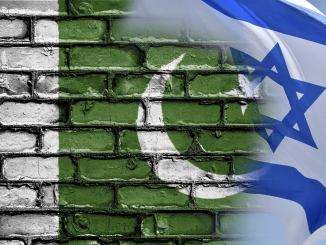
In IIOJK, the constant fear of demographic change has existed for decades and this apprehension is further intensified by Hindu right-wing groups openly calling for a change in the demography of Kashmir and integrationist politics. India has initiated a planned strategy to replicate the West Bank pattern of colonization like Israeli model in Kashmir, towards the displacement of local citizens, particularly Kashmiri Muslims through new settlers, to exert hegemonic influence. When attending a conference with the Kashmiri Hindus, a serving Indian diplomat in America claimed that “Kashmiri culture is Indian culture; it is Hindu culture” and he lauded Israel’s inhuman strategy of dealing with West Bank settlements.

Kashmiris have been living in terror of an ambiguous status given by the Indian Government for over 70 years and always feared for the expected change in the demography and status of IIOJK. Such anxieties have now been completely justifiable and deepened, which were perceived to be ridiculous and unwarranted at one point by the international community. In the backdrop of the recent security situation in IIOJK, the international community has shown no apprehensions, perhaps because of its ability to establish commercial and security ties with India. In breach of International Law and UN resolutions, India’s unconstitutional and undemocratic reforms in IIOJK are creating a serious breach of human rights.

Making Gilgit-Baltistan a Province of Pakistan

Voices for making Gilgit-Baltistan (GB) a province of Pakistan have been echoing for quite some time but on September 23, 2020, all the mainstream political parties of Pakistan showed agreement in making it happen. The  national media of Pakistan praised the decision and termed it as a major development but there is little talk about Pakistan’s long standing position on the Kashmir conflict, UN resolutions on Kashmir and the reaction from the Kashmiri leadership across the Line of Control. These factors and their ramifications for the people of Kashmir need to be examined, which this piece intends to do.

GB has been in a constitutional limbo; its people have suffered a lot due to their ambiguous legal status and have popularly demanded an end to their political and economic hardships and some of the commentators have even called the linkage of GB to Kashmir ‘forced’. But it is a historical fact that GB has been an integral part of the State of Jammu and Kashmir which cannot be overlooked or denied. It can be qualified through different historical sources, for example, C.U. Aitchison’s Treaties, Engagements and Sanads (1909, Vol. XI, pages. 256-257), popular tourist guidebooks of old (Ince’s Kashmir Handbook: A Guide for Visitors by Joshua Duke, 1888, pages 281-300; and A Handbook of Jammu and Kashmir State; Government of Jammu and Kashmir, 1945, page 3). Due to its strategic importance, the British deployed an officer in GB for four years (1877-1881) and after retraction, the Gilgit Agency was constituted again in 1889. It covered the areas of Ashkuman, Kuh, Ghizi, Punial, Nagar, Yasin, Hunza and Gilgit Wazarat. These areas were autonomous in some way but the Gilgit Wazarat was run by the Jammu and Kashmir State. In 1935, GB was given to the British on lease for 60 years but was withdrawn in August 1947. A popular revolt against the Dogra rule won independence for GB in November 1947, after that a request was made to Pakistan for accession. Pakistan deployed its troops and some of the other areas were liberated.

The accession request of GB was not accepted and Pakistan took direct control of it after signing an agreement (Karachi Agreement) in 1949 with the Azad Jammu and Kashmir leadership. For Pakistan, the reason for doing so was that GB was part of the Kashmir dispute and if a plebiscite supervised by UN was to be conducted in Kashmir, the Muslim majority in GB and AJK would have certainly voted for Pakistan. Hence the prospects of winning the referendum would have been high for Pakistan. Initially it was run through a bureaucratic setup and laws like Frontier Crimes Regulation (FCR), but it was Zulfiqar Ali Bhutto’s government in 1975 that made some administrative reforms and in 2009 the Government of Pakistan passed the Empowerment and Self-Governance order for GB. According to this, a legislative assembly was formed and some other changes were made, but the actual powers lay with the federal government of Pakistan as is the case with Azad Kashmir (AJK).

Given the disputed status of Kashmir, in the words of AG Noorani, does Pakistan have legal authority for making changes in the status of GB and AJK? The answer maybe in the negative but both the states, India and Pakistan, have governed their respective parts in the same manner. India revoked the special status of Kashmir and made it a part of union territory. On the other hand, there is a demand by the people of GB and a growing pressure from China that the status of GB must be clear as it is considered as the mouth of China Pakistan Economic Corridor (CPEC) and to avoid any critique by India or other states, China wants Pakistan to settle the legal status of GB. Now it seems that Pakistan is going to do the same with its part of Kashmir. Ironically, a month ago, Pakistan unveiled a new political map, showing GB, AJK and the areas under Indian control painted in green colour as part of Pakistan and reiterated that these are the disputed territories and the final resolution of Kashmir will be done in accordance with the UN resolutions on Kashmir, but now it is going to do the contrary, and doing so will be considered as a reaction and ‘befitting response’ to the unilateral Indian actions on August 5, 2019. It will not only change the status of Line of Control (LoC) into an International Boundary but will be an utter violation of Security Council resolutions on Kashmir. 

AJK’s Stance

On March 8, 1993, the High Court of Azad Kashmir, in a long judgment of 228 pages, ruled that the Northern Areas (GB) are part of Kashmir and made a reference to the objections of Pakistan on the integration of Kashmir with India, its stance before the United Nations Security Council and United Nations Commission for India and Pakistan. It read, “Allowing integration of Northern Areas to any Province of Pakistan would be tantamount to negation of Pakistan’s stance at home and in the Security Council.” However, the supreme court of AJK, while responding to an appeal, maintained that, “To summarize, in the light of what has been stated, the conclusion which we reach is that the Northern Areas are a part of Jammu and Kashmir State but are not a part of Azad Jammu and Kashmir, as defined in the Interim Constitution Act, 1974.” The mainstream AJK leadership also opposed any such move in the past but now there is a silence on their part.

In 1982, the government of Sheikh Mohammad Abdullah issued a white paper which stated that the areas now called Gilgit-Baltistan are a part of the State of Jammu and Kashmir. Both sides along the LoC opposed the idea of making GB a province of Pakistan. How they would react now is yet to be seen, but one thing seems to be clear, it would make the people of Kashmir more distrustful of the both states, India and Pakistan.

Kashmiris on both sides of the Line of Control have been looking for international bodies to play their part, but they got nothing and are disappointed. Will India and Pakistan cooperate and coordinate with each other and let the people have a say on both sides of the LoC? Given their actions, it does not seem so. What is the option Kashmiris are left with? Do they need to accept the situation as it is? Or do they need to face the realities and make an alternate strategy for the struggle? Perhaps the answers to these questions will take shape in the future. For the people of GB, if the government of Pakistan wants them to be empowered, they must be given their due rights by restoring the ‘state subject rule’ and a legislative assembly with authority and power. Their apprehensions need to be addressed rather than exploiting them in some other way. It will keep Pakistan’s long-standing position on Kashmir intact and address the problems of GB as well.

India’s Nuclear Assistance to North Korea

A recent report by the United Nations revealed that North Korea “did not halt its nuclear and ballistic missile programmes, which it continued to enhance, in violation of Security Council resolutions.” The United Nations Panel of Experts on North Korea in its two latest reports, the final annual report dated March 2, 2020, and the mid-term report dated August 30, 2019, identified over 250 alleged violations, involving 62 countries.

On a comparative assessment of all UN PoE reports on North Korea, it is interesting to note that India has repeatedly violated UN Security Council resolutions. The panel of experts in their report in 2018 found that between January and September 2017, India imported iron and steel valued at $1.4 million, iron and steel products worth $234,000, copper worth $233,000 and $526,000 of zinc. It was a clear and brazen violation of the UNSC resolutions.

Yet again, in 2020, it has been reported that India committed 5 to 10 violations. A close assessment of data shows that North Korea, with the help of India, employed a variety of evasion techniques to avoid detection of such illicit imports and these evasions directly support North Korea in financing its nuclear programme despite being under strict global watch.

India’s North Korean connection is not just confined to trade and business, it has a nuclear aspect too. As per earlier reports, India has trained more than thirty North Korean students at its ‘Centre for Space Science and Technology Education in Asia and the Pacific’ (CSSTEAP), even after the UN issued nuclear sanctions in 2006 that prohibits member countries from providing technical training to Pyongyang. These students later on became part of North Korea’s National Aerospace Development Administration, which has been playing a significant role in its nuclear programme.

The lapse, which was exposed in March 2016 in an annual report to the UN Security Council, also highlighted that the courses offered at Indian research institute were relevant to its nuclear weapons and ballistic missile development programme. India rejected the report on the courses being offered by saying that the topics covered were “very general” and the basic principles of these courses “were available from open-source”. If these were general in nature, why did India refuse further admissions to North Korean students after the lapse was exposed? 

Astonishingly, North Korean student Paek Chang-ho, who studied in CSSTEAP, became the head of an agency involved with North Korea’s first satellite launch in 2012. This strongly supports the proposition that India has actively helped North Korea develop and modernize its nuclear and missile program. There isn’t a single doubt that the training at CSSTEAP very well helped North Korea’s military programme.

It is an open secret that India trained North Korean students, who became moving force behind country’s nuclear and missile programme. India’s trade relations with North Korea, despite consistent appeal from the UNSC, continued to grow. At one point, it became North Korea’s 3rd largest trading partner with a trading volume of more than $200 million. Interestingly, the volume of the trade is highly in favour of India.

The cyber domain is another important aspect of Indian and North Korean relations. According to a report published by the US Army, titled ‘North Korean Tactics’, North Korea has about 6,000 hackers, many of whom operate from other countries, such as India. Earlier, the cyber security firm, Recorded Future, found intense North Korean internet activity in India where nearly one-fifth of North Korea’s cyber-attacks originate. As per latest reports, North Korean hackers, who are physically stationed in India, were involved in organized cyber-attacks throughout the world. By looking at this, one can reasonably argue that North Korean hackers along with Indian counterparts are involved in global cyber warfare. 

The mystery behind India and North Korea’s secret nuclear connection has long been busted. India is complicit in North Korea’s nuclear programme and it has continued for decades. The pattern of Indo-North Korean relation suggests that it was deliberate and occurred with the consent of Indian authorities.

It is imperative for the members of UNSC to re-assess India’s role in the North Korean nuclear and missile programme. From the training of North Korean scientists to hosting North Korean hackers, India’s secret connection needs to be thoroughly investigated. There is a big possibility that India and North Korea have exchanged nuclear technology.

There is a need to investigate why India has been assisting the North Korean nuclear programme. India is providing both financial and military assistance to North Korea in total disregard to and in violation of global non-proliferation regimes and at the expense of regional and global stability.

Gilgit Baltistan Reforms

There is a renewed debate on Gilgit-Baltistan; with varying opinions from political parties on the future of the territory – which at the time of a UN plebiscite on Kashmir would play a crucial role. It is however, important to understand the issue with a constitutional lens to appreciate the legal processes that have taken place over the years.

 If one peruses the legislation vis-à-vis G-B over the years; with reference to the 1999 Supreme Court Order on Al Jehad Trust v The Federation of Pakistan, and the 2009 Governmental Order pertaining to “Empowerment & Self-Governance” of Gilgit-Baltistan, the latter’s diverging path from the Supreme Court’s Order from 1999, can clearly be seen. This deviation is further exhibited in noncompliance of the court’s order to provide full citizenship to the people of Gilgit-Baltistan or the Northern Areas as it was formerly known. Moreover, the constitutional status of G-B was also left in a limbo, which fostered other problems as a consequence which in effect led to the creation of the G-B Council to handle them.

Under the People’s Party Government in 2009, much ground was covered in terms of awarding G-B the status equivalent to that of a province, however the spirit of the court’s order was not followed. It was also in this Order that Gilgit-Baltistan Council was setup with the Prime Minister of Pakistan as its Chairman, the Governor of G-B as its Vice-Chairman and the Chief Minister as a member. The establishment of this Council essentially meant a parallel government in G-B – in effect, undermining the role of the Chief Minister as the administrative head and overriding his authority. At the same time, unbacked by the constitution, the authority of the newly instituted position of the Chief Minister was already limited such that the Offices of the Accountant General, Directorate General Audit and Inland Revenue were placed under the Federal Government of Pakistan. In comparison, in all other four provinces the revenue system is directly under the provincial government.

It is understood that bearing that the region’s territory is currently disputed and subject to UNSC Resolutions – issues that are inherently complicated, the promulgation of several laws is easier said than done. Moreover, in the absence of a constitutional amendment, the linkage between the Federation and G-B necessitated the establishment of the Council. However, the provision of basic rights such as the right to citizenship and other constitutional rights have been unnecessarily delayed for decades – which has benefitted none, but usurped the rights of the people for over seven decades. Moreover, it may be important to consider that it is not so much that the problems are being ignored altogether, rather the underlying issues that trigger resentment and discontent amongst the people are not being dealt with the urgency they warrant. The people of G-B, especially the educated and bright youth, await the Federal Government to empathize with them and deliver them their due rights expeditiously.

Nevertheless, it seems that G-B’s reforms are moving are in the right direction, albeit at a snail’s pace. For instance, in 2015, following a demand of the people of G-B for further empowerment, the then Prime Minister, Nawaz Sharif constituted a committee to submit a report on the issue. The committee recommended that G-B may provisionally be given the de-facto status of a province by delegating further legislative, administrative and financial power. The matter was dealt with again in 2017, and in 2018 wherein an important development took place in the form of “2018 Gilgit-Baltistan Order” which replaced the 2009 Empowerment & Self Governance Order. This Order essentially transferred powers formerly with the G-B Council to G-B Assembly including the authority to pass legislation regarding mineral, hydropower and tourism sectors.

However, this Order was challenged in the G-B Appellate Court on the basis that it did not address the concerns of all the stakeholders. This decision was then suspended by the Supreme Court of Pakistan – following which, the National Security Council decided to hold consultations between stakeholders prior to the implementation of the Reforms Package 2019.

In any case, whilst the general direction is right, there is a need to accelerate the processes, in terms of provision of all the rights to the people of G-B that are enjoyed by other citizens of Pakistan. In the political realm, the de-facto province has been treated with negligence and highhandedness for decades, with little thought for the people of the region. With respect to the legal domain, their access to justice and citizenship has long been curtailed owing to lack of willpower of the federal government more than anything else. Whilst its link to the Kashmir issue has been of the impediments in its declaration as the fifth province of Pakistan; its status of an interim province through a constitutional amendment could have long resolved the issue altogether. On the economic side, the region requires attention from the federal government and with their non-inclusion, with respect to the mega projects such as Bhasha Dam and Pak-China Economic Corridor, further lends to their resentment.

It is evident that in light of the present regional issues and the current political impasse between the political parties, the status of Gilgit-Baltistan is likely to face further delays – nevertheless, it is up to the government of Pakistan to maneuver its way to provide basic rights to the people that they have been demanding for decades now. This will require not will-power, statesmanship and empathy on the current government’s part, but also the vision to appreciate the importance of the region in the long-term.

Nuclearizing Compellence

The nuclear deterrence established in 1998, between India and Pakistan, has lived to prevent major crises from escalating into an all-out nuclear war. The efficacy of the nuclear deterrence was duly acknowledged by both India and Pakistan in the Joint statement of 2004, recognizing each other’s nuclear capabilities as a factor of stability. India; however, soon manifested its discomfort with the idea of nuclear deterrence and opted for other coercive means to force Pakistan to behave in a certain desired manner.

By introducing Cold Start Doctrine (CSD) in 2004, which was later re-named as Pro-Active Operations (PAOs), India tried to overcome its strategic frustration by conventionally threatening Pakistan. The idea was to punish Pakistan through a limited conventional war without crossing Pakistan’s ‘perceived’ nuclear threshold. Adoption of PAOs doctrine was the classic manifestation of India moving towards strategy of compellence rather than submitting to the realities of nuclear deterrence. However, the introduction of ‘Nasr’ by Pakistan in the equation denied India to employ any conventional adventurism against Pakistan. This resulted in a doctrinal dilemma for India.  

Indian inability to effectively operationalize and execute CSD/PAOs to punish Pakistan – in the face of its newly demonstrated capability to plug the perceived gaps – led it to adopt several other means and tools of compellence which included; surgical strikes, nuclear signaling, escalation dominance and preemptive counterforce doctrine to execute its strategy of compellence. Indian offensive posturing – emboldened under fascist Modi – indicate that compellence is delivered through adopting a war-fighting doctrine.

Compellence includes the actual use of force in addition to the threat of use of force and, therefore, only increases the risk of conflict/ crisis escalation. Deterrence, on the other hand, prevents both sides from initiating a war due to the threat of Mutually Assured Destruction (MAD). Thomas Schelling defines compellence as ‘direct action that persuades an opponent to give up something that is required.’ It also entails a mix of diplomatic, military and economic threats to compel the adversary to behave in a certain manner.

India’s strategy of compellence failed during the recent 2019 Kashmir crisis which led to an aerial confrontation between the two nuclear armed neighbors which was first since 1971. The surgical strikes used as a tool to compel Pakistan were countered by a measured response from Pakistan which reinforced Pakistan’s conventional deterrence. Indian conventional failure steered it to employ nuclear compellence by deploying nuclear submarine and missiles against Pakistan. The escalatory approach adopted by India to dominate the crisis was successfully thwarted by Pakistan’s conventional and nuclear deterrent.

Indian use of nuclear threats and aggressive deployments, following the undesirable outcomes of 2019 Kashmir crisis, demonstrate an Indian attempt to use its nuclear capability as a tool of compellence. The associated danger with nuclearizing compellence is the fact that a failure in employing compellence has the potential to outweigh any conceivable gains. In his seminal work, Kenneth Waltz identified this problem as he wrote, “One state may threaten to harm another state not to deter it from taking a certain action but to com­pel one.” This is precisely the situation taking shape in South Asian scenario. He further explains what role the intent plays along with possession of nuclear capability as he writes, “If nuclear weapons make the offence more effective and the blackmailer’s threat more compelling, then nuclear weapons increase the chances of war…”

Like Napoleon III threatened to bombard Tripoli, if the Turks did not comply with his demands, Modi threatened Pakistan with Qatal ki Raat – a night of massacre. Modi’s blackmail did not stop at mere statements and escalated to deployment of nuclear capable missiles and submarines against Pakistan in a bid to demonstrate Indian capability to dominate escalation which in itself is a risky venture.

The risks associated with use of nuclear capability as a tool for compellence demand that India and Pakistan reaffirm the stabilizing role that nuclear capability has played and can play in avoidance of war and establishing durable peace in the region. For this, it is important that other cooperative means are employed to address the root-causes of hostile relationship and outstanding disputes. In a nuclearized environment where mutually assured destruction is a reality, use or threat of use of force is not worth the risk for any elusive desirable outcomes.

Sino-US and US-Soviet Cold War: A Comparative Analysis

The term ‘cold war’ was used for the first time by a famous British writer George Orwell in his essays on the tensions between the USA and USSR, now Russia. Generally, the term is used for all rivalries between two parties other than direct military confrontation. History has witnessed a long episode of tensions between the two great powers which lasted for decades. Due to ideological differences, the United States and Soviet Union had a wide range of encounters with one another in shape of proxies, arms race, alliances, soft power, propaganda and assassinations in the 20th century. At the end of the 20th century, the USSR couldn’t stand against its strong opponent and broke peacefully into smaller states. Thus, the US emerged as a victor and the world saw tremendous economic development after that. Today, once again, the international political system is on the verge of another cold war. China has gained a great economic status and is challenging the US’ hegemonic position in political and economic aspects of the world. The China-US cold war seems different than the Soviet-US cold war, and here are a number of factors which distinguish the former from the latter.

The recent tensions between China and the US increased when both powers held the other responsible for the coronavirus outbreak. In this regard, US President Donald Trump has mentioned several times that the said virus was prepared by China in the laboratory of Wuhan. Moreover, issues of Taiwan, Hong Kong and South China Sea have exacerbated tensions between the two powers. Most recently, the US applied a number of diplomatic restrictions on Chinese diplomatic staff in its territory.

For the last thirty years, the focal point for China has been its economy. China has kept its border disputes aside and has concentrated on its exports and building its economic infrastructure. Due to its special economic intentions, China is investing billions of dollars in various states of the world. It has not only earned a special status in its own region, but all over the world. A number of states have their concerns regarding the strong political and economic position of China in the international system. Among these states, the United States of America is at the top of the list, and it seeks to contain the increasing influence of China in the international arena.

A number of prominent political analysts consider trade an important area of confrontation between the US and China. Due to such different dimensions, the results of this cold war seem different and more destructive than that of the former one. Back in the 20th century, the Soviet and US conducted a 45-year-long confrontation through their proxies. It was an ideological battle, in which the US capitalist system and western liberal democracy stood tall against the Soviet communism. Without any direct military confrontation, the strong economy of the Soviet collapsed, and it disintegrated into 15 small states. But if the second cold war prevails for a long time, the end is expected to be much different from the former one, because in past, the US-allied European Nations were not very economically dependent on the Soviet nation, as they are now on China. Currently, China exports a large amount of raw materials to a large majority of European powers and US allies. For instance, Germany, the most influential state in the European Union after Brexit, has exported materials worth 96 billion Euros to China in 2019. Moreover, it has sold 4,200,000 cars to China since 2017. Unlike the Soviet Union, China is one of the main stakeholders in the European economic infrastructure. Under such circumstances, it will be not possible for a number of European states to stand with the US against China.

Similarly, due to the strong economic and political status of China in world affairs, it will not be possible for several states to remain neutral in this cold war, as they did in the Soviet-US rivalry. For example, India, despite its inclination towards the USSR, remained neutral in the cold war. However, this time it will be difficult for it to keep a non-alignment policy. India is already engaged with China in border disputes, and any further increase in border issues will certainly push India away from China to the US camp. At the same time, India imports a huge amount of raw materials from China for its industries, therefore, in case of any further escalation, it will be difficult for India to fulfil its needs from any means other than China. Moreover, it will also be tough for countries like Japan and South Korea to experience such tensions between the two major powers on its doorsteps, despite the fact that both have a close alliance with the US.

Along with other trade activities, the Belt and Road Initiative, a signature project of Chinese President Xi Jinping, has extended to Latin America, in which 16 out of 20 states are participating. Argentina is one of the most prominent states of the said region to have a very close economic partnership with China. Moreover, China and Brazil have raised their economic ties up to 13 percent. Similarly, like Latin America, China has deep influence over the African continent as well. China is giving 40 percent of its total aid to various African states, which is a huge amount of economic aid.

Along with the economic sector, China is also increasing its presence in global political and health affairs as well. Currently, China is heading four out of fifteen United Nations institutions. In 2017, China-backed Ethiopian Tedros Adhanom was elected as Director General of the World Health Organization and the UK candidate was defeated, which shows the effective influence of China in international institutions. Under such scenarios, this opponent of the US is different and much more influential as compared to the previous one. China has gained a tremendous position in the international system, and almost the entire world economy, including US, is dependent on it. Along with hard power and economic position, China is also pursuing its soft power in different ways. In such circumstances, if the new cold war continues for a longer time, the result might be quite destructive, as China is different from the Soviet Union in a number of economic and political aspects.

India’s Acquisition of Rafale Fighter Jets: Does Pakistan Need to Panic?

The first batch of 5 Rafale jets landed at the Ambala airbase in India on 29th July, 2020. The induction of these fourth-generation jets has been hailed widely in India and the notion prevails that a decisive technology has been acquired which will add significantly to existing Indian capabilities. 

Developed and designed by Dassault Aviation, the Rafales are twin-engine, multi-role fighter jets. They are nuclear-capable and can undertake both air-to-air and air-to-ground combat missions. For air-superiority missions, India has ordered the European-manufactured ‘Meteor’ air-to-air missiles which have a range of 120-150 km. Besides, these jets can also be armed with the ‘Scalp’ fire-and-forget cruise missile which can hit ground targets at a distance of 300 km.

The deployment of American AMRAAMs (Advanced Medium-Range Air-to-Air Missile) gave Pakistan first-shot capability. This edge proved to be a decisive factor in the aerial encounter between India and Pakistan on 27th February, 2019 when the latter shot down an Indian Mig-21 Bison and Su-30 MKI. This resulted in expedited induction of the Rafale jets by the Indian government. It is widely touted by the Indian media that the induction of long-range missiles will help the Indian Air Force (IAF) in offsetting this advantage of the Pakistan Air Force (PAF).

The hype that has been created around this acquisition is considerably exaggerated and is reflective of India’s embarrassment which the IAF had to face when it lost its two aircraft in February last year. The introduction of these aircraft in the IAF should not be used to spread despair in Pakistan. In reality, the mere induction of these jets will neither set the future trajectory of the regional environment nor will they have an immediate impact. It is worth pointing out that these jets will not even be fully operational and integrated into the existing Indian systems for another two years.

Labelling this technology a “game changer” for the strategic stability of the region is problematic since similar propaganda was created following India’s acquisition of the Russian-made Sukhoi (which although a highly advanced aircraft), was downed by PAF on 27th February through better utilisation of technology, employment and tactics. Hence, Prime Minister Modi’s statement that the aerial engagement would have led to a different result if Rafales were employed is questionable, since the Rafale is not a fifth-generation jet. Furthermore, technology can be offset by training and tactics as was amply highlighted when PAF surprised IAF and proved itself better in all aspects of combat.

Indian policymakers continue to claim that this technology will enable India to dominate Pakistan. However, India has always maintained numerical advantage as well as technological edge over Pakistan in the past. In aerial engagements, these factors do not ensure victory as the results are context-driven.

The recent Ladakh episode demonstrated that India is hesitant to escalate with China given the consequences of such an escalation. The aerial engagement of 27th February and the standoff at Ladakh are illustrative of the reality that India lacks the capabilities to tackle Pakistan or China separately, let alone together. The acquisition of technology, a new “toy” is a means to create nationalistic, anti-Pakistan hysteria in its citizenry by demonstrating an aggressive posture.

Apart from augmenting its offensive capabilities, India is also investing in its defensive capabilities. In 2018, the Modi government inked a deal with Russia for the purchase of 5 regiments of S-400 air defence systems, which are due to be delivered in 2021. What is concerning is that a combination of such weaponry and systems could be extremely destabilising for South Asia even if it will be quite some time before things play out according to Indian desires.

Firstly, it will take considerable time to device a deployment plan for the newly acquired technologies. Secondly, India is acquiring its systems from different states: S-400 from Russia; NASAM II missiles system from the United States; Phalcon AWACS from Israel; and Rafale jets from France. Such technologies and systems are highly advanced and diverse which would require mammoth integration plans in the existing IAF network. Apart from being a challenging task, NATO countries may be reluctant to integrate their systems with Russia’s military equipment. India initially planned to integrate the Meteor missiles on the Mirage 2000, the Su-30 and the Tejas Mark II. However, India was informed by the manufacturers that French-made Mirage 2000 and the Russian Su-30 MKI were not suitable for the long-range missile. Hence, compatibility problems will pose challenges to aggressive Indian ambitions. Moreover, this diversity will also put pressure on training and maintenance tasks.

The introduction of the Rafales will put pressure on Pakistan to add to its inventory to counter this threat. Consequently, the acquisition of new technology will become a dire necessity.

In an aerial engagement, first-shot capability is crucial – whoever has this edge forces an adversary into deceptive manoeuvring or take the risk of being intercepted. Cognizant of the evolving strategic environment, Pakistan is already exploring avenues to address any and all aerial threats from the Indian side.

The PAF is in the process of acquiring Chinese PL-15 long-range missiles, with a range of 250-300 km for JF-17 Block III which will offset this balance by giving first-shot capability to Pakistan. The attainment of fifth-generation fighter jets is the most befitting response in this regard.

Pakistan is also pursuing the development of fifth-generation fighter jets with China under the AZM stealth fighter program. If Pakistan is able to develop a fifth-generation aircraft, it will be a significant step towards countering belligerent Indian actions.   At the end of the day, it will be a matter of time and resources which will ultimately play a crucial part in regional stability of South Asia.

India’s Delusional Nuclear Strategy

Overt nuclearization of South Asia in 1998 and preceding crises between India and Pakistan have brought the concepts of nuclear deterrence and compellence in limelight in this region. These concepts are the legacy of advent of nuclear weapons and the Cold War that ensued. Although there is no universally accepted definitions of these concepts but generally, nuclear deterrence is defined as forcing a rival to stop a move by threatening the use of nuclear weapons and compellence is about forcing a rival to make a move by threatening the use of nuclear weapons.

Looking at the crises, such as, Kargil Conflict, Twin Peak Crisis, Mumbai Crisis and most recently the Kashmir Crisis of 2019 that occurred between two nuclear rivals in South Asia, nuclear deterrence seems to be the clear winner. Despite serious Indian intensions of attacking and dominating Pakistan, nuclear weapons have deterred all these moves and stopped the crises from escalating. The nuclear deterrence, therefore, has been the corner-stone of stability in the region.

The trigger for majority of the above-mentioned crises were the militant attacks in India, which it blamed on Pakistan as a knee jerk reaction without providing any solid evidence. The Indian strategic community, including officials and non-officials, accused that Pakistan is supporting proxy wars within India and nuclear deterrence has not been effective in stopping Pakistan from supporting the militant groups. This strategic frustration urges them to explore new means and thus favor nuclear compellence as a viable strategy towards this end. The adoption of proactive military strategies, such as Cold Start and Land Warfare Doctrine, possible revision of claimed adherence to NFU commitment and the so-called surgical strikes by India are different variants of this compellence strategy.

After nuclear deterrence neutralized India’s conventional military superiority over Pakistan, it has been continuously exploring the space to engage Pakistan in a limited warfare under a nuclear overhang. Towards this end, New Delhi simultaneously uses the mantra of two-front war and the so called challenge of cross-border terrorism as pretext to justify its increasingly offensive military posture. Recent events also indicate that the Indian military forces have become a tool for political leadership to achieve their domestic political interests. The afore-mentioned mantra allows India to allocate resources for advanced military capabilities and also using military skirmishes with Pakistan for meager electoral objectives. India projects to its populace that the burgeoning military potential would allow its forces to punish Pakistan and compel it to change its alleged support for terrorism. This pursuit of nuclear compellence against Pakistan is a dangerous trajectory and destabilizing for strategic stability in the region. Compellence requires strong military muscles, for that, India is improving its nuclear and conventional military forces both quantitatively and qualitatively. In a nuclearized environment, such an approach only exacerbates the risk of conflict escalation between the arch rivals.

According to SIPRI Year Book 2020, India is the second largest importer of major arms and with defence budget of $71.1 billion has become the third largest military spender in the world surpassing Russia and Saudi Arabia. It has signed a contract with France for the purchase of 36 Rafale fighter aircraft, 9 of which have been delivered. The Indian officials have termed these aircrafts as game changer in the region and also claimed that if India possessed this capability earlier the outcome of 2019 Kashmir crisis would have been different. India is also moving towards the development of BMD system and has signed a deal for the acquisition of S-400 from Russia. This BMD system can give India a false sense of security and encourage them for proactive military strike against Pakistan.

In the nuclear domain, different studies have shown that Indian nuclear weapons making capability is much more than what is portrayed. A study titled ‘Indian Unsafeguarded Nuclear Program’, published by the Institute of Strategic Studies Islamabad (ISSI) and co-authored by four nuclear scholars, estimated that India has sufficient material and the technical capacity to produce between 356 to 492 nuclear bombs. Similarly, another study by Dr Mansoor Ahmed for Belfer Center, estimated that India has fissile material for approximately 2261 to 2686 nuclear weapons.

Indian military modernization that contributes to its strategy of compellence, ambition of becoming a regional hegemon and a net security provider has ramifications for regional strategic stability. The 2019 Kashmir crisis has shown that both countries are willing to go an extra step in a nuclearized environment, which is unprecedented in the nuclear history of South Asia. Air Force of both the countries engaged in a combat and an Indian fighter plane was shot down and its pilot captured by the Pakistani authorities. The crisis de-escalated only because of restraint shown by Pakistan and its decision to release Indian pilot, otherwise, the crisis could have gone above on the escalation ladder. 

The current Indian political regime under Prime Minister Narendra Modi is hell bent in its rhetoric of teaching Pakistan a lesson. There are statements by the political and military leadership that Pakistan’s Azad Kashmir will be their next target after they have changed the constitutional status of IIOJ&K. This is a dangerous trajectory and can have consequences for India-Pakistan deterrence relationship.

It is a fact that both India and Pakistan are nuclear weapon states and it is very difficult for one nuclear state to compel the other nuclear state. This compellence strategy in a nuclearized environment can easily escalate the crisis to a nuclear war.  Therefore, Indian compellence strategy against Pakistan is filled with escalatory dangers and putting the regional and global stability at risk.    

SAARC Region Needs to Prepare for the Second Wave of COVID-19

Covid-19 pandemic continues to be the most serious threat to public health globally. Worldwide case numbers crossed over thirty million and over nine hundred thousand lives lost. To Trump’s dismay in an election year Covid-19 patients in the US are now over six million cases. In India despite of the world’s strictest lockdown imposed by Modi government there are over five million of Covid-19 patients making it world’s second & South Asia’s worst-affected country. Pakistan has a case load of around three hundred thousand patients.

Alongside Japan, Spain, New Zealand, World Health Organization (WHO) has commended Pakistan’s efforts and urged other countries to learn from Pakistan’s experience of managing pandemic with much better outcomes.

All SAARC countries have similar demographic profile, multi-generational households, high density urban centres, greater proportion of youth population and a woefully inadequate public health system. Looking at the current situation it will be very beneficial for the member countries if the Secretary General SAARC H.E Mr. Esala Ruwan Weerakoon calls for an urgent meeting of the health ministers. The agenda to be focused on sharing the best practices on managing this pandemic and SAARC countries can learn from Pakistan’s policies and practical measures it adopted.

WHO’s chief Tedros Adhanom Ghebreyesus recently said the pandemic could be over in under two years but warned that “no country can just pretend the pandemic is over”. This is a message for countries whose leadership is still grappling with the pandemic with no clear strategy in place. For SAARC group this means that all efforts should be adopted to limit the regional spread of the virus. On the other hand, the vast population which is infected by the virus cannot be adequately looked after as South Asian countries have a very weak health system. It is not adequately equipped to provide the critical care coverage to most of the population. The middle and lower earners who do not have financial means to pay for Covid-19 treatment packages being sold by many of the private hospitals.

Discovery of new treatments and vaccines could provide the relief from this pandemic. However, such discoveries will not give immediate benefits to less developed countries. Experiences from the previous pandemic are sobering. During the 2009 H1N1, or swine flu outbreak rich countries bought up virtually all available supplies of vaccine, leaving poorer nations struggling to procure supplies. With Covid-19, the stakes are far higher. It has spread across the globe recognizing no flags and no frontiers. Rich countries again behaved in the same manner and literally muscled out poor countries from procuring diagnostic tests, protective equipment, and lifesaving critical equipment. So, what this means is that SAARC nations should increase the lifesaving capabilities of their health systems.  As in reality we all may be at the back of an exceptionally long queue to procure reliable treatment or if a vaccine for Covid-19 becomes available.

As Pakistan continues to lead the way among SAARC countries in controlling the spread of the virus, overall smart lock down strategy alongside targeted testing has proven useful up till now. However, for many SAARC nations where infection cases are much more prevalent challenge remains to save lives and the livelihoods of millions of unskilled and daily wage workers. Across South Asia as educational institutions will be welcoming students back to the classrooms, it is critical to ensure that public health systems are suitably equipped to deal with the possibility of second wave of the Covid-19 pandemic. It is not just a theoretical risk but a clear and present danger to general population. Dr Kamran Pasha Physician in acute and internal medicine who divides his time working in the UK & Pakistan says that “availability of life saving equipment improves life chances of patients who are suffering complicated health issues due to Covid-19. So wider access to ventilators and other ICU equipment and drugs in government & private hospitals will hugely help in reducing death rates among the Covid-19 patients”

Despite the recent push to acquire lifesaving critical care equipment by the regional governments we have a woefully small number of ventilators available. For SAARC countries to adopt smart lock down policies all the government need to work jointly where their heath, finance and the heads of state – all work closely to make sure that they are able to equip the hospitals with the necessary equipment. Most important step Pakistan and other SAARC governments should take is to continue with the tax exemptions for at least a year on import of critical care equipment. Exempted items should include ventilators, BIPABS, oxygen kits, PPE, and associated items. SAARC governments will suffer a marginal drop in tax revenues however lives they will be able to save are far more valuable both in terms of economics as well as social benefits.

Covid-19 requires a joined up regional approach by South Asian neighbours. A high-level SAARC meeting is essential at this point of time. “The ICU is always full,” Dr Prabhat Kumar Singh, director of the All India Institute of Medical Sciences in Bihar’s state capital Patna, told the media. “Our biggest challenge is expanding our critical care capacity.” Countries like India at this stage should rise above narrow foreign policies agenda and work together with Pakistan and other SAARC members to save millions of poor citizens across the region who are affected by this deadly virus.

THE FUTURE OF AFGHANISTAN

The great Peloponnesian war was a war of choice and became a major cause for the destruction of the Greek civilization, murder of thousands of Athenians and Spartans, and engulfing the then region in perpetual wars. The war on terror was also a war of choice and had so far destroyed many countries, killed millions and engulfed the region in proxy wars. These are the consequences of wars, but more importantly, wars that are made on choice. The Peloponnesian war was concluded with the fall of Athens and the Spartans were successful in establishing a controlled democracy in Athens. But let’s look at the possible outcomes of the war on terror and the peace deal that has been signed on 29th of February 2020 between US and Afghan Taliban.

Before going into the possible outcomes of war on terror, let’s try to understand the weaknesses of Taliban and the Afghan govt. US has so far secured its face saving interests with Taliban by urging them not to allow any other terrorist group to operate in Afghanistan to attack the US forces or its allies, but what about the intra-afghan negotiations and the future of Afghanistan!

The strength of Taliban can be estimated from the fact that they control almost 20 percent of Afghanistan, while the govt controls 30 percent. The remaining 50 percent Afghanistan is contested between Taliban and the Afghan forces, which have resulted in the deaths of 45,000 Afghan forces and police from 2014 till 2019. As far as Taliban forces are concerned, there are 60,000 active  fighters and 90,000 seasonal force pitched against 2,70,000 Afghan forces. But the fact is that Taliban are fighting for more than 20 years, have known the tactics of gorilla warfare, and are motivated. Afghan govt weakness can be seen from the results of the last elections which has intensified power struggle between President Ghani and Abdullah Abdullah. There is also a widespread corruption, lawlessness and attacks on the government employees. Taliban has benefited from this situation and are pushing hard their own agenda. Despite these hurdles, there are options that could lead to a last solution of Afghanistan.

The 1st possible outcome of the peace process is that Taliban should be given permanent bureaucratic and legislative positions in the government. In this very case, polices and rules will be made by the top leaders of the Taliban. The lower ranks of Taliban will be consulted for implementation. This is also the current situation of policy making process in Taliban, and so far they are good at it. The permanent legislature will save Taliban from popular voting, and they will contest in their own sphere. The permanent legislature from Taliban side will also ensure that the laws of government are as per the teachings of Quran and Sunnah, and will have limited veto power. The bureaucracy in this case will be posted anywhere in Afghanistan and the Taliban legislature will decide for whole of the Afghan members of the Loya jirga.

 The 2nd possible outcome may be that Taliban are given certain districts with their own rule but as part of a federation with the central govt. The central govt will control its defense against external forces and proxies, and its economy. Taliban may be given weightage in the foreign policy making as they have friends and foes in the region. Along with certain districts they will also have MPs in the central legislation as representatives of their under-controlled districts. The problem in this setup will be the dualism of laws, but it can be tackled by the constitution (which is another topic in regards to Afghanistan) by dividing powers between central and provincial govt. In this very case, Taliban will be restricted to certain areas of Afghanistan, where they will run the administration as per their wish.

Another possible scenario is the failed dialogue between Taliban and the Afghan government. This will be the worst situation the people of Afghanistan could ever imagine. There will be a civil war, not only among the government and Taliban – the two major parties, but also among the other groups like TTP, ISIS-K and Al-Qaeda. They will try to capture more and more districts. There will be a power struggle between different groups and no one will have a clear majority.

This situation will be worsened, if external forces also try to exploit it for their self interests. The regional countries along with powerful state will try to turn table in their favor. Pakistan will be the most affected country in this scenario, as more Afghan refugees will turn towards Pakistan. With dwindling economy, Pakistan will not be in a position to accommodate refugees or to turn country to a hub of crimes. The priority of Pakistan in Afghanistan will be to bring an end to the civil war and support Pashtun groups loyal to the country. Saudi Arabia might join Pakistan, to stop the Iranian influence in Afghanistan. As a result, Iran will be in the opposite block against Saudi Arabia. India will try to side with the Afghan government to win its support and break pro Pakistan coalition. China may  also support Pakistan to secure its economic interests in the region. Russia provides diplomatic support to the Taliban, and is likely to side with them, mainly to oust the US forces from the Afghan soil.

The main actors of Afghan peace process and regional countries should keep in mind that such a situation is not in the interests of anyone. It will be another war on choice with serious consequences for the whole region.

The regional countries should avoid any such situation at any cost. They should support the peace process to have a clear and sustainable solution to the problem of Afghanistan. The regional countries should stop their lobbies to fulfil their petty self-interests in the peace process and let the main actors decide for their future.