Scaring Scenario of Geopolitics Under Trump 2.0

Trump’s Radical Stance on Gaza and Global Repercussions

In a recent press conference alongside the Israeli Prime Minister, President Donald Trump made a stunning declaration: “All Palestinians should leave Gaza, and Egypt and Jordan must accommodate them. If necessary, America will occupy Gaza and use military force.” This statement, echoing colonial-era rhetoric, sent shockwaves across the international community, igniting fierce debates on diplomacy, sovereignty, and human rights.


Saudi Arabia’s Response: Balancing Power and Diplomacy

Saudi Arabia, a key regional player and traditional ally of the United States, was quick to respond with diplomatic caution. Crown Prince Mohammed bin Salman (MBS), while reaffirming Saudi Arabia’s commitment to regional stability, rejected the idea of forceful displacement of Palestinians. Riyadh emphasized that any resolution must be grounded in international law and the two-state solution, warning that forcibly expelling Palestinians could destabilize the Middle East and jeopardize future Arab-Israeli normalization efforts.


France and Europe – Firm Opposition to Trump’s Approach

French President Emmanuel Macron condemned Trump’s remarks, calling them “a blatant violation of human rights and international law.” France, along with Germany and the European Union, reiterated support for a negotiated peace process and denounced any forced displacement. The EU’s High Representative for Foreign Affairs Josep Borrell labeled Trump’s proposal as “unacceptable” and “dangerous for global security.”


The United Nations’ Reaction

The UN Secretary-General Antonio Guterres expressed grave concern over Trump’s rhetoric, warning that forced displacement of Palestinians would constitute ethnic cleansing. The UN Security Council convened an emergency session, where China and Russia vehemently opposed the U.S. stance, calling it “a violation of international norms.” Resolutions condemning the plan were tabled, though likely to be vetoed by the U.S.


Global Response and Escalating Tensions- Jordan and Egypt:

Both countries outright rejected Trump’s demand to absorb displaced Palestinians, citing national security concerns and historical precedents.


China and Russia:

Beijing and Moscow seized the opportunity to position themselves as protectors of international law, warning that unilateral U.S. actions would set dangerous precedents.


OPEC Nations:

In an indirect response, OPEC members signaled a potential cut in oil production, leveraging economic pressure against Washington.


Palestinian Reaction – Defiance and Resistance

Unsurprisingly, Palestinian leadership, including Hamas and the Palestinian Authority, vowed to resist any forced expulsion. Demonstrations erupted in Ramallah, Gaza, and the West Bank, with protesters denouncing the U.S. as “complicit in genocide.” Palestinian President Mahmoud Abbas accused Trump of “erasing Palestinian identity” and called for immediate international intervention.


Domestic Reaction: America Divided

Trump’s stance on Gaza has further polarized the American public. While his conservative base and evangelical supporters largely backed his pro-Israel policies, Democratic lawmakers and progressive groups condemned his plan as “inhumane and reckless.”

A CNN poll revealed that 55% of Americans opposed military occupation of Gaza, while only 38% supported it. Anti-war protests erupted in major U.S. cities, with activists drawing parallels to America’s prolonged entanglements in Iraq and Afghanistan.


Trump’s Unilateralism: A Pattern of Withdrawals

Trump’s foreign policy has been characterized by isolationist moves. During his first term, he withdrew the U.S. from:

The World Health Organization (WHO) – citing inefficiency and Chinese influence.

The Paris Climate Agreement – dismissing climate change as a “hoax.”

The UN Human Rights Council – criticizing it as “biased against Israel.”

Now, reports suggest he may withdraw from the World Trade Organization (WTO) if China lodges a formal complaint over tariffs. This could ignite a global trade war, destabilizing markets and further alienating U.S. allies.


Projection The Next Four Years Under Trump 2.0

If Trump follows through with his extreme foreign policy positions, several scenarios could unfold:

Increased Middle East Conflict: A potential U.S. military intervention in Gaza could trigger a broader regional war, involving Iran-backed militias, Hezbollah, and other resistance groups.

Economic Backlash: A trade war with China and strained relations with Europe could weaken the U.S. economy.

Declining Global Influence: America’s unilateral decisions may push allies towards greater cooperation with China and Russia, diminishing U.S. diplomatic power.

The High Cost of Arrogance: Emmanuel Todd’s 2001 prediction of America’s decline seems increasingly relevant. Trump’s “America First” policies, rooted in arrogance and coercion, risk not only alienating allies but also hastening U.S. isolation on the world stage.

Unless a more balanced approach is adopted, Trump’s four-year term could mark a significant shift in global power dynamics—one that accelerates the decline of American dominance rather than reinforcing it.


The Muslim World: A Growing Call for Unity and Strength

There is a deep and widespread awareness within the Muslim Ummah that they have long been subjected to external pressures, conflicts, and injustices. Over the past several decades, Muslim nations and communities have faced political instability, economic exploitation, and socio-cultural challenges, often exacerbated by global power dynamics. This collective experience has fostered a growing realization that no external force truly prioritizes their well-being. Consequently, there is now an emerging sense of urgency for change—an awakening that emphasizes unity, self-reliance, and collective resistance against external hostilities.

Muslims possess a rich and illustrious history, marked by significant contributions to science, philosophy, governance, and economic development. Today, the Muslim world remains a cornerstone of the global economy, endowed with vast natural resources, particularly oil and gas, which fuel much of the world’s energy needs. Despite making up nearly 25% of the global population and contributing significantly to international trade and commerce, many Muslim nations continue to face political marginalization and economic disparities. This imbalance underscores the need for greater cohesion and strategic cooperation among Muslim-majority countries to assert their rightful place in global affairs.

The time has come for the Muslim world to transcend divisions and forge stronger bonds based on mutual respect, shared interests, and collective progress. By fostering economic collaboration, political solidarity, and technological advancement, Muslim nations can reposition themselves as key players on the global stage. The challenges faced by the Ummah demand not just awareness but decisive action—toward a future where Muslim nations are not merely reactive to global events but actively shape them. The call for unity is no longer an option but a necessity, as the Muslim world moves toward reclaiming its dignity, sovereignty, and influence in international affairs.

Sea Power Role in India’s National Security Strategy: Analytical Overview on Ramifications for Pakistan & the Indo-Pacific Region

In international trade, the Indian Ocean is the lifeline which handles a significant portion of commerce and energy supplies across the world. Emerging phenomenon of multi-polarity denotes the active involvement of multiple players which may alter the discourse of the region and complicate the web of military alliances between nations. For India, asserting influence and ensuring security of this maritime expanse is not merely a matter of national interest but also a strategic imperative. Historically, India’s maritime prowess was evident in its thriving trade networks, which connected the subcontinent to regions across Asia, Africa and beyond. In contemporary times, India has recognized the importance of robust naval presence, reflecting a significant move in state security policies.

Multiple transformations can be seen in India’s national security strategy with its growing emphasis on attaining sea power. India’s ambitions to emerge as a regional hegemonic power also hinges on its maritime capabilities. India’s maritime strategy is underpinned by the principle of SAGAR (Security and Growth for All in the Region), which seeks to foster regional cooperation and mutual development. This strategy emphasizes enhancing surveillance and monitoring capabilities to address emerging threats and ensuring effective sea control to safeguard Indian maritime interests, including EEZ (Exclusive Economic Zone). Additionally, India’s focus on projecting power extends to initiatives such as Humanitarian Assistance and Disaster Relief (HADR) operations, reflecting commitment to regional stability and influence. Moreover, active engagement in QUAD further amplifies its ambitions and has the potential to reshape security dynamics of the region. Alongside this, India prioritizes cooperation by fostering partnerships with regional navies and organizations to advance shared interests. Formation of alliances and conducting extensive naval drills such as MALABAR exercise highlights the largest naval modernized effort.

In many aspects, sea power is an integral element to safeguard India’s interests, their reliance on energy imports particularly crude oil further accentuates the importance of secure sea lanes. Disruption to these routes whether from piracy, geopolitical tensions or blockades could cripple the Indian economy. Hence, ensuring the safety of sea lines of communication (SLOCs) is paramount. India is advancing its conventional and nuclear naval capabilities that threaten the region. US-China contestation and increasing importance of the region are now resulting in rethinking of calculus of regional players. Increasing naval developments have also been altering the power dynamics of IOR in its favor resulting in military tensions with other states, especially Pakistan. Also it could pose a challenge to Pakistan’s strategic interests at Gwadar port and CPEC.

India’s growing concerns have significant implications for Pakistan, which has long been concerned about India’s military modernization and expansion. As such, a realist posture of power increasing will put increase pressure on Pakistan’s navy, which are already facing significant resource constraints. India’s ability to control and protect its maritime interests could potentially threaten Pakistan’s maritime trade, which is crucial to its economy. Not only this, but it will have implications for Indo-Pacific region in a broader sense. Such as a shift in regional balance of power, which will eventually challenge the dominance of other regional powers, like China. India’s cooperation with navies, like United States, Japan and Australia, will provide the state with prospects to flourish.

However, challenges persist. Despite significant modernization efforts, India’s Navy budget allocations often fall short of its requirements. Undoubtedly, it is a critical component of its strategy which continues to modernize and expand its naval capabilities. It requires much holistic approach to look upon the matter. Oceans are becoming more critical to getting power and in becoming a global or regional hegemon. Through the lens of realist approach, maritime power rivalry can be analyzed thoroughly. India has been enjoying the support for its blue economy ambitions, and for that they have signed numerous cooperation agreements. For the security of Pakistan, it will have far reaching implications. To seek security Pakistan is reaching out to different states to develop mutual defence and economic pacts. Non-traditional threats have also played their utmost role in exacerbating the situation. Risk reduction measure should be implemented to limit the possibilities of escalation and unintended consequences.

The New Horizon of “AI Race” – India Vs Pakistan

The DeepSeek, an Artificial Intelligence company from China founded not more than two years ago in 2023, made headlines recently when its Large Language Model (LLM) surpassed the American OpenAi’s ChatGPT in number of downloads. The impact of this development reflected on stock market erasing market share of companies by around one trillion USD. Should this change be viewed as a major upset in tech industry only? Or is it going to have a more profound impact on the global power dynamics. The traditional parameters of gauging military might have been rapidly corroding over the years, as technology advances have taken place in Robotics, Drones Technology and AI the concept of boots on the ground is losing its significance.

The point, here is not to discuss foreign developed AI technology and evaluate which technology, American, Chinese or European AI model is best for Pakistan, but rather to understand that whichever foreign model Pakistan opts for will be a security breach for the country and the only way out of the situation is developing indigenous AI systems.

AI models are data-driven, relying heavily on information for training and operation. Dependence on foreign systems risks exposing sensitive data, be it military, infrastructure, or even citizen-related information to external parties. Indigenous AI models would ensure that a nation maintains full control over key areas like defense, cybersecurity, and intelligence, while relying on external systems would naturally increase vulnerability to espionage and sabotage.

India has taken some very positive steps in developing indigenous AI Eco-system in the country. India’s “Bhashini” initiative aims to support Indian languages, addressing gaps that tools like ChatGPT or Google Translate struggle to fill. These homegrown AI are much better trained to tackle national challenges in areas like agriculture, healthcare, and disaster management, the issues that are not prioritized by foreign developers. Another such initiative is “Atmanirbhar Bharat” (Self-Reliant India) this initiative emphasizes on building local technology, including AI. Such investments in local AI not only create local jobs but also cultivate a robust tech ecosystem, fostering global leadership in AI innovation.

The role of AI in strengthening defence and intelligence setup of a country is expanding rapidly, as AI models improve their analytical capabilities their role in defense, from general surveillance, performance of reporting system to drone operations has increased, thus relying on foreign systems in these areas risks hugely compromising national security. Similarly, indigenous AI would be able to analyze intelligence securely, reducing risks of data leaks to foreign entities. Reportedly India’s AI-driven border surveillance systems have significantly contributed towards safeguarding sensitive military data within national boundaries.

India has made significant strides in AI development, starting with initiatives like the “National AI Strategy” at its base and later “Bhashini” targeting critical areas such as defense, agriculture, and local languages. It further built a strong public-private partnerships and funding around ₹3,000 crores for interdisciplinary cyber-physical systems to drive progress in the AI domain. Over the period India boasts a thriving AI start-up ecosystem, with over 1,500 start-ups and major contributions to global AI research.

Pakistan on the other hand, is at an earlier stage of its AI journey, the “National Centre for Artificial Intelligence (NCAI)” established under the government’s Vision 2025 initiative is headquartered at the National University of Sciences and Technology (NUST) in Islamabad and operates research laboratories across six major universities in the country. The total number of researchers engaged in the process is much lower than the adversary country. Secondly efforts like the “Digital Pakistan Vision” are promising but require greater investment and strategic direction. The AI start-ups initiated by Pakistan are fewer than 50, at the most and the country has a much smaller global AI research footprint.

Comparison: Key AI Metrics for India & Pakistan 

Metric India Pakistan
AI Research Output 3rd globally (8% of research) Minimal, with limited collaboration
Government Investment ₹3,000 crore (approx. $400 million) Significantly lower
Talent Pool Top 5 globally Growing, but faces brain drain
Industry Adoption 60% of enterprises use AI Emerging, slower uptake
Start-up Ecosystem 1,500+ AI start-ups Less than 50 start-ups

Source: Internet

Developing home-grown AI models has become a strategic necessity for nations, especially when viewed through the lens of national security. India and Pakistan, in particular, stand at critical junctures where prioritizing indigenous AI development could have profound implications for their futures. While both India and Pakistan are making progress, India is clearly ahead in AI development due to stronger government policies, a larger talent pool, higher industry adoption, and greater investment. For Pakistan, overcoming challenges like limited funding and brain drain is essential to reduce the gap. It is crucial at this stage for Pakistan to implement Organizational Knowledge Management (OKM) as a cost reduction strategy; it will reduce research costs and increase innovation by fostering a knowledge-driven ecosystem within public and private organizations.

A national-level policy promoting knowledge sharing and collaboration should be developed as the foundation. This can include establishing OKM frameworks in key sectors like defense, education, healthcare, agriculture and especially AI to systematically capture, organize, and disseminate valuable insights. By prioritizing OKM, Pakistan can reduce redundancy, minimize resource wastage, and accelerate innovation, paving the way for sustainable economic growth.

Soaring Hopes Amid Grounded Reality

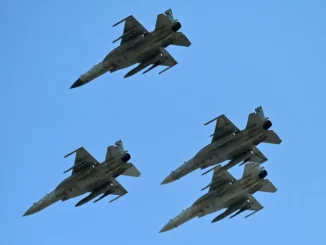
As India prepares for their Republic Day Parade on the 26th of January with the usual pomp and show, the grandeur on display seems to be hiding some obscure truths. This year, it lies in the sky, or rather what will be missing from it. According to Indian media, two of the most prominent Indian indigenously developed aerial platforms, the Light Combat Aircraft (LCA) Tejas and the Advanced Light Helicopter (ALH) Dhruv, will be missing from the show. In their stead, the fly-past will be dominated by foreign-acquired aircraft including Rafales, Sukhois and Chinooks.

This brings to light a compelling realisation. India’s claim of self-reliance in defence manufacturing under its “Make in India” initiative is becoming increasingly difficult to reconcile with the reality on ground. This is especially clear when its platforms are not deemed safe enough to be demonstrated at their Republic Day spectacle. The fact that the French-acquired Rafale fighter jet will carry out the Vertical Charlie manoeuvre as the grand finale speaks volumes about the capability of India’s developments.

The LCA Tejas, launched in the 1980s, was envisioned as the epitome of Indian defence indigenisation strategy. However, more than two decades after its maiden flight in 2001, it remains mired in controversy with India not having a single full squadron of Tejas aircraft. The envisioned plan to induct sixteen Tejas aircraft within the 2024-25 timeframe to overcome operational shortcomings of the Indian Air Force (IAF) is also likely to fall short, given the operational delays with the Mark 1A variant. This also pushes back the IAF’s plan to induct 180 Mark 1A and 108 Mark-II jets over the next decade and a half.

Secondly, the ALH Dhruv has been a staple at these parades for many years and is considered to be a hallmark of the Hindustan Aeronautics Limited (HAL). However, following its 5th January crash, claiming the lives of Indian coast guard personnel, all Dhruv helicopters have been grounded. This is not the first time this issue has arisen as the Dhruv ALH has been involved in numerous accidents both domestic and abroad. So much so that in 2015, after numerous crashes, Ecuador grounded its fleet of

Dhruv helicopters and cancelled its contract with India, citing poor reliability.
Both these platforms have failed to live up to the lofty claims laid down by the developers. Thus, for a country that blows the trumpet of indigenisation at every turn, it is ironic that its military might continue to rely on foreign-acquired platforms. From a strategic point of view, continued struggles of the Indian military with indigenisation reflect a pattern of over-ambition and underachievement. While India is quick to demand a seat at the table of global powers, its inability to produce reliable aerial platforms, and overreliance on foreign equipment aptly highlights where it actually stands.

The upcoming Republic Day parade will only display the absence of two of its flagship aerial platforms. With the French, Russian and US acquired platforms dominating the sky, the spectacle will inadvertently highlight the inadequacies of its domestic development and continued reliance on foreign suppliers.
Juxtaposing this inadequacy with developments taking place in the Indian neighbourhood, one can clearly ascertain the technological gap vis-à-vis India, Pakistan, and China—a gap that is about to widen further. While the Indian so called 4.5 Gen Tejas continues to struggle, China has already showcased a 6th Gen aircraft in December 2024, which is likely to be inducted in the next few years. Meanwhile, it already operates 5th Gen aircraft.

Pakistan is also ready to receive its first 5th Gen aircraft from China in 2026. This will augment its current fleet of F-16s, Mirages, J-10s and the indigenous JF-17s. Pakistan has already inducted over a hundred and fifty of its Block 2 and 3 JF-17s in its own arsenal while also exporting to other interested countries. Although Pakistan partners with China for a variety of its defence needs, this relationship has been carefully curated with the latter providing expertise for production of platforms like the JF-17s.
Thus, while India has glorified self-reliance in the defence field as the cornerstone of its strategic autonomy, the reality on the ground is starkly different. As the Republic Day parade unfolds, it will merely be a display of imported aircraft rather than a show of IAF’s prowess. However, true strength lies in the ability of a state to rely on its own capabilities, not in lofty but hollow claims.

India’s Political Importance for US’ Grand Strategy, Considering New Delhi Engagement With China and BRICS.

The US assumption that India would check the rise of China in the Asia-Pacific region has been questioned following the 2024 China-India border patrol agreement. The efforts to normalize the border issues between China and India made by both countries is continuing, driven by their strong commitment to working together in bolstering shared interests in bilateral trade and multilateral platforms such as BRICS and the Shanghai Cooperation Organization (SCO). It is not unusual for India to navigate both side of the equation. While India is an active member of BRICS and the SCO, it also plays a leading role in the Quadrilateral Security Dialogue (Quad), India, Israel and US, UAE (I2U2), and the US Indo-Pacific Strategy (IPS). This approach mirrors India’s Cold War era non-alignment policy so called strategic autonomy. However, it has raised serious concerns in Washington about India’s utility in the context of the US grand strategy for the Asia-Pacific region. The Indo-US partnership is primarily based on the assumption that India would assist countering China’s influence in the region.

Indian Foreign Ministry disclosed a momentous disengagement deal between India and China in the recent 2024 BRICS summit in Russia. Both countries agreed to drawdown the number of troops at the two unsettled friction points at the India-China border. The deal resumed the regular pattern of patrolling before their 2020 border clash. According to Sushant Singh, a lecturer at Yale University, if India wants to increase its economic growth, it needs Chinese investment. India’s business community values India’s business relations with China, which could have contributed to the Modi-Xi détente. This patch up between China and India is quite concerning for the US, as Washington’s primary interest toward South Asia underlines India’s action to counter the rise of China.

India is non-Western and not anti-West; it always adopts a midway in great power competition. Hedging between BRICS and Quad with safe hand demonstrates India’s commitment to maintaining its traditional approach toward international relations. It is more astonishing to look at how US has misconstrued India’s attitude and bets on it to counter the rise of China. It is far from becoming a part of the US’s “hub and spoke” model. Being the largest democracy and one of the fastest-growing economies, Delhi has long viewed the BRICS platform as an opportunity to assert its influence, particularly in the Global South. It has substantial stakes in the region, with growing markets in Africa, Latin America, and Southeast Asia. This Indian aspiration competes with the US view of India.

For India, the BRICS platform offers a natural space to exert its economic and political influence. Bilateral trade between the US and India touched $200 billion in 2024, indicating the strengthening of their economic ties. However, Trump’s aggressive stance on BRICS and his tariff threats could put India in a tough position. If other BRICS member countries continue to push for the use of local currencies in trade, India might be forced to make a difficult choice. It could align more closely with the BRICS bloc, which provides a platform to amplify its influence in the Global South and could risk alienating Washington by continuing its participation in BRICS. Furthermore, the idea of BRICS is a brainchild of India, as Delhi wants to become a leader of the Global South.

In the face of Trump’s tough rhetoric, India’s commitment to BRICS and its growing economic ties with other member nations may push Delhi further away from the US. Although India is likely to continue doing business in dollars for the foreseeable future, it might increasingly support BRICS’ broader goal of reducing dependency on the US currency. While India has rejected the idea of adopting the de-dollarization strategy of BRICS, the growing shift toward local currencies among other member states might compel India to make a choice. As the geopolitical landscape evolves, India will be forced to navigate a delicate balancing act between the economic and strategic leverage of the US-led bloc and the rising influence of the BRICS bloc.

India’s firm commitments in BRICS, and Modi-Xi reproachment show that India does not feel threatened from China. At the same time, it questions India’s commitment to US as a regional power balancer against China. Yet, it is uncertain how would Washington manage its relations with India in the future. In the context of the containment policy for China in the region, US has no other option but to rely on India.  Delhi is the only viable option through which Washington could fire a shot, considering the mutual understanding of both countries on China. On the other hand, India-China détente stands as a watershed which might convince the US to reconsider India as a strategic partner in the Asia-Pacific region. Further, Trump’s hardline stance on BRICS, combined with the broader geopolitical changes, may push India further into the arms of the BRICS bloc, even if it tries to maintain its relationship with Washington. India’s foreign policy, based on strategic autonomy, will face significant tests as it navigates these pressures in the years ahead.

Transforming the Nuclear Triad into Tetrad

The idea of a nuclear triad has long been the foundation of strategic deterrence that includes a combination of Intercontinental Ballistic Missiles (ICBMs), Submarine-Launched Ballistic Missiles (SLBMs), and bombers capable of delivering nuclear warheads, thus maintaining a safe and reliable second-strike nuclear capability against any nuclear opponent. However, military and technological developments, especially in the space domain, pressurize reconsideration of such a structural approach. Satellite systems contribute to nuclear command and control facilities, monitoring facilities, and alert and warning systems in case of a nuclear strike. The concept of a nuclear triad has been used as the core of strategic posturing for nuclear-capable countries. However, the space domain becomes crucial with the upsurge of Anti-Satellite (ASAT) weapons, the formation of dedicated space forces, and the prospects of space-based missile defense systems. This proposes that the nuclear triad may have to mature into a nuclear tetrad with space as the fourth leg.

A significant fundamental of nuclear doctrine is the second-strike capability – a country’s assured ability to respond to a nuclear attack with massive and powerful retaliation. This could be compromised by potential missile defense systems positioned in space – undermining the viability of nuclear deterrence. In response to this changing nature, the nuclear-weapon states may require space assets that complement their overall strategy for deterrence. These may include suppressing or neutralizing an opponent’s missile defense systems to constructive space and weapon systems meant to attack an opponent’s space assets. The nations would develop a more robust deterrence to degenerate threats in space by incorporating space as the fourth pillar of their nuclear strategy.

Space-based missile defense systems are a dominant factor in this potential shift.
Previously, missile defense relied mostly on ground or sea-based systems to intercept ballistic missiles. However, emerging technologies are encouraging defense efforts into space, with nations investigating the likelihood of deploying space-based interceptors competent in neutralizing ballistic missiles during their midcourse phase or even during the boost phase of a launch. Furthermore, countries are establishing and developing their space forces due to the growing relevance of space in the contemporary complex global security environment, making it crucial for national defense. The sensitivity of space-based assets including the early warning satellites or missile defense systems could sabotage a nation’s nuclear deterrence. To illustrate, in the absence of early warning systems, a country could be bushwhacked in the event of a nuclear strike, making the space domain fundamental to the viability of a nation’s nuclear deterrent.

This new component in a nuclear strategy could consist of space-based missile defense countermeasures, early warning systems, and offensive space capabilities in neutralizing space threats. This could optimize the robustness of a nation’s nuclear forces in attacks targeting space infrastructure. ICBMs, SLBMs, and bombers capable of delivering nuclear warheads provide hardened and reliable options for nuclear retaliation, mobile and survivable second-strike capability, and rapid deployment and demonstration of deterrence, respectively. This would create a more perseverant and vigorous nuclear deterrent by offering augmented protection, affirming that strategic tools such as early warning systems, missile defense countermeasures, and others sustain and function in the face of an ASAT weapon or similar threats.

The growing significance of the space domain in military operations pressurizes an extensive approach to nuclear deterrence. Performing for decades as the foundation of deterrence, the nuclear triad is evolving. It is, therefore, crucial to ensure the viability and reliability of deterrent forces given the rise of emerging technologies – proposing incorporating space into nuclear strategy. The concept of a nuclear tetrad, integrating space as a fourth leg of deterrence, provides a rational response to this shifting landscape. However, shifting from a triad to a tetrad exhibits challenges such as prompting a destabilizing arms race or escalating tensions. Still, it puts forward a more enduring structure for nuclear deterrence, strengthening their strategic competencies and readiness for evolving threats.

The Role of British Nationals of Pakistani Origin in the Development of UK

British nationals of Pakistani origin have significantly contributed to the United Kingdom’s economic, social, and cultural development across various sectors. Below is an overview of their roles, achievements, and the challenges they face, categorized by profession.

  1. Medical Professionals

Doctors and Surgeons: British Pakistanis have a notable presence in the UK’s medical field. Many have pursued medical degrees and serve as general practitioners, specialists, and surgeons, contributing to the National Health Service (NHS).

Dental Specialists: Similarly, individuals of Pakistani origin have established careers in dentistry, providing essential healthcare services across the UK.

  1. Engineering and Technology

Engineers and Technologists: British Pakistanis have made strides in engineering disciplines, including civil, mechanical, electrical, and software engineering. Their contributions are evident in infrastructure projects and technological innovations. Detailed data on their representation is scarce.

  1. Academia and Education

Professors, Lecturers, and Teachers: Individuals of Pakistani descent hold academic positions in universities and schools, engaging in teaching and research across various disciplines. While their presence enriches the educational landscape

  1. Finance and Economics

Finance Specialists and Economists: British Pakistanis participate in the financial sector, including banking, accounting, and economic analysis. Their roles contribute to the UK’s economic growth.

  1. Arts and Media

Artists and Media Professionals: The community has produced notable figures in literature, music, visual arts, and broadcasting, enhancing the UK’s cultural diversity.

  1. Legal Profession

Lawyers and Judiciary Personnel: British Pakistanis serve as solicitors, barristers, and judges, upholding the legal system and promoting justice.

  1. Healthcare Support

Health Workers: Beyond doctors and dentists, individuals of Pakistani origin work as nurses, pharmacists, and allied health professionals, supporting the NHS.

  1. Business and Entrepreneurship

Businesspeople and Investors: Entrepreneurs of Pakistani descent have established businesses in various sectors, contributing to employment and economic activity.

  1. Innovation and Research

Innovators and Researchers: The community is involved in scientific research and innovation, contributing to advancements in various fields.

British nationals of Pakistani origin play a vital role in the UK’s development across multiple sectors. While their contributions are significant, addressing the challenges they face in the labor market is essential to fully harness their potential and ensure inclusive growth.


Demography of UK

As of the latest available data, the United Kingdom’s population is approximately 68.2 million.

Of this, around 14% are foreign-born residents, equating to about 9.5 million people.

Composition of the UK Population:

Total Population: Approximately 68.2 million.

Foreign-Born Residents: Approximately 9.5 million (14% of the total population).

Immigrant Population by Country of Birth:

The foreign-born population in the UK comprises individuals from various countries. As of 2021, the largest groups include:

India: Approximately 896,000 individuals.

Poland: Approximately 696,000 individuals.

Pakistan: Approximately 533,000 individuals.

Romania: Approximately 370,000 individuals.

Ireland: Approximately 364,000 individuals.

Percentage of Pakistani-Origin Individuals in the UK Population:

Individuals of Pakistani origin constitute a notable segment of the UK’s population. According to the 2011 Census, there were over 1.8 million British Pakistanis, making up approximately 2.7% of the total population at that time.

These figures provide a general overview of the composition of the UK’s population, with a focus on the share of immigrants and the representation of individuals of Pakistani origin. Different sources might have slightly different figures.

As compared to the population percentage, their role in socio-economic development of UK is much higher and appreciated well.


Reasons for Migration to Developed Countries

Migration to developed countries is a complex phenomenon influenced by multiple factors. People leave their countries due to a mix of push and pull factors, ranging from economic and social opportunities to war, instability, and environmental changes. The following outlines the general reasons and processes associated with migration, with a particular focus on forced migration and historical context.

  1. General Reasons for Migration
  2. Economic Opportunities

Better Employment: Migrants often seek better job opportunities in developed countries where industries are thriving, wages are higher, and unemployment rates are lower.

Improved Living Standards: Access to better housing, healthcare, education, and public services motivates individuals and families to relocate.

  1. Educational Aspirations

Higher Education: Many people migrate to access world-class universities and advanced education systems, which are often lacking in their home countries.

Skill Development: Opportunities for training in cutting-edge technology and specialized professions attract skilled workers.

  1. Safety and Stability

Escape from Conflict: Political instability, wars, and terrorism force people to leave unsafe environments.

Persecution and Discrimination: Ethnic, religious, or political persecution drives people to seek asylum in countries with inclusive policies.

  1. Family Reunification

Joining Relatives: Migration laws in many developed countries prioritize family reunification, allowing people to join family members already settled abroad.

  1. Climate Change and Environmental Factors

Natural Disasters: Droughts, floods, and hurricanes displace populations, particularly in developing nations.

Resource Scarcity: Depletion of natural resources like water and arable land forces migration for survival.

  1. The Gaza Crisis and Forced Migration

The current situation in Gaza epitomizes the devastating consequences of war and forced migration:

Loss of Lives and Displacement: Thousands have been killed, hundreds of thousands injured, and millions displaced, forcing people into refugee camps or pushing them to seek refuge abroad.

Refugee Camps: Overcrowded and under-resourced camps fail to provide long-term solutions, prompting refugees to look for resettlement in developed countries.

  1. The Case of Iraq and Similar Examples

Iraq serves as a poignant example of how geopolitical conflicts lead to mass migration:

Before the U.S. Invasion: Iraq was a stable welfare state with free education, healthcare, and abundant resources.

Post-Invasion Chaos: The U.S.-led invasion dismantled infrastructure, caused widespread destruction, and created unlivable conditions. Millions were displaced, killed, or injured.

Brain Drain: Iraq saw an exodus of professionals such as doctors, engineers, and academics, who sought safety and opportunities abroad.

Other countries like Libya, Syria, Yemen, and Afghanistan follow similar trajectories of destruction, displacement, and forced migration due to foreign intervention or civil wars.

  1. Historical Context of Migration

Colonialism played a significant role in shaping migration patterns:

Exploitation of Resources: Colonizers plundered natural wealth and deliberately underdeveloped their colonies, keeping local populations impoverished and dependent.

Migration to Metropoles: Former colonies saw waves of migration to colonial powers like the UK, France, and Spain, as people sought opportunities unavailable in their own countries.

  1. Consequences of Migration

For Host Countries: Migrants contribute to economic growth, fill labor shortages, and enrich cultural diversity, but may also strain public services and cause political debates.

For Origin Countries: Migration can lead to brain drain, with the loss of skilled workers impacting development, though remittances often support economies.

  1. Lessons and Global Responsibility

Preventing Forced Migration: Addressing root causes like wars, climate change, and inequality is essential to reducing forced migration.

Inclusive Policies: Developed countries must foster integration and offer legal pathways for migration.

International Cooperation: The global community has a moral obligation to support refugees and rebuild war-torn nations to ensure people can live in peace and dignity.

Migration is a universal phenomenon, shaped by historical injustices, current crises, and aspirations for a better future. Understanding its complexities can help create humane policies that benefit both migrants and the societies they join.


Immigration to United Kingdom

The Legacy of British Colonial Rule and Immigration to the UK

The British Empire, once spanning nearly half the globe, was famously referred to as the empire where “the sun never sets.” However, despite its vast reach and influence, the development of its colonies did not match the standards achieved in the United Kingdom. The infrastructure in these regions remained underdeveloped, and the local populations were not empowered to become economically self-reliant. Instead, the colonies were predominantly exploited for their natural resources and cheap labor, ensuring the prosperity of the British Empire while leaving the colonies economically dependent and politically unstable.

After the end of colonial rule, many individuals from former colonies began immigrating to the UK in search of better opportunities. This migration was driven by the disparity between the underdeveloped infrastructure and economic systems in their home countries and the advanced, industrialized society of the UK. The post-colonial connection and linguistic familiarity further facilitated this movement.


Historical Exploitation and Continuity

During the colonial period, the British Empire utilized its colonies as a source of cheap labor and raw materials, fueling industrial growth at home. This pattern of labor exploitation extended into the post-colonial era, where many immigrants to the UK found themselves filling low-wage jobs in industries such as transportation, healthcare, and manufacturing. Even today, a significant portion of the immigrant population contributes to sectors that rely on affordable labor, reflecting a continuity of the exploitative dynamics of the colonial era.


Attracting the Best Brains

While a large number of immigrants were drawn to low-skilled labor, the UK has also benefited immensely from attracting some of the brightest minds and most talented individuals from its former colonies. Skilled professionals, including doctors, engineers, academics, and innovators, have made remarkable contributions to the UK’s economy, education system, healthcare, and technological advancements. For example:


An Integral Part of Modern Britain

Today, the descendants of immigrants from former colonies are deeply woven into the fabric of British society. Despite historical exploitation and initial challenges, many of these communities have achieved remarkable success and integration, reshaping modern Britain. They continue to play a crucial role in the UK’s development, bridging the legacy of colonialism with a shared future of progress and mutual benefit. They are not less loyal to the state and integrated absolutely. They are not less British than the original white British in any respect.

This narrative underscores the duality of history—while colonialism caused immense harm and inequality, the contributions of immigrants from former colonies highlight the enduring resilience and potential of those who have become an essential part of the UK’s story.

US Sanctions on Pakistan’s Missile Program: Containment or Double Standards?

On 18th December 2024, the US imposed sanctions on four Pakistani firms accused of their involvement in the development of long-range ballistic missiles widely known as Inter-Continental Ballistic Missiles (ICBMs), adding that the success of this program will allow Pakistan to strike any target outside South Asia, particularly the United States (US). The sanctioned enterprises include the National Development Complex (NDC) in Islamabad and three Karachi-based firms: Akhtar and Sons Private Limited, Affiliates International, and Rockside Enterprise, as reported by the US Department of State.

It is illogical for the US to accuse Pakistan of developing long-range missiles with the intent to target its territory. It might sound surprising for the enemy state leadership that plots against Pakistan; however, it does not make sense to a rational human being. Pakistan’s missile program is explicitly for defense purposes, and officials have never claimed it is intended for targets outside South Asia. The development of the land-based Shaheen-III nuclear-tip missile with a range of 2,750 km provides Pakistan with a strategic deterrent against India – thus nullifying accusations of Pakistan’s ambitions for acquiring long-range missiles.

Adding to that, the intermediate-range Shaheen-III is capable of targeting India’s key sites including its counter-force and counter-value targets. While the acquisition of this capability enhances the country’s strategic posture, the development of the Ababeel medium-range ballistic missile adds another layer to Pakistan’s deterrence against India. The 2,200 km range nuclear-capable missile with multiple independently targetable re-entry vehicle (MIRV) capability is designed to penetrate India’s Ballistic Missile Defense (BMD) systems including S-400, Prithvi Air Defense, and Advanced Air Defense system.

Pakistan has shown very responsible behavior throughout its history, particularly in terms of vertical and horizontal non-proliferation of weapons of mass destruction. Over the past decades, the country’s nuclear profile has been reported as the safest among all the nuclear weapon equipped states. Conversely, numerous incidents of nuclear and radioactive material theft and sale are reported annually in India. Last year, three individuals were arrested in the Indian state of Bihar for possession of 50 grams of radioactive Californium worth $101 million. In response, Pakistan’s Foreign Office spokesperson condemned the incident highlighting the measures taken by New Delhi to prevent the spread of radioactive material.

Similar cases have been reported in other countries as well, since 1993, there have been 419 cases of stolen or smuggled nuclear material. And despite Pakistan facing terrorism and security issues, there has not been a single case of nuclear theft. The country is not a member of or enjoying the privileges of international treaties and agreements such as the Non-Proliferation Treaty (NPT), Missile Technology Control Regime (MTCR) and Hague Code of Conduct (HCoC); however, it strictly performs its duties as a responsible nuclear state. Among the early acquiring nuclear weapon states, Pakistan stands at the lowest with 170 nuclear warheads in its stockpile, lesser than India with 172 according to the latest report.

Similarly, the major P-5 states (US, China, Russia, UK, and France) have far greater numbers of nuclear-tipped missiles with ranges exceeding 5,500 km and even 10,000 km. This compromises the principles of disarmament outlined in the NPT. As the major powers make their way into acquiring advanced military equipment, a conventionally weaker state like Pakistan faces sanctions from the US for the ‘alleged’ development of long-range missiles. But as famously said, “The strong do what it wants, and the weak suffer what it must,” perfectly suits the contemporary global security environment.

The international system is MORE rational than mere rational – allies are assets but interests come first. Pakistan was important to the US for its confrontation in the Afghan War against the former USSR and in the Global War on Terror – but the distance between the two sides increased as their interest decreased. In contrast, the US, in pursuit of its Indo-Pacific strategy started inclining towards India and other regional actors to curb Chinese economic and military influence in the region. Now, being a non-signatory of NPT, India could not get technology from the US, thus the country has taken refuge by joining MTCR and HCoC, which helped it acquire missile defense systems and unmanned aerial vehicles from major powers.

Furthermore, in light of the sanctions, the Pakistani government is reassessing what actions align with the nation’s best interests. The response by the Ministry of Foreign Affairs of Pakistan condemned the sanctions in solid words criticizing the US for its “double standards and discriminatory practices,” adding that “they not only undermine the credibility of non-proliferation regimes but also endanger regional and international peace and security.”

In short, Pakistan has always tried to contain India by developing weapons that could decrease or nullify the conventional asymmetry between the two archrivals. In addition to the development of defensive weapons, Islamabad devised its nuclear doctrine in a way to narrow down any room for aggression by India, specifically by adopting the Full-Spectrum Deterrence (FSD) strategy. This strategy reduces the threshold for the use of tactical nuclear weapons against Indian actions – thus giving tougher time to the military strategists in New Delhi. Whether the US sanctions on Pakistani entities were unilateral or a result of external influence, one thing is indisputable: the enemy does not want the country to stand on its feet!

Indian Testing of Hypersonic Cruise Missiles: What Does It Mean for South Asian Strategic Stability?

On Nov 16th 2024, India test fired a Long-Range Hypersonic Missile (LRHM) from Dr. APJ Abdul Kalam Island from the cost of Odisha. This weapon system has the ability to engage targets over 1500 km, and can carry variety of payloads as reported by Indian media. This test has been celebrated as a major technological feat by the Indian military planners and strategic community. As per open sources, this missile had the ability to do terminal maneuvers while maintaining the hypersonic speeds.

Why India is aiming to develop such high-speed missiles having the ability to do terminal maneuvers? Hypersonic missiles are usually of two types: Hypersonic cruise missiles & Hypersonic Glide Vehicles (HGV’s). In this discussion focus will be placed on the Indian development of hypersonic cruise missiles, related technologies, and shedding light on the rationale for developing these weapon systems. Eventually, this article will examine the implications of Indian acquisition of hypersonic cruise missiles on South Asian strategic stability.

Indian Defense Research & Development Organization (DRDO) took the lead initiative for development of scram-jet engine technology, which is considered as the core tech for the development of the hypersonic cruise missiles. During the first phase DRDO conducted theoretical studies to understand the technical nuances of the scram-jet engines and collaborated with different laboratories that focused on the high-speed aerodynamics. In 2010 DRDO commenced the Hypersonic Technology Demonstrator Vehicle (HSDTV) program to validate the scram-jet engine technology for achieving sustained hypersonic flights. In lieu of the above-mentioned, ground tests as well as wind tunnel tests of HSDTV’s were conducted. In June 2019, DRDO conducted the first flight test of HSDTV, however it was not successful. In September 2020, DRDO again flight tested the HSDTV, and this time it sustained the flight at hypersonic speeds: Mach 6 for 20 seconds. Afterwards DRDO has worked to refine the functioning of scram-jet engine for developing hypersonic cruise missiles. Latest test of Indian LRHM is reflective of the fact that it has attained relative mastery in producing scram-jet engines.

Bernard Brodie in his seminal book, The Absolute Weapon: Atomic Power and World Order, stressed on the fact that nuclear weapons are not weapons of actual use, but for deterrence. Building on this premise, it seems unplausible and irrational why India is developing hypersonic cruise missiles, if its deterrence needs can be met by other means.

India has a stated doctrine of credible minimum deterrence and a posture of No First Use (NFU). India aims to pursue massive retaliation for inflicting unacceptable damage on the adversary in case of a nuclear first strike. In any such case, why there is a need to develop hypersonic cruise missiles?

Hypersonic cruise missiles are known for their speed, maneuverability and a flight path within the atmosphere. In an operational sense, hypersonic missiles are used for precisely and swiftly engaging the counter-force, and counter military (battle-field) targets while minimizing the collateral damage.

For deterrence to work, a state must possess Assured Second-Strike Capability (ASSC). Hypersonic cruise missiles have a greater penetration capability due to their speed, maneuverability and are difficult to be tracked in most of the cases. Does the penetration capability strengthen the deterrence stability? It seems like that if a state has a weapon that is likely to hit the enemy targets, and evade missile defenses, it gives confidence to states to go for nuclear first strikes.  Deterrence operates on the principle of Mutual Assured Destruction (MAD) and a balance of terror, acquisition of hypersonic cruise missiles might alter the strategic balance between adversaries, recognizing its penetrating potential. For an assured retaliation, development of hypersonic missiles might be more than what is needed.

It is high time to contemplate the possible and plausible Indian doctrinal rationales for the developing and testing of hypersonic cruise missiles. Various studies have quoted Indian statesman hinting at revisiting the NFU pledge, and creating doctrinal spaces for going nuclear first against Pakistan. Development of hypersonic cruise missiles that can carry variety of payloads (conventional or nuclear) might be materialization of this thinking.

Furthermore, Indian conventional military strategy as reflected in the Joint Doctrine of Indian Armed Forces, has the provisions of pursuing limited conventional operations across the border. In such a situation hypersonic cruise missile with conventional payloads can be used to engage and hit counter military targets for easing the way for ingress. These missiles can be deployed to precisely target the Command & Control (C-2) centers of adversary forces. If launched from an aircraft, hypersonic cruise missiles can be used as an effective stand-off weapon. Indian Air Force’s (IAF) doctrine published in 2022, advocates its role in Low Intensity Conflicts (LIC’s). In November 2023, IAF test fired supersonic BrahMos missile from the Su-30 MKI, additionally it has test fired supersonic BrahMos missile from naval and land platforms. Test firing of supersonic cruise missiles from land, air and sea, adds plausibility to the idea that India is likely to develop and deploy hypersonic cruise missiles against Pakistan’s counter military and counter-force targets in a limited conventional conflict.

India is also acquiring advanced Air Defence Systems (ADS) from Russia having anti-ballistic capabilities over 400km: S-400. Russia has delivered first two batteries to India in 2021, deployed respectively at Adampur and Halwara Air Force Stations (AFS). As substantiated by above discussion, India is acquiring advanced air defenses alongside hypersonic cruise missiles, at the prima-facie these technological developments indicate that India is transitioning to a nuclear posture aimed at damage limitation. Meanwhile, Pakistan has also developed and acquired sophisticated air defenses, latest induction is HQ/9P to deny any such advantage to India. This air-defence system is capable of engaging aircrafts, cruise missiles and Beyond Visual Range (BVR) weapons up to 100km with great accuracy, as per Inter Services Public Relations (ISPR).

Lawrence Freedman in his famous book “The Evolution of Nuclear Strategy” opines that nuclear war fighting doctrines entails the provisions of the graduated responses. A nuclear strategy based on graduated responses is based on the deterrence by denial model rather than on punishment model. Within the doctrinal framework of Credible Minimum Deterrence (CMD), there exists no precedence for going for nuclear war fighting options, as CMD calls for a ASSC to ensure the deterrence. Development of Indian hypersonic cruise missiles that can carry conventional as well as nuclear payloads will compromise South Asian strategic stability by blurring the lines. However, unpredictable and maneuverable flight trajectories of hypersonic cruise missiles within the atmosphere make them less detectable and are difficult to be tracked as compared to ballistic missiles, this aspect reduces the response time for counter-measures. Ballistic missiles are easily detected by the space based infrared sensors in their boost phase and during the midcourse due to their predictable parabolic flying trajectory. Additionally, hypersonic cruise missiles have the ability to do terminal maneuvers, thus developing the potential for evading missile defenses. In that logic hypersonic weapons can be deployed to launch preemptive or counter-force strikes, thus threatening deterrence stability. Lastly, hypersonic cruise missiles can be fitted with conventional and nuclear warheads. In reference to South Asian strategic stability equation, deployment of missiles having ambiguity in their payloads will further complicate the crisis management and amplify the risks of escalation.

Development of hypersonic cruise missiles by India will increase the likelihood of arms race in the South Asia, and foster a false sense of confidence for India to pursue counter-force strikes against Pakistan; however, many operational hiccups are present for executing these strikes. India must pay heed to classical principles of minimum deterrence and avoid acquiring destabilizing technologies and missiles that alter the strategic balance in the region and stress South Asian strategic stability. India must accept the Strategic Restraint Regime (SRR) proposed by Pakistan in 1998, to avoid arms race in the region.

Navigating Risks and Benefits of Pakistan’s Tech Dependency on China

Pakistan’s growing reliance on Chinese information technology (IT) and emerging technologies, especially artificial intelligence (AI), has become a focal point of national discourse. While this partnership offers substantial opportunities for modernization and development, it poses complex challenges, particularly in the domain of national security. As Pakistan seeks to strengthen its technological infrastructure, the implications of its dependence on Chinese technology warrant careful examination.

China’s technological dominance, driven by companies like Huawei, ZTE, and China Unicom, has enabled Pakistan to access advanced systems at competitive costs. The roll-out of telecommunication networks, surveillance technologies under “Safe City” projects, and the digitization of public services have significantly boosted Pakistan’s capacity for innovation. Notably, the Punjab government has embarked on several projects in collaboration with Chinese tech companies, including AI-driven urban management systems and e-governance platforms. While these initiatives aim to improve governance and service delivery, they further deepen Pakistan’s reliance on foreign technology providers.

However, these advancements come with strings attached. The integration of Chinese technology into critical infrastructure raises pressing concerns about digital sovereignty. In an era where data is often described as the “new oil”, the potential for unauthorized access or misuse of sensitive information cannot be ignored. Such risks are compounded by the possibility of cyber espionage, a concern that looms large in any nation heavily reliant on foreign technology.

The geopolitical dimensions of this reliance are equally significant. By deepening its technological ties with China, Pakistan risks alienating other global partners, particularly in the West. As tensions between China and Western nations intensify, Overdependence on one side could limit Pakistan’s ability to navigate a balanced foreign policy. This strategic dependency might also expose the country to secondary sanctions, especially as some Chinese tech firms face restrictions in global markets.

On the economic front, Pakistan’s overreliance on Chinese technology threatens to stifle domestic innovation. Rather than fostering a robust local IT ecosystem, dependence on imported solutions can lead to a stagnation of homegrown technological advancements. The financial implications of this reliance are equally concerning. Many Chinese technology projects in Pakistan are tied to investments under the China-Pakistan Economic Corridor (CPEC). While these initiatives promise economic growth, they often involve significant loans, exacerbating Pakistan’s debt burden and creating long-term economic vulnerabilities.

The implications for governance and civil liberties are equally profound. China’s export of surveillance technology has bolstered Pakistan’s internal security apparatus, but it also raises questions about the potential erosion of privacy and political freedoms. The adoption of technologies that enable extensive state surveillance might serve short-term security objectives, but it could also pave the way for authoritarian practices that undermine democratic principles.

From a national security perspective, the risks are particularly acute. Overreliance on foreign IT infrastructure compromises strategic autonomy. Military and defense systems that depend on imported technology are vulnerable to supply chain disruptions and potential infiltration. As Pakistan seeks to bolster its defense capabilities, ensuring the security of these systems is paramount.

To address these challenges, Pakistan must chart a course that balances its technological aspirations with the imperatives of national security and economic independence. Diversifying technology partnerships is a crucial first step. By engaging with a broader range of countries and companies, Pakistan can reduce dependency on any single provider and mitigate associated risks. Simultaneously, investing in the development of a robust domestic IT sector is essential. Supporting local innovation through research and development (R&D), fostering partnerships between academia and industry, and providing incentives for startups can strengthen Pakistan’s technological foundation.

The emphasis on localizing R&D should be prioritized. By building its own technological capabilities, Pakistan can reduce reliance on foreign providers, create high-value jobs, and drive sustainable economic growth. Local R&D efforts are critical not only for innovation but also for ensuring that technologies are tailored to Pakistan’s specific needs and challenges. This requires long-term investment in education, skill development, and infrastructure to nurture a generation of tech leaders and innovators.

Regulatory frameworks must also be strengthened to safeguard data privacy and cybersecurity. Enforcing stringent data protection laws and conducting thorough audits of imported technologies can help ensure that national interests are not compromised. On top of that, enhancing cybersecurity infrastructure and training professionals to tackle evolving threats are critical components of a comprehensive strategy.

In the final analysis, Pakistan must navigate this technological landscape with a nuanced approach that prioritizes its national interests. While Chinese technology offers immediate benefits, long-term resilience and security require a diversified and forward-looking strategy. By cultivating domestic capabilities, prioritizing localized R&D, and balancing international partnerships, Pakistan can harness the benefits of emerging technologies without compromising its sovereignty or security.