JCPOA 2022 EDITION & IRAN: UNDERLYING INTENTIONS, OLD TRICKS, & MURPHY’S LAW

In a news cycle of world affairs filled with numerous crises and matters, the current Ukraine-Russia conflict has taken center stage and rightly so. It is a cause for international concern and a call for analysis, but should not be so at the cost of other important developments. The recent JCPOA negotiations and its prospective restoration faces one obstacle after another. A landmark achievement for the arms control and the non-proliferation regime which took shape in in 2015, the core essence of the Joint Comprehensive Plan of Action was to halt Iran’s nuclear program as it had become gravely concerning for the international community, primarily the P5+1. The entire agreement was jeopardized when the USA unilaterally pulled out in 2018 under President Trump, making it toothless as it removed compliance incentives for Iran.

Recently, there have been renewed efforts for restoring the agreement and a series of negotiations have taken place with a fair amount of progress. Iran’s foundational nuclear motivations are important for understanding why it has come back to the table, despite a more conservative leadership at its center, and why it agreed to the JCPOA in the first place. Whether or not the JCPOA is restored to a 2022 edition also depends on the motivations of all parties involved, including Iran, and the benefits they receive from an Iranian nuclear program that is kept in check.

Iran’s Underlying Nuclear Motivations

What makes a state go nuclear? A short question with a complex answer. As far as the peaceful part of a nuclear program goes, there are numerous benefits of nuclear technology that a state would benefit from. It provides diversification of energy production programs, aids the agriculture sector through high yield and resilient crops, and offers cancer related medical treatment.

Pursuing a nuclear weapons program, however, may not have impetus as simple as that. There are many models that explain underlying motivations. The proliferation puzzle model suggests that presence of a major military threat, that cannot be countered conventionally, leads to the pursuit of nuclear weapons. For Iran, even though it does face substantial military threats, this may not be the right explanation.

Iran is the descendant of the great Persian Empire. It is not just a nation state but a civilizational state. This leads to the prestige factor; in an environment filled with competitors posing security threats (Israel and Saudi Arabia), this gives cause for initiating a nuclear weapons program as explained by Scot Sagan’s security model. However, the political and influence factors associated with nuclear weapons may provide the primary reason for Iranian motivations.

Struck with sanctions soon after the Iranian revolution and facing isolation, a nuclear weapons program was Iran’s ticket to the world table; it was a means to an end rather than the end itself, the end being economic prosperity and political influence, both of which are interlinked. This explains why Iran decided to agree to the JCPOA in the first place, to achieve a path to economic prosperity through easing of sanctions. Pursuing nuclear weapons as a path to achieving economic prosperity and political influence is also corroborated by Supreme Leader Ayatollah Khamenei’s fatwa against nuclear weapons. Put together, these reasons suggest that Iran went forward with its program not to actually acquire nuclear weapons but to use that pursuit for political leverage leading to economic leverage and prosperity.

Recurring Objections to the Nuclear Program

For a long time, Iran has justified its nuclear program by giving reasons of peaceful application, civilian use and industrial benefits, among other things, for its pursuit. In 2003, it issued the Tehran declaration where it agreed to voluntarily implement an Additional Protocol with the International Atomic Energy Agency (IAEA). This meant added inspections and safety compliance. Its aim was to acquire modern technology as a result. However, such agreements and deals eventually faltered as the West began raising objections in relation to the Non-Proliferation Treaty which includes Iran as a Non-Nuclear Weapon State (NNWS) member. Iran’s reasoning was that the other side of the table would not live up to their bargain, leaving it no option but to continue with the objectionable aspects of its program.

All objections to Iran violating the NPT are arguably hypothetical since there is no mechanism to verify any violations and even the UN Security Council has not categorically declared Iran to be in violation of the treaty. However, objections exist based on claims that Iran violated its safeguards agreement with the IAEA. This creates the argument that it violated Article III of the NPT, which asks its NNWSs to accept and follow those safeguards. Other objections have been raised about Iran supposedly violating Article II of the treaty that deals with the manufacturing or acquisition of nuclear weapons, and any help given or received related to that effect. This objection and claim is also made without substantive evidence; it was stated that there were “possible military dimensions to Iran’s nuclear programme,” which could mean the violation of Article II. Without conclusive proof, actions against Iran for its nuclear program indicate that the objections leveled against it are political and not based on concern for the non-proliferation regime which is used as the reason by its flag bearers.

Whether or not the JCPOA will be restored in a 2022 edition is yet to be seen. Before negotiations had started, Iran had begun to exceed the limits it had agreed to, after the initial fallout, and started Uranium enrichment to higher concentrations. This was in response to the other parties not holding up their side of the bargain. Regardless of its reasons and justifications, it was still enriching more than what is deemed as suitable for civilian use. This does not match with the expectations of a NNWS part of the NPT. After the death/targeted killing of its top general by the USA and then its top nuclear scientist by Israel, it removed limits on its nuclear enrichment and ended its agreement with the IAEA for monitoring. However, for a year after the USA had pulled out of the agreement, Iran was verifiably in compliance till 2019. This again backs up its primary reason for the nuclear program, pursuing political and economic benefits. Until major sanctions were invoked, it stayed in compliance and when leverage was required then it went on to strengthen the nuclear program.

JCPOA 2022 and Implications from the Murphy’s Law Effect

Negotiations had been going smoothly and the chances of the JCPOA’s restoration were extremely high. Then came the Russia factor. Western sanctions had piled up immensely and comprehensively after Russia’s attack on Ukraine and Russia demanded in the negotiations that its military and trade cooperation with Iran be removed from those sanctions as part of the JCPOA 2022. This had halted the negotiations, but the release of British-Iranians that had been detained in Iran points to a thaw and better chances of restoration. However, what if Murphy’s Law gets applied, and everything that can go wrong does go wrong?

If the JCPOA does not get restored, for one reason or another, Iran might go on the same course it did last time. If the road to political influence and economic prosperity through mainstream channels and peaceful nuclear technology is blocked then the detour through a nuclear weapons program becomes the next best option. This would add to the existing critique of the NPT that it not only lacks teeth but also dentures for a substitute. Its credibility as a pillar of the non-proliferation regime would further crumble, more so if Iran decides to follow North Korea’s route and decides to leave NPT altogether. On the other hand, if it stays and continues on its trajectory in the event the JCPOA is not restored, then it will add to the conception of the non-proliferation regime being a hollow facade.

In either case, the regime would be further weakened if, seeing Iran’s actions, other regional powers such as Saudi Arabia try to follow suit and proliferate, to some added degree, citing security threats from Iran as part of Scot Sagan’s security model of proliferation. Most recently, the regime was also arguably weakened due to the possibility of the AUKUS deal violating Article III of the NPT. While much about the specifics of nuclear-powered submarines remains in the dark, the sheer notion that the idea of their transfer to a NNWS of the NPT can be floated suggests a weakening of the regime by the parties that essentially crafted it. If the JCPOA negotiations fail, it could be seen as the first domino falling for the NPT based non-proliferation regime.

BRAHMOS MISSILE INCIDENT: INDIA’S STRATEGIC IRRESPONSIBILITY OR INCOMPETENCE?

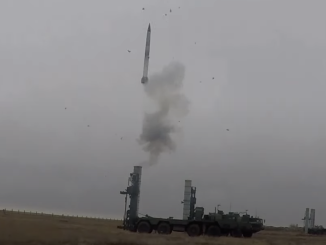
In the complex contemporary global, regional, and domestic environment, dominated by the Russia-Ukraine War, post-US withdrawal Afghanistan, growing internal security challenges and political dynamics in Pakistan, the recent incident of the Indian cruise missile crashing into Pakistan’s territory has shocked many strategic thinkers. On 9th March 2022, an Indian supersonic cruise missile, which according to some experts was ‘BrahMos’, entered Pakistan’s air space and crashed in Mian Channu. The Indian Ministry of Defence expressed its ‘regret’ and maintained that it was an accidental launch caused by a technical malfunction during routine maintenance activity. The government also announced a high-level Court of Enquiry.

Pakistan’s Foreign Office gave a cautious response to the Indian statement by terming the Indian stance as a ‘simplistic explanation’ of a very serious matter. Pakistan also demanded a joint probe in order to establish the facts, and urged the international community to take serious notice of such a grave incident and play its due role in promoting strategic stability in the region. The Chinese Foreign Ministry has called on both countries to thoroughly look into the incident and promptly establish a reporting mechanism to avoid misunderstanding and miscalculation.

The Indian claim of ‘accidental launch’ is suspicious and independently unverifiable. Cruise missiles, regardless of their land, sea, and air-launched versions, are guided missiles that follow a specific flight trajectory. It is difficult to accept the Indian explanation that the cruise missile was accidentally launched and entered Pakistan’s air space on its own.

Furthermore, even if it was an accidental or unauthorized launch, it raises serious questions about the credibility of the Indian nuclear command and control system, operational protocols of its strategic delivery systems in general and the safety of the Indian missile arsenal in particular. These safety and security issues pose grave risks to regional stability because India has been pursuing extensive and all-encompassing military modernisation, including the development of nuclear-capable supersonic cruise missiles. In addition, since India’s nuclear and missile arsenal is one of the fastest-growing programmes in the developing world, such incidents imply that the Indian nuclear and missile arsenal is poorly managed and faces a great risk of miscalculation and unauthorized launch.

Serious incidents like these raise important questions about the overall credibility of Indian military planning, operationalization, and safety mechanisms related to its expanding missile forces. For instance, during the 2019 Pulwama-Balakot episode, when Pakistan responded to New Delhi’s misadventure under operation ‘Swift Retort’, Indian military professionalism and missteps were badly exposed. After all, India ended up destroying its own Mi-17 helicopter within Indian Illegally Occupied Jammu & Kashmir (IIOJK), resulting in the loss of lives of its own military personnel. This recent incident, involving the BrahMos supersonic cruise missile, is further evidence of the Indian inability to maintain and safely operate state-of-the-art military equipment and sophisticated missile technologies.          

Another critical aspect of this whole scenario is Pakistan’s response options.  Pakistan’s air defence system was able to detect and track the incoming supersonic missile, from the time of its launch inside India and entry into the country’s airspace. It is indeed fortunate that the missile was not carrying any warhead and there was no loss of life on the ground. However, this incident makes one wonder: what if the missile was armed with a conventional warhead or even a nuclear weapon?

Some experts have said that India could have deliberately launched the missile to test the readiness and response options available to Pakistan, so as to help the former improve its internal plans for future scenarios. However, Pakistan’s mature, calculated, restrained and responsible reaction based on its commitment towards regional peace and stability has prevented further escalation, despite the inadequate Indian explanation of the cause of this incident.

Such disturbing and irresponsible Indian strategic behaviour deserves urgent and proactive international attention and a review of all defence cooperation with New Delhi, because incidents such as these indicate that the Hindu extremist government currently ruling India and its unprofessional military cannot be trusted with such lethal missile technology. Notwithstanding Indian objectives, Pakistan must consider giving a strong and clear strategic signal to India that any such irresponsible act in the future will not go un-responded to. It is equally important to further enhance our air defence system, particularly against the growing threat of India’s supersonic cruise missiles.

The World’s Lurch Right in the New Millennium

The mid-2010s saw a swift rise in the fortunes of right-wing populism around the world. With democracies falling to it like dominoes, free expression came under assault in country after country. It went to the point that democracies all across the globe that once (although perhaps not wholeheartedly)  stood for international cooperation, diplomacy, and globalization now stood in sharp contrast to these international norms and values. In hindsight, it is fair to say the silver lining of the rise and rise of right-wing populism in country after country is that the authoritarian nature of this political ideology has become plain to see.

Large group of people standing in the form of a world map

Right-wing politics is subscribed to by leaders who want to maintain their traditional and cultural values, class system within the society and protect the interests of the state, its sovereignty, and territorial integrity. They are those who advocate for notions such as authority, hierarchy, order, duty, tradition, reaction, and nationalism. To quote Norwegian political scientist Prof Bernt Hagtvet: “Right-wing groups tend to perceive nations as unequal. They rank nations by worth, placing theirs on top. They insist on the excellence of their own nation, they emphasize its history as particularly glorious, they include allusions to its past in their political discourse.”

On the other hand, the Left ideology is subscribed to by those who want to establish liberal values, freedom, equality, fraternity, rights, progress, reform, internationalism, and ethical decisions within a state. They advocate ending the class system, racism, and the dominion of one over another.  

In the 21st century, the rise of right-wing activism and politics has played a pivotal role in the world. Electoral results across the globe demonstrated how right-wing populist parties were rising nationally and internationally, especially in Europe. The rise of such parties has had negative effects on the economy, politics, and social behavior of the world. If we review the rise of right-wing populist parties through the mid and late 2010s elections held all over the world, we can clearly see how their activism, politics and ideological struggles are shaping our world.

The victory of Donald Trump over Hillary Clinton with 77 electoral college votes, Narendra Modi’s rabidly nationalist party BJP party’s victory against the Indian Congress, populist Imran Khan’s victory against his opposition, Recep Tayyip Erdogan’s success against a coup attempt to overthrow his government in 2016 and his subsequent securing of the President’s seat by gaining 51 percent public votes, Jair Bolsonaro in Brazil, Boris Johnson in the United Kingdom, and Angela Merkel’s election as the chancellor of Germany are evidence of how it is not only rising in Europe but all across the world.

However, its rise in European states, and generally in the West, can be seen as a critical juncture for international politics because the international power centers reside in the West and this lurch to the right is in stark contradiction to the West’s much-supported liberal values abroad. The hypocrisy is striking!

The aim of these parties and their victories is to protect the tradition, culture, religion, sovereignty, and linguistic identity of a nation, but it has had some significant impacts on the economy, immigration, and politics of a state or among the states.

Economic Crisis

The most devastating effect of the rise of right-wing politics was the global economic crisis. Neoliberal globalization or capitalism led to the financial straits of 2008 and the Eurozone crisis which had reverse effects on the global economy.

Right-wing politics emerged in contention with globalization. The rise of populist parties, far and wide, therefore, harms the global economy. This reflects the contagious nature of the global economic crisis and extends Marx’s critiques on capitalist politics. For example, due to the destabilizing effect of the oil industry in many states like Libya, Iraq, Nigeria, Sudan, and Syria, these developing nations had depended, by and large, on stable oil prices during the financial crisis since the Great Depression of 1929.

Moreover, the US government pushed its housing and mortgages market and in return created financial crashes and instability. Looking at them, many other states implemented similar policies with the same results as the United States. The then US President George W. Bush signed the USD 700 billion relief for banks, corporation, and authorities to overcome the global financial crisis.

However, although the economy was stabilized, it reflected the inability of neoliberal capitalism to provide a reliable system for the world. While the big corporations were funded heavily by the US, public living standards declined.

After Trump’s election and the rise of right-wing politics in Europe, privatization, authoritarianism, and neoliberal trade further aggravated the human rights situation as witnessed in the Black Lives matter (BLM) Movement in the US; living standards have plummeted, good wages have become ever harder to come by as Bernie Sanders continuously reiterated, and uncertainty has engulfed the present and future. Right-wing populist parties woo the masses with false promises to overcome all the challenges. They cash in on a state of crisis to cement their authority.

On the other hand, European populism of is different from that of Latin America. Europe has exclusive policies that have a socio-cultural dimension, while Latin America has inclusive policies that are designed to help the poor.

The Populism practiced by Indian Prime minister Narendra Modi, Brazil’s Jair Bolsonaro, and the United Kingdom’s Boris Johnson’s are also exclusive in nature.

In Pakistan’s political history, right-wing politics was first supported by President Zia ul Haq, against the left-wing government of the Pakistan People Party (PPP). He established Islamism as the ideology of Pakistan and institutionalized the conservative economic and foreign policies. The current Prime Minister Imran Khan has also changed his politics from the liberal left to the conservative right, has marginalized dissent and critical voices, and encouraged nationalism, Islamic ideology, and indigenous culture.

Moreover, ascendant right-wing nationalist parties in Europe and Asia are largely supported by the working and anti-elite classes due to their perceived immigration problems and their fear of cultural changes, economic instability, low wages etc., because of a refugee influx. These parties tend to be anti-refugee and pay lip service to poverty alleviation.

Democratic Public Discourse and Authoritarianism

Public discourse is essential to the development and long-term progress of a state in which people have the right to have their opinions and to voice their concerns. But some current developments are problematic for democracy.

Right-wing forces restrict freedom of expression to safeguard their own parochial interests. Whatever falls outside of this narrow ambit is considered treason- as witnessed in South Asia where critical voices against the state oppression are met with sedition charges. The suppression of dissent under these parties lays bare their authoritarian nature, which leads us to conclude that democratic public discourse and freedom of expression cannot go hand in hand with right-wing politics.

Even in the US, the Black Lives Matters movement was met with hostility by the Trump administration. In fact, Trump went out of his way to call the protestors ‘thugs.’

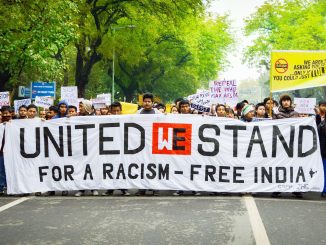
In the world’s most populous democracy, India, resistance broke out in Delhi when the BJP government legalized the marginalization of the Muslim community in India. In response, the government used brutal tactics against students to suppress critical voices. In Pakistan, students and academics are facing sedition charges by the state for demanding their constitutional rights.

This pattern all over the world leaves us to another conclusion: This is a systemic problem and it does not vary from state to state.

If we are to progress as a free society, we need to get rid of the right-wing politics that is pushing us back to the medieval times when any criticism of the Emperor would result in persecution – times when, in Foucault’s words, “it was forbidden to say that the emperor had no clothes.”

Today, there is an urgent need to understand that the economic crisis is due to the capitalist system. Equally, there is an urgent need to deconstruct political propaganda churned out by right-wing populists, who prey on the working and anti-elite classes by pretending to respect or care for them.

For, unless that propaganda is deconstructed and defeated, authoritarianism in the guise of right-wing populism will continue to dominate the world.

The views expressed in this article belong to the author and are not reflective of Strafasia’s position.

Comparing the China-Taiwan Situation to the Ukraine Crisis

President Zelenskyy has now agreed to talk with President Putin for peace in Ukraine. It can be seen as an admission of defeat, now that the Ukrainian leadership is not seeking help from their European neighbors or the US, and they have no more hope that the international community can convince Putin for a peaceful settlement or at least a ceasefire. In this war, Russia used hypersonic missiles for the first time, though it was not a decisive missile as it did not carry a nuclear warhead.

Ukraine is not a formal military ally of NATO and the US, which encouraged Russia to launch an attack on Ukraine. Taiwan, however, has signed the Taiwan Relations Act in which the US will assist it with military modernization but is not bound to give any security guarantee.  Taiwan does not have any territorial connectivity with the West as Ukraine does, but that did not guarantee Ukraine’s rescue. As such, it is a lesson for the Taiwanse leadership not to trust the West and try to resolve issues with China through talks.

China is unlikely to launch a military campaign against Taiwan unless the latter moves toward a formal anti-Chinese military block. In the future, if the US or NATO were to establish a military base in Taiwan, it could provoke China, which is otherwise not seeking the world’s attention by means of attacking Taiwan. There are several reasons which argue against China and Taiwan going to war with each other. 1) Both countries have heavily invested in each other; the value of bilateral trade was US$166 billion in 2020 value. 2) The tourism industry will not welcome any aggression. 3) China has an energy-consuming and export-oriented economy that cannot afford any kind of hostility as it will disturb the supply chain; in 2020, 10,852.615 barrels/day were imported by China and any disruptions in this supply of crude oil supply will disturb the Chinese economy significantly. And 4), China is dependent on the Taiwan semiconductors industry.

Now the question is, if the US gives a positive security guarantee to Taiwan, how China will react? Will it do the same as Russia did with Ukraine or not? Russian forces are facing resistance from civil society. This reinforces for China that winning the hearts and minds of the public before any invasion is as important as the invasion itself.

Role of China in this conflict

China had abstained from the UN vote in the ongoing crisis, which was surprising for the US; the assumption was that China would overtly support Russian, but this was not the case. If China gives any military assistance to Russia then it will face very strong opposition from the US and its allies, and may even become the target of secondary sanctions by the West. The challenge in this crisis will be to remain neutral when China becomes a mediator, given China’s leaning toward Russia. If China succeeds in brokering a ceasefire or comes with any other solution for both, it would mean China is a serious player in mediating for European issues. 

Will sanctions work?

Russia is one of the largest energy suppliers to Europe, which means European sanctions create great difficulties for the European economy. Russia is an exporter of oil, gas, and grain it will survive much as Iran has survived the sanctions against it. China and India will likely remain mindful of sanctions; however, India must choose between the US and Russia. US Sanctions will also hurt the European Union, as Russia is the largest energy and grain supplier to it only Germany is importing 40% of its gas from Russia. China is a beneficiary of this turmoil; it will be able to import more oil and gas at a cheap cost.

Wining position for Putin

Putin must have calculated by how much the war can be prolonged, and how much territory they will need to capture in order to compel Kiev. Now if Kiev recognizes the Donbas region as home to two sovereign states, it may open the way to end this war and will be a considerable victory for Russia. Regime change is also an option for Putin to make changes and set Ukraine according to their will.

US response

Russia is now the world’s most sanctioned. President Biden stated that he will not send troops to aid Ukraine, essentially emphasizing that this is Ukraine’s war, not America’s. The US knows if they take part in this war the conflict will expand into Europe. Russia deters Europe and America by having activating its nuclear command. But if Russia takes full control of Ukraine and attempts to further move toward NATO members, then Article 5 will be invoked.

From this crisis we can draw a few lessons. International liberal institutions fail cannot be effective in protecting a state that does not have a formal treaty for protection, and it must then not become a pawn between two great powers. In light of this, Taiwan and India must revisit their foreign policy options. This episode should encourage China that the US will not engage in a military campaign in any regional conflict when one an adversary is a nuclear power and has military might, economic power and veto power.

Indo-French Defence Bonhomie

India, one of the world’s largest arms importers, continues to expand the scope and range of its defence and strategic cooperation with countries like France, the US, Russia and Israel. It’s all happening despite India’s blatant disregard for Western concerns over Russia’s invasion of Ukraine. Indo-French defence cooperation is one example of India’s mounting strategic partnerships which have pointedly challenged the South Asian regional security environment. The Indo-French defense partnership along with the Indo-U.S. strategic partnership has disastrous ramifications for the regional stability of South Asia.  Unfortunately, both the US. and France continue to transfer the latest cutting-edge technology and weapons systems to a revisionist India led by PM Modi.

The Modi government signed a murky deal with France for the sale of 36 Rafale medium multi-role combat aircraft (MMRCA) for a whopping $9.4 billion.  PM Modi was accused of awarding the deal to his personal favorites like Ambani who owns Reliance Defense.

France’s supply of the Rafale jets to India, that the French Air Force successfully used to rehearse a nuclear strike mission, is dangerous and worrisome. According to the military sources, “France tested all phases of a nuclear strike with an 11-hour mission that saw a Rafale fighter jet refuel and fire an unarmed missile capable of carrying a nuclear warhead.” The sale to India ticks all criteria for fueling regional tensions, particularly with Pakistan.

France has always been at India’s side. “There is defence, there is nuclear and space, France has been a long-standing partner, a good partner, a reliable partner with whom, certainly it is the desire of our government to grow the relationship and take it to the next level. The India-France strategic partnership has become even more relevant in the 21st century both to strengthen multilateralism, which must be the basis of a stable multipolar world, and even more for the future of the Indo-Pacific region,” Jaishankar said during interaction with French FM Jean Yves Le Drian.

France has shown a degree of irresponsibility by selling state-of-the-art combat weapon systems to a militarily revisionist state. In fact, France’s sale of Rafale jets to India breaches nuclear proliferation protocols as the deal involves the transfer of sensitive technology which is capable of carrying a nuclear warhead.

South Asia is one of the most volatile and fragile regions of the world. Strategic communities around the world are unanimous in their views that India and Pakistan’s violent relationship has the potential to trigger a nuclear war. The Indo-Pak historical animosity is further widening due to India’s reluctance to engage with Pakistan in a meaningful dialogue. In such circumstances, the massive influx of deadly weapons in the region without taking care of regional sensitivities is further adding to the instability. Unfortunately, France has become a direct party in fueling regional tensions with its weapon export to India.

 France’s defence cooperation with India is not limited to fighter jets. Both countries have extended their defence partnership to the maritime domain. The Indian defence ministry has already awarded the French Shipbuilder Naval Group a $4.16 billion contract for the construction of six Scorpene-class (Kalvari-class) SSKs in partnership with Mazagon Dock Limited (MDL). The French Defence Minister termed naval cooperation with India as a “shining illustration of the exemplary nature of our technological and industrial cooperation.”

French cooperation with India in multiple domains of defence may be driven by the lucrative Indian market, but its regional ramifications will be disastrous in the long run. With French support, India won’t hesitate to experiment with its military doctrines and policies in the region, particularly against Pakistan.

This situation demands that France must revisit its defense policy towards India. France needs to consider regional security dynamics before selling the latest military system to India because hostilities and regional anxieties have directly been affected by such deals. France must also accept the fact that Pakistan will have to bear the brunt for this latest French-manufactured war-machinery being provided to India. Unlike other regions, South Asia is considered to be a nuclear flashpoint, and France’s contribution to the Indian defence force modernization is virtually leading the region towards more instability and brinkmanship. It is indeed unfortunate to see France arming India to the teeth, a fact which does not go well with France’s image as a responsible power.    

POLITICAL CHANGE IS VISIBLE IN INDIA

Not all Indians are extremists or racist. It is a country of wide diversity, many different religions, cultures, and civilizations that have been living in India for centuries. Many outsiders ruled India perfectly, like Muslims, British, etc. Even, after getting independence from the British in 1947, the people of India were living together. Hindu, the major religion in India has four castes but the adherent of each are not treated equally; the lowest of these, the so called ‘Untouchables’, are often the worse-treated.

While it is the duty of the Government to enjoin good practices and oppose bad ones, Prime Minister Narendra Modi, during his election campaign, gain votes from the extremist groups by promoting extremist ideology and making promises of converting India into a pure Hindu state where all non-Hindus would either be converted to Hinduism or kicked out of India.  After winning the election, he enacted extremist policies which harmed the minorities, including Muslims, Christians, Sikhs, etc.

The extremists standing with him are estimated at only 6% of the population. But, due to government backing, and with support from security forces, the judiciary and the media, their impact is huge. In fact, the Government has been hijacked by extremists. By virtue of their official powers, they are leading the country into chaos. It has damaged the unity of the nation and projected an ugly face to the global community. Human Rights Watch and NGOs, working on human rights have been criticizing Indian official policies against minorities.

There is a complete awareness of the sensitivity of the extremist policies within the country and common people are worried about it. They have reflected their anger in the recent local / provincial election. As a result, the ruling political party led by Prime Minister Modi has merely a clear majority in only 10 of the 29 state Assemblies.

The remaining breakdown is as under:

  • 0 seats in Sikkim – a state invaded by India illegally,
  • 0 seats in Mizoram – a state undergoing insurgency,
  • 0 seats in Tamil Nadu – one of the most literate states,
  • 4 out of 175 in Andhra – the most populous state,
  • 1 out of 140 in Kerala – full of IT intellectuals and termed the Silicon Valley of India,
  • 3 out of 117 in Punjab – home of Sikh religion and victim of state terrorism,
  • 3 out of 294 in Bengal – Muslim majority state,
  • 5 out of 119 in Telangana – a state under insurgency,
  • 8 out of 70 in Delhi – the capital of the nation,
  • 10 out of 147 in Orissa – highly populated state,
  • 12 out of 60 in Nagaland – desperate state struggling for independence.

In those states where the BJP has a coalition government, the BJP’s seat status is thus:

  • 2 out of 60 in Meghalaya – a critical and fragile coalition,
  • 53 out of 243 in Bihar – a Muslim majority state,
  • 25 out of 87 in J&K – the most troubled state, where 900,000 troops are deployed to control the 8 million population,
  • 13 out of 40 seats in Goa- a beautiful state and tourist destination.

Out of a total of 4139 assembly seats in the country, the BJP has 1516 seats out of which 950 seats are from 6 states like Gujarat, Maharashtra, Karnataka, UP, MP, Rajasthan.

The meaning is clear: there is no wave or storm of the BJP. In fact, the BJP has lost 66% of the seats in the country.

The common man is more concerned about his or her job, earnings, safety, welfare, and development of the country. The extremism, intolerance, and discrimination have harmed the social and economic life of the common man. The common population cannot change the state policies so easily, but they can reflect their anger and concerns at polling time and cast their vote against those responsible for said policies.

Based on the above facts and figures, one can derive a conclusion about the future of the BJP or PM Modi. The next general elections are due in the year 2024, but election campaigns have already begun and pre-election preparations are underway. The people of India have full awareness and have the right to choose the government of their own choice. 

WHY RUSSIA WANTS TO EXPAND: ITS GEOPOLITICAL CONCERNS FROM TSAR IVAN TO VLADIMIR PUTIN.

State behavior in international politics is usually driven by a factors such as the economy, geography and ideology. As far as Russia is concerned, while it has a strong military and a comparative stable economy, the lack of natural borders and strategic depth creates a vacuum for geopolitics to dominate Russian behavior on the international stage.

Battle pawn chess between Russia and Ukraine with USA and China chess standing for both countries political conflict and war concept by 3d rendering technique.

Tim Marshall, in his book ‘Prisoners of Geography’ says Putin’s perspective is that geography would not be so kind to its country in the event of war or other need. This is because the Russian navy would not have the option to get out rapidly to the Baltic Sea if required, since NATO allies control the Skagerrak Strait and GIUK Gap (Greenland, Iceland, United Kingdom), while Turkey, part of NATO, controls the Bosphorus under the 1936 Montex Pact. Vladimir Putin’s biggest nightmare, yet, might be that Ukraine would one day be able to host a NATO maritime base. Russia’s sole warm-water port, Sevastopol, situated on the Crimean promontory, gives Moscow a decisively large base for its maritime armada.

Meanwhile, the fact that the world’s largest state lacks natural borders and strategic depth created impetus for its invasions. If we trace their history, this was known as the policy of ‘expansion for survival’, introduced by Tsar Ivan.  Ivan policies were extremely aggressive, introducing a policy of ‘attacking to defend’. He was responsible for the massive expansion of territories that turned Russia into the great bear that it remained for centuries. After Ivan, geographic concerns led many other Russian rulers to adopt this expansionist policy.

When WWII ended, the Soviet Union’s primary concern was ensuring that it could never again be invaded by a European power. Non-Russians may easily forget or be unaware of the fact, but Russia has suffered several times throughout its history at the hands of European nations, and as World War II drew to a close, Stalin vowed that his nation would never again be faced with another Hitler or Napoleon.

At the same time, the reason Russia has been invaded by European powers so many times in the past is its unfavorable geography. It is located at the eastern end of the European plain, a lowland area with natural barriers and fewer natural defenses. The European Plain extends deep into Russian territory and, historically, has been used as an easy highway for invading armies, leading straight into the political and economic heart of Russia. The only possible way for Russia to protect its borders from invaders is to build a series of prohibitively expensive fortifications across the vast plains.

Moreover, by sitting on the eastern side of the great plain, Russia’s border forces are concerned about it being defended against numerous possible invasions through such geographical loopholes. This was the reason why Napoleon and Hitler’s armies were able to penetrate so deeply into Russian territory and, had the machine gun not fundamentally changed the nature of fighting WWI, Germany too would have likely been able to invade deep into Russia as well.

Meanwhile, to protect itself, Russia would need to aggressively expand westward on the European plains, thereby reducing the number of possible corridors of invasion. American and western leaders at the end of WWII fundamentally misunderstood the Soviet Union’s intentions though. At first, Stalin was happy to let the governments of the eastern European nations dictate their own affairs, as long as they swore fealty to Moscow; but when the United States launched NATO, Stalin believed that the West was once more preparing for a confrontation with Russia and immediately cracked down on Soviet bloc nations and their governments.

As the Cold War drew to a close, the Soviet Union repeatedly courted the United States and NATO, hoping to transition to a more friendly state of relations. Moreover, when revolutions swept across the old Soviet bloc, the Soviet Union agreed to the US demand that it would not use military forces to quell them. The Soviet Union eventually allowed German reunification with the demand that NATO’s expansion stop west of Germany so that the country would forever remain a buffer zone between the West and Russia.

The new Russia also wished to retain its influence on its neighbors, as it had done so far for nearly half a century; by keeping its neighbors close politically, Russia could feel safe from another European invasion or the effect of another European war. Shortly after reunification, Germany’s membership of NATO was approved President Bill Clinton set his sights on a larger NATO expansion, with countries such as Poland, the Czech Republic, and Hungary joining in. This event was a strategic disaster for post-Cold War Russia, which suddenly saw the keys it had enjoyed for nearly half a century eroded overnight.

Concerns grew in Russia over the countries desperate to join NATO because it would give them the protection to chart their own course.  For decades, they had been ruled by Soviet proxies; however, NATO protected them from Russian interference. It is easy for Westerners to see Russia as paranoid, yet the country has not only been invaded many times, but its geography has actively opposed it even in peacetime. Russia has a few year-round ports from which they operate their commercial and naval fleets, as most of its ports are subject to winter freezes or are far from major population centers. Russia’s access to the sea was easily blocked by Western navies, such as the British in the 17th and 18th centuries, and this geographic location drove much of its desire to expand.

Russian expansionism is, in Russian minds, all about national survival. Because of its unfortunate geographical and geopolitical factors, it has suffered catastrophic invasions throughout its history, as well as economic and military blockades, and Russia has often been a victim to European powers. Russian leaders believe that only through expansion they can survive and prevent future disasters. At the same time, President Putin wants to exert regional influence on his neighbors, even arguing that his great-power status gives him the right to do that. Influence in the region and beyond is considered critical to keeping Russia geographically, politically and economically secure.

Russia has suffered some major blows over the years, with World War II and the Cold War leaving Russia weak and surrounded by the NATO alliance. The only way for Russia to survive would be to expand its territory, even as it wishes to do so without beginning a new Cold War.

Nuclear Signaling for a Strategic Edge: Russia-Ukraine Crisis

There was a flashback to moments of the Cold War when the Russian President Vladimir Putin ordered the Russian military to put its deterrent forces on special alert, amidst provocative statements from the West in the ongoing conflict with Ukraine. Similar signals were given out during the Cuban Missile Crisis in 1962. In case of the latter, it had been triggered by the stationing of Soviet nuclear missiles in Cuba, resulting in the imposition of a naval blockade by the US to prevent the USSR from shipping in more. Fast forward to Ukraine in 2022, Putin’s orders were widely interpreted as Russia’s signaling of the threat of nuclear weapons use if Russian sovereignty was threatened. The nuclear deterrent forces were stationed on a special regime of combat duty. It was reported that duty changes of the control points of the Russian Strategic Missile Forces, its Northern and Pacific Fleets and the command of Long-Range Aviation carried out combat duty with a reinforced composition.

Russian Strategic Nuclear Forces (SNF) consist of Strategic Missile Forces that include dual-use forces and units of strategic and long-range bombers, submarines, surface ships and naval missile-carrying aircraft of the Russian Navy with conventional high-precision long-range weapons. The Strategic Defence Forces consists of combat-ready forces and means of the Aerospace Defense Forces, including a missile attack warning system, a space control system, missile defense and anti-space defense, and air defense. In addition to this, Russia also stationed its anti-air missiles and other advanced missile systems in Belarus, and positioned its naval fleet in the Black Sea as an effort to prevent a western intervention in Ukraine.

The document entitled ‘Basic Principles of State Policy of the Russian Federation on Nuclear Deterrence’ states that Russia implements nuclear deterrence only “with regards to individual states and military coalitions (alliances/blocs) that consider the Russian Federation as a potential adversary and that possess nuclear weapons and/or other types of weapons of mass destruction, or significant combat potential of general purpose forces”. In addition to this, the Russian policy in the field of nuclear deterrence is intended to be defensive in nature, aimed at “maintaining the potential of nuclear forces at a level sufficient to ensure and guarantee the protection of the sovereignty and territorial integrity of the state”, deterring a potential adversary from “aggression against the Russian Federation and/or its allies”, and in the event of a military conflict, “preventing the escalation of hostilities and their cessation on acceptable grounds for the Russian Federation and/or its allies’ conditions”.

In light of these arguments, President Putin’s nuclear signaling over Ukraine, designed to deter the US and its allies from further intervention in the conflict and the coercive economic measures that Russia might see as an existential threat, has been successful in achieving his political objectives. Not only that, but has been in line with its deterrence and nuclear policy. The ambiguity of Russian intent of using the nuclear weapon has been surprising and confusing for NATO. The nuclear dimension of the Ukraine crisis has been corroborated by NATO’s restrained response to Russia’s nuclear messages and the fact that it has avoided engaging in tit-for-tat nuclear messaging. One of the examples is NATO’s refusal to impose a no-fly zone over Ukraine, stressing that it would lead to an all-out war with a nuclear-armed Russia.

Tracking the past and present scenarios, Ukraine’s government which seeks to join NATO and the EU, adds to Moscow’s apprehensions that the alliance will deploy missiles there and use them to target Russia. President Putin ordered his troops to be put on high alert and has been giving bold statements, to keep the nuclear deterrence continuous during the peacetime, in the face of a threat or an aggression. It affirms the Russian policy to hold the right of using nuclear weapons to end any conventional aggression. It also seems to make use of Thomas Schelling’s concept of “competition in risk taking” that aims at achieving political goals not by tests of force but by tests of nerves. In such a scenario, the decisions are not made by people who can actually bring the most force to bear, but by who is willing to do so while signaling that more will be forthcoming.

The doctrine of Mutually Assured Destruction (MAD) has helped avoid nuclear exchanges between US and Russia, even during the tenuous moments of the Cold War. It is also possible that Russia’s nuclear signaling is aimed at strengthening its psychological and political position vis-à-vis the West during the crisis. It can be an indicator for the West, particularly NATO, as to how high Russia sees the stakes in Ukraine, as well as the former’s resolve to deter its aggressor and end the crisis on its own terms.

Sixty years have elapsed since the Cuban missile crisis of 1962 and in its image, the Ukraine-Russia conflict has turned into a major geopolitical crisis.  History is being repeated in the Eurasian region. Ukraine is now Moscow’s most pressing and important concern. There is an apparent urgency in Russia to prevent further arms’ deliveries to Ukraine before strategically significant weapons are employed that can change the dynamics of the crisis and tip it in the West’s favour. This urgency is observable from how President Putin implemented Russia’s deterrence policy in the Ukraine conflict to establish its strategic edge.

CHINA’S STANCE IN THE RUSSIA-UKRAINE CRISIS & IMPLICATIONS FOR PAKISTAN

Conflicts and wars make history, which can change the entire course of mankind. Political eras are defined by a transformation in the world order, which are rarely free of conflict. The post-9/11 era saw an international ‘war on terror’ with America dominating international relations. But in the aftermath of the 2020 pandemic and with the US withdrawal from Afghanistan, we are witnessing the rise of a competitive great power, China, and change is in the political air.

Experts believe that the Russian attack on Ukraine is a definite reassurance of transformation in the post-World War-II world order. Classical realism came back into play when Russia cited domestic security concerns as a viable reason for an offensive attack on Ukraine. With the newly blossomed China-Russia alliance against the US-led Western one, there are questions on the position of China; consequently South Asian countries are being placed in the ‘increasingly uncomfortable’ position of having to choose a side or be sandwiched in the middle like in the Cold War days.

It is important to understand some of the reasons of the current war and Chinese interests, in order to make sense of what China wants and what it is doing. The crisis escalated when, in response to the Russian demand of Ukraine not becoming a NATO member, Ukraine refused to accept any such imposition on their sovereignty. After the recognition of Luhansk and Donetsk in the Donbas region, Russia stated it intended to undertake the denazification of Ukraine, meaning to topple the current government in Kyiv and reshuffle the political landscape.

China on the Russia-Ukraine war:

China, despite its newly adopted wolf warrior diplomatic posture took a step back and asked President Putin to resolve the conflict through talks. This is because China is navigating a complex position, attempting to maintain a balance between ties with Russia and with its “practiced foreign policy of staunchly defending state sovereignty”.

Although both China and Russia have complementary authoritarian regimes, both are distinct nation states with separate identities. The question is, does China believes that the Russian security concerns are a legitimate reason for an all out attack or does China only want to set a precedence for its own domestic issues over Taiwan? Did abstaining from the United Nations General Assembly emergency session on the crisis mean only an opposition to the Western dominance and economic interests in Moscow?

Putin’s decision to recognize the Donetsk and Luhansk People’s Republics as independent means that Putin is asserting a state’s right to declare that portions of another state are independent. This can set a dangerous precedent for China on the issue of Taiwan which is viewed as a renegade province by the mainland but stands akin to the United States recognizing Taiwan as an independent country.

The situation on hand is now two fold. Of concern for China is the aspect of a foreign country’s blatant support for separatist movements in a sovereign country – particularly through military intervention. Because of China’s own separatist challenges at home, in Xinjiang and Tibet (and to a lesser extent Hong Kong), as well as its staunch opposition to any move toward Taiwan’s independence, Russia’s move in support of the separatist movements in Ukraine could set a negative precedent. The second aspect could be in favor of China, if the West shifts its attention from China to Europe. It is viewed that maybe the best-case scenario for China is the West and Russia at daggers drawn, which allows Beijing the space and time necessary to cultivate its power and influence.

Because if the latter happens, China’s domestic challenges are ignored for the moment and China has gotten the chance to once again do what it does the best; help out the financially sanctioned states. The decay of Russia’s relations with the West and imposition of Western sanctions will further push Moscow into Beijing’s orbit and allow the latter greater leverage and influence in the relationship. It has been the pattern of the US and Western allies up till now that their aggressive postures have left many unexplored opportunities which can be capitalized through economic diplomacy by great powers like China, such as in the case of Afghanistan and Iran.

 On the other side of the coin is Taiwan where the great power competition is in a very fluid state; although Taiwan maintains a stark difference in choosing sides as compared to China, by implementing strict export controls on Russia.

If China finds out that Putin’s gambit has increased Taiwan’s prominence in Washington it could make the Chinese intervention almost a certainty. Therefore, any preventive attack by China on Taiwan could trigger and challenge American power. In this hypothetical scenario, the US could either stand aside in the face of this aggression and possibly lose its credibility among the Western allies, or respond offensively on both fronts, i.e. Ukraine as well as Taiwan. The latter option would allow the US to reassure Taiwan of its support and, at the same time, deter China.

Russia’s invasion of Ukraine, by raising Taiwan’s profile, highlighting its contributions as a reliable U.S. partner, and increasing the probability of a US intervention on Taiwan’s behalf, sets back China’s ambitions for Taiwan. Historically, China would be again risking its aim to bring Taiwan under its control by allying with Russian in this bloody war. This either or situation could lead to an inevitable probability of war on a larger scale.

Where does Pakistan stand in the war in Europe?

In the recent visit of Pakistan’s Prime Minister to Moscow, there was talk of building of an 1,100 km gas pipeline. Although analysts are of the view that the trip was a merely ‘coincided’ with the Russian attack on Ukraine, Pakistan has to keep an eye at her own interests.

In a recent Twitter space hosted by the Islamabad based think tank IPRI, renowned Pakistani analyst Dr. Huma Burqi said that although Pakistan will be affected by the sanctions imposed on Russia, we would have to navigate our way around it. This compromise and readiness to bear the consequences of taking the Russian side does not preclude us from being a part of great power politics. Ukraine has asked India for political support and India, having strong economic ties with Russia, has ultimately maintained a neutral stance on the matter. Therefore, it should be noted that we are fooling ourselves if we keep on saying that we are not in the Chinese-Russian camp while our actions on ground are to the contrary. Furthermore, this would have an effect on our relations with the US as well as our matters in the international financial institutions. We are waiting and watching India to make a move and then we follow the lead to build up narratives.

Wars are not confined to two states; they carry ripples with them, destroying every middle or great power becoming a part of it, whether intentionally or by force. It was rightfully said by Dr. Burqi that though this is an era of multilateralism, the middle powers are much more significant players now than ever. The attack of February 25 has definitely ushered in a change in the current world order, with “national security being prioritized over sovereign rights and non-interference”. The ripple effects of the invasion will be felt far beyond the borders of Europe, with significant economic and geopolitical implications for Asia that will only become increasingly complex in nature.

Recalling Indian Misadventure and Smear Campaigns

The month of February has a distinctive significance in terms of the events that occurred in history and the ones that are currently taking place. Currently, it is witnessing a conflict between Russia and Ukraine. In February 2019, an exchange took place between India and Pakistan that escalated to the level of a small-scale war and ended with victory for Pakistan, when the PAF ruined aspirations of the Indian establishment and its defense forces to establish a new normal. The war-mongering attitude of India faced a shameful defeat on 27th February 2019, remembered as ‘Surprise day’.

When Indian CPRF personnel were attacked on 14th February 2019, killing 40 of them at Pulwama, the attack was immediately blamed on Pakistan without any proper investigation. The farce was later exposed when The Wire news disclosed WhatsApp chats between the CEO of Broadcast Audience Research Council and anchorperson Arnab Goswami. Indian media and Indian Intelligence had created a cacus belli using the blame game; India invaded Pakistan’s airspace on 26th February 2019 at night and the Indian fighter jets dropped their payloads in Pakistani territory for a swift escape. As a result, not more than 15 pine trees were damaged. 

The response from Pakistan in the shape of operation Swift Retort was both comprehensive and proportional. Pakistani fighter jets crossed into Indian airspace and, in a dogfight, downed two Indian fighter jets. The air raid from Pakistan also locked sensitive sites inside India but the bombs were not dropped on the actual targets, with careful maneuvers. An Indian fighter pilot Wing Commander Abhinandan, was forced to eject after his jet was shot and he was captured by Pakistan Army. The outcomes of the operation were mind-boggling. They clarified the abilities and will of Pakistan’s armed forces, while also showing the incompetence of Indian defense equipment and its flawed human resource. 

The Indian establishment tried to hide the international embarrassment faced at the hands of Pakistan, with a massive disinformation campaign. They spread fake news that Abhinandan had shot down an F-16. It was later affirmed by the US that all Pakistani F-16s were accounted for and none were missing. The misadventure of the Indian establishment brought international disgrace to its people and was later blamed on the lack of modern fighter aircraft.

The Indians have tried to make such events a new normal. Such misadventures of India have become a norm that is covertly meant for providing the sitting government with political gains. The parliament attack in 2001, the Mumbai attack in 2008, the Pathankot attack in 2016, and all such related events were part of a strategic maneuver executed by Indian governments to rally the sentiments of Indian people towards increasing their vote bank. India has put regional stability and international peace at stake multiple times for a populist image, defying the notion of peace and stability. Such an approach for mere political gains can bring chaos not only to the region but also the whole world.

Modi used Balakot airstrikes as a maneuver for his election campaign. While addressing a rally in Ausa in Maharashtra’s Latur, Modi said: “Can your first vote be dedicated to those who carried out the air strike?” He further added: “I want to tell the first –time voters: can your first vote be dedicated to the veer jawans (valiant soldiers) who carried out the air strike in Pakistan. Can your first vote be dedicated to the veer Shaheed (brave martyrs) of Pulwama”.

Another reason to use falsehood as a tool of statecraft was to divert the attention of the international community from Indian atrocities being perpetuated against Muslims in Kashmir and in other parts of the country. The domestic challenges, mainly the disputes between the ethnic groups, are kept hidden using disinformation. In this way the Indian army and PM Modi colluded to create fiction and a hero for their general public. 

The current Indian government, in keeping with the extremist ideology of Hindutva has made the region a hub of rivalry and a nuclear flashpoint. The fallacious Indian belief of becoming the regional hegemon while having a war-loving approach has put international peace under serious threat. Pakistan on the other hand has always followed a defensive approach by making sure that every Indian aggression must be reciprocated with a similar proactive response while staying under the threshold. 

The sinister designs of the Indian establishment are a reason of worry for the international community. Operation Swift Retort was a major blow for them. The loopholes in the procurement process of defense equipment and the flawed human resource is a major concern for the Indian forces. They have realized that they are far below the level of proficiency that Pakistan’s armed forces possess. This realization has further threatened the stability-instability paradox of the region because of the heavy investment by India in defense procurements promoting militarization. 

All the aforementioned Indian efforts to jeopardize international peace have been proven with solid evidence. The EU DisinfoLab report is one such proof that discloses the Indian endeavors to spread disinformation against its enemies, mainly Pakistan and China. Such irresponsible attempts to vandalize its peaceful neighbors have serious consequences. The international community must put in efforts to make India realize its mistakes, in order to bring peace to the region.