
US Strategic posture from NSS to NDS: The Future of US allies in the Asia-Pacific region

In December 2025 the Trump administration releases the National Security Strategy (NSS) 2025. A fundamental component of the report sets the US national security priorities, especially the great power competition with China. Trump 2.0 security arrangements are visibly departing from Trump 1.0 in the context of the U.S. posturing toward China. Trump 1.0 had declared China a strategic threat, but Trump 2.0 marked China as an economic competitor.

Nonetheless, the document reiterated China as the second-largest military and economic power after the United States and would remain a challenge to U.S. strategic and economic interests. Moreover, it also highlights that the economic engagement rather than confrontation would be the pathway for the U.S. to deal with China in the Asia-Pacific region. The question is how the US allies interpret this new strategic trajectory of the United States, as their interpretation will determine the security environment of the Asia-Pacific region in the future.

In the same vein, the Pentagon’s 2026 National Defence Strategy no longer views China as a top security concern. Instead, it shifts focus to the Western Hemisphere, marking a departure from decades of U.S. foreign policy that treated China as the primary threat to its security and economic interests. The document emphasizes that US allies in the Asia-Pacific region, such as South Korea and Japan should bear their fair share of the collective defence. The document holds that the Pentagon would be influenced by four major concerns, namely defending the homeland, giving up the leading role in security matters in Europe and Asia-Pacific region, strengthening the industrial base and establishing strong deterrence, and dealing with China with strength, not confrontation. Under Biden, the Pentagon declared China and Russia as revisionist powers which pose central challenge to the security of the United States.

The Trump administration would seek security cooperation with allies and partners based on their contributions in terms of resources and money. It shows that the US allies in the Asia-Pacific region such as Japan, South Korea, Australia, Taiwan, and Indonesia would construct their security architecture themselves rather than relying on Washington, though the presence of the US would still be there, not as a leading player but as supporting power.

It now seems likely that the US allies such as Japan, South Korea, Taiwan, Vietnam, and Australia could veer closer to China. Beijing’s polices accentuates economic interdependence and cooperation, in contradiction to Washington’s long-standing focus on strategic dominance and exclusive security arrangements. Instead of pursuing confrontation, the document stresses deterrence through strength does not force. Through upholding a “strong denial defence” along the First Island Chain to deter China’s threat, the NSS proposed to ensure a decent peace in the Asia-Pacific region. The concept of deterrence in the document is cyclical. Military deterrence complements strategic stability, which enables smooth economic activity, and supports the military industrial base. A strong industrial base then produces the wherewithal for strong military power, reinforcing deterrence and once again ensuring strategic stability.

There are two critical questions. First, would US allies in the Asia-Pacific be willing to substantially increase their military strength against China if the credible and reliable US security assurance becomes uncertain and conditional? For instance, Japan has already hiked up its military build-up, allocating a 58-billion-dollar defence budget for the year 2026, which is 9.4% increase over the previous year. Likewise, Australia is increasing its defence investment, with nuclear-powered submarine related spending projected to rise sharply. Similarly, South Korea enhances its defence spending amid threats from North Korea. These actions reflect real progress, but they have largely occurred with the expectation of US backing.  Without reliable and unconditional security assistance, as the US NSD illustrates on burden sharing and burden shifting, the political will to go further with US remains uncertain.

Second, as the document holds that the US would retrench from direct involvement in regional issues of allies, would the allies continue to feel China as a rational threat? China remains a major trading partner for most of the US allies in the Asia-Pacific region, establishing a rational choice for practical engagement with China. The trade volume between China and Japan amounts to 322 billion dollars, while between South Korea and China it stands at 331 billion dollars, with Taiwan 314 billion dollars, 296 billion dollars with Vietnam, and 206 billion dollars with Australia. It seems more probable that the allies would reach out to China, leveraging economic interdependence over prolonged confrontation, while US security commitment weakens, and China is no longer considered as an existential threat due to reduced US interference.

Most importantly, the grey zones such as the South China Sea, Taiwan, and East China Sea are no longer considered as primary security concerns of the United States. This might gravely recalibrate the strategic trajectory of Japan, South Korea, Taiwan, and Australia. At the beginning of 2026, China has hosted South Korean President Lee Jae Myung, Canadian Prime Minister Mark Carney, Finnish Prime Minister Petteri Orpo and Irish leader Micheal Marin, who are all traditional allies of the United States, and are disenchanted by President Donald Trump’s policies.

In conclusion, the strategic direction of U.S. allies in the region is likely to be affected by the shift in U.S. strategy toward the region. This shift may create strategic space that China would like to fill, particularly given its strong trade relations with U.S. allies. China can effectively leverage this opportunity to advance its strategic interests. However, the future remains uncertain and is likely to unfold in unpredictable ways.

Rare Earths and the New Great Power Competition

Rare Earth Elements (REEs) are those that have proven indispensable to modern technology, global and national security. Such minerals are used in Smartphones, Computer Processors, Digital Cameras, MRI Machines, Wind Turbines, and Solar Panels, Electric Vehicles, and High-Tech Military applications, such as Missile Guidance Systems and Radar. The importance of rare earth is increasing due to global shift towards digital technologies and green energy. Rare Earths are now strategic materials that determine the strength of the world’s powers and the domination of technology as countries progress to a zero-carbon world. Geographically, the rare earth minerals are found in various regions, but processing and production are highly concentrated. China controls most of the supply chain world, with a significant part of the mining and refining being done in Inner Mongolia. The Chinese industry dominates a substantial portion of global output and an even greater portion of processing power to give it unrivalled bargaining power in supply. It used to be the lead of the world through its Mountain Pass mine in California, which provided the majority of rare earth in the world between the 1950s and 1980s. Japan is a large importer with no natural resources; its electronics and car industries are very reliant on rare earth, which is why the Pacific Ocean seabed, the Amazon basin and Afghanistan have been investigated as possible sources. In the meantime, the new frontiers like Greenland and Venezuela are of interest because of their reserves and strategic positioning.

Largely, major powers invest in rare earth minerals due to a variety of reasons that are related. These are also strategic in defence technologies, such as fighter jets, precision-guided missiles, high-tech communication systems, and other surveillance equipment, which makes them of critical importance to national security. Economically, management of rare earth supply chains would allow countries to take over the high-tech production industry and the global market in electronics, renewable energy and electric cars. Green technologies like wind turbines, solar panels and battery storage systems that play a central role in curbing climate change are inseparable in terms of environmental considerations and require rare earths. GEO-Politically speaking, the ability to limit or control exports or supply gives the country a potent bargaining power in international relations. To illustrate, these disruptions have the potential to impact the whole industry, providing exporting countries with the power to impact the trade relations and the results of the diplomatic process. It has admired the most important players or actors, commonly known as rare earth geopolitics, which include China, the United States, Japan, and the European Union. China secured its hegemony by providing firm state assistance, minimal production expenses and relatively lenient environmental standards, enabling it to outperform its competitors in the West and take over as much as 95 per cent of the world supply in the 1990s and early 2000s.

The US, which was previously the world hegemon, was forced to lose its powers through tough environmental laws and increased cost of production and also because of the migration of manufacturing firms to Asia. However, over the past few years, the United States has attempted to redefine its domestic mining as well as lower reliance on Chinese importation by strategic alliances and investing in recycling technologies. Japan is also very dependent on Chinese rare earths imports, following the process of shifting its facilities to China making it prone to supply interruptions. Rare earths are considered by the European Union as raw materials of critical importance, and it has been on the hunt to find alternative suppliers to augment strategic independence and eliminate the dependency on a single supplier. The competition over time can be seen regarding the role of rare earth geopolitics. Between the 1950s and 1980s, the United States controlled world production in the Mountain Pass mine. During the 1980s, China took advantage of the situation and gained entry into the market with cheap production, which began to flood the global markets and many Western mines were forced to close. In the 1990s, the leadership of China called rare earths a strategic resource and its most famous statement was that the Middle East had oil, but it had rare earths. By the early 2000s, China had already monopolized the supply chain and U.S production had reduced significantly. The rising shipments were limited and quotas imposed through the export ban in China in 2010-11, fuelling world prices to up to 500 percent. This incident instigated a global hunt to find alternative supply and the geopolitical competition over the rare earth minerals was heightened.

The recent years have also seen the increased pressure of clean energy technologies and electric vehicles, further streamlining the efforts to diversify supply chains all over the world. Greenland and Venezuela are the only emerging areas that portray how the rare earth geopolitics has been evolving. The Kvanefjeld area of Greenland also has major deposits of hard-to-mine elements, especially rare earths, and this would help in globally distributing the supply. Nevertheless, the issue of environmental concerns, adverse climatic conditions and local resistance has slowed down the mining projects at the large-scale level. On the other hand, Venezuela is said to be endowed with massive reserves of the rare earths in the Guayana Shield but the political instability, crisis and weak governance have hindered the development. Regardless of these hurdles, the two regions are still quite strategic because the great powers are finding alternative sources of power so as not to be overly reliant on China. To sum up, the strategic importance of rare earth minerals in the modern world has been brought to the global centre of power politics because of their necessity in the world of modern technology, clean energy, and the national defence sphere.

The concentration of supply in China poses a strategic weakening of other major powers such as the United States, Japan and the European Union. Due to the constantly increasing demand and exploration of access to new sources, the competition in the sector of rare earth minerals is expected to be more prominent. Rare earths are one of the most important strategic resources of our time and the control of these resources will determine technological innovation, economic growth, and geopolitical influence in the twenty-first century.

The Shadow Over the Gulf

by Muhammad Mohsin Iqbal

The present confrontation in the Middle East has brought the international system to one of its most delicate moments since the end of the Cold War. The joint military campaign launched by the United States and Israel against Iran in late February 2026 has rapidly expanded into a wider regional crisis, drawing in multiple actors and raising fears of an uncontrollable escalation. Independent analysts describe the conflict as the opening phase of what some commentators already call a “third Gulf war,” whose consequences may extend far beyond the immediate battlefield.

The campaign began with coordinated air and missile strikes by Israel and the United States against Iranian military installations and infrastructure. The stated objective was to weaken Iran’s missile capabilities and strategic facilities that Washington and Tel Aviv believe threaten regional security. Yet the war has not unfolded according to simple expectations. Iran has responded with missile and drone attacks against Israeli targets and military facilities in several Gulf countries, while tensions around the Strait of Hormuz have disrupted global shipping and energy supplies.

The resilience of Iran’s retaliatory capability has surprised many observers. Missile strikes and asymmetric responses have demonstrated that even under intense pressure Iran retains the ability to inflict strategic costs. At the same time, Israel’s celebrated multilayered defence system has faced severe strain as repeated waves of missiles and drones test the limits of interception technologies. The war has therefore turned into a contest of endurance rather than a swift demonstration of military superiority.

The economic consequences of the conflict are already visible. Oil prices have surged rapidly, shaking global financial markets and raising fears of recession in several economies. The United States, already confronting inflationary pressures and fiscal burdens from earlier conflicts, may find the continuation of a prolonged war economically difficult. Wars fought far from home often impose invisible costs that gradually accumulate in national budgets and public opinion.

The Gulf countries, despite their close security ties with Washington, are deeply worried about the consequences of the conflict. Iranian retaliatory attacks have already reached several states of the region, and analysts warn that vital infrastructure—including desalination plants and energy facilities—could become targets if hostilities intensify. For countries whose survival depends on imported technology and fragile water infrastructure, the specter of a wider war is profoundly alarming.

Beyond the immediate region, the positions of major global powers further complicate the situation. China and Russia have voiced strong diplomatic criticism of the military strikes and warned that the conflict could destabilize the international system. Beijing in particular appears to be pursuing a cautious long-term strategy, balancing its economic ties with Iran and its global diplomatic interests while urging de-escalation. Moscow, for its part, sees the crisis through the prism of great-power competition with the West and fears that a prolonged war could reshape strategic alignments in Eurasia.

These reactions highlight a deeper transformation in world politics. The Middle East is no longer merely a regional theatre; it has become an arena in which the strategic interests of major powers intersect. Energy routes, technological supply chains, and geopolitical influence are all at stake. Consequently, even a localized war has the potential to produce global consequences.

One of the most troubling questions raised by the present conflict concerns the possibility of nuclear escalation. While neither the United States nor Israel has publicly suggested the use of nuclear weapons, analysts acknowledge that the longer the war continues without decisive results, the greater the temptation for extreme measures may become. History offers a sobering precedent. During the final phase of the Second World War, the United States resorted to atomic bombs against Hiroshima and Nagasaki in order to force Japan’s surrender. That decision ended the war but introduced a terrifying new era in human history.

The comparison is not exact, yet the psychological logic of war often follows similar patterns. When conventional military campaigns fail to achieve rapid victory, decision-makers may consider extraordinary options. However, the geopolitical environment today is fundamentally different from that of 1945. The existence of multiple nuclear powers, combined with complex alliances and global media scrutiny, creates powerful deterrents against such a catastrophic step. Any nuclear attack on Iran would almost certainly provoke unpredictable reactions across the world, potentially drawing other nuclear states into the crisis.

For countries such as Pakistan, the implications of such an escalation would be profound. Pakistan lies at the crossroads of South Asia, the Middle East, and Central Asia. Instability in the Persian Gulf would affect its energy security, economic stability, and regional diplomacy. Moreover, Pakistan’s strategic partnership with China and its historical ties with Muslim countries of the region would place it in a highly sensitive diplomatic position.

The most realistic future scenario may therefore involve neither total victory nor immediate peace, but a prolonged confrontation punctuated by periods of negotiation. Wars in the modern era often evolve into complex stalemates in which military operations coexist with diplomatic maneuvering. International pressure—from Europe, China, Russia, and regional actors—may gradually push the warring parties toward a ceasefire or negotiated arrangement.

Yet the broader lesson of the current crisis is unmistakable. Military power alone cannot resolve deeply rooted geopolitical rivalries. Every missile launched and every city bombed deepens mistrust and multiplies the risks of miscalculation. The Middle East, already burdened by decades of conflict, can ill afford another generation of instability.

The present war has therefore become more than a regional struggle. It is a test of whether the international community has learned the lessons of history or remains condemned to repeat them. The shadow of Hiroshima still hangs over humanity. The responsibility of avoiding another such catastrophe rests not only on the nations directly involved but on the collective wisdom of the entire world.

The India–Israel Axis and the Erosion of International Norms

The recent visit of Narendra Modi to Israel and his warm welcome by Benjamin Netanyahu is much more than a simple diplomatic exercise; it heralds the establishment of a strategic axis that is deepening and changing the security landscape in South Asia and beyond. In the midst of an unparalleled wave of international objection to the military operation conducted by Israel in Gaza, and as India is being called into question because of its policy in Kashmir, the politics and content of this alliance come off as disturbing concerns to the future of legal treaties, the diplomatic stability within the region, and the formative global order.

India, which had been a vocal ally of Palestinian self-determination, has, in recent years, especially since 2014, adjusted its foreign policy to focus on a strategic and defence partnership with Israel. It is not just a symbolic change, but institutional, technological, and highly militarized. During the visit, the two parties stressed greater cooperation in defence, artificial intelligence, and other military technologies, rooted in a shared vision of security based on technological excellence and hard power projection.

The centre of this relationship is the growing defence alliance that is gradually encroaching on Pakistan’s strategic space. The Indian intentions to purchase Israeli drones, missile systems, and laser-guided air defence technologies indicate the development of a multi-layer military shield that was clearly meant to counter the deterrence resources of Pakistan.  This is not a non-partisan technological improvement, but an effort to shift the regional power setup. To Pakistan, a nation already operating in a precarious security environment due to the 2025 crisis with India, these add to the current asymmetries and initiate an arms race that poses a threat to strategic stability.

However, this military alliance has more than its traditional military estimates. The meeting between Modi and Netanyahu is a more ideological convergence between securitized nationalism and pluralism, and their justification of the use of force as one of their main instruments of governance. Both leaders contextualize their policies in the rhetoric of counterterrorism and make reference to the policies of zero tolerance, which tends to blur the distinction between justifiable security needs on the one hand and oppression of civilian populations on the other.

Indian policies in Kashmir have attracted the negative attention of human rights groups and the international community because they are marked by high military presence, communication restrictions, and demographic insecurities. On the same note, the current activities of Israel in Gaza have been highly criticized on unbalanced application of force and civilian deaths. Although the context of every war is different in terms of its historical and political context, the similarity lies in the normalization of extraordinary actions and the lack of accountability.

The Modi-Netanyahu alignment can therefore be a kind of mutual legitimization agreement where both states play off of the other to derive political and strategic affirmation of their own actions. In solidifying the ties at a time when Israel is experiencing diplomatic isolation, India implicitly gives its approval to its policies, with Israel supporting India, giving credence to its account on Kashmir. This mutual legitimization undermines international attempts to enforce international humanitarian law and encourages other states to follow suit.

In the case of Pakistan, the effects are both long-term and short-term. In strategic terms, the introduction of Israeli technology into India’s military structure makes India stronger in surveillance and precision strikes, as well as in missile defence. This may also effectively challenge the broader strategic stability in South Asia, therefore forcing Islamabad to invest in countermeasures, hence driving the arms race in the region. Pragmatically, the evolving nexus in the relationship between India and Israel makes Pakistan’s attempt to secure international backing on its Kashmir issue more difficult because geopolitical alliances are shifting to interest-based relationships as opposed to normative alliances.

In addition, some concerns are enhanced by the wider regional environment. Modi’s visit to the Middle East comes at a time of extreme tension, including the conflict and the increasing prospects confrontation between Iran and the United States. With that balancing act, the formation of new strategic alliances, such as the so-called hexagon of alliances (which includes Israel and India), is an indicator of a geopolitical reorganization that may have a ripple effect on South Asia.

More importantly, this shifting relationship is also an indication of the change in the world order, which was based on the rule-centered structures to the power-based politics. Strategic pragmatism and technological competition are increasingly becoming dominant over the traditional focus on international law, human rights, and multilateralism. In this regard, the India-Israel relation can be used as an example of how states negotiate their way- and sometimes even bypass normative restrictions with the goal of achieving their interests.

However, one should also move past rhetorical denunciations and engage in an analytical discussion of the policy reactions. In the case of Pakistan, this is necessitated by a multi-dimensional approach that blends diplomatic outreach, investment in technology, and internal resilience. Enhancing relations with states that share similar interests, especially in the Muslim world, remains vital, but it should be supplemented by measures to improve indigenous defence forces and economic security.

The international community is as well subjected to a severe test. The selectivity with which the international norms are applied is a detriment to the norms. When the perpetration of violations in Gaza and Kashmir can be responded to with silence based on geopolitical reasons, this will create a negative precedent that undermines the very existence of the global order.

Finally, Modi-Netanyahu convergence never involves only two countries, but it is also a symbol of another transformation in international politics. It is indicative of a world in which strategic alliances are becoming increasingly dominant over ethics, technological advancement over human safety and security, and in which defence and domination become more and more intertwined.

Iran’s Future Cannot Be Bombed into Submission

The recent military strikes carried out by the United States and Israel against Iran represent one of the most alarming escalations in the Middle East in recent years. In a region already burdened by decades of war, occupation, and instability, such attacks risk pushing the international system further away from the principles that were supposed to guide the post–Second World War order. The strikes were not merely another episode of geopolitical rivalry; they raised serious questions about respect for international law, the authority of the United Nations system, and the fundamental norms of human rights.

At the heart of the matter lies a basic question: can powerful states unilaterally use military force against another sovereign nation without clear justification under international law? If the answer is allowed to be “yes,” the consequences for global stability will be severe. The recent attacks against Iran appear to violate not only the spirit but also the letter of the international legal framework that governs the use of force.

The prohibition against the use of force is one of the foundational principles of the international system. Article 2(4) of the Charter of the United Nations explicitly prohibits states from using force against the territorial integrity or political independence of another state except in cases of self-defence or with authorization from the UN Security Council.

Neither condition appears to have been fulfilled in the case of the American and Israeli strikes against Iran. There was no Security Council authorization for such military action. Nor has any convincing evidence been presented to justify the attacks as an act of immediate self-defence. In the absence of these legal grounds, the strikes raise serious concerns regarding their legitimacy under international law.

Beyond legal technicalities, the strikes also undermine the fragile architecture designed to prevent war. The international community established these rules precisely to avoid the recurrence of the catastrophic conflicts that defined the twentieth century. When powerful states bypass these norms, the credibility of the global system erodes.

Military strikes inevitably carry humanitarian consequences. The international laws of war, including the Geneva Conventions, place strict obligations on combatants to protect civilians and civilian infrastructure. Yet modern warfare often blurs the line between military and civilian targets, leaving ordinary people to bear the brunt of geopolitical struggles.

Reports and concerns raised by international observers suggest that such strikes risk harming civilian populations and critical infrastructure. Even the threat of military escalation has already created anxiety among millions of ordinary people across the region.

War crimes are not defined merely by intention but by outcomes and conduct. Indiscriminate attacks, disproportionate use of force, and disregard for civilian life constitute grave violations of international humanitarian law. The international community must carefully examine whether these principles have been respected in the current conflict.

History reminds us that the Middle East has too often become a theatre where geopolitical competition overshadows human suffering. Every new escalation adds another layer of trauma for communities already exhausted by war.

Despite immense pressure and decades of sanctions, Iran has demonstrated remarkable resilience. The country possesses a deep civilizational heritage, a proud national identity, and a population that has repeatedly shown its capacity to endure hardship while maintaining social cohesion.

External military pressure has rarely succeeded in reshaping the internal political trajectory of a nation. On the contrary, such actions often strengthen national solidarity. The idea that bombs or coercion can determine the political future of a sovereign nation is both unrealistic and historically disproven.

The future of Iran will ultimately be determined by its own people. Decisions about governance, reforms, and national direction belong to the Iranian population—not to foreign powers, not to military planners, and certainly not to political leaders thousands of miles away.

Neither the policies of Israeli Prime Minister Benjamin Netanyahu nor the ambitions of former U.S. President Donald Trump can dictate the destiny of a country with thousands of years of history and a population of nearly ninety million.

As Iranian officials have emphasized, the fate of the country will be decided by Iranians themselves. Attempts to impose political outcomes from outside rarely succeed and often produce prolonged instability.

The Middle East today sits on a geopolitical fault line where multiple conflicts intersect. From Gaza to Syria, from Yemen to Lebanon, the region already faces numerous crises. An expanded war involving Iran would not remain confined within its borders. It could rapidly spread across the entire region.

Such a scenario would have devastating consequences for global energy markets, international trade routes, and civilian populations across multiple countries. The world cannot afford another large-scale war in the Middle East.

Diplomacy, therefore, is not merely an idealistic aspiration—it is an urgent necessity.

Amid the escalating tensions, China has positioned itself as a voice for restraint and dialogue. Chinese diplomacy has emphasized the importance of preventing further escalation and protecting civilian lives.

During a series of diplomatic engagements from March 1 to 4, Chinese Foreign Minister Wang Yi held telephone conversations with counterparts from Russia, Iran, Oman, France, Israel, Saudi Arabia, and the United Arab Emirates. These consultations reflected Beijing’s effort to promote communication among key stakeholders and to reduce misunderstandings that could lead to further conflict.

China’s position has been consistent: the protection of civilians must remain a red line that cannot be crossed. Respect for sovereignty, adherence to international law, and commitment to peaceful dispute resolution are essential principles guiding Beijing’s approach.

In addition, China has announced that its special envoy on Middle Eastern affairs, Zhai Jun, will soon visit the region to facilitate dialogue and help ease tensions. Such diplomatic missions demonstrate China’s willingness to play a constructive role in conflict mediation.

Unlike traditional power politics that rely heavily on military alliances and coercive pressure, China’s approach emphasizes development, dialogue, and mutual respect. This perspective aligns with Beijing’s broader vision of promoting stability through economic cooperation and diplomatic engagement rather than confrontation.

The belief that military power alone can resolve complex political disputes has repeatedly proven misguided. From Afghanistan to Iraq, the record of foreign military intervention demonstrates the limits of coercion as a tool for achieving political goals.

Even the most powerful militaries cannot easily reshape societies or impose lasting political arrangements. What they often leave behind are fractured institutions, humanitarian crises, and cycles of resentment that fuel future conflicts.

Instead, the region requires renewed diplomatic initiatives, regional dialogue, and international cooperation aimed at addressing the underlying causes of instability. These include economic inequality, unresolved territorial disputes, and the absence of inclusive political frameworks.

The current crisis also highlights the urgent need for stronger global governance. The international community cannot remain passive when fundamental principles of international law are at stake.

The United Nations Security Council has a responsibility to uphold the norms that it was created to defend. Silence or inaction in the face of unilateral military aggression risks weakening the authority of international institutions.

Likewise, regional organizations and major global powers must work collectively to prevent the conflict from spiralling further out of control.

Peace-loving nations around the world should raise their voices in support of diplomacy and restraint. Civil society organizations, humanitarian groups, and global public opinion all play a role in demanding accountability and advocating for peace.

Ultimately, the crisis surrounding Iran is not merely a regional dispute; it is a test of whether the world still believes in the principles that underpin the modern international system.

Respect for sovereignty, adherence to international law, and the protection of civilian lives are not abstract ideals. They are the foundations of global stability.

When these principles are ignored, the consequences extend far beyond any single conflict.

The international community must therefore reaffirm a simple but powerful message: the future of nations cannot be determined through bombs, sanctions, or coercion. It must be shaped through dialogue, respect, and the sovereign will of their people.

The escalating tensions surrounding Iran demand urgent international attention. The United Nations, regional powers, and responsible global actors must intensify diplomatic efforts to prevent further violence.

The people of the Middle East deserve peace, security, and development—not endless cycles of war. The Iranian people, like all nations, deserve the right to determine their own future without external coercion.

At this critical moment, the world must return to the fundamental principles that safeguard humanity.

Respect the UN Charter.

Respect international law.

Respect the sovereignty of nations.

And above all, respect humanity.

Beyond the headlines: Questioning the Saudi-Pakistan SMDA

Amid the ongoing rising tensions in the Gulf, including recent missile and drone attacks originating from Iran that have struck Saudi Arabia, the question has become more dire. Not only is the security of U.S airbases and embassies located in Saudi Arabia being called into question, but also Saudi oil infrastructure is vulnerable. Tensions are also running high in the Strait of Hormuz, as shipping has been at a near total halt for the last four days (The Guardian ). Approximately 20 to 30% of the world’s total oil and gas passes through this strategically crucial waterway, including Pakistan’s oil and LNG shipments, directly impacting its economy. Now in the face of these threats, the practical value of SMDA is unclear. Would Pakistan really step in practically and not just take part in making telephone calls to gulf foreign ministries, if its key energy lifelines are at risk? Would it really consider an attack on Saudi soil an attack on Pakistani soil? Or is the SMDA just symbolic to reassure audiences rather than deliver real security?

Prince Muhammad bin Salman invited the Prime Minister of Pakistan to Saudi Arabia on 17 September 2025. A session of talks took place in the presence of delegates from both countries. Muhammad bin Salman and Shahbaz Sharif signed the “Strategic Mutual Defence Agreement.” This pact was signed exactly two days after a joint session between the OIC (Organization of Islamic Cooperation) and the Arab League after Israel attacked Doha, Qatar’s capital, on September 9, 2025. This pact involves the commitment of both countries towards each other to enhance their collective security and joint deterrence against any threat. The pact clearly states, as disclosed till now, that “Any aggression against either country will be considered an aggression against both”. An attack on one will be viewed as an attack on both. (MOFA PAKISTAN) This pact further strengthens the bilateral relations between the two states. Other details and the official documents of this agreement have not yet been made public. Also, it is worth noting that Pakistan is the only Muslim nuclear power state, and whether nuclear is added to this pact is not clear.

Yet the SMDA does not automatically translate into boots on the ground or guarantees in the conflict. It exists between diplomacy and military commitments, promising much but delivering little in concrete terms so far.

Pakistan is finding itself in a difficult balancing act. Its economy relies on LNG and oil imports from Saudi Arabia and other Gulf States like Qatar, all shipped through the Strait of Hormuz. Any military action in the Gulf could backfire as Pakistan shares a 900 km-long border with Iran and must manage a complex regional relationship. At a time when Pakistan is facing a volatile situation at its Afghan border, instability on the Iran-Pakistan border will only add to its problems. Aligning too close militarily with Saudi Arabia risks straining ties with Tehran, which could have security and energy consequences. Also, Pakistan is home to a large number of Shia Muslims, whereas Iran holds a special position of being the spiritual centre for Shia Muslims. Any instability with Iran would have consequences for Pakistan’s sectarian harmony. These risks make it nearly impossible for Pakistan to practically commit to SMDA at times like this, when its own stability and interests could be at stake.

Despite the bold statements like “Any aggression against either country will be considered an aggression against both”. The SMDA has little to no operational effect. There have been no major joint deployments, no formal guarantees to protect Saudi assets despite the Ras Tanura Oil Refinery being affected, and no mechanisms to ensure Pakistan’s energy security. Pakistan is not prepared for such threats; there is no concrete evidence of contingency planning, rapid response mechanisms or mutual defence initiatives to tackle such threats. Pakistan had avoided and would avoid any direct involvement in the pursuit of managing geography, economy and diplomacy. The agreements appear to be symbolic rather than practical. Leaders of both states can showcase the SMDA to highlight their solidarity but in practice Pakistan continues to prioritize its own stability.

In practice, SMDA is nothing more than a diplomatic ornament. It just provides political reassurance and does not prepare for real world gulf threats. The agreement is largely just a charade, serving the narrative of strong Saudi-Pakistan ties without delivering any security cooperation. Pakistan needs practical measures to secure its energy lifelines and navigate regional tensions, not just symbolic pacts. Real results require strategy and planning ahead of a crisis and not just a ceremony. SMDA has yet to prove its value beyond words. As it is not even working as a deterrence tool.

Power, Presidency, and the Perils of Global Intervention

by Muhammad Mohsin Iqbal

Power has always tested the character of those who possess it. When authority falls into the hands of an individual, the desires rooted deep within human nature often grow stronger. Yet history also bears witness to personalities who restrained their ambitions, controlled their impulses, and earned respect not through the display of power but through its careful limitation. The exercise of authority, therefore, has long remained a measure of moral discipline as much as political capability.

The history of the presidency of the United States offers an illuminating reflection of this enduring tension between power and restraint. Since the independence of the United States in 1776, forty-seven individuals have occupied the office of president. In the early decades of the republic, American leaders were primarily preoccupied with the consolidation of their young nation. But as the country gradually emerged from internal struggles and global conflicts with increasing economic and military strength, a profound transformation occurred. The United States began to perceive itself not merely as a sovereign state but as a power with global responsibilities and influence.

With this transformation came a new dimension to presidential authority. American presidents increasingly found themselves shaping not only domestic policy but also the political and military affairs of distant regions. As the twentieth century unfolded, many of them began to act with the conviction that global stability and international order could be influenced—or even directed—through American leadership. In certain moments this sense of responsibility inspired constructive engagement, but in other instances it encouraged the use of military power in ways that critics later questioned both politically and morally.

Historically, the United States has formally declared war only eleven times, all of them concentrated within five major conflicts. The authority to declare war constitutionally rests with Congress, yet the decisions leading to those declarations were shaped by presidential leadership. The first such declaration occurred during the presidency of James Madison, when the War of 1812 was declared against the United Kingdom. Decades later, President James K. Polk led the nation into the Mexican–American War in 1846, a conflict that ultimately ended with the Treaty of Guadalupe Hidalgo and dramatically expanded American territory.

At the close of the nineteenth century, President William McKinley presided over the Spanish–American War, which marked the beginning of America’s emergence as an overseas power. The early twentieth century brought even larger responsibilities when President Woodrow Wilson led the United States into the First World War in 1917, declaring war on Germany and later on Austria-Hungary. The final and most expansive declarations of war came under President Franklin D. Roosevelt following the attack on Pearl Harbor in December 1941, drawing the United States fully into the Second World War against Japan, Germany, and Italy, along with several allied states of the Axis powers.

Yet formal declarations of war represent only a fraction of the military engagements undertaken by the United States. Over the course of its history, the country has participated in dozens of armed conflicts without issuing an official declaration. Particularly after the Second World War, the pattern of military involvement changed significantly. Presidents increasingly relied on congressional resolutions, international mandates, or executive authority to deploy American forces abroad.

President Harry S. Truman’s decision to intervene in the Korean War in 1950 stands as a notable example. The conflict was described not as a war but as a “police action” conducted under the auspices of the United Nations, yet it involved large-scale combat against North Korean forces. His successor, Dwight D. Eisenhower, oversaw the conclusion of that conflict while also initiating early American involvement in Vietnam.

The Vietnam War later expanded dramatically under President Lyndon B. Johnson following the Gulf of Tonkin Resolution in 1964, which authorized extensive military operations against North Vietnam. President Richard Nixon continued the war until the Paris Peace Accords of 1973 brought an end to direct American involvement. These years illustrated how military engagements could evolve into prolonged conflicts even without formal declarations of war.

Later decades witnessed further examples of presidential military authority. President George H. W. Bush led the international coalition during the Persian Gulf War of 1990–1991 against Iraq following its invasion of Kuwait. His son, President George W. Bush, launched the war in Afghanistan in 2001 after the attacks of September 11 and later initiated the Iraq War in 2003. President Barack Obama continued military operations in both countries while authorizing intervention in Libya in 2011 against the forces of Muammar Gaddafi.

Beyond these major conflicts, numerous smaller-scale interventions have occurred. President Ronald Reagan ordered the invasion of Grenada in 1983 and conducted airstrikes against Libya in 1986. President Bill Clinton authorized NATO’s bombing campaign in Kosovo in 1999 and several operations against Iraq. President Donald Trump later ordered missile strikes against Syrian government targets in 2017 and 2018. These actions, often described as interventions rather than wars, nonetheless demonstrated the expanding scope of presidential authority in military affairs.

The pattern of engagement has continued into the present era. A significant escalation occurred on February 28, 2026, when the United States, alongside Israel, initiated large-scale military operations against Iran. The campaign, known as Operation Epic Fury by the United States and Operation Roaring Lion by Israel, followed weeks of mounting tensions, stalled nuclear negotiations, and allegations concerning Iran’s regional military activities. Coordinated airstrikes employing advanced weaponry—including cruise missiles, stealth aircraft, strategic bombers, and drones—targeted Iranian leadership compounds, missile installations, air defense systems, naval assets, and military infrastructure across several regions, including the capital, Tehran.

The military campaign soon ignited an intense constitutional debate in Washington. Several members of Congress argued that the United States Constitution grants the authority to declare war exclusively to Congress and that sustained military operations required explicit legislative approval. In response, a bipartisan group of lawmakers introduced resolutions under the War Powers framework seeking to restrict the continuation of the conflict unless formally authorized by Congress.

However, both chambers of Congress ultimately rejected these efforts. The United States Senate voted by a margin of 53 to 47 against a resolution intended to limit the president’s authority to continue military operations against Iran, effectively allowing the campaign to proceed. Shortly afterward, the House of Representatives also rejected a similar war powers measure by a narrow vote of 219 to 212, declining to compel the administration to halt military action.

These decisions reflected the deep political divisions within American politics over questions of war powers, national security, and presidential authority. Supporters of the administration argued that restricting military action during an ongoing confrontation could weaken American deterrence and endanger allied forces in the region. Critics, however, warned that bypassing Congress risked eroding constitutional safeguards designed to prevent unilateral decisions that might draw the nation into prolonged conflict.

Meanwhile, the military confrontation itself has already widened. Iran responded with missile and drone attacks against American military facilities and regional partners across the Gulf, including installations in Bahrain, Kuwait, Qatar, and the United Arab Emirates, while also directing strikes toward Israel. The cycle of action and retaliation has heightened fears that a regional crisis could gradually evolve into a broader and more destructive conflict.

Such developments once again revive enduring questions about the relationship between power and restraint. The presidency of the United States remains one of the most influential political offices in the modern world. Decisions taken in the Oval Office can alter the strategic balance of entire regions and shape the fate of millions far beyond American shores. History suggests that while power may tempt leaders toward decisive action, the true test of leadership lies in the wisdom to distinguish between necessity and ambition. The legacy of any statesman is ultimately measured not merely by the wars he wages, but by the peace he preserves.

Echoes of Deception: From USS Liberty to the Gulf Crisis

There is a well-known proverb in Urdu which says that a thief may abandon the act of theft, but he rarely abandons the habit of manipulation and deceit. This old saying appears strikingly relevant in the unfolding drama of contemporary geopolitics. In the Gulf region today, a dangerous confrontation has emerged in which the United States and Israel appear engaged in a direct contest with Iran while simultaneously pursuing indirect pressure across other countries of the region. The declared and undeclared objective of this confrontation seems to have been the weakening or eventual collapse of the Iranian political order. Yet, despite sustained political, military, and psychological pressure, this objective has so far remained beyond reach.

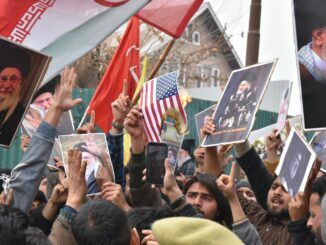
Instead of producing internal fragmentation, the crisis has produced a contrary effect. The martyrdom of Iran’s supreme leader, Ayatollah Ali Khamenei, has generated an emotional and political wave of unity across Iranian society. According to accounts circulating in the region, he had been advised by his security advisers to relocate to a fortified bunker for safety. He is said to have rejected that suggestion with the words that he could not abandon his people in their hour of trial. Whether interpreted as symbolism or sacrifice, the narrative has strengthened the spirit of national solidarity inside Iran and has complicated the strategic calculations of its adversaries.
As the expected political collapse failed to materialize, the theatre of conflict began expanding in other directions. In recent week missile and drone strikes have been reported in several countries including Azerbaijan, Saudi Arabia, Turkey, and other states situated around the wider Gulf and Middle Eastern region. The immediate accusations pointed toward Iran as the orchestrator of these attacks, creating an atmosphere of suspicion and alarm among neighbouring states. Such accusations, if accepted without scrutiny, could easily push regional powers into a broader military alignment against Tehran, thereby transforming a limited confrontation into a far wider war.

Yet, in the age of digital surveillance, satellite intelligence, and advanced communication technologies, the narrative has begun to unravel. Investigations conducted through various technological means have suggested that Iran may not have been responsible for these attacks at all. Instead, emerging indications point toward a calculated attempt to fabricate evidence and manipulate regional perceptions. If these findings prove accurate, they will imply that the strikes were not acts of retaliation by Iran but rather components of a strategic deception designed to provoke neighbouring states into entering the conflict.
In the shadows of geopolitics, history often repeats itself—not as a farce, but as a chilling reenactment with different actors and familiar motives. A historical episode from nearly six decades ago offers an unsettling parallel. On June 8, 1967, during the Six-Day War between Israel and several Arab nations, the American naval intelligence ship USS Liberty was sailing in international waters near the Sinai Peninsula. The vessel, clearly marked and not configured for combat, suddenly came under a devastating assault by Israeli fighter jets and torpedo boats.

The attack lasted more than an hour. By the time it ended, thirty-four American servicemen had lost their lives, and one hundred seventy-one others were wounded. Despite the presence of a clearly visible American flag and repeated signals identifying the ship, the assault continued with remarkable precision. The survival of the vessel owed much to the extraordinary courage of its captain, Commander William L. McGonagle. Severely wounded early in the attack, he remained at his command post on the bridge and continued directing the crew while the damaged ship struggled to remain afloat. His leadership ultimately prevented the vessel from sinking.
Commander McGonagle was later awarded the Medal of Honor, the highest military decoration in the United States. Yet the ceremony was conducted quietly at the Washington Navy Yard rather than at the White House, an unusual decision widely interpreted as an attempt to minimize diplomatic tensions with Israel and avoid public controversy. Survivors of the attack have consistently maintained that the strike was deliberate. Petty Officer Ernie Gallo famously remarked that the ship’s identity was unmistakable, while another survivor, Joe Meadors, described the event as cold-blooded murder. For decades these voices have continued to challenge the official narrative that the assault was merely a tragic mistake.

The parallels between the USS Liberty episode and the unfolding developments of 2026 are difficult to ignore. In both situations, an initial act of violence served to shape public perception and justify broader strategic objectives. In 1967 the attack removed a potentially inconvenient witness and risked drawing the United States deeper into the regional conflict. In the present crisis, alleged attacks attributed to Iran appear to be aimed at mobilizing neighbouring countries against Tehran and widening the battlefield.

A second similarity lies in the manipulation of information. In the Liberty case, the explanation of mistaken identity persisted despite substantial evidence to the contrary. In the current situation, the narrative attributing the missile and drone strikes to Iran has begun to face serious technological and investigative challenges. When information becomes an instrument of strategy rather than a reflection of truth, the boundaries between defence and deception become dangerously blurred.
A third parallel concerns the silence that often follows such controversies. Governments frequently subordinate uncomfortable truths to diplomatic expediency, while media narratives are shaped by strategic alliances and political calculations. In the Liberty incident, the pursuit of justice by survivors faded into the margins of public attention as successive administrations preferred not to reopen the issue. Similarly, today’s international institutions appear hesitant to question powerful narratives that could disrupt existing geopolitical partnerships.

Yet history also offers warnings. Manufactured crises, however, skilfully orchestrated, seldom remain contained. The Liberty incident left a lasting scar on the trust between American servicemen and their political leadership. The present allegations of orchestrated attacks across Turkey, Azerbaijan, Saudi Arabia, and neighbouring states have already rekindled tensions that could destabilize an entire region.
When truth becomes the first casualty of strategic deception, the consequences extend far beyond immediate battlefields. Nations of the Middle East—and indeed the wider international community—must therefore approach the present crisis with caution, transparency, and a commitment to independent investigation. Otherwise, the world risks witnessing once again the tragic pattern in which suspicion breeds confrontation, confrontation breeds war, and the lessons of history are learned only after irreparable loss.

The Erosion of Pakistan’s Strategic Patience in its Relations with Afghanistan

Pakistan and Afghanistan – two countries with shared economic and security interests – have experienced a low trajectory in their relations post US withdrawal from Kabul in August 2021. Under the Taliban regime, Islamabad hoped for a better start in its bilateral relations; however, instead of providing a strategic advantage and contributing to regional security, the ruling Taliban proved to be a worrisome thorn for Islamabad. The Taliban Regime backed out of the security assurances they made in the Doha Agreement, released TTP (Tehreek e Taliban Pakistan) ranks, and provided safe havens to militant groups like Al-Qaida and Islamic State Khorasan Province (ISKP). The terror attacks skyrocketed in Pakistan after the withdrawal of US forces from Afghanistan. In 2024, terror attacks increased by 73%. According to the Armed Conflict Location and Event Data Project report, TTP carried out at least 600 attacks on Pakistani Forces in 2024, and as per the Director General of Inter Services Public Relations (DG ISPR’s) press briefing on January 6, 2026, in 2025 alone, 5397 terror incidents were reported nationwide. Relations plunged in October 2025, when deadly fighting killed more than 70 people on both sides. Within two weeks, Qatar and Türkiye brokered the ceasefire agreement, but their efforts could not produce lasting peace. Pakistan ran out of strategic patience when, on 26th February 2026, Afghanistan carried out an unprovoked offensive against Pakistani military posts near the border, and on 27th February, Pakistan’s Defence Minister Khawaja Asif declared an “Open War” with Afghanistan. Pakistan Military launched operation Ghazab Lil Haq (Wrath for Truth) and carried out coordinated ground and air strikes against Taliban posts in Kabul, Nagarhar, Kandahar, and Paktia.

The deterioration into open confrontation between Pakistan and Afghanistan is not a sudden or isolated development. Rather, it emerges from a gradual erosion of what may be termed Pakistan’s ‘strategic patience,’ shaped by a confluence of security, political, and geopolitical factors accumulated over time. The militant groups, especially TTP, have consistently attacked military and civilian installations in Pakistan, which Afghanistan keeps denying. United Nations’ Analytical Support and Sanctions Monitoring Team, in its latest report published on 8th December 2025, stated, “The threat from Islamic State in Iraq and the Levant-Khorasan in Afghanistan continues to pose serious threats within Afghanistan, regionally and beyond.” It further stated, “Tehreek-e Taliban Pakistan has conducted numerous high-profile attacks in Pakistan from Afghan soil. These attacks have led to cross-border military confrontation, causing a number of casualties, as well as disruptions to bilateral trade.” Despite continuous terror attacks from Afghanistan, Pakistan actively engaged with the Taliban regime and demanded action against militant groups operating from Kabul. Since 2021 to 2025, there have been multiple secretarial and Ministerial level visits to Afghanistan; Pakistan’s Foreign Minister visited 4 times to Kabul during this time, Defence Minister and Head of Pakistan’s Intelligence Service (ISI) visited twice, on secretary level there have been 5 visits, Pakistan’s National Security Advisor visited once and there have been 8 meetings of Joint Coordination Committee and 25 Border Flag Meetings. All these visits and meetings focused on a singular agenda of security and demanded swift action from the Taliban Regime against terror attacks being carried out within Pakistan using Afghan soil.

Furthermore, Pakistan strongly believes in the hostile external elements’ exploitation of Afghan territory to destabilize Pakistan. DG ISPR and Pakistan’s Defence Minister have stated multiple times that India is actively involved in supporting and financing these militant groups to conduct sabotage and terrorist activities inside Pakistan. Their statements are backed by multiple pieces of evidence, i.e., the capture of Indian spy Kulbhushan Yadav in Baluchistan is one such example. Pakistan authorities have also referred to the case of Ehsaanullah Ehsaan– former spokesperson of TTP, who was captured in Pakistan in 2017. According to official statements, he later confessed that India was actively funding TTP and other militant groups against Pakistan. Additionally, Foreign Affairs Magazine also reported the external involvement in Afghanistan, though without explicitly attributing responsibility to India. From Islamabad’s perspective, such cases collectively reinforce the idea that regional rivalry with India is actively contributing to militancy targeting Pakistan.

The Afghan Taliban have shown reluctance in taking any action against TTP. The hesitation can be understood within broader sociopolitical and ideological linkages. TTP has historically pledged allegiance to the Afghan Taliban, fought alongside them against the US and shares ideological, cultural and family ties with Taliban. Any action against TTP would threaten the Taliban’s internal cohesion and stability. Furthermore, pressurizing TTP too aggressively may push its members towards defection to ISKP, which the Afghan Taliban consider an ideological rival. Hence Taliban would always prioritize internal cohesion over other interests.

As of March 5th, 2026, the ongoing Pakistan-Afghanistan war entered its second week, showing no sign of immediate de-escalation. As per Pakistan’s army, operations have resulted in the elimination of 464 Afghan combatants, the destruction of 188 enemy check posts, the capture of 31 military posts, and the neutralization of 192 tanks and artillery guns. At the same time Afghan Defence Ministry claims to have captured 25 Pakistani Military posts and killed 100 enemy personnel. The United Nations’ International Organization for Migration (IOM) reported that ongoing confrontation along the Durand Line has resulted in critical infrastructure damage and displaced more than 66,000 people in eastern and south-eastern Afghanistan.

The confrontation between the Afghan Taliban and the Pakistani military establishment is likely to continue in the absence of a meaningful diplomatic breakthrough. While Islamabad continues to demand concrete assurances that Afghan territory will not be used by militant groups to launch attacks against Pakistan, the Afghan Taliban leadership has so far struggled to balance these demands with its own internal political and security considerations. Amid these tensions, several regional actors have indicated a willingness to facilitate dialogue between the two sides. Türkiye has signalled readiness to offer its good offices to help revive negotiations and reduce hostilities, reflecting Ankara’s broader diplomatic engagement in regional conflict mediation. At the same time, China has emphasized the importance of stability in Afghanistan and the wider region. During recent diplomatic interactions, China’s ambassador Zhao Xing reportedly underscored to the Taliban’s foreign minister, Amir Khan Muttaqi, the need for dialogue, regional cooperation, and effective counterterrorism measures to prevent further deterioration of security conditions.

Strategic Designs and the Uncertain Future of the Gulf

The Middle East today stands engulfed in a climate of extraordinary tension, where political calculation and military preparedness coexist uneasily with fear, suspicion, and the ever-present possibility of sudden war. What may outwardly appear as a confrontation primarily between Israel and Iran, backed decisively by the United States, has in reality expanded into a crisis whose tremors are felt across the entire Gulf region. The geography of conflict is no longer confined to rhetoric or limited engagement; it now encompasses alliances, military installations, sacred spaces, energy corridors, and the collective conscience of the Muslim world.

The presence of American military bases across the Gulf states, long justified as instruments of deterrence and regional stability, has introduced a dangerous layer of complexity. These installations, embedded within sovereign Muslim lands, are simultaneously symbols of partnership and potential liabilities. Tehran has made it clear that any use of these bases for hostile operations against Iran would render them legitimate targets, and by extension, implicate Washington directly in any escalation. Yet Iran has also publicly conveyed that it harbours no intention of targeting civilian populations or oil infrastructure of neighbouring Muslim states. This distinction, though diplomatically significant, does little to dispel anxiety in a region where misinterpretation can prove catastrophic.

In such an atmosphere, the Qur’anic warning that “fitnah is worse than killing” (2:191) acquires profound relevance. Fitnah—discord, engineered provocation, or deliberate destabilisation—can ignite wars that neither side initially intended. The peril lies not merely in declared hostilities but in the possibility of covert operations, false-flag incidents, or acts of sabotage designed to inflame tensions. Reports in certain quarters have spoken of clandestine activities and intelligence networks operating within Gulf territories, allegedly plotting attacks that could be attributed to Iran. Whether these claims are substantiated or exaggerated, their circulation alone heightens suspicion and erodes trust among regional actors.

The Qur’an further instructs: “O you who believe, if a wicked person brings you news, verify it, lest you harm a people in ignorance and afterward become regretful” (49:6). In an era of instantaneous communication and psychological warfare, this command assumes strategic as well as moral significance. Decisions taken in haste, under the influence of incomplete or manipulated intelligence, may plunge entire nations into prolonged conflict. Prudence, verification, and restraint are not signs of weakness; they are hallmarks of statesmanship.

Beyond the immediate military calculus lies a broader strategic narrative that commands serious reflection. Many analysts say that Israel and its patrons are pursuing an agenda conceived years ago, the fulfilment of which is to transform the current Israel into a Greater Israel. References in recent days by the American ambassador in Tel Aviv to the notion of “Greater Israel” have been interpreted in some quarters as an articulation of long-standing ideological ambitions. Whether such statements are official policy or rhetorical flourish, they have revived apprehensions that the present crisis forms part of a continuum rather than an isolated episode. In this climate of suspicion, nothing is perceived as distant or unattainable; every development is weighed against the possibility of far-reaching geopolitical transformation.

Particularly alarming is the vulnerability of sacred and symbolic sites. The city of Jerusalem remains a spiritual epicentre for Muslims, Christians, and Jews alike. Within it stands Al-Aqsa Mosque, revered as Islam’s first Qibla and a trust of immeasurable sanctity. The Qur’an condemns those “who prevent the name of Allah from being mentioned in His mosques and strive for their ruin” (2:114). In moments of extreme crisis, fears arise that provocations involving such sacred sites could be used to justify broader military escalation. Some apprehend even darker scenarios: that destruction or grave damage to the mosque could be engineered and blame assigned elsewhere—perhaps through allegations of missile fire from Iran—thereby igniting a conflagration of incalculable magnitude. Whether such fears are realistic or speculative, their very plausibility underscores how combustible the present environment has become.

The Gulf monarchies occupy a uniquely delicate position. Bound by strategic partnerships with Washington yet sharing cultural, economic, and geographical proximity with Iran, they must balance deterrence with diplomacy. Their oil installations, critical not only to regional prosperity but to global economic stability, are prime targets in any widening conflict. A strike upon these facilities would reverberate through international markets, disrupt supply chains, and deepen global uncertainty. Thus, what unfolds in the Gulf cannot be regarded as a localised contest; it is an issue of worldwide consequence.

The Qur’anic injunction to “hold firmly to the rope of Allah all together and do not become divided” (3:103) is not merely spiritual counsel; it is a blueprint for collective resilience. If the Muslim Ummah fails to close its ranks against sedition and manipulation, it is difficult to imagine that any single state will remain insulated from the repercussions of a widening war.

For the Muslim world, therefore, the present crisis constitutes a defining test. If rivalries, sectarian narratives, and narrow geopolitical calculations override the imperative of unity, the region risks descending into a war whose consequences would spare no capital, no economy, and no sacred trust. Conversely, a coordinated diplomatic effort grounded in mutual respect, transparency, and regional ownership of security arrangements may yet prevent catastrophe. Dialogue among Muslim states, balanced engagement with global powers, and a firm rejection of provocation are indispensable.

History bears witness that wars, once ignited, seldom remain confined to their architects’ designs. Proxies become principals; limited strikes escalate into sustained campaigns; and civilians invariably shoulder the gravest burdens. The Middle East has endured decades of devastation—from invasions to civil wars—and its societies are weary of perpetual instability. The cost of another conflagration would not be measured solely in military losses but in shattered economies, displaced populations, and generations marked by trauma.

At this volatile juncture, restraint must triumph over impulse, verification over rumour, and unity over division. The stakes extend beyond national pride or strategic advantage; they concern the preservation of lives, the protection of sacred trusts, and accountability before history and before Almighty Allah. In a region where a single miscalculation may redraw the map of alliances and animosities, wisdom remains the most powerful defence.