The Arrival of the Rafale and India’s False Bravado

India’s increasing military adventurism is a telltale sign that it is on the quest for hegemony and dominance in the South Asian region. Looking to expand its conventional military capabilities, India’s military leadership has invested in massive defence purchases over the last decade. In fact, the very election manifesto of the Bhartiya Janata Party (BJP) has openly asserted that a key objective is to boost the “strike capabilities” of India’s military. This has manifested in an overwhelming increase of defence acquisition over the years. Take, for consideration, its recent and much awaited acquisition of Rafale fighter jets.  

India had agreed to purchase thirty-six Rafale jets along with spares, ammunition and maintenance. With each jet costing India nearly $200 million, the total defence deal amounting to a whopping $8 billion. The Rafale jets have long been touted by the Indian political and military leadership as game changers and essential to the security of India. Even when Pakistani jets shot down the Indian Mig-21, the Indian political leadership spared no breath before declaring it a consequence of not being equipped with the Rafale jets. In the wake of the recent standoff with China, the Indian leadership repeatedly pleaded and urged France to fast track the development and handover of the Rafale jets to the Indian Air Force.

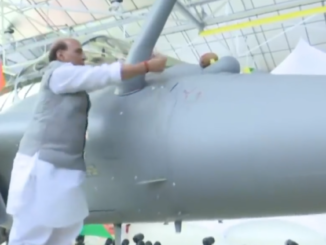
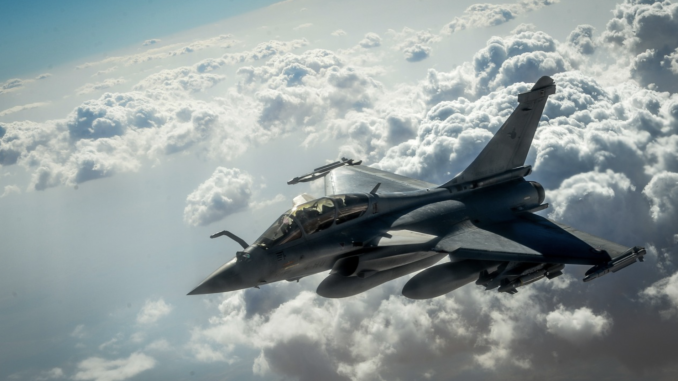
When five Rafale jets were handed over to the Indian Air Force on the 29th of July of this year, Indian political circles, military leadership and media spun into a frenzy, thumping their chests and beating the drums. Some went on to claim that the arrival of the Rafale jets will bolster India’s aerial capabilities vis-à-vis China. Comparisons were even drawn between the Rafale and the Chengdu J-20, China’s indigenous fifth-generation stealth aircraft, declaring that the Rafale has a decisive advantage over the J-20 in combat. It would seem that the Indian analysts have been much too generous in their estimations.

The reality is one cannot compare the Rafale to China’s J-20, without a thorough understanding of the economics of war and conflict. Firstly, the J-20 costs almost half as that of the Rafale and due to its indigenous servicing and maintenance, is substantially less operationally cost-intensive. The Rafale, on the other hand, is expensive and operationally cost-intensive.  Therefore, India committing its operationally cost-intensive and expensive jet against the J-20 is highly dubious.

Secondly, in terms of numbers, according to some estimates, China already fields close to fifty J-20 jets and is capable of ramping up production due to the indigenous nature of the jet. India, by contrast, does not have this luxury and is instead, forced to rely on the foreign import of the Rafale jet and its spares and ammunition. Hence, due to its indigenous production, China holds a distinct advantage fielding its J-20, should there be a case of India’s military ingress into its territory. There are talks between Dassault and India for producing Rafale by the Hindustan Aeronautics Limited (HAL) but that seems to be a pie in the sky. Not to mention, the massive production cost of the Rafale would also limit India’s production of the jets.

What is also important to consider is the operational capability. Comparing the Rafale to a J-20 is somewhat of an error. The Rafale is considered to be a 4.5 generation fighter with advanced aeronautics, manoeuvrability and speed, along with an Active Electronically Scanned Array (AESA) Radar and Infra-Red Search and Track (IRST) sensor. However, the J-20, along with these features also has stealth capability. The J-20 has been designed with an internal weapons bay and is also envisioned to have ‘supercruise’ ability. These features mean that it can easily evade radar detection due to its small radar cross-sectional area. Therefore, the Rafale is not a direct competitor of the J-20. The Rafale can be regarded more of a competitor to China’s SU-30 and SU-35, of which China has a combined strength of a hundred combat aircraft. It is evident therefore that China has a visible and tangible advantage of numbers in this department as well.

Perhaps what could be regarded as a competitor to the Rafale is the Pakistani and Chinese developed JF-17. This especially holds true with the production of the Block III of the JF-17, which has granted it significant aeronautical advancement. In particular, the JF-17 Block III will be equipped with AESA Radar along with helmet-mounted displays and an IRST system as well. These capabilities will put it on par with the Rafale.

While India celebrates its latest additions to its defence capabilities, concerns have been raised on whether such armament is accentuating India’s military aggression. Could it be that India may seek another military misadventure in the Galwan Valley on the basis of its overestimation of its defence capabilities? Already, the region is witness to an escalation of border conflicts between India and its neighbours. There is a case to be made that the arrival of the Rafale might increase the chances of India risking the strategic stability of the region, in particular with China. This would be a grave miscalculation as India’s estimation of challenging Chinese air dominance is misleading at the very least.

It is time that the Indian leadership comes to grips with the ground realities. It would serve India well to introspect its approach to regional stability, where it has used military coercion and force to exercise its writ and fulfil its relentless power ambitions. This is surely not a sustainable or beneficial policy tool, especially vis-à-vis its relationship with its neighbours Instead of actively working towards regional harmony and cooperation, India has maintained a hostile and aggressive posture towards its neighbours, isolating and threatening them. With an aggressive defence buildup and a consistent influx of military arms, India’s quest for hegemony is abundantly clear. Analysts would be right to suggest that such a policy direction will be damaging for any promise that South Asia has for regional peace.

The Operability of Non-Stealth Fighter Aircraft in the Emerging Age of Stealth

The Operability of Non-Stealth Fighter Aircraft in the Emerging Age of Stealth

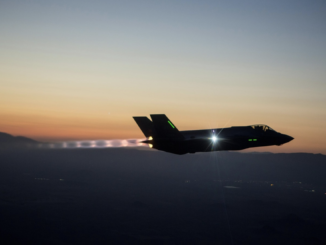
Stealth can simply be defined as the ability to hide from the enemy. From combat aviation perspective, stealth aircraft are designed to possess extremely low observability in terms of radar cross section (RCS), infrared signature (IRS) and visual identification, which helps in avoiding detection by enemy’s active and passive sensors. Historically, only United States has successfully operationalized combat aircrafts with inherent stealth features. From F-117 Nighthawk to B-2 Spirit, and from F-22 Raptor to F-35 Lightening, United States has proved its pioneer capability to develop, employ, sustain, utilize and even evolve stealth aircrafts with respect to the variability of the threat environment. In fact, stealth is being regarded by many as the trademark for distinguishing a true 5th generation fighter aircraft from older 4th generation examples. This primary characteristic feature, exclusive to stealth airframes only, henceforth grants four major advantages over legacy designs.

First; stealth offers enhanced survivability as the probability of the stealth aircrafts getting tracked and intercepted by enemy forces is far less in comparison with legacy aircrafts. In the majority of cases, stealth aircrafts – due to added superior situation awareness – can eliminate the target before getting exposed to the threat. Second; stealth is key in achieving the element of surprise which allows successful exploitation of enemy vulnerabilities. In air combat particularly, this advantage provides look first shoot first capability which is of pivotal value in the establishment of air space denial for antagonist forces. Third; stealth allows the expansion of combat air space as stealth aircraft can penetrate well defended air space which is believed too risky for non-stealth aircrafts. In general, stealth fighters are considered ideal as path makers since they can neutralize the enemy’s pivotal node points pre-emptively and make operational utilization of other aircraft possible within the given airspace. And finally; stealth aircraft are a considerable conventional deterrent due their unmatched operational capabilities. This prowess, specifically related to beyond visual range (BVR) combat and deep strike missions, yields psychological dominance over the adversary, which is key to thwart conflicts and maintain coercive control.

Stealth aircraft, despite all the remarkable advantages briefed above, still have a certain set of shortcomings. First, stealth is a very complex technology and no nation in the world has yet fully practicalized it with United States being the sole exception. In Global Defence market, there is only the option of F-35 Lightening available for export which is prone to US imposed operational controls. Other examples, like Russian Su-57 and Chinese J-20, are not fully combat ready. The complexities and conditions that exist in the availability of stealth aircrafts has compelled several armed forces to either abandon stealth ambitions for time being (for example France and Germany) or initiate work on domestic products in hopes to match benchmarked capabilities by spending enormous capital in terms of economics and time, e.g. Turkey’s TFX and South Korea’s KFX projects.

Second, stealth fighters are far more expensive to operate and maintain than legacy counterparts. Besides United States, no other nation in the world has the financial capacity to raise a dedicated fleet of stealth fighters, and even modern air forces with deep pockets have been forced to retain limited fleet due to higher net economic costs involved. Russia, despite of having a robust aviation industry, is struggling to finance Su-57 project, and China is still maturing the key technologies needed to achieve the standards of a true 5th generation fighter for its J-20 project. None of the NATO members have indigenous stealth fighter projects, rather several European nations have diverted the focus directly towards 6th generation programs. As a stopgap measure, majority of US allies have purchased F-35s in limited numbers to add stealth oriented capabilities without overstretching the scope of defence budgets.

Third, the stealth aircraft suffer from payload restrictions as to maintain stealth configuration weapons are meant to be carried within internal weapon bays only. Although stealth fighter aircraft can carry payloads on external hardpoints just like older generation aircrafts, this approach compromises the stealth configuration and defeats the purpose of fielding a stealth platform in the first place. Moreover, a wide variety of air to ground munitions are too large to fit within weapon bays. For example, F-35 cannot carry sensor fused cluster munitions, AGM-88 HARM and AGM-84 Harpoon missile internally, thus demanding compromise of stealth configuration for execution of anti-armour, SEAD/DEAD, and anti-ship warfare missions using these munitions. Similarly, air launched cruise missiles like Storm-shadow ALCM and AGM-158C LRSAM are also carried on external hardpoints; albeit the long range of weapons nullify the need of maintaining stealth. Therefore, conventional design fighters are still used as the preferable platform for strike missions in which employment of large size munitions is concerned.

The above-mentioned limitations of stealth platforms favour the utilization of non-stealth platforms. Modern versions of 4th generation aircrafts, often classified within 4.5th generation category, now incorporate several modern systems which were initially nascent to F-35 fighters only. For example, all current 4.5th gen fighters of American origin, i.e. F-15 E/EX, F-16 V/Blk70 and F/A-18 E/F, incorporate similar weapon packages as F-22 and F-35; house state of art technologies like Airborne Electronically Scanned Array (AESA) radars, sensor fusion, advance cockpit layout, enhanced human-machine adhesion; and have also sustained existential advantages related to payload, operational modularity and flight performance. As a compensation measure for the lack of stealth, 4.5th generation aircrafts undertake additional emphasis on Electronic Warfare (EW) and Electronic Counter Measures (ECM), both in the shape of built-in suite and externally mounted EW/ECM pods, to augment the mission execution capabilities within a challenging battlespace. The same approach can be observed in European modern fighter aircraft including latest versions of Dassault Rafale, Eurofighter Typhoon and Saab Gripen.

Stealth fighters have exceptional beyond visual range (BVR) capabilities but are vulnerable in within visual range (WVR) combat. In contrast, modern 4.5th generation fighters of Western origin present promising BVR capabilities and credible WVR prowess due to better flight characteristics. Therefore, nations which do not have strategic depth and face geographical proximity with the enemy primarily rely on advanced 4th generation fighters for fulfilling their strategic demands. Similarly, modern combat aviation is now based upon power projection of combined assets, not just fighter aircrafts. Alongside fighter aircrafts, the modern combat involves the usage of force multipliers like AEWCS and ELINT assets, unmanned systems, multi-mode satellites, and even land/sea-based systems within a network centric environment to paint a complete picture of the battlespace. This comprehensive network of systems, when working together, ensures the achievement of requisite objectives while minimizing risks as much as possible. Henceforth, it can be argued that stealth aircrafts on their own are not a true game changer. It is the extent and capacity of network centricity of military assets which is the difference maker.

The deployment of a high-end asset like F-35 has allowed several air forces to reduce the size of fighter aircraft fleet and increase combat net-capabilities at the same time. However, unlike USAF which is structuring its combat arm around F-35A, the allied nations also continue to rely upon evolved variants of 4th generation aircrafts to constitute the bulk of combat fleet. There are major NATO states which have decided to solely maintain the proven designs instead of procuring off-the-shelf stealth platforms from US, e.g. air forces of both Germany and France have side-lined F-35 from their modernization programs. Even the United States Navy (USN) itself retains a mixed operational fleet of F/A-18 Super Hornets and F-35 Lightening for carrier borne operations. This mixture of stealth and non-stealth platforms vindicates the approach of overcoming limitations of stealth fighters using non-stealth designs, and vice versa.

The above argumentation summarizes the rationale why stealth fighters presently do not have the potential to act as a discrete replacement of the legacy design fighters on a universal scale. It also proves that the presence or absence of stealth design should not be used as a primary criterion for tagging certain combat aerial systems as modern or obsolete. In fact, for majority of nations, stealth fighters are exclusive assets needed in limited numbers to undertake tasks beyond the capacity of older generation aircraft. However, the combat proven designs, i.e. 4.5th generation fighters, due to economic feasibility, high-end flight performance parameters, myriad operational modularity and superior payload characteristics, can still accomplish numerous combat challenges better than stealth aircraft. Therefore, in the contemporary threat environment, the stealth and non-stealth aircraft will continue to co-exist, and will continue to offer combat solutions with respect to the variability of threat perception and strategic requirements of air combat forces around the globe.

Indian Force Modernization and The Looming Shadows of Arms Race in South Asia

A new cycle of arms race is on the horizon as major powers strive for power projection. Rapid force modernization has initiated a domino effect across various regions, coercing states into an arms race. Global defence spending has reached USD 1.82 trillion in 2018, with US (USD 649 billion), China (USD 250 billion), KSA (USD 67.6 billion) and India (USD 66.5 billion) accounting for 60% of total spending. The hegemonic ambitions of India under the Modi regime have initiated a force modernization program, instigating major procurement of weapon systems and hardware for the tri-services by allocating USD 16.91 billion. The gravity of the issue can be observed by the fact that the Modi regime spent USD 1.23 billion for emergency procurements for the armed forces within the first 50 days of its re-election, thus moving towards the destabilization of the strategic balance of the region.

The Indian Army’s Future Infantry Soldier System (F-INSAS) program, aiming to equip infantry soldiers with new weapons, armour and network-centric communication systems, received USD 6-8 billion investment by the DRDO to upgrade 325 battalions by 2020. It has allocated USD 3.4 billion to the Field Artillery Rationalization Program to equip its 169 artillery regiments with 3,000 tracked, self-propelled 155 mm Howitzers by 2025. The Indian army’s 65 armoured regiments comprising of 3000 tanks are to be replaced by T-90S Bhishma MBTs under a USD 1.93 billion Transfer of Technology (ToT) agreement from Russia.

The Indian Air Force has embarked on a major force modernization program with purchases worth USD 1.088 billion cleared for IAF during May-July 2019. Meanwhile, deals for procuring 170 aircrafts, including 114 Medium Multi-Role Combat Aircraft (MMRCA) and 56 C-295 cargo jet worth USD 22 billion, are also underway. Moreover, the deal for 36 Rafael jets worth USD 8.6 billion and S-400 BMD worth USD 5.5 billion is to be finalized by 2022 and 2023 respectively.

The Indian Navy aims to man over 200 naval vessels by 2027. Under the Advance Technology Vessels (ATV), work on six Arithant Class SSBNs is underway for USD 13 billion. The Indian Navy’s first indigenous aircraft carrier, INS Vikrant, is also under construction which is worth over USD 2.4 billion; it is expected to be inducted by 2023. Meanwhile, major deals for acquiring advance frigates, destroyers, AEWACs, and replenishing vessels are in the pipeline.

India has been running the largest un-safeguarded nuclear program, however, it was given a waiver in NSG in 2008. The Indian Nuclear City project at Challakere, Karnataka, boasts of being world’s largest nuclear site, with fissile material production capabilities enough to manufacture over 2,500 nuclear devices, including hydrogen bombs. According to estimates, India possesses fissile stocks ranging from 4.0±1.4 tonnes of HEU (30% U-235) enriched to 0.58±0.15 tonnes of weapon-grade plutonium.

The Indian space program with a budget of USD 1.6 billion has embarked on multiple projects, including sending manned missions to space. India, on 27 March 2019, carried out an ANTISAT test targeting its own satellite, indicating its reckless ambition to militarize space. It has launched over 29 satellites in three different orbits, which include satellites for navigation, weather monitoring, and military intelligence-gathering. Moreover, the formation of India’s Defence Space and Cyber Agencies will broaden the country’s offensive capabilities.

The new era of India’s arms race in various domains, conventional, nuclear, space and cyber, showcases its hegemonic ambitions which can potentially destabilize the region. The balance of power in the region is gradually shifting, thus creating an impetus upon Pakistan to indulge in this arms race to maintain balance of power. Indian force modernization along with cyber and space defence commands in the coming decades will subsequently increase security and strategic implications for Pakistan. The massive spending and procurement of weapons systems and rapid force modernization by India poses a grave danger to regional stability by 2030, upon maturation of Indian defence projects.

Moreover, the force build-up could give India the ability to engage Pakistan across all spectrums of the battlefield using network-centric warfare capabilities. In its second term, the Modi administration has spent an alarming USD 2 billion on its defence needs, indicating the belligerent and hostile intentions of India. As India is crucial to the US Pivot to Asia policy, India is on a spree of force modernization in an attempt to quench its hegemonic desires albeit at the cost of destabilizing strategic balance in South Asia. The picture that will emerge after the ripening of Indian defence deals displays a considerable threat to the national security of not only Pakistan, but also China. Assessing emerging battlefield scenarios, it is imperative for Pakistan to reinvigorate its warfighting capacities across various domains. Pakistan should capitalize existing capabilities, ensuring the survivability and efficiency of command and control structures, enhancing intelligence, surveillance and reconnaissance capabilities such as spy satellites, and develop delivery means such as long-range strategic and cruise missiles capable of striking targets deep within enemy territories while suppressing enemy air defence systems. Therefore, it is proposed that China and Pakistan should further strengthen their military ties and initiate a joint venture for research and development in the conventional domain, emerging aerospace and naval domains, and most importantly the space and cyber domains, which will be the battleground of the future.