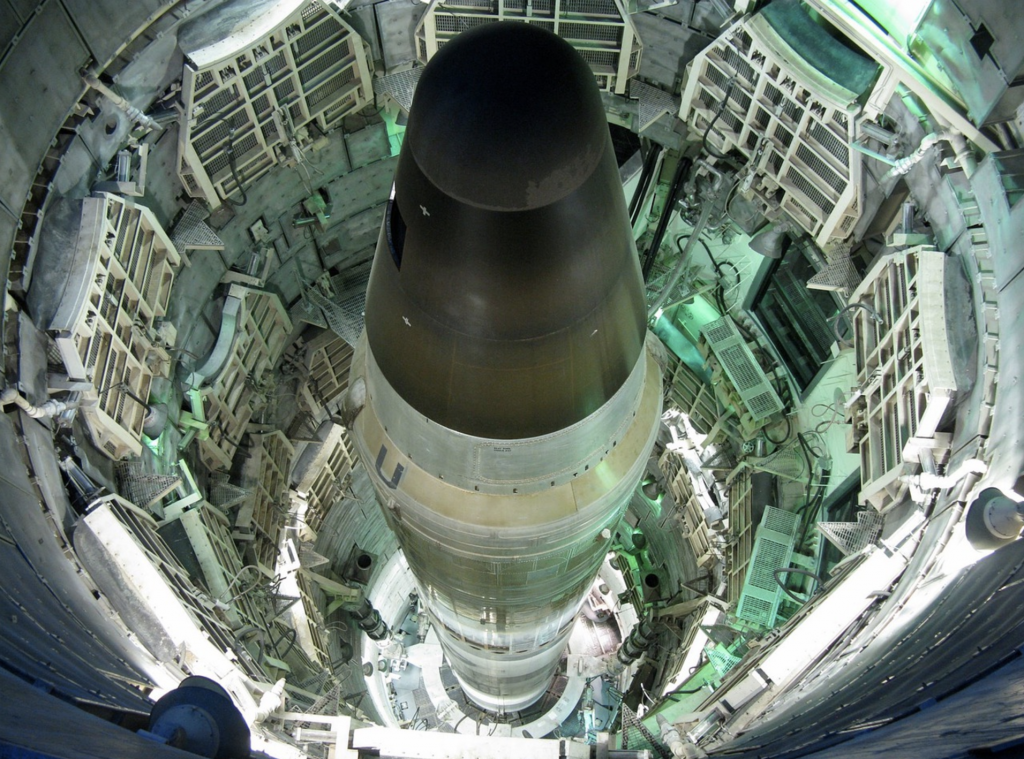
Challenges to the Arms Reduction and Nuclear Disarmament

To live in an anxiety free world and non -violent environment, the utility and use of weapons should be reduced. Arms reduction plays a fundamental role in state security and government’s decision-making regarding political and economic affairs as well as the relations with other states. It is necessary for the development of a nation or a region to resolve the disputes with their neighbors. International disputes have always given a fair chance with dialogue between the parties as an integral component. Different states can coexist with friendly neighbor resulting in greater benefit of the people of the country. It brings peace and stability in the region. For the progress of humanity peace is an essential element. To avoid war and hostility, an element of understanding and mutual survival will be established among the states. Hence states will learn to co-exist peacefully. The attainment and flaws of the arms limitation are described below.

No argument regarding nuclear disarmament can be concluded without considering the global arms reduction mechanism. In the cold war period, arms limitation decisions included many stages. During the initial stage, the two nations attained symmetry in armament holdings through bilateral arms reduction and demobilization. During the final stage, states established principles regarding the dangers of nuclear weapons and to limit the use of nuclear warheads by states. Given the pursuit of national interests, an element of uncertainty is developed among states. Nuclear powers face many challenges because of the political considerations of the international community. To limit and reduce the use of anti-ballistic missiles and capability, the two nations Soviet Union and the United States agreed and signed a treaty known as the Anti-Ballistic Missile Treaty (ABM) in 1972. Both sides agreed not to develop missile defense system at sea, air and in space. Soviet Union and the United States negotiated the ABM treaty to limit the intensity of the nuclear arms race. Both the sides believed that limited the defense systems can reduce the need to build new or offensive weapons and to overcome all defenses that your opponent can muster. By prohibiting the use of nuclear weapons will bring stability, ameliorate safety dilemmas, enhance deterrence, and in the long run prevent war.

For allies, the issue of arms limitation is the termination of existing treaties. For instance in 2002, United State left the ABM Treaty which limits the number of missiles that United States and Russia can keep. Another problem is non-compliance. The meaning of current regime is changing. They were created at different times against the background of a variety of political and military threats. To put an end to the significantly improved weapons, another treaty of multilateral nature as the Comprehensive nuclear-Test-Ban Treaty was signed in 1996. Russia signed and ratified while the United States signed (but not ratified) and agreed to the prohibition of nuclear tests for both civilian and military purposes in all environments. The weapons kept by both the states were enough to cause destruction on large scale. However, the possibility of violent struggle existed between the two nations. Therefore, a number of such type of initiatives were taken to prevent hostility between the two great powers.

There was a ban on countries using missiles to protect themselves from incoming missiles. For survival countries increase size and quality of military resources to gain military and political superiority over one another. By doing so, states develop conflicts, the example of Pakistan and India can be considered as a context. Conflict is based on politics, religion and territory between India and Pakistan. A lot of states from across the globe supported the Non-Proliferation Treaty (NPT) which was signed in 1968. The purpose of the NPT was to stop the spread of nuclear technology and weapons innovation to develop collaboration between countries and promote the use of nuclear energy for peaceful purposes. Besides prohibiting the manufacturing of nuclear weapons, a nuclear-free zone was created. Nuclear warheads are not allowed in that area, not only of that country but also other countries were forbidden from keeping weapons, selling them or pilling them in stocks for use. Hence, the neighboring countries will feel safe and secure.

Still, however, a lot of issues and problems have been faced by states in the elimination of nuclear weapons. This is also because some states more importantly the nuclear powers like India, Pakistan, and Israel are yet to sign the NPT which has challenged the utility of the regime.

Some states have nuclear weapons and can use them in their defense, but don’t use them to threaten the other state. As the other state does not have similar weapons in its possession and cannot fight back. This is the concept of negative self-assurance between states.

Therefore, a fundamental principle should be followed by states not to develop nuclear weapons, and those who already have should not have excess numbers that can be stockpiled for use in the distant future.

A convention was signed in 1993 known as the Biological and Chemical Weapons Convention (BCWC). This was aimed to prevent the use of Bacteria and other viruses that were used earlier to destroy men, animals or food. But the issue of chemical and biological weapons is less important than the deployment of nuclear weapons. In addition to adhering to a non-universal protocol, there are several reasons why the bio-chemical weapons problem persists.

It is clear that the 1925 Protocol does not contain any production or ownership information and prohibits their use. Many countries maintain reservations, often restrict compliance with obligations only if they are associated with other parties, or allow hostile states to lose their freedom if they do not comply with the provisions of the Protocol. Additionally, there are no conditions for viewing the records. Thus, the possibility of revenge instead of survival under the 1925 Protocol prevented significant use of biological and chemical weapons during World War II. However, it was not successful.

Under the 1990 Treaty on Conventional Armed forces in Europe (CFE), no nations or group of nations at present has the ability to start a military invasion in Europe. Limits on the use of military equipment were observed by countries after the Cold War. A number of conflicts among nations have seen the use of anti-personnel mines. Because of the destruction caused by mines, they were prohibited, not allowed to be pilled in stocks, not to be produced or transferred. This was to reduce the intensity of causalities to end conflicts between states. Restriction was imposed on the use of anti-personnel mines. However, this convention does not have legal interpretations.

Some conventions were successful in achieving their objectives and some were not. Some states have nuclear weapons and the capability to threaten other states, while many states don’t have nuclear weapons and cannot defend themselves. However, the disputes can be resolved peacefully as the major source of conflicts which can reduce the utility of weapons. The selection of arms reduction initiatives should be based on mutual agreement of the parties or states. As states security is a crucial concern for a state itself. Whether absolute disarmament would be possible or not? The questions will continue to persist.

Treaty on the Prohibition of Nuclear Weapons: A Pakistani View

The Treaty on Prohibition of Nuclear Weapons or TPNW is an outcome of Non-Nuclear Weapon States’ (NNWSs) frustration with lack of progress on Article-6 of the Nuclear Non-Proliferation Treaty (NPT) that obliges the established Nuclear Weapon States (NWSs) to pursue disarmament. An additional factor is the discriminatory access to civil nuclear cooperation, under Article-3 of the NPT, whereby likeminded states are deemed eligible for cooperation even if their military nuclear programs benefit from the same. The exemplary success of NPT is restricted to horizontal non-proliferation i.e. non-development of military nuclear option by the NNWSs which is simultaneously supported by mechanisms like export controls, IAEA safeguards, and UN Security Council Resolutions like 1540. Given such a disparity in fulfilment of the rights and obligations of the NWSs and the NNWs; NPT will come under immense pressure in the future review conferences in what has been termed as ‘legitimacy crisis.’ Luckily or unluckily, NPT outlier states will not be sharing the same stress as the P-5.

The established NWSs or the P-5 have come out unequivocally in their opposition of TPNW. Two of the NPT outlier states (India and Pakistan) have also expressed their opposition to the treaty even though they do not share table with the other opponents of the treaty – i.e. the P-5. The unanimous opposition by the nuclear-armed states (P-5 and the NPT outliers) is rooted in their non-participation in TPNW’s negotiation process. Consequently, the indispensable stakeholders feel that their legitimate security interests have not been factored in.

If, ever, the P-5 chose to pursue disarmament and address NNWS’ concerns on discriminatory access to civil nuclear cooperation; the next big question would be over taking the NPT outlier NWSs (that includes Israel and DPRK besides India and Pakistan) on board. On this account, DPRK is an exceptional case where efforts for its denuclearization are pursued by the U.S. through various means. Likewise, Israel continues to possess the capability while not sharing the requisite responsibilities. The other significant stakeholders are then India and Pakistan.

Because of an exceptional NSG waiver and various civil nuclear cooperation agreements, India finds itself entitled to all the rights of a NWS. On the contrary, notwithstanding its implementation of strategic export controls, India has not taken over the same obligations as the NWSs other than committing to disarmament in its nuclear doctrine and by its political leadership.

Even without similar incentives, Pakistan has implemented effective strategic export controls to address the threat of horizontal proliferation and has committed itself to the objective of verifiable and non-discriminatory global nuclear disarmament. Pakistan’s experience with disarmament diplomacy indicates that there are no takers in the region or globe. Preceding its nuclear tests of 1998, Pakistan made various attempts at regional disarmament which were not accepted by India and neither did the international community provide the sufficient security guarantees to address Pakistan’s genuine security concerns.

The discrimination from pre-1998 phase morphed into another form of discrimination in the post-1998 era. While India was granted access to civil nuclear cooperation – despite its abuse of the same in 1974 – Pakistan was denied this legitimate demand. The U.S. led west adopted an even worse approach to facilitate buildup of Indian military nuclear capability by negotiating and implementing an IAEA safeguards mechanism that is ‘not fit for the purpose’ and enables India to advance its military nuclear program.

Pakistan’s pre and post-1998 experiences will dictate that it cannot comfortably rely on foreign entities to meet its national security imperatives. Pakistan has long advocated the objective of global nuclear disarmament by arguing at the Conference on Disarmament (CD) that nuclear disarmament and negative security assurances should take precedence over a Fissile Material Cutoff Treaty (FMCT) that only preserves the status-quo in favor of a few.

An FMCT, therefore, appears a politically motivated measure to appease the NNWSs without the P-5 having to take up any additional obligations since their existing nuclear forces are sufficient to address their security concerns. Pakistan on the other hand faces India’s unabated vertical-proliferation. India’s largest and oldest unsafeguarded nuclear program – along with the NSG waiver and various nuclear deals – affords it the comfort zone to agree to a future ban on fissile material production. Pakistan cannot afford such an approach when Indian bomb-making capacity falls at over 2600 nuclear warheads unless existing stockpiles are taken into account.

While the P-5 claim that, “[TPNW] is creating divisions across the international non-proliferation and disarmament machinery;” they overlook how they have extended discrimination towards to NNWSs within the NPT ambit and those who possess nuclear weapons outside NPT framework. Likewise, Indian assertion that CD “is the world’s single multilateral disarmament negotiating forum working on the basis of consensus;” seems ill-informed since the past three decades of CD’s functioning have injudiciously focused on a discriminatory fissile material treaty instead of genuinely focusing on the objective of disarmament.

For Pakistan, support to international legal arrangements – existing and prospective – remains issue and principle-based. Pakistan supports the rights and obligations that each party has undertaken through international legal instruments. Pakistan’s support for global nuclear disarmament remains firm but will be channeled through the appropriate forum, i.e. the CD, as and when it chooses to dedicate requisite attention to the issue of disarmament instead of serving the political interests of a select few.

Breaking the Myth of Proliferation Nexus

The word ‘Nexus’ every so often refers to an evil connection, frequently used in media reports. The originators have practised the word ‘Nexus’ to associate something shady. Mostly it rings the bell with a taste for controversy. The writers ordinarily use their stretch of imagination, detracting reality. The marred reality springs up from sowed seeds of none other than controversy and barefaced lies. The intentional use of Nexus mostly goes uncheck, uncontested and making myths reality. This requires an extra mile run to break down the myth. The myth-makers cherry-pick some related facts on the subject without even realizing their true essence. In this endeavour, the myth makers continue to beat the bush to style a paranoid reality. Their stated eutrophic realities turn out to be a conspiracy of silence. When it comes to international relations, the blame game is not something new. States continue to blame each other in order to cater to their desired objective. With the evolution of social and print media’s accessibility to the majority, many states have been using media as a propaganda tool of their foreign policy.

Some nascent Indian writers like media stardom have mastered the technique of creating more myths than stating proofs. Interestingly, arguing facts is a misfit in their understanding and subsequent write-ups. Why do they do that? What makes them come up with such sheer fraught stories? Reason! To create an augmented reality shrouded with lies and deceit about their adversaries. Sometimes a short-lived success they can grasp, and mostly get a bloody nose. A rejoinder is sometimes necessary. Mostly, it is a waste of time to respond. The EU disinformation report is a shred of evidence to India’s media flip-flop. Why waste time? No answers. Why necessary? A factual sucker punch necessitates a complete ending of the myths created by the Indian myth makers.

Indian nuclear myth makers successfully create a brand new myth in national media. Multiple news stories were published recently on the subject. The Indian pranksters exploited Nexus’s use to describe a false nuclear proliferation link between Pakistan, Turkey, and China. This false nuclear Nexus is none other than non-academic and media misadventure. Most nuclear proliferation stories are myths, and less are realities. The myth-makers deliberate fabricated stories and describe mottled realities. Indian writers attempt to fabricate this Pakistan-China-Turkey nuclear proliferation nexus is only a myth, which will die abruptly. Because there is nothing believable in it. Separating myth from reality becomes a headache. Stating facts to the myth makers would be a sheer waste of time as they would better act like the deaf. But, why not make a valuable effort other than impressing the deaf ears. Yes! Let’s make a beneficial attempt for the masses to prevent them from falling prey to the predatory Indian news mill.

Is Turkey becoming a pariah state under President Erdogan? He is blamed for resuscitating the Ottoman Empire with plans for Turkey expansionism. This is a statement which requires concrete shreds of evidence and logical answers. Erdogan is playing a proactive role in the Islamic world but with an ambition to become a Caliph. He is gradually losing popularity in the country. The loss of Ankara’s mayorship is a setback to President Erdogan. This reflects a democratic process in the country. As far as going nuclear, Turkey under President Erdogan is quite clear. It does not want to acquire nuclear weapons even though it has strong industrial and technical support available to go nuclear. The intentions are understandable, and perhaps if Turkey wants nuclear weapons, it will not bother India. What bothers Indian media mischief-makers to write on Pakistan-China-Turkey nuclear nexus? The only thing that troubles Indian authors is President Erdogan’s undeniable support to the Kashmiris. This has prompted Indian writers to spread as much falsehood as they can. Over the years, Turkey supported Kashmiris in their right of self-determination and Pakistan’s position. Nevertheless, that does not benefit Turkey’s relations with India.

Likewise, one should not expect a positive thing from Indian writers on Pakistan’s nuclear program. Not an iota of positivity. It would merely be a waste of time. Same goes for Chinese case. Indian media pundits only want to stigmatize and blame Pakistan and China on the nuclear proliferation issue. However, they do not want to listen to their world’s largest unsafeguarded nuclear program. They become deaf when someone points at their new nuclear city in Karnataka. They do not wish to listen to their massive military build-up. They do not want to listen to their atrocities in Kashmir.

In today’s world, where the media is being used as a propaganda tool, it can also expose such antagonists. India’s proliferation record make it more evident that India has been involved with so many other states for material gains and have been a source of threat for international and regional peace and stability. In sum, concocted stories about Pakistan-China-Turkey unholy nexus might impress domestic audiences in India. However, they would not amaze other sides as it becomes a habit of Indian authors to leave every time with a bloody nose.

Sustainable Developing Goals and Pakistan’s Nuclear Program

No state can overlook actions of other states undermining its national security. Pakistan also developed nuclear weapons because of an existential threat from India. With this unavoidable correction of strategic equilibrium in South Asia, it is commendable how the scientific community of Pakistan, with the co-operation of the successive governments, utilized peaceful applications of nuclear energy for socio-economic benefits. Under IAEA safeguards, peaceful uses of nuclear technology in Pakistan have covered many success stories in distinct fields of agriculture, medicine and industry. The construction of 1100 MW Nuclear Power Plant (NPP) in Karachi is the manifestation of Pakistan’s commitment to pursue the peaceful uses of nuclear energy.

Pakistan’s efforts in utilizing nuclear technology remained outside the global mainstream due to politically motivated rhetoric and fabricated narratives. Pakistan is one of the 30 countries that have fully operational NPPs. It has mastered complete nuclear fuel cycle and is amongst the 10 countries in the world to have done so.

In 1956, Pakistan Atomic Energy Commission (PAEC) was established to oversee the peaceful uses of nuclear technology with the major aim to look for economic potential of nuclear technology in socio-economic development. Keeping this in mind that in the early ’70s, Canadian General Electric (CGE) constructed first-ever 135 Megawatts (MWs) NPP at KANUPP via a turnkey contract. Later, in 1976, Canada halted the supply fuel and other technological help to his NPP. On exigency basis, PAEC initiated and later continued fuel fabrication for KANUPP. Despite so many constraints, slowly and gradually, Pakistan developed nuclear plants at Chashma, the CHASNUPP-1, CHASNUPP-2, CHASHNUPP-3, and CHASHNUPP-4. Furthermore, Pakistan also building two NPPs known as K-2 and K-3 at Karachi, approved one at Chashma, and two at Muzaffargarh. In Dec 20, the fuel loading was started for newly built 1100 megawatt KANUPP Unit-2. By 2021, both K-2 and K-3 NPPs are scheduled to come online. Also, the contract for C-5 NPP (1100 MW) has been signed. Being energy starved country; this is part of Pakistan’s long-term plan to produce 40,000 Megawatts MWs of electricity using nuclear energy by the year 2050.

Presently, Pakistan is on the road to achieve eleven out of seventeen sustainable Development Goals (SDGs) adopted by UNGA by 2030. These include zero hunger and no poverty, areas of work in agriculture (Enhancing crop productivity, control of insects and pests, food preservation irradiation services, food safety and security), good health and wellbeing, quality education, clean water sanitation, affordable and clean energy; industrial innovation and infrastructure, climate action, life below water and on land and partnership for these goals. For instance, PAEC has contributed to the development of technology to reclaim saline lands to be used lucratively. Pakistan has also offered this technology and know-how to other states as well.

Likewise, nuclear technology has been best utilized in the field of medical science, especially for the diagnosis and treatment of cancer disease. In this regard, a total number of 18 cancer treatment centers have been developed by PAEC where nearly 0.7 million cancer patients have been treated by using radiation and various other nuclear techniques for treatments of the patients.

Pakistan has used its Centers of Excellence to promote and share best practices in nuclear security with the international community. Three affiliated institutes that are currently working in this domain are: the Pakistan Centre of Excellence for Nuclear Security (PCENS), the National Institute of Safety and Security (NISAS), and the Pakistan Institute of Engineering and Applied Sciences (PIEAS). While exploring Pakistan’s merits for nuclear safety and security, these institutes’ work efficiently in their own domains.

Additionally, PAEC has been collaborating with the international organizations which include collaboration with the IAEA, World Association of Nuclear Operations, CANDU Owners Group, World Nuclear Association, European Council for Nuclear Research (CERN), Synchrotron-Light for Experimental Science and Applications in the Middle East (SESAME), Abdus Salam Centre for Theoretical Physics and Third World Academy of Sciences, World Health Organization (WHO), International Rescue Committee (IRC) and Union for International Cancer Control (UICC). This shows Pakistan’s resolve and commitment in utilizing nuclear energy for peaceful purposes. Pakistan is also the first country in the region to gain associate membership of the European Organization for Nuclear Research (CERN). The main equipment that Pakistan produces for CERN includes magnet supports, hadronic forward collar shielding, sextupole magnets for SESAME H2020 Project (Thermal-Hydraulics Simulations and Experiments for the Safety Assessment of Metal Cooled Reactors).

Keeping in mind the prospects of peaceful use of nuclear energy, the IAEA, in 2018, initiated a four-year programme with Pakistan to closely coordinate with country’s key nuclear energy institutions on safe, reliable and sustainable operations of NPPs. In this regard, a food safety laboratory of the Nuclear Institute for Agriculture and Biology was established in Faisalabad. The institute uses nuclear and other modern techniques in agriculture and biology to address challenges for crop production and conservation.

It is also a known fact that NPPs emit a very low level of carbon emission which makes it an excellent source for producing clean energy. As Pakistan is a member of the Paris Treaty on Climate Change, and it is among the countries which are most affected by climate change, nuclear energy could provide a peaceful alternative to Pakistan growing energy demands. For instance till date, a collective of five operational NPPs of Pakistan avoided 52 million tons of greenhouse gas emissions.

There is a misperception that nuclear power is an expensive source of energy. According to Dr Imtiaz Ahmed,  DG International Affairs, PAEC, presently, nuclear tariffs on Pakistan’s NPPs include; Rs 6.35/kWh for CHASNUPP-1, Rs. 10.54/kWh for CHASNUPP-2 Rs. 15.09/kWh for CHASNUPP-3 and Rs. 15.00/kWh for CHASNUPP-4 respectively. After debt services, tariff of C-2, C-3 and C-4 NPPs will reduce to tariffs of C-1 i.e. Rs 6.35/kWh.  Hence, nuclear power is the most affordable source of energy. By utilizing civil nuclear technology alone, Pakistan has added $7.4 billion to its national treasury.

There have been media- and aggressor-state motivated misperceptions questioning Pakistan’s nuclear safety and security record. Dispelling the misconceptions, Pakistan, from the past 48 years, has been able to maintain an enviable safety record. Pakistan is also one of the Asian countries capable of sharing its nuclear knowledge with other states. The IAEA has, on more than one occasion, expressed satisfaction over Pakistan’s nuclear safety and security regime.  

The country specific discrimination particularly against Pakistan’s peaceful nuclear programme in global nuclear mainstream appears to be politically motivated. It is high time for the international community to not opt for politically motivated agenda of criticizing nuclear Pakistan, rather, look at Pakistan’s impeccable nuclear safety and security record. Pakistan has the ability and capacity to achieve many milestones while assisting other countries in the quest for exploring peaceful uses of nuclear technology – if it is given open access to the global nuclear commerce through membership in the Nuclear Suppliers Group (NSG).  

India’s War Rhetoric, a Pretext for False Flag Operation

India has long been trying to find a pretext for a false flag operation against Pakistan. A humiliating defeat in the hands of Chinese forces in Ladakh and Dokalam, its maltreatment of minorities, farmers’ protests, its growing atrocities in occupied Kashmir and increasing criticism from international community, a false flag operation along LOC to divert public attention appears imminent for policy pundits in New Delhi. However, any Indian misadventurism will further add to India’s long list of humiliations in the hands of Pakistani armed forces.

One must look at the irony that while the world community is striving for a global ceasefire to focus on the shared struggle to overcome the Covid-19 crisis, India has opened up a series of territorial conflict with all of its immediate neighbors, including China, Nepal and Pakistan. India’s aspiration for a great power status has recently been exhibited through its coercive actions along its borders. On one hand Indian army has opened a new front against China in Ladakh region, on the other hand its busy killing innocent civilians along the LOC and torturing those under its occupation in Indian Illegally Occupied Jammu and Kashmir (IIOJ&K).

The IIOJ&K is witnessing the worst human rights crisis where occupation forces, under the Modi government’s tyrant regime, are following a pattern of torture and abuse. Today, IIOJ&K is one of the highly militarized regions of the world where almost a million Indian occupation forces, under the notorious Constitutional Provision of Armed Forces Special Powers Act (AFSPA), have been given overarching powers and legal immunity to kill and torture innocent Kashmiris.

The pattern of India’s increasing belligerence along LOC is worth noting. As per estimates, this year, India has committed more than 2,000 ceasefire violations, which resulted in martyrdoms and serious injuries to several innocent civilians and soldiers. The mass blinding of unarmed Kashmiris and extra-judicial killing of civilians have become a daily routine under Modi’s “New India”. Despite the UN Secretary General’s repeated appeal for a global ceasefire, BJP government has intensified cross border shelling including heavy Mortars and Artillery. Indian aggressive military posturing along the LOC and consistent violations of Pakistan’s aerial space through the use of spy drones reflect that India is preparing for another misadventure. This year alone, Pakistan has shot down 11 Indian spy drones.

Despite massive Indian military deployment along LOC, Indian military and political leadership repeatedly accuse Pakistan of terror infiltration. The fact is otherwise. In fact, Pakistan has been the real victim of Indian state-sponsored terrorism. Recently, Pakistan has shared a well-evidenced dossier with international community, showing India’s state-sponsored terrorism inside Pakistan. The dossier carries irrefutable proofs of how Indian intelligence agencies, particularly RAW has been recruiting agents as well as training and financing them to carry out acts of violence on Pakistani soil. According to Pakistan’s Foreign Minister, a 700-member strong militia, working under 10 personnel of India’s prime intelligence agency, RAW, had been raised for targeting CPEC projects.

Pakistan’s sharing of dossier with various global originations such as UN and OIC has exposed India’s real face to the world community. After a careful assessment of dossier one can reasonably argue that India is not only using occupied Kashmir but also Afghan soil as terror launch pads against Pakistan. Ironically, India has long played terror victim card but it is India which is financing a global terror network to destabilize Pakistan.

It is evident from the fact that India’s global image is turning out to be a reflection of a fascist country. Modi government has already gotten rid of India’s secular identity and turned it into a “Hindu Rashtra” where the civic space for Muslims and Christians is decreasing with each passing day. Modi’s BJP is following divide and rule policy in which religious based violence is promoted at state level. Domestic unrest amplified by economic decline has reached to the new peaks.

Under such circumstances, Modi government is desperate to divert public attention from its failures and, as usual, a false flag operation along LOC appears imminent for Mod’s belligerent brigade. However, this time, India’s habit of misleading the world community with false accusations won’t work. World community has come to the realization that India is the real aggressor in the region, which is evident from its illegal annexation of occupied territory.

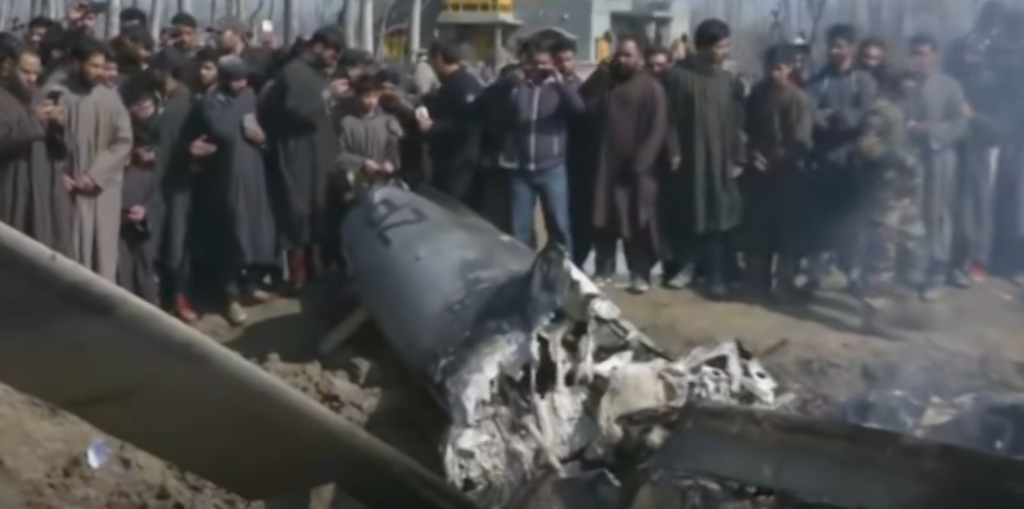
Since India’s unprovoked aerial strike on Pakistani soil in Feb 2019 and latter’s restraint but superior response, India has been trying to establish a “new normal.”  With this new normal, India’s main purpose is to make Pakistan pay the price for genuine indigenous Kashmiri freedom struggle. Policy pundits in New Delhi, therefore, paint Kashmir’s freedom struggle with terrorism. This narrative has been further validated among Indian masses through a systematic propaganda campaign in which freedom fighters are shown as terrorist. Consequently, Indian society has virtually become indifferent to Indian armed forces’ inhumane treatment of Kashmiri people.  

With three of its borders on fire, it has become evident that India’s increasing assertiveness in the region is the real cause of instability. A revisionist India in the fragile region of South Asia is dangerous and worrisome for stability. However, such a trend is not only disastrous for India but for the peace and tranquillity of entire region.

In the backdrop of all said, it is safe to predict that India’s continued rhetoric coupled with LOC violations is aimed at creating a pretext for a misadventure against Pakistan. Having been embarrassed at the hands of Chinese forces in Galwan Valley, India’s next military adventure is almost certainly going to be directed at Pakistan. Therefore, it is important for the international community to pay heed and check India from pursuing disastrous policies in the region in the interest of regional stability and global peace at large.

Preaching the Choir: The Structural Issue with the TPNW

The proliferation of nuclear weapons is one of the most glaring challenges to global security. An imperfect non-proliferation regime strives to stop the spread of nuclear weapons. Leading the pack, is the Non-proliferation Treaty(NPT), a landmark treaty that is now in its 6th decade. The Treaty distinguishes between the nuclear haves and the nuclear have-nots. Within the Treaty, there are two kinds of bargains. The first one is a promise to not develop, acquire, and control nuclear weapons in exchange for gaining access to nuclear energy for peaceful uses. The second one is a vow of not entering into give and take arrangements that may help countries produce, control, and stockpile nuclear weapons. However, there is another understanding between the privileged and the underprivileged parties to the Treaty: we won’t get the bomb, and you would eventually give up the bomb. This has continued to be the biggest stumbling block, for the ‘recognized’ Nuclear Weapon States(NWS) are not willing to surrender their crown jewels. As an exemplar of this attitude, the United States came up the CEND initiative, which called upon non-Nuclear Weapon States(NNWS) to ‘Create an  Environment for Nuclear Disarmament’. Thus, it is fitting to argue that, there are elephants in the room that are denting efforts to make the non-proliferation regime robust while vitiating ties between deterrence enthusiasts and disarmament advocates.

Since 2017, disarmament campaigners are enchanted by a new treaty, known as the Treaty on the Prohibition of Nuclear Weapons (TPNW). Set to enter into force on January 22, 2021, the TPNW calls for the complete elimination of nuclear weapons, a step that, according to many, will help further delegitimize nuclear weapons and plug the legal gap that exists in outlawing nuclear weapons. The Treaty, it must be recalled, was inspired by a renewed focus on the humanitarian consequences of a nuclear use. That a 24-paragraph-long preamble delves into the disastrous humanitarian repercussions and the value of the existing corpus of disarmament pleas is reflective of the nature of the Treaty.

The structure of the Treaty is such that it ends the apartheid. In other words, all parties to the Treaty will be required to give up nuclear weapons while pledging to not develop, use, and threaten to use, acquire, and stockpile nuclear weapons. The NWS have been given a choice. They could either ‘join and destroy’ or ‘destroy and join’, but destroy they must.

While the complete, irreversible elimination of nuclear weapons may enamour backers of disarmament, it does not sit well with ‘nuclear-armed’ states (NPT plus non-NPT) and countries that are being protected through extended deterrence. Therefore, it is hardly surprising that no nuclear-possessor has signed the Treaty. The signatories to the Treaty are those who are neither interested in nuclear weapons nor believe in their deterrent value. Hence, so far, the Treaty is merely preaching the choir, without appealing to those who believe in the utility of nuclear weapons, or, at the very least, are beguiled by its impact.

Besides the issue of verification, ambitiousness and idealism pose challenges. What marginal benefits would TPNW bring to the fore, absent support from powerful actors in the comity of nations? At a time when states like the United States and Russia are not only backing off from their decades-old commitments on arms control but are also expanding the role of nuclear weapons in their defence policies and doctrines, a Treaty so divorced from ground realities will prove to be ineffectual.

Also, basing the Treaty solely on humanitarian concerns is problematic in two ways. One, the assumption that a world without nuclear weapons will be stable, is too simplistic. Two, ignoring the phenomenon of deterrence altogether is a tad unfair, given that, just very recently, a humanitarian catastrophe was averted only when North Korea communicated to the United States that it has a complete nuclear deterrent in its arsenal. In the midst of a fraught security environment, TPNW’s singular-focus on the humanitarian angle may not excite countries that face current and prospective security threats.

All this notwithstanding, the Treaty certainly complements Article VI of the NPT. Moreover, the Treaty’s emphasis on only disarmament will put pressure on states that are, as yet, eschewing substantive discussions on the matter. TPNW’s supporters and signatories could act as a very powerful pressure group. The rising popularity of the Treaty could, at the very least, compel parties to the NPT to get their act together and take Review Conferences seriously.

However, the TPNW can be made more effective if its goals are harmonized with structural landscapes. In addition to that, the TPNW is silent when it comes to incentivizing states to give up and/or forswear the development of nuclear weapons. Though a strong, real motivator, the humanitarian aspect is not the only driver of and for nuclear disarmament. Thus, the makers of the Treaty have to rejig and redesign the terms while devising a better pitch in a bid to elicit greater support for a cause that is critical to removing sources of global instability. 

Strategic Stability at the Cost of Crisis and Arms Race Stability

The general impression, that has endured since the Cold War, is that the Ballistic Missile Submarines (SSBN) enhance strategic stability through providing the adversary with an assured second-strike capability – thus, removing the incentive for counterforce preemptive strikes in an event of crisis. During the Cold War, both USA and USSR felt the need to develop the naval leg of their nuclear triad, in order to not just make the threat of massive retaliation credible, but to subside pressure on their land and air arsenals – it was believed that if one has an assured second-strike capability, there is no need to build upon land and air forces, as one would retain the capability to strike back in case of an attack either way.

In short, it was believed that SSBNs lead to strategic stability by providing an assured second-strike capability, crisis stability through obviating the desire to strike first, and arms race stability through removing the need to rely on numbers of the land and air forces.

These assumptions are rationally and empirically unfounded. In this article, the impact of Ballistic Missile Submarines (SSBN) and Submarine Launched Ballistic Missiles (SLBM) on strategic stability, crisis stability and arms race stability will be assessed separately.

Introduction of SSBNs and SLBMs to one’s arsenal enhances strategic stability through creating mutual vulnerability and, therefore, cementing the Mutually Assured Destruction (MAD). MAD is the term used for a state of affairs, where two adversaries have a secure capability to inflict countervalue strikes on each other, undermining the incentive for a preemptive strike aimed at adversary’s strategic forces. In this way, SSBNs do contribute to strategic stability, as Nuclear Submarines are hard to locate or detect and, thus, are much less vulnerable to an enemy’s counterforce strike.

But when we talk about impact of SSBNs on arms race stability, the picture is quite different and unsettling. First, deployment of the Nuclear Submarines was not able to halt the arms race between USA and USSRthey continued building upon their land and air arsenals. Contrary to the general assumptions, mutual vulnerability, which comes as an outcome of strategic stability, is not as welcomed by adversaries as it is thought to be – states find themselves uncomfortable in a state of vulnerability, even if it is mutual, and will try to alter the state of affairs through enhancing their anti-submarine warfare (ASW) capabilities. Thus, introduction of SSBNs in one’s strategic arsenal creates upward pressure on the conventional forces on the other side; states would utilize any options at their hand to trump their adversary’s advantage in the sea domain. This leads to a cross arms race where development of strategic forces on one side leads to advancement of conventional forces on the other, and vice vera.

The situation appears even more grim when the relation between SSBNs and crisis stability is assessed. Deploying SSBNs in one’s strategic arsenal has command and control implications; it is hard to maintain an assertive control (negative control ensuring weapons are never used unauthorized or by accident) over SLBMs – Permissive Actions Links (PALs) cannot be applied for their safety and the authority to launch them is inevitably delegated to the local commanders in the event of a crisis. Therefore, SSBN’s have a reputation of creating an always-never-dilemma for the security officials – a dilemma to choose between positive control (weapons always launched when intended) and negative control (weapons never launched without authorization) over the naval strategic reserves. The dilemma has continued to confound decision makers for decades, as submarines lose contact with the higher authorities when submerged, and have to have the capability to strike the enemy, in need, in order to keep the threat of retaliation credible.

Moreover, during a crisis, SSBNs coming in contact with the adversary’s ASW efforts are faced with use-or-lose pressures, which can lead to inadvertent escalation. For this reason, SSBNs carry great potential for undermining crisis stability; the activities in the sea domain might have a deleterious effect on land in terms of crisis management.

These issues are still pertinent to the international landscape as, while the Cold War is over, world is still tainted with nuclear armed adversaries, with a geographical and political context much more sensitive than that of the Cold War. India and Pakistan have been at loggerheads with each other, over the disputed territory of Kashmir, since their independence in 1947. The conflict has endured leading to four full-blown wars. Both declared themselves nuclear power states in 1998, leading to Kashmir being regarded as a nuclear flashpoint by the international community. India and Pakistan are now embroiled in an arms race and are enthusiastically pursuing the naval leg of their nuclear triad, with hopes, that it will create strategic stability.

Distance provided some shield to the nuclear adversaries during the Cold War, but in South Asia, due to the contiguity, the potential for crisis instability and inadvertent escalation is much greater. The arms race in South Asia has continued unabated, disproving the idea that an assured second-strike capability, achieved through SSBNs, takes pressure off the land and air forces. In fact, India’s introduction of Arihant – a nuclear powered SSBN – has pushed Pakistan to not only advance its ASW capabilities, but to develop its own naval leg in order to retain the capacity to retaliate in case of an Indian first strike.

The situation is even worse when assessed in terms of crisis stability. Both, Indian and Pakistani SSBNs will be dangerously close to each other, due to the fact of being neighbors. Moreover, they have not specified how will they be resolving the always-never dilemma in the context of command and control of their SSBNs. The only option that appears possible, as of now, is the delegation of authority to the local captains, which can be perilous in the time of crisis.

SSBNs and SLBMs contribute to strategic stability through making the capability to retaliate on both sides credible, but, contrary to what is expected, they have not proven to have contributed much to crisis or arms race stability. Regardless of maturing of the sea-based deterrents, arms race continued during the Cold War, and so it has in South Asia. Problematically, the naval strategic reserve carries a huge potential for crisis instability and inadvertent escalation due to command and control issues and communication breakdowns. It is important for Pakistan and India to be mindful of the implications attached to a sea-based deterrent, and do not place high hopes in it as a stabilizing force for South Asia.

India-US Basic Exchange and Cooperation Agreement (BECA)

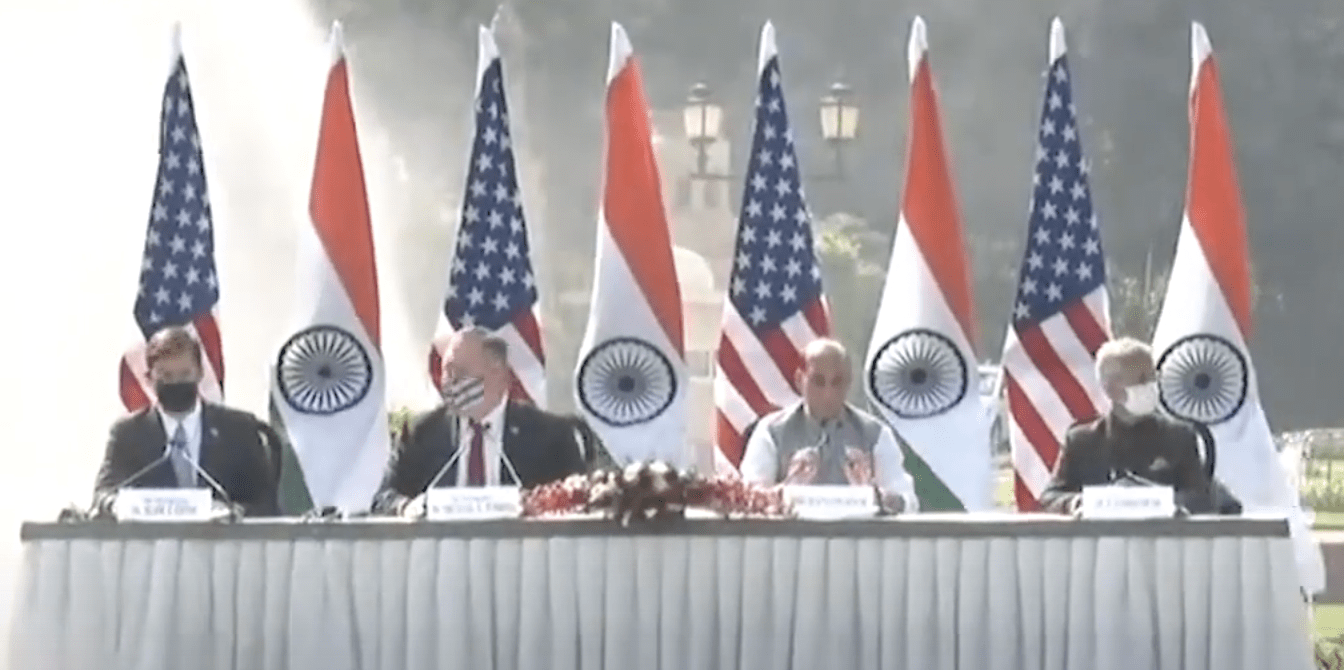
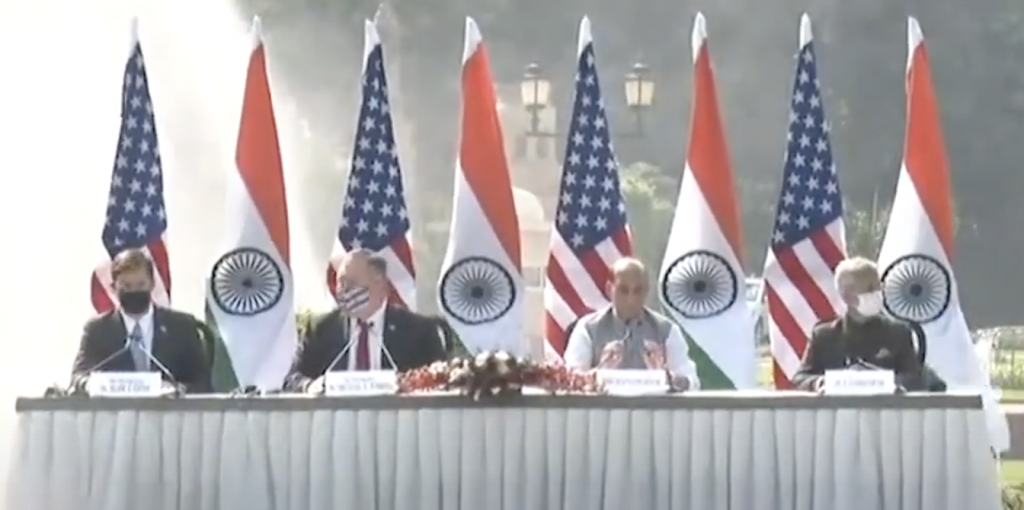
After a prolonged negotiation spanning for over a decade, the US and India have finally signed Basic Exchange and Cooperation Agreement (BECA) during their third round of India-US 2+2 dialogue which involved the US Secretary of State and Defense and their Indian counterparts. BECA is the last of the four foundational agreements and will enable India access to classified real-time signal intelligence (SIGINT) and other sensitive information gathered by the US satellites about India’s Northern and Western borders. This will significantly enhance the Indian military’s situational awareness for planning conventional or nuclear strikes, especially against Pakistan, in line with India’s evolving counterforce temptations.

India’s Journey from NSSP to BECA.             India and the US agreed on the Next Steps in Strategic Partnership (NSSP) in 2004 which provided the basis for expanding bilateral activities and commerce in space, civil nuclear energy and dual-use sensitive technology. The Joint Statement of Jul 18, 2005, provided a future framework for building a strategic partnership and included a commitment to build closer ties in space exploration, satellite navigation and launch, besides promising a civil nuclear cooperation agreement which offered an unprecedented concession to India by allowing it to keep 08 out of the 22 nuclear facilities outside the International Atomic Energy Agency (IAEA), purely for military purposes.

To enable the India-US civil nuclear cooperation agreement, the US had to amend its own domestic law which prohibits civil nuclear cooperation agreement with a non-NPT (Nuclear Nonproliferation Treaty) state like India. Additionally, the US also coerced the 48-member Nuclear Suppliers Group (NSG) to grant India-specific exemptions from its export control guidelines so that India could engage in civil nuclear trade with rest of the members of the NSG.

The US also forced India’s entry into the export control regimes that regulates missile and dual-use technologies that could be used in weapons of mass destruction. The US is also pushing the NSG to allow India the full membership of the group that came into existence as a result of India’s misuse of civilian nuclear technology for military purposes. Several countries, however, continue to resist this joint move by India and the US as it would formally give recognition to India as a nuclear weapon states with no reciprocal obligations to work towards nuclear disarmament.

Interestingly, when India and the US were negotiating contours of their strategic partnership, the BJP, which was in opposition, strongly criticized the Congress government for giving up on India’s ‘strategic autonomy.’ Over the last 15 years the BJP, from being a strong critic has turned into a strong advocate of the evolving strategic partnership that may have consequences for India’s security and autonomy.

Other than the BECA that has been signed recently, India and the US have signed General Security of Military Information Agreement (GSOMIA) in 2002; Logistics Exchange Memorandum Agreement (LEMOA) in 2016; and Communications Compatibility and Security Arrangement (COMCASA) in 2018. These agreements are based on reciprocity and India would be expected to share classified information with the US and other countries with the emergence of new partnerships in the Indo-Pacific region.

In their Joint Statement issued after the recently concluded 2+2 ministerial dialogue between the US and India, both sides expressed satisfaction on the progress made in the implementation of LEMOA, COMCASA, and agreed to review their bilateral military-to-military engagements which would include the holding of joint military exercises, training and expert exchanges. These developments are being viewed with concern by India’s neighbours, including China and Pakistan.

Implications for the Region.       The US-India Comprehensive Global Partnership is likely to enhance India’s political standing at the international level besides helping the current BJP leadership to restore its credibility at the domestic front. On the military side, access to classified information and satellite imageries from the US satellites would help India improve its situational awareness and plan offensive military operations that may include the possibility of aerial surgical strikes inside mainland Pakistan, or counterforce conventional or nuclear strikes against Pakistan’s strategic assets.

India has recently tested Hypersonic Technology Demonstrator Vehicle (HTDV) which would be able to carry hypersonic cruise missiles with speeds more than Mach 7 and hit the targets with greater accuracy. Hypersonic weapons due to their short flight time could also be useful against mobile launchers such as the ‘Nasr’ missile system that Pakistan is likely to employ for deterring India’s limited warfighting doctrine of Cold Start or Pro-Active Operations (PAOs).

India can also utilize the information acquired from the US owned satellites for its drone strikes across the Line of Control (LoC) or the mainland Pakistan, to help reduce the risks of manned aerial surgical strikes and achieve the intended political objectives without putting at risk the credibility of its military. The recently loosening of its export rules for the sale of drones by reinterpreting the Missile Technology Control Regime (MTCR) guidelines to specific countries would largely benefit India, which has shown interest in buying the US technology.

These developments are in line with India’s evolving offensive military posture towards Pakistan, and less to do with its ‘projected’ military competition with China, and could force the former to take remedial measures that could ensure the credibility of its overall deterrence posture. 

Options for Pakistan.       Unlike India, which has a significant presence in space and has also developed anti-satellite (ASAT) weapon system, Pakistan is yet to seriously embark on its space odyssey. This deficiency could seriously impede Pakistan’s military planning and for developing options that could counter India’s evolving thinking on manned or unmanned surgical strikes, or its misguided counterforce temptations.

Pakistan will have to fast track its indigenous space program to meet its growing demand in the civil as well as military spheres. This however would require resources and access to technologies that are limited mainly due to political reasons. To arrest the yawning gap with its eastern neighbour in the space domain, Pakistan meanwhile, could enhance its ongoing collaboration with China. Both countries are already working on the 2012-2020 Space Cooperation Outline between China National Space Administration (CNSA) and Upper Atmosphere Research Commission (SUPARCO), with China launching several communications and Earth observation satellites for Pakistan. This cooperation, nevertheless, needs to be further expanded focussing more on civilian applications to bridge the gap as early as possible, since the developments in the civilian sphere outpace the military developments around the globe and technologically advanced countries like the US are also outsourcing their projects to tech giants instead of establishing their military focussed infrastructure.

The US, which has been a major partner and continues to remain dependent on Pakistan for help in the ongoing Afghan peace talks seems completely oblivious to the implications of these new developments, and how it could affect Pakistan’s security concerns vis-à-vis India. There is a bipartisan consensus in Washington against China and false expectations that India would be able to deliver if its conventional and nuclear capabilities are enhanced. This consensus is not likely to alter with the change of US administration. India, despite the official denials, is now formally part of US military alliance against China. This may compel other countries in the region, including Pakistan, to consider options that could help safeguard their national security interests, but without getting embroiled in the new and different kind of ‘Cold War’ that is shaping up between US and China. 

Pakistan’s Nuclear Energy Program

When there is mention of Pakistan’s nuclear program the first thought goes to nuclear weapons due to negative coverage in the western media and academia and in part due to over projection of strategic nuclear capabilities by media. The major attention given to nuclear weapons has stolen the limelight from the civilian nuclear uses in Pakistan. In fact, nuclear technology has contributed to meeting the energy demands of Pakistan along with uses in medicine and industry.

Pakistan’s nuclear journey started 64 years ago with the establishment of the Pakistan Atomic Energy Commission in 1956. Interest in the peaceful uses of nuclear technology was generated from the Atoms for Peace initiative in 1953. Pakistan was one of the first countries to join this initiative. Pakistan had ruled out building nuclear weapons and focused on producing electricity and other civilian uses. The country decided on building weapons after the 1971 war with India, India’s conventional advantage, and progress made on nuclear weapons by India. After the Indian nuclear test more resources and attention were diverted to the acquisition of nuclear weapon capability but the program of civilian use of nuclear technology was not abandoned.

The Indian nuclear test and global focus turning towards non-proliferation during the 19960s and 1970s resulted in the technological denial to Pakistan by the western countries. Pakistan was left with no choice but to develop the technology on its own as it had become an urgent security issue for the country.

Nevertheless, the civilian side of the nuclear program continued developing. Pakistan’s first 137MW Karachi Nuclear Power Plant (KANUPP) came online in 1971 which was built with the help of the Canadian government. After the 1974 Indian nuclear tests, the western help stopped, and strict measures were taken to restrict access to nuclear technology to several countries. Pakistani planners and scientists, however, continued to approach friendly countries for the acquisition of nuclear power plants as the country then faced extreme power shortage. An agreement for building nuclear power plants was signed with the People’s Republic of China in 1986. Consequently, the construction of Chashma-1 began in 1993 and became operational in 2000. Later, Chashma 3-4 were built with a combined capacity to produce 1355MW electricity units. Two more nuclear power plants of 1100MWe each are under construction in Karachi with the Chinese help completing in 2020 and 2021. China and Pakistan have also signed an agreement in 2017 to build Chashma Unit 5.

The development of nuclear energy is crucial for Pakistan due to a shortage and a decrease in other sources of energy such as fossil fuels. Pakistan’s domestic oil production meets only 20% of its needs and the country’s gas reserves are decreasing. This has forced the government to import expensive liquefied natural gas (LNG) and build coal-based projects. The government has also approved hydropower projects in northern areas and Azad Kashmir. These projects also would not be sufficient to meet the growing energy demands of the country. Pakistan’s energy consumption will be increasing sharply due to the development of the next phases of China Pakistan Economic Corridor which focuses on the industrialization of the country.

Nuclear energy is clean, economical, and safe. Nuclear power plants have also a high capacity factor around the year as compared to other sources. For example, Chashma 1-4 are operating above 80% capacity factor without any interruption and producing electricity at comparatively low tariff rates.

In the current energy mix of Pakistan, fossil fuels are the largest contributing factor at 64%. Hydropower and renewables including nuclear contribute 27 and 9 percent, respectively. Pakistan aims to reduce dependency on fossils and increase the share of other power generation sources including nuclear energy.

In addition to the already operating and under construction plants in Chashma and Karachi respectively, PAEC has plans to start work on five 1100MW plants in the next ten years. It has plans to have a total of eleven nuclear power plants by 2030 with a total output of 8900MW of electricity.

Pakistan Nuclear Regulatory Authority (PNRA) and IAEA have identified the Qadirabad-Bulloki (QB) link canal; Dera Ghazi Khan canal; Taunsa-Panjnad canal in Multan; Nara canal in Sukkur; Pat Feeder in Guddu; and Kabul River in Nowshera sites for possible future plants.

Moreover, under its Nuclear Energy Vision 2050, Pakistan plans to have a total of 32 nuclear power plants with a total of 44000MW of electric power, one-fourth of the country’s energy requirements.

To achieve this goal, the development of more plants in a given timeframe is necessary. With other sources such as fossil fuel depleting and becoming expensive, nuclear energy share should continue increasing in the future along with renewable sources such as solar and wind.

India’s Nuclear Assistance to North Korea

A recent report by the United Nations revealed that North Korea “did not halt its nuclear and ballistic missile programmes, which it continued to enhance, in violation of Security Council resolutions.” The United Nations Panel of Experts on North Korea in its two latest reports, the final annual report dated March 2, 2020, and the mid-term report dated August 30, 2019, identified over 250 alleged violations, involving 62 countries.

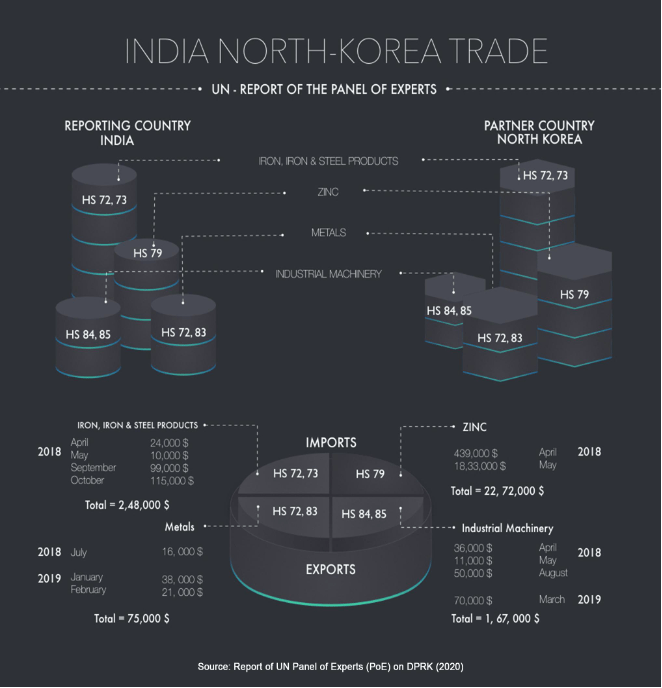
On a comparative assessment of all UN PoE reports on North Korea, it is interesting to note that India has repeatedly violated UN Security Council resolutions. The panel of experts in their report in 2018 found that between January and September 2017, India imported iron and steel valued at $1.4 million, iron and steel products worth $234,000, copper worth $233,000 and $526,000 of zinc. It was a clear and brazen violation of the UNSC resolutions.

Yet again, in 2020, it has been reported that India committed 5 to 10 violations. A close assessment of data shows that North Korea, with the help of India, employed a variety of evasion techniques to avoid detection of such illicit imports and these evasions directly support North Korea in financing its nuclear programme despite being under strict global watch.

India’s North Korean connection is not just confined to trade and business, it has a nuclear aspect too. As per earlier reports, India has trained more than thirty North Korean students at its ‘Centre for Space Science and Technology Education in Asia and the Pacific’ (CSSTEAP), even after the UN issued nuclear sanctions in 2006 that prohibits member countries from providing technical training to Pyongyang. These students later on became part of North Korea’s National Aerospace Development Administration, which has been playing a significant role in its nuclear programme.

The lapse, which was exposed in March 2016 in an annual report to the UN Security Council, also highlighted that the courses offered at Indian research institute were relevant to its nuclear weapons and ballistic missile development programme. India rejected the report on the courses being offered by saying that the topics covered were “very general” and the basic principles of these courses “were available from open-source”. If these were general in nature, why did India refuse further admissions to North Korean students after the lapse was exposed? 

Astonishingly, North Korean student Paek Chang-ho, who studied in CSSTEAP, became the head of an agency involved with North Korea’s first satellite launch in 2012. This strongly supports the proposition that India has actively helped North Korea develop and modernize its nuclear and missile program. There isn’t a single doubt that the training at CSSTEAP very well helped North Korea’s military programme.

It is an open secret that India trained North Korean students, who became moving force behind country’s nuclear and missile programme. India’s trade relations with North Korea, despite consistent appeal from the UNSC, continued to grow. At one point, it became North Korea’s 3rd largest trading partner with a trading volume of more than $200 million. Interestingly, the volume of the trade is highly in favour of India.

The cyber domain is another important aspect of Indian and North Korean relations. According to a report published by the US Army, titled ‘North Korean Tactics’, North Korea has about 6,000 hackers, many of whom operate from other countries, such as India. Earlier, the cyber security firm, Recorded Future, found intense North Korean internet activity in India where nearly one-fifth of North Korea’s cyber-attacks originate. As per latest reports, North Korean hackers, who are physically stationed in India, were involved in organized cyber-attacks throughout the world. By looking at this, one can reasonably argue that North Korean hackers along with Indian counterparts are involved in global cyber warfare. 

The mystery behind India and North Korea’s secret nuclear connection has long been busted. India is complicit in North Korea’s nuclear programme and it has continued for decades. The pattern of Indo-North Korean relation suggests that it was deliberate and occurred with the consent of Indian authorities.

It is imperative for the members of UNSC to re-assess India’s role in the North Korean nuclear and missile programme. From the training of North Korean scientists to hosting North Korean hackers, India’s secret connection needs to be thoroughly investigated. There is a big possibility that India and North Korea have exchanged nuclear technology.

There is a need to investigate why India has been assisting the North Korean nuclear programme. India is providing both financial and military assistance to North Korea in total disregard to and in violation of global non-proliferation regimes and at the expense of regional and global stability.