COVID Politics in India

COVID Politics in India The recently released report of the US Commission on International Religious Freedom ( USCIRF) for 2020 has designated India as a country of Particular Concern for ¨engaging in and tolerating systematic ongoing and egregious religious freedom violations¨. This annual report compiled by the American State Department under a Congressional  Mandate evaluates the state of religious freedom in different countries. The last time it mentioned India was in 2003, following the massacre of Muslims in the Gujrat State of India at which time the current Indian Prime Minister, Narendra Modi, was the Chief Minister of Gujrat, and was accused of complicity in the massacre. As a result, he was denied a US visa – a restriction that was withdrawn when he was first elected Prime Minister in 2014. This change in American policy was dictated by growing US strategic interests rather than any change in Modi’s commitment to religious tolerance towards the Muslims of India.  In fact, over the last six years, the Indo –US strategic alliance against China has ensured that Washington turns a blind eye to Modi’s systematic persecution of Muslims and other minorities in India.

Now with the spread of COVID-19 pandemic in India, yet another excuse is being used to discriminate against Indian Muslims.  It remains to be seen whether the US Government will act on the recommendations of the USCIRF report to restrain Modi’s repression of Muslims or American Strategic Interests will trump American ‘commitment’ to Human Rights, including religious freedom.

So far, the Modi Government has quite literally got away with mass murder. The policies of persecution implemented in Gujrat, are now being extended on a national scale. Guided by the fascist ideology of its RSS mentors, Modi’s BJP views India as land only for Hindus, in which Muslims need to be either purged or to live as second class citizens if they refuse to return to their original Hindu faith. Muslims are projected as’ oppressors’ during their rule over India and their religion as an alien faith which did not emerge within India.  As a result, Indian history is being rewritten to portray Muslim rulers as villains, their heritage is being destroyed, such as the Babri Masjid, and their memory is being erased from the names of cities, roads and buildings.

Mobs of Hindu vigilantes and thugs have been given a free hand to extract `revenge’ on Muslims for imagined crimes such as cow slaughter or marrying a Hindu. Their places of worship have been desecrated or destroyed. Entire localities and villages of Muslims have been demolished and their inhabitants forced to flee. In these pogroms against the Muslims, fuelled by derogatory and inflammatory rhetoric by Hindu leaders, state institutions, such as the police, have just stood by as spectators or even actively engaged in the violence. Government officials, the judiciary and even the armed forces have become willing or forced collaborators.  With a few exceptions, the Indian media has promoted this anti –Muslim campaign, spewing venom against Muslims in line with BJP/RSS policy. Those who resist are branded as `Pakistani agents’ to be tried in Kangaroo courts or just simply beaten up.

Encouraged by the absence of the international opprobrium, Modi has taken even more draconian and institutionalized measures against Muslims in his second term which started in May 2019. In August, he changed the Indian Constitution to remove even the fig-leaf of autonomy given to the Muslim majority occupied the State of Kashmir, placed it under lockdown and media censorship which continues arrested thousands of people, including children and unleashed a wave of renewed repression by more than 900 thousand troops. Also by enabling non –Kashmiris to buy properties and settle in Kashmir, Modi’s objective is to change the Muslim majority demography of the occupied state, turning it into a Hindu majority area. This is nothing short of genocide.

Within India itself, the BJP has enacted the Citizenship Amendment Act which bars only Muslims to acquire Indian citizenship. It then approved the National Population Register, initially meant to identify illegal migrants in Assam, as a first step towards nation-wide National Register of Citizens, in which people would have to prove their Indian nationality.  The real purpose of this subterfuge is to deny nationality to Muslims who can then them be expelled and India’s Hindu`purity’ ensured. At the very least this law will enable the Modi government to hold Muslims hostage to its whims. Reaction to these developments by Muslims and secular Hindus, which had been peaceful throughout the country, was met by violence by the police and Hindu facist volunteers.  Muslim educational institutions like Aligarh University and Jamia Milia in Delhi were particularly targeted, with students being beaten up and arrested from their dorms  and libraries.  At least fifty innocent people were killed in this state sponsored violence.  Then in February 2020, even as US President Trump was visiting India, anti- Muslim riots provoked by BJP leaders broke out in the Muslim areas of Delhi, leading to hundreds of causalities, destruction of Muslim homes and damage to mosques. Not surprisingly, Trump described this as India’s `internal affair’.

It is against this toxic background, that the Corona Virus struck India. Instead of forging a united front against a virus that does not distinguish between religion or caste, Modi and his fascist henchmen have tried to use the pandemic to promote their anti-Muslim agenda. Blaming the occurrence of COVID symptoms among some members of the Tableeghi Jamaat, the spread of the virus was blamed on Muslims – even though other Indians had been infected by the virus before this incident. As a result, Muslims in different parts of India have been ostracized, their homes and businesses boycotted and even denied treatment for Covid infections or other medical ailments.

In occupied Kashmir, the situation is even worse. With the continuing lockdown, patients are unable to get treatment or obtain essential supplies. At the same time, medical services are woefully inadequate, with no support from the central government. In fact, the Covid lockdown is being used to further isolate the Kashmiris and keep them in a virtual prison. This enables India to prevent any Kashmiri expression of public dissent against Indian repression. Meanwhile, Indian troops on the LoC have increased firing on Kashmiri villages on the Pakistan side, leading to several casualties.

All this is being done by taking cover behind the global pandemic crisis, with the international community preoccupied with its own national emergencies.

Nevertheless, the discrimination against Indian Muslims with state patronage has led to reactions from the UN, the OIC and the Gulf states, apart from Pakistan. All have expressed grave concern over these developments. But just as in the case of the USCIRF report, the Modi government has rejected these concerns as interference in India’s internal affairs. Unfortunately, those countries that do influence to compel a change in Indian policies, like the US, give greater weightage to their strategic partnership with Modi and are in any case consumed by their COVID challenges, rather than focus on discrimination against Indian Muslims. In these circumstances, there is unlikely to be any check on the Indian government’ s victimization of its Muslim citizens.

However, over the longer term, adding the COVID layer of discrimination against Muslims, who are over 200 million people, will eventually tear the Indian polity apart. These policies discriminating against such a large minority would severely test India’s ability to remain a coherent, functioning multi-lingual, multi-religious and multi-ethnic state. It was in recognition of this diversity that India’s founding leaders pursued secularism as the glue that would bind such a diverse country together. Now Modi and his fascist henchmen have torn even the pretence of secularism to sherds. Eventually, the very survival of India could be jeopardised. This process of disintegration has already started with the alienation of the Indian Muslims. The resort to COVID politics in India has made the situation even worse.
The Chronic Imbalance

Your civilization will commit suicide with its own dagger

What’s built on a shaky foundation will not last long 

Allama Dr. Iqbal

Pakistan’s Poet Philosopher


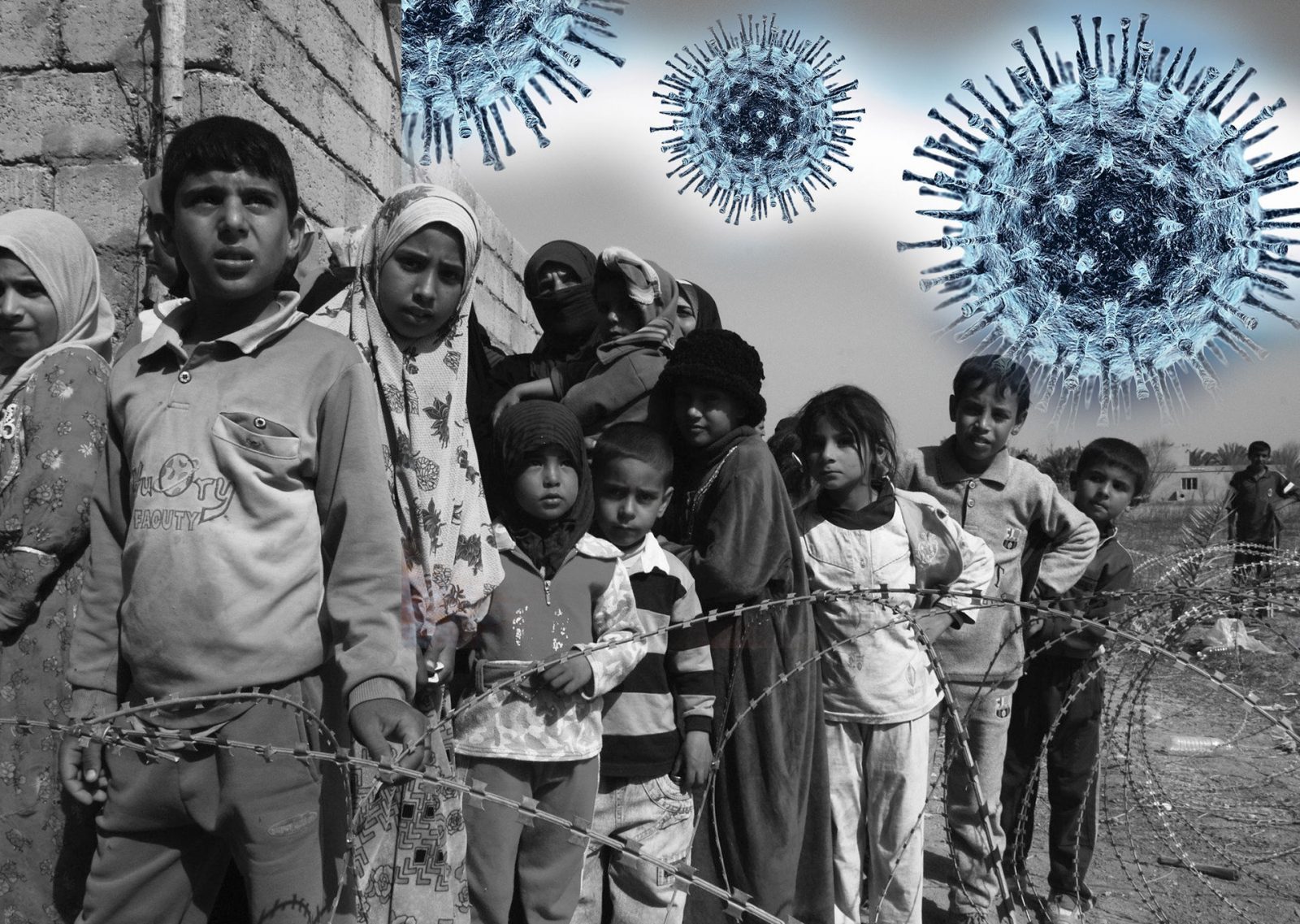
Just in case one didn’t agree with this prognosis that the world was hopelessly out of plumb; the corona crisis might help take another look.

To keep ahead of the pack some hounds had indeed gone on steroids. A rat-race depleted the natural resources and produced plenty of junk. If growth became the goal, seeking contentment was like reaching for the lights of a moving truck. Military-Industrial complexes needed perpetual wars to survive. Smaller families was a good idea – taken beyond a point, where children became a drag on the lifestyle, some societies could not raise enough for the old age benefits. Ever more money was being recycled in the same piece of dirt, called real-estate.

In other words, the system was collapsing under its weight. But the worst part was that though it was all too obvious, nothing could be done but to sleepwalk with eyes wide shut. Anyone who suggested that the process was unsustainable; if not pooh-poohed as a naysayer, was shrugged-off with our legendary laissez faire: yehan to apni guzarti hey maze main, akhrat ki khabar khuda janey (enjoy while it lasts – who has seen the hereafter). But no one, not even Iqbal, had the faintest idea that this wobbly structure could be so brutally rocked by a microbe.

When it happened, one was reminded of another shrug.  Zia-ul-Haq was often warned that some of his actions would backfire. When they did, he simply said: yeh toe hona hi thaa ; yes, that had to happen”. One still cannot deny all the collateral benefits: air getting cleaner, birds chirping louder, friends and families coming closer, moods more reflective, and personal hygiene now nearly an obsession. And of course we are delighted that corona has lined-up all the high and mighty who were getting too big for their boots (no pun intended) in the same firing line

Understandably, we do not want to lose these gains and have therefore assured ourselves that once the crisis was over, it will no longer be business as before. Possible; but not if history or even mythology were any guide. Nimrod was killed by a mosquito; an ant creeping up the tusk felled an elephant; and David got the better of Goliath. None of that convinced the people at the helm that the balance of power was a sound concept. The UNO, established after the Second World War to prevent or preempt conflicts, cannot fulfill its raison d’être because the Big Five, reluctant to loosen their grip, scuttle all efforts to restructure the world body. At home, the political dynasties resist changes that could infuse new blood. One might still argue that the corona phenomenon was a gamechanger and some citadels must therefore fall. The problem is that even revolutionary movements were hijacked by the better organized or the more powerful.

The Iranian revolution was spearheaded by the Communist Tudeh Party, but was taken over by the Mullahs in quick time. The Arab Spring, triggered by a lone self-immolator, helped the Egyptian military entrench its regime. The Kashmir uprising of the 1990s was led by the pro-independence JKLF, which was soon edged out by groups sympathetic to Pakistan. “The more we change, the more we remain the same”, may sound cynical, but it’s essentially because the beneficiaries of the old order do their best, or their worst, to defend the status quo – in this case, to restore the status-quo-ante. And, they will also be better placed!

Yes, the Virus may not discriminate between the poor and the rich, but the latter have more cushion to absorb its onslaught. Stronger economies, though certainly under stress, were more likely to survive this crisis than those barely keeping their heads above water. Individually too, despite the lockdowns; people with money in bank could put food on the table, while the daily wage earners were out begging for alms. But for our charitable traditions, most of them would have kicked the bucket or stormed the Bastille. Depending upon when we will limp back to a new normalcy, our emaciated masses would rather take out their pushcarts than rally to support a just order. And then there are no signs that the post-corona world would be a more level playing field for the underdog.

To start with; pleas by the UNSG notwithstanding: wars continue; no relaxation of sanctions on Iran; and no letup for the besieged Kashmiris. Reduced violence in Afghanistan, Syria, or Yemen may be due to the diminishing capacities of the belligerents – and some of them must already be positioning to resume combat with more vigour. The state that claims monopoly on power is hard at work to grab even more. Its rationale: after terror, it has to fight another global war – against an invisible enemy. And the looming economic meltdowns provide just the right pretext to declare an emergency. That all these challenges were more effectively met by devolving power—to the point of application, as they say in the military—never crossed an establishment mind.

Lockdowns may or may not be the best option in the current crisis, some of the arguments from the pro-lobby clearly showed that it couldn’t care less about the plight of the powerless. One of them who had never missed a meal in his life believed that since the hunger takes longer to kill than the virus, therefore corona first. Another from his ilk consoled us that in Pakistan people do not die of starvation. If they don’t – as those who defied the recent lockdowns must have noticed – it’s because some of our compatriots take food to the hungry. In the process, the people thus saved will keep the country afloat—and not the state. One can reasonably assume that our big business would suffer because of the worldwide recession, but also that the informal sector could still provide livelihood to the masses. Given a choice therefore, I would rather shut down the government than our undocumented enterprises.

The unipolar world order was already on the mend because the sole superpower had overstretched itself and was running out of steam. In Pakistan, when people whisper in your ears that it was now worse than under Zia, the imbalance was clearly beyond critical. I don’t know why the “tiger force” reminds me of Tiger Niazi, but its creation has uncomfortable similarities with FSF, the mafia that blew-up in ZAB’s face. And if there was any Churchill around to ask if in the present state of war, the courts were still functioning, he was likely to draw a blank.

Indeed, we do not know in what shape the virus will leave us. If we are by then prostrate on ground, all bets are off and the sphinx that will rise from the ashes will lead the new order, or the disorder. But it’s more likely that the world would not be beyond repairs and then the onus of chartering an equitable course would be on the victims of the old order. It can be done, but only if one learnt from the laws of nature.

Open any channel like the Animal World, and the chances are that a predator was chasing a herd of zebras. It gets one, and the others feel relieved under the illusion that they had saved their skin. Sure as hell, another of the species would be hunted in the next round. The French military thinker, Beuf, has formalized this phenomenon as “the piecemeal strategy”.  The next episode was likely to show how the horned buffaloes deal with such threats: they build a cauldron for an all-round defence. it’s then the animal of prey that beats the retreat. Now that corona has locked-up the pillagers of earth, time for its saviours to rally around is just right.

Of course, there is a better course available, but that’s for the powers that be to take. According to an old Subcontinental wisdom, jab sara dhan jataa dekhiey to adha dijiey baant – when all that you have was in jeopardy, give away some of it. A just distribution of resources and powers is the proclaimed objective of states and societies. Post-corona, if it was not done voluntarily, some may rally together to snatch all of it.

India-France Military Partnership: Implications for South Asian Stability

India-France Military Partnership: Implications for South Asian StabilityInternational and regional stability is ultimately the product of broader political, economic, and military dynamics among many players, in which political, technological, strategic alliances and decisions perform multiple roles as agents of change for the strategic environment. France and India have a fairly multifaceted strategic relationship, one of cooperation spanning multiple domains, including the defense, civil nuclear energy, space and climate change arenas. During President Emmanuel Macron’s visit to India in March 2018 the two countries signed 14 agreements covering these areas. And Prime Minister Narendra Modi, during a state visit to Paris in 2019, coined the term ‘INFRA’ to denote the alliance of India and France. Reciprocal visits by each state have been a feature of their ties for decades now.

Background.          Historically, there has always been a rather unique quality to the Franco-Indian relationship.  Even at the height of the Cold War, when India’s rapport with NATO was frequently colored by mistrust due to its rapprochement with the Soviet Union, but relations between France and India remained relatively functional and cordial. France was one of the first Western countries to lift the arms embargo that hit both India and Pakistan in the aftermath of the 1965 conflict. Likewise, during the 1971 war, France was one of the only Western capitals to comment on the legitimacy of India’s concerns regarding the refugee issue in its border regions with Bangladesh (East Pakistan). Perhaps the most important gesture was when France refused to chasten India after the 1998 nuclear tests and openly opposed U.S. sanctions. Since 1998, the Franco-Indian relationship has become increasingly strategic and now, arguably, is nearing its full economic potential.

Strategic and Political Cooperation.           The India arms trade graph has been climbing since Prime Minister Narendra Modi took charge in 2014 and pursued hawkish strategic and economic policies. Arms imports from France, a major supplier to India, increased by 715%, thereby making it the third-largest supplier during 2015-19 among other exporters like Russia, the U.S. and Israel. The military equipment includes fighter aircrafts, helicopters, submarines, warships, artillery guns and assault rifles.  The long list of strategic defense equipment acquisitions including Rafale fighter aircraft, Dassault Mirage 2000 fighter aircraft and a squadron of DCNS Scorpène-class submarines (called Kalvari-class submarines), are significant for their capabilities and implications. The armed-services of both nations conduct joint-exercises on an annual basis. The Indian and French Navies will be able to use each other’s naval bases, under an agreement signed in 2018. Indian warships will be able to use French bases in the Indian and southern Pacific oceans.

Simultaneously, France is one of the prominent suppliers of nuclear fuel to India, under the “Framework Agreement for Civil Nuclear Co-operation“, signed in the aftermath of India’s waiver of U.S. 123 Agreement in 2008. On 30th September 2008, both nations signed an agreement that would pave the way for the sale of French-made nuclear reactors to India. France has also supported India’s bid to be a member of the Nuclear Suppliers Group, along with other missiles and nuclear related import Missile Technology Control Regime (MTCR), Australia Group (AG) and Wassenaar Arrangement (WA).

Additionally, France and India view each other as important partners in space technology and its applications. The Indian Space Research Organization (ISRO) and its French counterpart Centre National de Etudes Spatiales (CNES) have a history of cooperation and collaboration spanning about four decades. The research and development communities of both nations cooperate in joint radiation experiment, space components development and space education. The Indian Space Research Organization (ISRO) Vikas rocket engine benefited from Indo-French scientific collaboration in France on the Viking 4A engine built by CNES/SEP.

In the political domain France, alongside Russia, is considered a more reliable ally supporting India in the United Nations Security Council (UNSC) for all strategic matters; this includes support over abrogation of Article 370 by India for Jammu and Kashmir and its bid for permanent membership in the UNSC. Traditional cooperation in the defense, space, and civil nuclear domains has now expanded to counter-terrorism, maritime cooperation and cybersecurity. The collaboration in Artificial Intelligence was positioned on top of the agenda during Modi’s 2019 visit.

Implications for South Asian Strategic Equilibrium.    The convergence of strategic and political interests is the major rule of International relations and inherently has implications for other states. The Indo-France strategic, political and technological partnership is high in strategic aspirations, with the development of military and hybrid technologies. However, it has a direct impact on regional and international strategic stability, in both mid-term and long term.

Mid-term risk factor effects pertain to the impact of political and military equipment cooperation by France; essentially, it contributes to a volatile strategic environment in the South Asian region where two bordering nuclear weapons capable states (India and Pakistan) have uneasy relations. It refers to the risk of inadvertent escalation of any military crisis between the two countries due to perceived threats with aggressive political and strategic military actions/signaling.  

This can be assessed by France’s response to India’s revoking the special status of Jammu and Kashmir. France supported India’s abrogation of Article 370 in the United Nations Security Council (UNSC). Pakistan called for a UNSC debate over the disputed territory of Jammu and Kashmir, a demand which China supported and Russia’s position was not in total favor of India either. Therefore, the support by France emboldened India to adhere to its unlawful stance and triggered a regional military crisis. The consequences of such political decisions, followed by military actions by India in the Pulwama-Balakot episode are aptly explained by Former Director General Strategic Plans Division, Lt. General (R) Khalid Ahmed Kidwai who states, “It is clear that the strategic and military consequences of an irresponsible political decision by poor professional military advice were not thought through or war gamed to their logical conclusion. Therefore, nuclear India, and international actors who are issuing a blank pass to India, must consider the strategic costs in an active military conflict situation and escalation dangers could be disastrous for the region and the globe”.

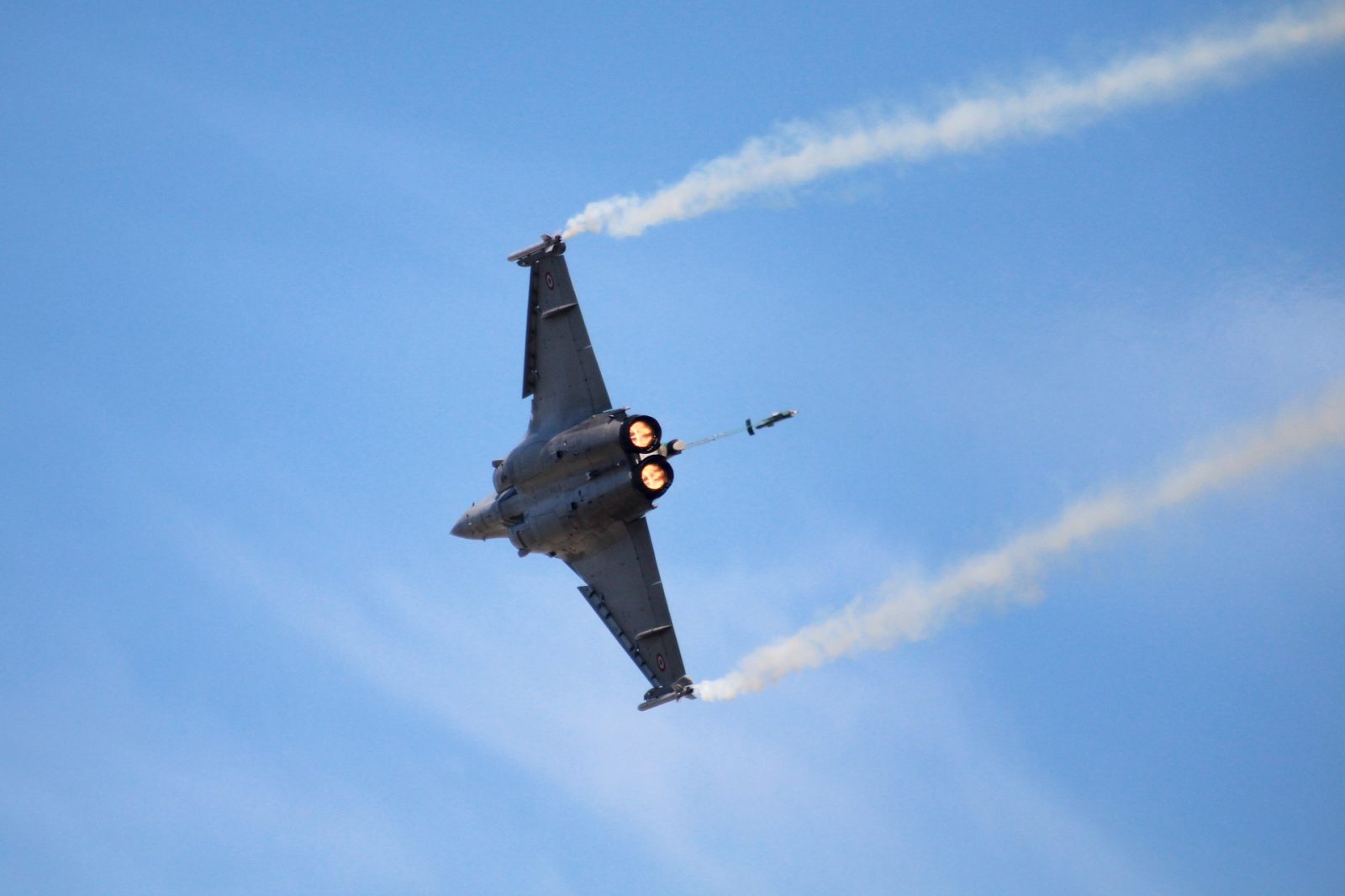
In military equipment deals between France and India, specifically the induction of Rafale fighter aircraft manufactured by France-based Dassault Aviation, is not just an addition to the inventory. It indicates the impetus for arms race, threat perception and signaling, consequently destabilizing the strategic equilibrium.

Long term effects address cooperation in nuclear fuel supplies through nuclear agreements, despite the fact of peaceful uses of nuclear energy.  The dual use factor still remains a strategic concern as it results in radically different outcomes like unlimited fissile material production. This, along with French support for India’s membership in the Nuclear Suppliers Group (NSG), adds to the pressure of a nuclear arms race environment in the South Asian region.

Another strategic concern for Pakistan is the substantial investment of France in the Indian maritime domain by supplying sophisticated weapon systems and surveillance technologies, as well as military training and exercises. These provisions raise concerns for blocking the sea lanes of communication in times of crises by manipulating maritime intelligence and communications.

Conclusion.     The India-France Strategic partnership is for boosting the economic market, convergence of high strategic interests for geo-political gains and continuation of strong support to India as a strategic investment. Yet, all the elements of India-France cooperation trends, trajectories in developments and deployments are exacerbating geo-political competition and the regional arms race, all of which may lead to crisis instability. Therefore, technological asymmetry may lead to deterrence failure. No doubt, international and strategic relations are based on the realism rules but Dwight Eisenhower explains another strategic perspective for coexistence: “The world must learn to work together, or finally it will not work at all.”

Chinese Role in Afghan Peace

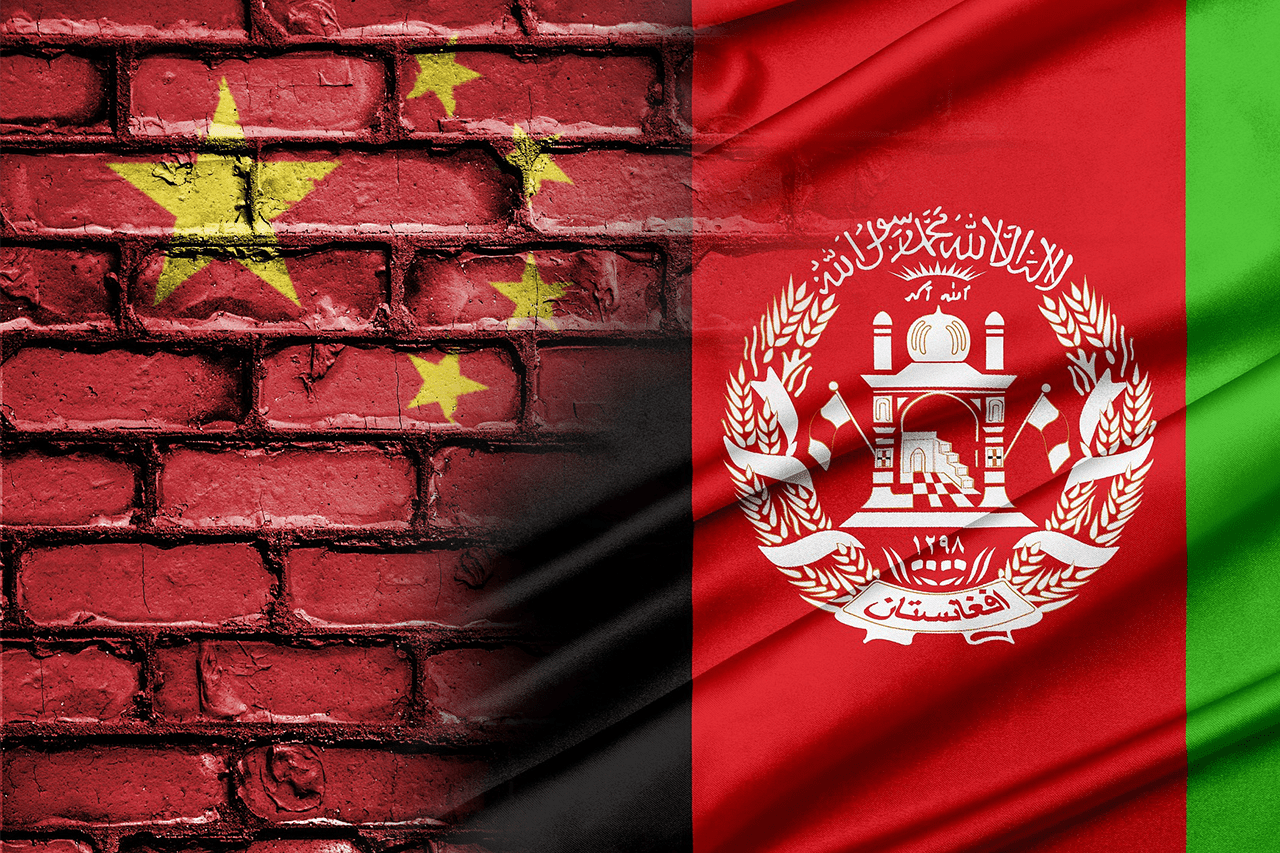
Peace remains elusive in Afghanistan, despite serious efforts by various stakeholders and the accord signed between the US and Taliban. The people of Afghanistan have suffered immensely, having been ravaged by wars since 1979; the Soviet invasion, followed by internecine warfare, the US-led war in 2001, the war on terror, the rise of Taliban and Daesh have all taken a huge toll. Besides Afghanistan, its neighbours too have a stake in Afghan peace. Numerous development projects of Pakistan are on hold till peace returns to Afghanistan. Prominent among these are the Turkmenistan-Afghanistan-Pakistan- India (TAPI) gas pipeline and the Central Asia-South Asia power project, commonly known by the acronym CASA-1000, a $1.16 billion project currently under construction that will allow for the export of surplus hydroelectricity from Kyrgyzstan and Tajikistan to Afghanistan and Pakistan.

Iran, Pakistan and China besides the Central Asian States are those neighbours who are keen to see peace return to Afghanistan. Among them, China is the most powerful as well as most keen to invest in Afghan peace. Chinese strength and development model through engagement and connectivity will work best for Afghans. China, along with other regional stakeholders and neighbouring countries, is likely to extend its constructive role in the Afghan peace process from political, economic, and security aspects once the NATO troops withdraw from the country.

Recent events in Afghanistan, however, indicate that the spoilers of peace are still active and influential. Initial zeal and expectations of the Afghans from the US-Taliban peace deal have reduced a little after the delay in a prisoner exchange and expected intra-Afghan talks. Political crisis in Afghanistan has weakened existing Afghan Governance and its reputation. Common Afghan views developments with despair as political opponents callously play with the peace deal related steps only to undermine life and security of the people. Proxies are still in action with the Afghan Intelligence Agency NDS playing politics through Afghan Daesh (ISKP) related violence. ISKP mysteriously opted to surrender to Afghan intelligence after having been comprehensively defeated by the Taliban initially in Nangarhar and finally in the Kunar Province. Ironically, ISKP has accepted responsibility for multiple attacks in Kabul including Gurdwara Attack targeting the Sikh community.

In this milieu, China’s role in Afghan peace becomes more significant because there is no trust deficit between Afghanistan and China. Iran and Pakistan have endeavoured to act as a catalyst in brokering peace but the Afghans remain wary of both because of their previous vested interest. Pakistan’s age-old notion of finding strategic depth in Afghanistan and the Iranian quest for propagating Shia theology in predominantly Sunni Afghanistan make them suspect in the eyes of Afghans. The US is perceived as an invader and a foreign element so its peace overtures are viewed as a desperate attempt to extricate itself after wreaking havoc in Afghanistan for the last two decades.

Afghans are cognizant of the factor that after the withdrawal of the US and other NATO forces, the local law enforcing agencies will not be able to manage the peace. The withdrawal of US and NATO troops will put a great and serious effect on Afghanistan’s policy, economy, and security. The war on terror has not been won yet. Neither terrorist networks are dismantled nor did stability emerge in the country. In this backdrop, China, recognized as a global power while also enjoying secure relations with Iran and Pakistan, will be welcomed. Iran will not put impediments in any Chinese propositions for peace while Pakistan, which is a strategic ally of China, will welcome any Chinese initiative.

Afghans are well aware that China has no hegemonic designs and has no history of military interference in any countries; contrarily it seeks to consolidate its relations with other states through spreading economic exchanges. This policy of non-interference and extending economic support to less-developed nations carries great significance for Afghanistan.

Peace and stability in the country are in the interests of both Afghanistan and China. Sustainable peace will not emerge in Afghanistan through mere agreements, which are the beginning of a long-haul process. No sooner the Taliban lay down their arms, the Afghan government will be desirous of executing rehabilitation, economic development and poverty reduction, all of which are directly dependent on sustainable peace. China has the capacity to support Afghanistan both politically and economically in achieving lasting peace.

A war-torn and unstable Afghanistan is detrimental to China too since terrorist groups seek safe havens and the separatist East Turkistan Independence Movement (ETIM) had wreaked havoc on China’s Xinjiang province till the Chinese government managed to control it with sustained measures. China’s ambitious mega project, the Belt and Road Initiative (BRI) can also gain the desired impetus through peace in Afghanistan.

Not only did former Afghan President Hamid Karzai but the incumbent Dr Ashraf Ghani also reached out to Chinese President Xi Jinping for aiding the Afghan peace process but Taliban delegations have also travelled to China to repose their confidence in China’s initiatives for peace.

China has constantly revealed its interests to play a constructive role in Afghanistan so that the peace process moves forward. US Special Envoy Zalmay Khalilzad had a trip to Beijing in July 2019 after completing its seventh round of negotiations with the Taliban in Qatar.

Geopolitics and location play an important role in a country’s power potential. Currently, Afghanistan is located in the centre of many regional and trans-regional mega projects including the BRI which connects China to Europe and Africa through routes, railroads, pipelines, energy lines, ports, and other infrastructures and Chabahar Port, which connects Afghanistan to high seas. Afghanistan is also endowed by nature with numerous mineral resources which are of interest to China.

Despite the Sino-US rivalry, Washington DC has taken Beijing into confidence along with Russia to ensure that all stakeholders are on the same page. Contrary to previous apprehensions about the US’ motives of staying in Afghanistan for an indefinite period, this move also shows that the US has tried to raise the comfort level of China and Russia to assure that it does not view Afghanistan as a listening post for the region any longer, thus beckoning Afghanistan’s neighbours (China, Russia, Pakistan and Iran) to take the responsibility of stabilizing the situation in Afghanistan.

An important consideration is China’s investment of 3.5 Billion US Dollars in Afghanistan in the Aynek Copper and the Amu Darya oil exploration projects.

China, which shuns chest thumping and cock crowing would prefer to be a part of the multilateral process rather being a solo player to maintain good ties with all the stakeholders in Afghan peace.

It is now an acknowledged fact that despite maintaining a neutral instance on Afghanistan in the past, China has been playing an important behind the scene role in nudging the different players in Afghan politics to sit at the negotiating table. Where numerous powers have failed in the past, China will be conscious of a letdown thus it will proceed rationally and pragmatically to secure peace, which has been elusive in Afghanistan so far.