Historical and Religious Linkages between Pakistan and Afghanistan

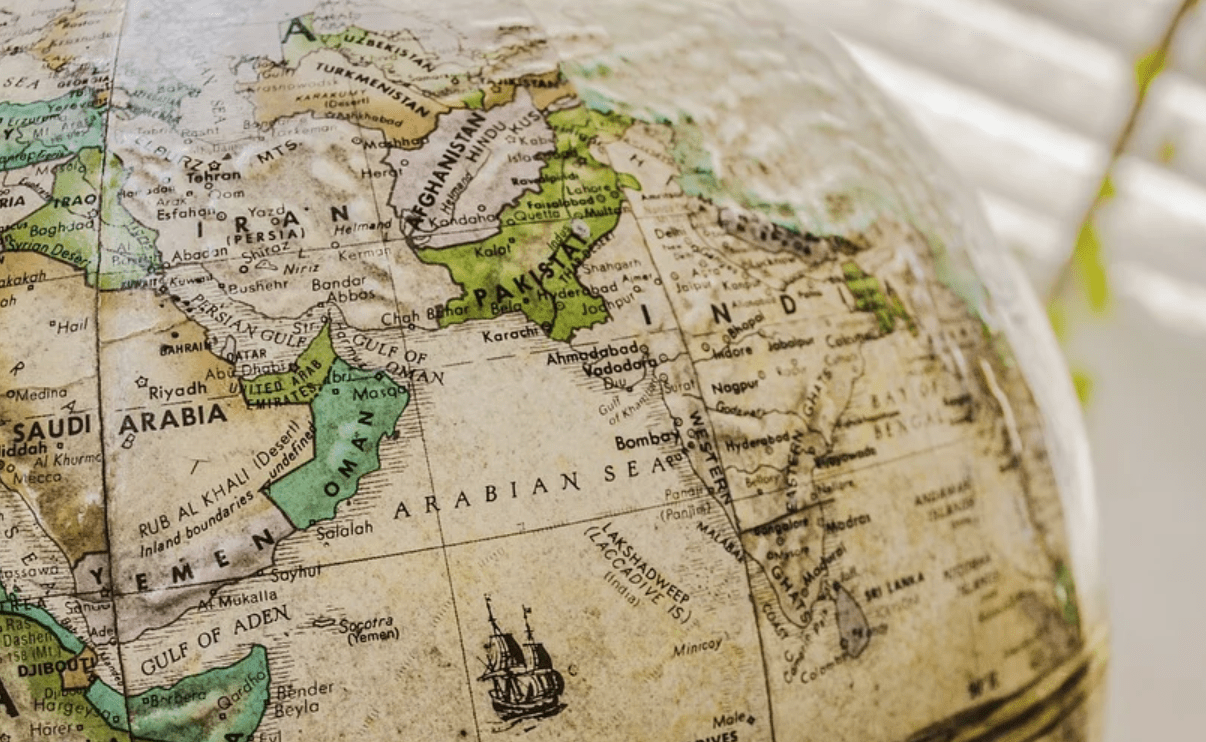
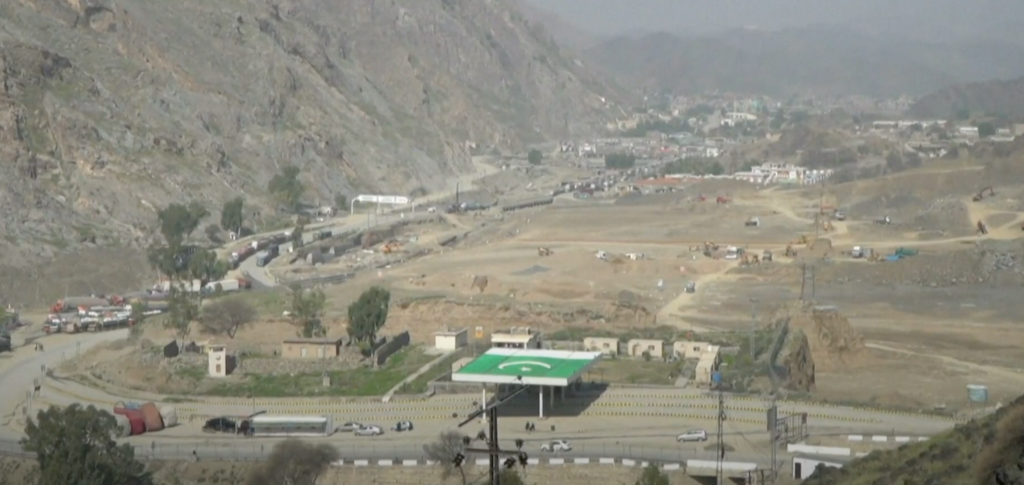
Pakistan and Afghanistan are often associated as brother countries, having profound historical links, traditional affinity, remarkable social fabric resemblance, common religious identity, ethno-cultural bondage, and strategic partnerships, all dating back to pre-partition Indian subcontinent era. Afghanistan the “cockpit of Asia” is not only strategically, but also psychologically, culturally, geographically and politically, one of the most important neighbours of Pakistan. Throughout history, the invaders, merchants and visitors came to the Indian sub-continent through and from Afghanistan, crossing the Khyber Pass and lands of Sind and Punjab ending up in Delhi, Somnath and beyond. Though in the post-partition regional dynamics and inheritance of issues between the British Raj and Afghanistan, bilateral relations between the two have been wavy, yet people to people affinity has always been an assurance against any serious derailing of bilateral ties.

In 2001, US-led international coalition occupied Afghanistan; it toppled the Taliban regime and since then the diplomatic face of Afghanistan has been managed through overt coercion and covert conspiracies. The conflict of interest between the people of Afghanistan and foreign installed Afghan governments is the cause of current mass resentment and distrust in the Afghan political system, well manifested by extremely low turnout in the 2019 presidential elections. Although post 9/11 the two countries have remained at odds in building mutually beneficial and trusted relations, yet there are strong religious, spiritual, cultural and historical connections between both countries discussed in subsequent paragraphs:-

Religion and Spirituality.      Overwhelming demographic segments of both countries practice same religion (Islam) down to sect and sub-sect – Sunni version of Islam, generally compliant to Deobandi school of thought – hence providing a sound ideological foundation for bilateral fraternity. The Afghan Jihad against former Union of Soviet Socialist Republics (USSR) was a solid manifestation of unanimity of thought engulfing the people of both countries.

In the past, Ulema and Saints from Pakistan and Afghanistan have frequently visited both countries. The most notable among those is Hazrat Data Ganj Bakhsh, who came from Ghazni in Afghanistan. He became one of the most successful Sufi preachers of the subcontinent and is today one of the most notable Sufi saints in Pakistan. The Shrine of Data Ganj Bakhsh Hajveri is located west of Bhatti Gate, just outside the Old City of Lahore.

Durrani Empire.      Present-day Pakistan and Afghanistan remained a single geographical unit during the Durrani Empire (1747–1826). Ahmed Shah Durrani’s empire with its power base in Kandahar, and later transferred to Kabul, incorporated Kashmir, Punjab, Sind and Baluchistan, and thus the Durrani empire bears the closest resemblance to Pakistan. Since the Durrani Empire included the present-day Pakistan and Afghanistan, the forces of history and the aspiration for the unity of Muslim Ummah have all come into line, explaining the interconnected geopolitics of both countries.

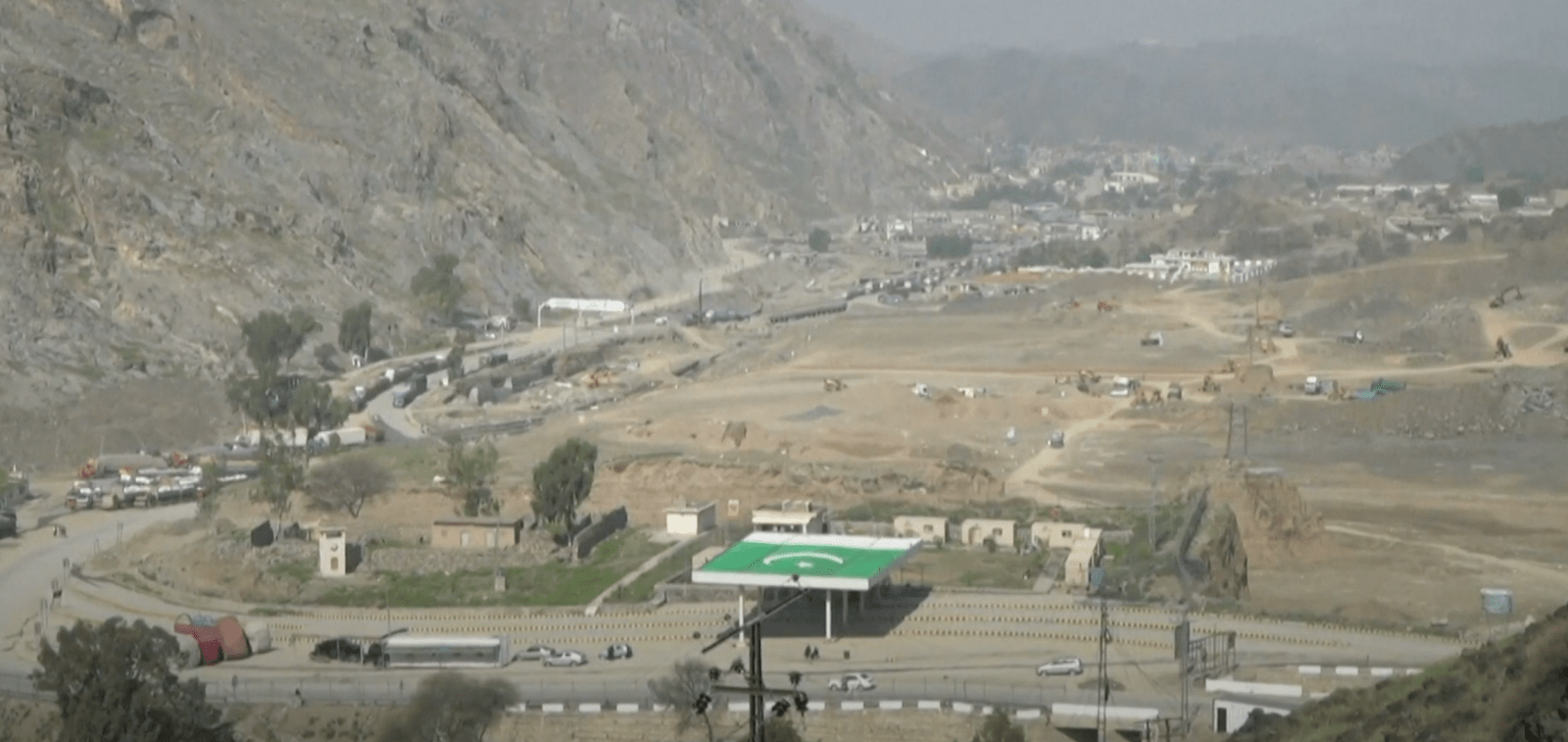
Long Shared Border.        Another natural enabler of the cordial bilateral relationship is a long-shared border of over 2,500 km, which is crossed each day by thousands of people and serves a handy source of people-to-people contacts as well as trade and economic interactions. Moreover, this cordiality and mutual dependency are supported by the factor of the reciprocal strategic significance of both the countries for each other, as stability of one state directly affects the internal stability of the other.

Afghan Refugees.        Owing to a distinct geographical location, both the countries are simultaneously affected by global and regional dynamics and volatility of world order. At the time of USSR’s invasion of Afghanistan, there was a pro-USSR and anti-Pakistan government in Kabul, yet Pakistan opened its arms and hosted more than 3 million Afghan refugees. Even today, nearly 2 million documented and undocumented Afghans live in Pakistan, run their businesses, send their children to schools and universities, are married in Pakistani families, and therefore, consider their host country as their home.

Hazara Community.     Hazaras are an ethnic group, predominantly Shi’a Muslims believed to be the descendants of Ghengis Khan mainly based in Afghanistan, but also with a large population in Pakistan. There are approximately 6-7 million Hazaras in Afghanistan, residing mainly in the Hazarajat region in central Afghanistan. The majority of Hazaras in Pakistan, ranging from 650,000 to 900,000, live in the city of Quetta, the provincial capital of Baluchistan.

Common Heroes.      The Afghan warriors who defeated Hindu rulers in the past are equally cherished as heroes in Pakistan. Pakistan has named many of its missiles on the names of Afghan warriors in response to the names of Indian missiles e.g. Prithvi and Agni etc. As these names of Indian missiles resembles the 12th century Indian war hero Prithviraj Chauhan and God of Fire (Agni), Pakistan named its missiles as Gauri, Ghaznavi and Abdali to remind India of Muslim domination of the subcontinent. These all were rulers of Afghanistan in 11th,12th and 18th century AD and were great warriors who defeated Hindu kings and were devoted to Islam.

Nevertheless, the US-led invasion of Afghanistan followed by the prolonged presence of foreign occupation forces have created many ripples about Pak-Afghan relations. The political influence of India in Afghanistan, and its strategy of engaging Pakistan from within Afghanistan, has further disturbed the Pak-Afghan relations. In the past two decades, India received vast support from the US, to elevate it as a regional power as part of its China containment policy. Therefore, India enjoyed a free hand in Afghanistan, post-US invasion and successfully shifted its war against Pakistan from its own home to Afghanistan. Resultantly India achieved peace and stability for its own country at the expense of Afghanistan. The United States also played the role of an irritant in deteriorating Pakistan-Afghanistan bilateral relations as it overlooked fermenting anti-Pakistan Indian activities in Afghanistan. Presence of India’s consulates in Afghanistan’s major cities and their role in jeopardizing Western border remained a matter of concern for Pakistan.

Yet, in case of Pakistan-Afghanistan relations, there is a major area of overlap of national interests of the two countries, barring a few irritants. The cohesion of interests is backed by geographical contiguity, cultural, religious, ethnic and historical similarities. Both countries could safeguard their interests through cooperation and coordination. They should work in harmony to overcome irritants.
Not One but Two Great Powers

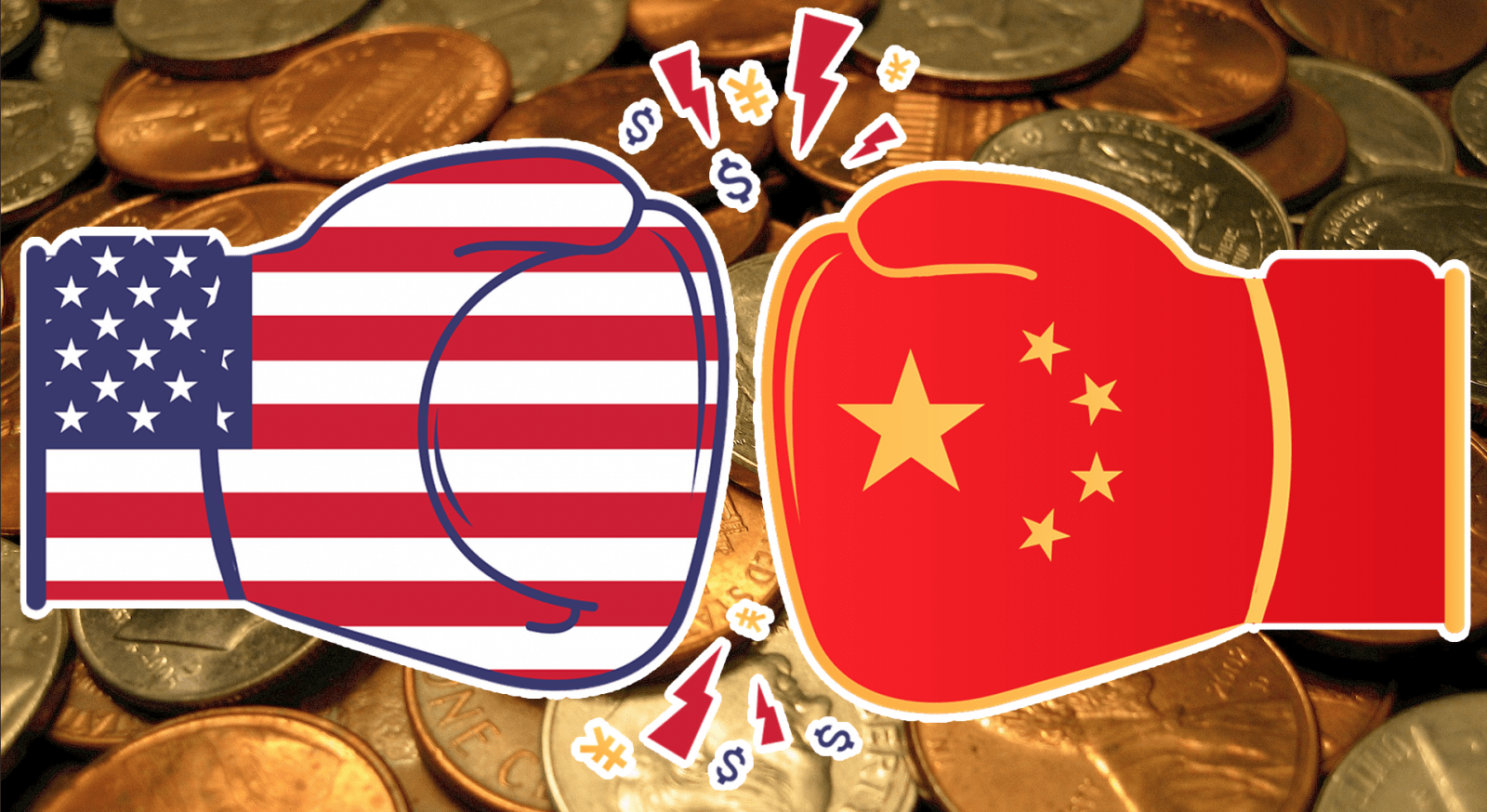
While the world grappled with the uncertainty of dealing with an unprecedented pandemic, great power politics between the US and China did not cease. There is little love lost between the two countries; tit-for-tat tariff impositions, and the power competition, if it continues to grow, could foreshadow a global pandemonium.

Irrespective of its failure in ‘flattening the curve’, the US refrained from cooperating with China. It will be difficult for the US in a post-COVID world to abandon its global leadership; however, the competition for power will always be present – and growing.

Great powers have always sought influence and exclusive economic control. Before World War I, the economic markets were interdependent. This interdependence did not preclude the European countries from laying claim to territories not already spoken for, which led to preemptive imperialism. The competition between the European imperialists gradually grew, which sparked tensions in the continent. 

After World War I, Japan and Germany made efforts to gain economic privilege over other nations, provoking World War II. During the Cold War, the exclusive spheres of influence in Europe and Northeast Asia and superpower competition between the United States and the Soviet Union were contributing factors in a conflict that lasted for about forty-five years. However, the desire for exclusive economic control or its fear was not the prime cause, but a principal constituent in instigating catastrophic wars.

It is obvious that the yearning for economic privilege and influence has contributed to precipitating global wars despite economic interdependence. It drives the great power competition between states, and is a vicious cycle difficult to stop. 

Contemporary great power competition is dominated by economic and political spheres. However, alongside the continued politicking, strategic maneuvering for power and dominance is underway. The strategic significance of Southeast Asian states and China’s substantial influence in the region has compelled the US to revamp its foreign policy in the past decade. China, on the other hand, has strictly opposed US interference and growing partnership with regional states, many of whom lay claim to disputed territory with China. 

Even as the world is encompassed by the pandemic, China and the US are conducting naval exercises in the South China Sea. In mid-April 2020, two US carriers, the Theodore Roosevelt and the Ronald Reagan, were docked at the port because of the COVID-19 cases among the crew. A Chinese aircraft carrier and five warships reportedly sailed into Taiwan waters and through the Miyako strait. This was seen as a threat to Taiwan’s security because of its territorial dispute with China and the latter’s continuous threats of military advancement. In response to China, the US navy and air force did a runway show of strength. 

More recently there is the clash over Hong Kong’s ongoing anti-government protests and Trump’s continuous meddling. Trump’s vow to end the special status accorded by the US to Hong Kong if China were to impose new national security laws on the city, started a new chapter of the same quest for regional and global hegemony.

Given the proliferating great power competition which can be mutually destructive, what can both countries do to avoid an escalation of tensions and ensure a mutually beneficial market? Unlike the extreme views of conservatives and liberals in both countries, neither conflict nor cooperation is inevitable. Neither country can neglect the fact that their policies and extravagant economies affect the international economy. What can be done for the world system to accommodate not one but two great powers?

On the China side, it should liberalise its domestic market for foreign as well as national firms and reduce non-tariff barriers on western firms. It should ensure openness and free trade of capital goods across the borders, thereby diminishing the risk of manipulating firms for economic incentives by the government. Secondly, it should build economic consortia with western firms for joint partnerships in areas where it is increasing its influence. For instance, openness and free movement in the South China Sea for western and national firms will be a pragmatic approach to reducing tensions in the region. It should also encourage consortia in regions linked to the Belt and Road Initiative (BRI) project. 

On the US side, the Trump administration should encourage China for joint cooperation, and thereby, it will have to participate in the Chinese market. It should not make the mistake of opposing progressive initiatives as President Obama did with the Asia Infrastructure Investment Bank. The administration should eschew protectionism and the protectionist ‘America first’ policy (when necessary) to uplift the liberal international market in practice. Finally, the US needs to restructure its domestic markets to welcome global market change. 

Nothing is inevitable in international politics. If the US refrains from protectionism and China embraces openness, we may see a new global order emerging.


Peace: The Forgotten Virtue in the RSS-Occupied India

“Peace is not something you wish for; It’s something you make, something you do, something you are, and something you give away.” This John Lennon quote is sure to resonate with a majority of earthlings. However, the same may not be said for the ruling elite in India which has continued to disrupt peace not only internally but regionally as well just to satiate its own selfish interests of gaining prestige, votes, and in some cases sympathy from the international community.

Going back to the early 1960s, India exploited its month-long “war” with China as a cover to justify its quest for nuclear weapons to augment its prestige. The main setback to peace in the region was dealt when on 18 May 1974, Buddha smiled at Pokhran test range. India misused the nuclear technology and instead of utilizing it for peaceful applications, it used it to build a bomb, while the leadership continued to project it as a “peaceful” nuclear explosion (PNE). However, as one of India’s leading physicist and former Minister of State for Defense, Raja Ramana stated: “[T]he Pokhran test was a bomb, I can tell you now – an explosion is an explosion, a gun is a gun, whether you shoot at someone or shoot at the ground – I just want to make clear that the test was not all that peaceful.”

India shook the foundations of peace in the region with just one explosion while continuing to fool the world by touting it as a peaceful explosion until recently when on 18 May 2020, the Congress party on its official twitter handle acknowledged that the PNE was “not only our nation’s first successful nuclear test but also the first confirmed nuclear weapons test by a nation outside the five permanent members of the UNSC”.

This did not end here, neither did Indian ambitions which ultimately led to the testing of fission bombs in May 1998. The tests were initiated on 11 May 1998, under the assigned code name Operation Shakti, followed by the detonation of two other fission devices two days later. In its quest for prestige, while India continued to sabotage peace in the region, it also became a driver behind        Pakistan’s reluctant entry in the nuclear club.

India’s thirst for prestige continues to drive its pursuit of advanced nuclear capabilities and investment in weapon systems along a broad spectrum of ranges and yields. Currently, India’s arsenal comprises of a triad including weapon systems like Prithvi short-range ballistic missiles,         intermediate and intercontinental versions of the Agni ballistic missile; nuclear glide bombs carried on aircraft; and K-4 and K-15 missiles which are submarine-launched ballistic missiles (SLBMs) and may be deployed on conventional or nuclear ballistic missile submarines (SSBs or SSBNs, respectively). It has already ventured into the development of nuclear- powered submarines. New Delhi is also investing in Multiple Independently Targetable Re-entry Vehicles (MIRVs) capability which is being flaunted as a force multiplier by its officials. Such developments show that the Indian leadership has opted for these capabilities because of their war-fighting nature, hence damaging the remaining semblance of peace and stability in the region.

One may argue that these capabilities could be used as defensive tools and for employment during a heightened crisis only and that India indeed requires these to ensure its security from its two nuclear neighbours. Yet, India’s growing penchant for false-flag operations, incursions into Pakistani territory as it tried to do post-Pulwama, and the RSS-leadership’s increasingly belligerent statements make the aforementioned argument hard to accept.

To augment its narrative of being a victim and garnering political support, the RSS-led ruling elite continues to exploit the Indian-occupied Kashmir (IOK) as its trump card. It is a globally known fact that IOK is the primary bone of contention between the two nuclear-armed neighbours. India,    however, has gradually been upping the ante recently by engaging in continual violations along the Line of Control (LoC), terming Kashmiri struggle for freedom as ‘terrorism’, and consequently increasing suppression of Kashmiris. Any incident that happens as part of IOK’s freedom fight is blamed on Pakistan. Consequently, belligerent rhetoric ensues in India whereby political leaders vow to teach Pakistan a lesson even if it has to be through the use of nuclear weapons. Incidentally and interestingly, these ‘terror incidents’ coincide with either election in India, visit of some foreign dignitary, or scheduled meetings between Pakistani and Indian officials. The textbook cases proving this assertion include Pathankot and Uri attacks. Moreover, most recently the Pulwama incident which brought both nuclear-weapon states on the verge of a nuclear catastrophe also followed a similar trajectory.

These accusations from India have sabotaged any possibility of peace-building initiatives between India and Pakistan. For instance, the Pathankot incident led to the cancellation of talks between Indian and Pakistan Foreign Ministers. Similarly, the Uri attacks were used as an excuse by India to back out from SAARC Summit which led to its postponement. In the aftermath of Pulwama incident, India tried to exploit Pakistan’s measured and rational responses in the previous episodes by conducting a so-called airstrike inside Pakistani territory, however, the latter’s befitting aerial response pulled the curtain back on India’s fake news.

The statements coming from the Indian officials – especially since the BJP came into power – are anything but rational, and betray the mindset of India’s ruling elite which knows nothing about maintaining peace or even trying to work towards it. The Indian Army Chief Gen Manoj Mukund Naravane’s threat of pre-emptive strikes inside Pakistan and potential large scale military operations inside Pakistan-administered Kashmir reflect irrational thinking on part of Indian decision-makers at the highest levels. Similarly, Indian National Security Advisor Ajit Doval has       consistently propagated the importance of covert operations, which he explains as “a low-cost sustainable offensive with high deniability aimed to bleed the enemy to submission.” To top it off, while PM Modi’s remarks like “our armed forces will not take more than seven to 10 days to make Pakistan bite the dust,” and his infamous “qatal ki raat” statement may act as a good election campaign rhetoric, they prove to be increasingly damaging for the overall peace in the region.

As Gen (Retd.) Khalid Kidwai in his recent speech at International Institute for Strategic Studies (IISS) London this year put it, “there are few parallels of a country possessing nuclear weapons conducting itself with greater irresponsibility than India did against another nuclear-armed country.” At the same event, Gen Kidwai also aptly highlighted the dual standards of the international community that remains quiet when it comes to India which is being led by extremists and religious fanatics of the RSS and BJP – in firm control of India’s nuclear weapons, with a track record of strategic recklessness and irresponsibility – since the last six years. 

The only conclusion that can be derived from RSS and BJP’s actions is that a polity which cannot ensure peace for its own citizens, cracks down on minorities to serve the ideology of Hindutva,      annexes a previously occupied region and puts it under lockdown against the wishes of the population, relies on belligerence as a tool to gather votes, will not care about maintaining peace at a regional or even global level. Thus, a country being run by a fascist elite is not only a menace and nuisance for its own citizens, but also for the region.

Yemen’s Houthis: ‘Iran vs Saudi Arabia’ False Binary

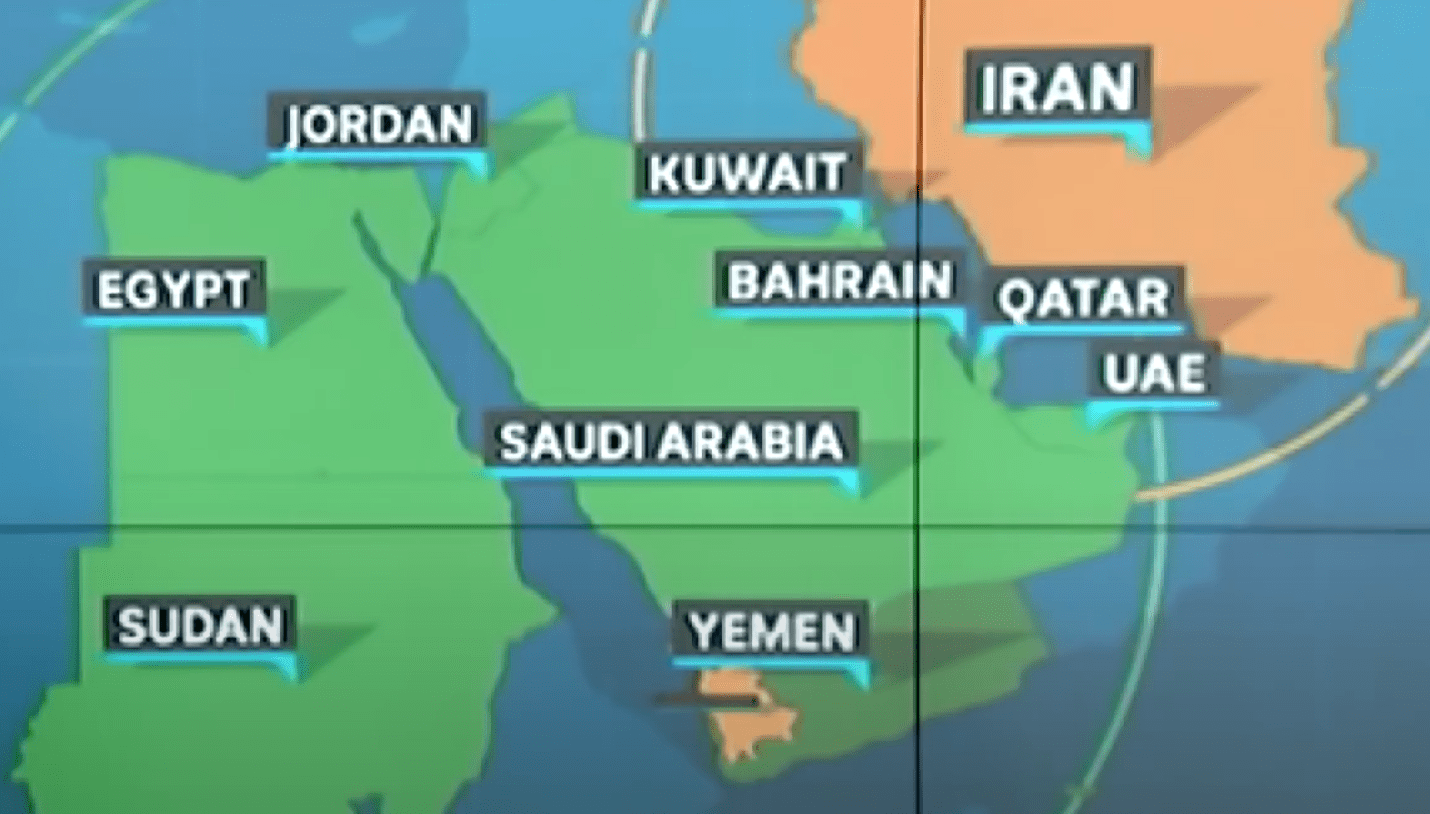
Notably in Pakistan, the notion of a regional ‘Iran versus Saudi Arabia’ struggle for influence is a popular framework adhered to by global affairs analysts. It holds that Iran and the Saudis involve themselves very proactively in the affairs of Middle Eastern states with the goal of thwarting the other’s objectives, causing proxy wars and military conflicts.

However, the approach falls short in numerous ways of explaining contemporary turmoil in the troubled Middle East region. The Yemen War, ongoing since March 2015, is the most recent and striking example of the ‘Iran versus Saudi Arabia’ framework applied onto a major conflict in contradiction of both its basic facts and broader regional and global relevance.

With special regard to the origins and motives of Yemen’s Houthis, the ‘Iran versus Saudi Arabia’ label when applied to the Yemen War produces factual errors and fallacies. Behind these errors and fallacies lie crucial facts about the armed group and political-religious organization, without which its true contemporary geopolitical significance cannot begin to be understood.

The Houthi uprising: Iranian proxies or independent actors?         The idea that the Houthis’ September 2014 takeover of Sanaa from Saudi client President Aburrabuh Hadi was an Iranian move is fairly entrenched among analysts. The Houthis are portrayed as mere sock puppets in this regard, armed and directed by Tehran. However, this contradicts revelations made during the early days of the war regarding the Houthis.

US and European career intelligence officials and diplomats immediately voiced scepticism about Saudi claims that the Houthis acted on Iran’s behalf. Pointing out that the Houthis did not follow mainstream Twelver Shi’ism as did Iran and its allies, they also added that the Houthis were not reliant on Iranian weapons for their military campaign, which given the large quantity of weapons already in Yemen was easily self-sustainable.

Additionally, Huffington Post reported in April 2015, citing US officials familiar with the Houthi movement, that Iran had even warned the Houthis against taking over Sanaa. Despite the US condemning the Houthis and militarily assisting the Saudis, there was no acknowledgement by countries aside from the Saudis and Gulf Cooperation Council (GCC) that the Houthis were Iranian proxies.

In fact, as far back as 2009, Wikileaks-obtained cables from the US State Department described the Houthis’ weapons source as the Yemeni black market – and not Iran.

If not Iran, then who caused the Houthi uprising?   After the Yemen War began, the Houthis established ties with Iran and began receiving weapons from it. However, given the lack of serious ties with Iran prior to the war, the question arises, what motives drove the Houthis to seize Sanaa?

The answer lies in the mass discontent against leaders propped up by the GCC, despite repeatedly making a mockery of the Yemeni reforms process.

As a major Zaydi politico-religious entity in Yemen founded in the 1990s, the Houthis were a significant part of the overall Yemeni mass-protests of 2011. Directed at then-President Ali Abdullah Saleh, who had ruled for over two decades, the protests induced a GCC reaction who then introduced the November 2011 GCC Initiative for power transition in Yemen. Both the government and opposition approved of it.

The UNSC-backed Initiative mandated that Saleh step down and hand Hadi, his vice president for 18 years, presidential duty. Hadi was tasked with holding presidential elections within 60 days, setting up a committee to draw a new referendum-approved constitution with parliamentary elections following a new Yemeni government.

However, Hadi held a rigged, one-man ‘election’ with himself as the only candidate and became the new president in February 2012. This caused opposition resentment to fester further, with intra-factional and government-protestor violence erupting frequently as Hadi secured a two-year term. The Houthis and protestors affiliated with former president Ali Abdullah Saleh, who opportunistically decided to join the opposition, had called for a boycott of the election.

Even at the end of his term, Hadi who enjoyed GCC backing, refused to relinquish his post and the GCC Initiative-mandated elections for a new parliament never took place. The Houthis together with Saleh loyalists – now dominating Hadi’s own ruling party, the General People’s Congress (GPC) – stormed Sanaa in September 2014 and established full control of the city by January 2015 with the seizure of the presidential palace.             

Hadi resigned, but ‘retracted’ the resignation after managing to flee south to Aden city in February. Exemplifying his lack of domestic support and legitimacy, the GPC which possessed a majority in Yemen’s Parliament declared its refusal to accept him as president again.

Hadi then fled to Riyadh, Saudi Arabia, with the Saudis initiating an aerial bombing campaign against the Houthis on 25 March 2015.

The Houthis as an Iran-aligned but independent new regional player.      As the Yemen War finally shows signs of winding down, the Houthis can lay claim to a victory of sorts while the ‘coalition’ which sought to crush them has failed. Through years of massive aerial bombardment and ground assaults led by GCC-hired foreign and local tribal mercenaries, they impressively sustained control of Yemen’s major population centres and strategic assets such as its Red Sea ports.

To go with this, the Houthis have taken unmistakable steps toward assuming a broader regional profile. Their offer to release captured Saudi air force personnel in exchange for Saudi Arabia releasing imprisoned members of the Palestinian resistance organization, Hamas, resident in the kingdom, is a prime example of this and was received positively by the Palestinians.

The Houthis’ rhetoric regarding Israel’s oppression of the Palestinians along with a general emphasis on the issue of al Quds (Jerusalem) is also poised with major momentum, given the ongoing alliance of Israel with their GCC adversaries.

All in all, the Houthis are a reality in Yemeni politics not reliant on Iran for their objectives but aligned with it now more so than ever – thanks to Iran’s rivals.

US-China Trade War Amidst COVID-19: A Step Towards a New World Order

Sino-US clashes have been in play since the founding of People’s Republic of China. Intricacies of their cultural and economic rivalry have been researched immensely in the past and present. The conflict continues during the COVID-19 pandemic, even as the international community is talking about unity and cooperation to control the virus.  

Their diplomatic relations were not established until Nixon’s era during the 1970s. China’s consistent and unconditional support to socialist economies and their rise as an economic power has been a problem for the US. Washington’s involvements in the Taiwan issue, its intrusion in the South China Sea, and violations of international agreements have displeased Beijing. 

Despite their huge differences, their trade stood at around $700 billion prior to the COVID-19 pandemic. Primarily, this is because China and the US have no other potential market of their size for the thousands of goods they produce, everything from meat to musical instruments, footwear to telephones. Both needed a market of great magnitude.

In the present scenario the situation has worsened, particularly with the Trump in the Oval Office. He has been accusing China of unfair trading practices such as intellectual property theft and currency manipulation from the very first day. During the election campaign, as reported by BBC News on May 02, 2016, he promised Americans that he will “avenge Chinese rape of the US economy”. Initially, it was considered an election stunt by the world. But he did what he promised, and around $360 billion Chinese goods were slapped with 30% tariffs from July 2018 onwards. As of now, US tariffs are applied exclusively to Chinese goods worth US$550 billion.

China gave a befitting response and imposed tariffs on US goods worth $110 billion at 25% in 2018; the worth of Chinese goods facing US tariffs has now increased to $185 billion. Yet, Washington did not learn its lesson and is still trying to destabilize Beijing’s economy further by placing sanctions against Iran. China is the largest importer of the Iranian oil and – the Trump administration has already threatened China if Beijing continues to import it.

It is now widely believed that China has won the third world war – which is economic in nature. It has successfully detracted the economic performance of its competitors. China cannot afford a direct nuclear war with its most advanced and nuclear rivals. It would cost China a huge loss; it would be unwise to go into such a situation when it is nearing economic supremacy and reorienting the world order through huge investments in Belt and Road initiatives across the world.

All of Europe and the US have realized that their neo-liberal economic model is unfit and failed to protect the lives and money of their people. A new world order ‘made in China’ is going to appear after COVID-19. It will include only those countries that accept Chinese terms and conditions. China is going to apply it first in Asia, then everywhere else. The SCO member markets will cater to such a purpose. Member countries such as Russia, India and Pakistan have huge potential which China is not harvesting.  It can be forecasted that Beijing will not need the European market for its goods as good opportunities exist at its doorstep. Especially after Brexit, now Grexit and the long-standing euro-zone crisis, the future of the European market is uncertain. Sino-Indian economic ties will also be improved post-COVID-19. US sanctions will no longer be respected by SCO states if China introduces its new order. This is most probable.     

Indian Border Algorithm

India and China share an almost 2000 km-long border as per Chinese claims and over 4000 km as contended through the Indian narratives. The actual length of the border is 3488 km, which starts at the junction east of Siachen between Pakistan, China and Indian Occupied Kashmir (IOK), moving along the entire length of the Northern Indian territory, going all the way to Myanmar. This border has multiple complex regions, rough geographies, and historically contested peripheries. The 19th Century British annexation of many Chinese regions has always remained a point of concern for China. Unfortunately, the British had a shameful legacy of mapping occupied colonies, drawing arbitrary lines with little or no regard for the local history, culture, society, and economies, not to mention sowing the seeds of conflicts that could last for centuries.

The Indian–Chinese border was no exception. Addition of Ardagh–Johnson Line in 1865, Macartney–Macdonald Line during 1899 and McMahon Line of 1914, are all part of the same reprehensible inheritance.  All these lines now form part of the Line of Actual Control (LAC) between China and India. The LAC meanders along Ladakh in the IOK, Uttarakhand, Himachal Pradesh, Sikkim, and Arunachal Pradesh – none of them without contested claims.

The important questions arise, why there is such a large discrepancy between both nations claiming different border lengths, and what are the bilateral and regional consequences?  These questions are more relevant due to the latest Chinese–Indian soldiers’ spat in the Ladakh region and many other places along the LAC. Indian media claims that the incursions have been to the range of 3 to 8 KM at multiple places. As an unprecedented and dangerous development, China has refused all Indian requests for border meetings, necessitating high-level diplomatic engagements (and therefore the trying, and possibly, payback time for the Modi– Doval Doctrine).

On 19 Dec 2010, The Times of India reported that China had excluded almost 1600 kms from the mutually shared border. This claim was repeated by the Indian Envoy to Beijing, Jaishankar, who refuted the Chinese claim. However, during the Chinese Premier Wen Jiabao’s December 2010 visit, China maintained the stance that the length was 2000 km and not 3488 km, as claimed by India. Further analyses of this discrepancy reveal that China had excluded Ladakh and many other portions from LAC and continues to consider them as part of (Indian Occupied) Jammu and Kashmir and not the state of India. This claim has been echoed by multiple scholars in research publications, books referring to India, and China. Ostensibly, there is no doubt in Chinese policy circles that the total length of LAC is 2000 km, and Ladakh is not part of India, therefore, any Indian excesses in that region are taken seriously and with grave concern. To further substantiate this claim, unlike the passport stamped visas issued to the Indian citizens, China has been issuing special “stapled visas” since 2009 to the residents of Indian Occupied Jammu and Kashmir and Arunachal Pradesh, whom they do not consider Indian citizens.

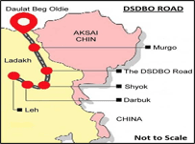
During the last few months, India has made unprecedented indulgence in the Occupied Kashmir and Ladakh. First, the abolition of Article 370, and merging of Kashmir into the Indian Union during August 2019, and second, splitting of Ladakh from the Indian Occupied J&K and its merger in the Union as a separate territory. A third (although decades-old) transgression has been the construction of Darbuk–Shyok–Daulat Beg Oldie (DSDBO) Road on the eastern fringes of Ladakh. This 255 km long road was planned post-Indo-Pakistan Kargil War to serve three purposes:
1) to provide an alternate and year-round road infrastructure to the troops deployed at Siachen;
2) threaten Pakistan, one by building an all-weather road to sustain its deployment in Siachen, and two by the proximity of Daulat Beg Oldie – just 9 km away from Karakoram Pass, which is dangerously close and can infringe upon the CPEC and other Pak-China interests; and
3) to dominate the eastern Ladakh region to further the Indian claims of Aksai Chin, which is currently under Chinese control. The construction of DSDBO Road started in 2000 and was completed, (after a lot of funding issues) by the Indian Army in 2019, at a cost of Rs. 3,200 million. The Indian intelligentsia places the DSDBO Road as the cause of the recent standoff, however, they are hesitant to blame BJP’s annexation of J&K in the Union and division of Ladakh from J&K.  

It is important to note here that a major reason for Indian refusal to join China-Pakistan Economic Corridor (CPEC) was that the project runs through Gilgit – Baltistan region. India claims Northern Pakistan to be part of Kashmir, and Kashmir as part of India, and therefore, the demand that the Chinese should have sought permission from India before embarking on the CPEC passing through this region is considered preposterous (if not outright ridiculous), to say the least, both by China and Pakistan.

Without going into further detail of what India believes to be the extent of its excesses, it is not hard to trace the origin of all the regional border problems back to India. First, well-known and extensively covered by scholarship, is the dispute against Pakistan over Kashmir. Second, only one segment of Sino-Indian spat has been discussed here, but the Chinese claims over Arunachal Pradesh, Doklam on Bhutan border, (not to mention the latest Chinese anger over Indian support for Taiwan), are all noteworthy border-centric disputes. Similarly, among the smaller neighbours, such as Nepal’s objection against the depiction of Kalapani as part of India in the November 2019 map, alongside the annexation of 35 square kms area, and the inauguration of Kailash–Mansarovar, a 50 km long Himalaya Link Road leading to a Hindu pilgrimage site in the Tibetan plateau, has left the Nepalese completely shocked and dismayed. This Indian claim certainly involves and annoys China, as the Himalaya Link Road is an infringement in the tri-state area between Nepal, China and India. The Indian border with yet another smaller state, Bhutan, has been a source of friction as the tri-state area among these three nations (China, Bhutan, and India) is also disputed at Doklam. China has been in constant negotiations with Bhutan on the issue, much to the annoyance of India, as India claims tacit control over Bhutan by supporting it militarily and economically.

Similarly, without going into the details of historical Indian problems against Sri Lanka over security and fisheries, against Bangladesh over ill-defined and porous border pushing and pulling Rohingya Muslims, with Myanmar over fencing the border, it is prudent to claim that India remains the centre of gravity on all border issues. Finally, the exhaustive list of disenfranchised Indian neighbours also includes Mauritius and Maldives, over the Delimitation of the  Maritime boundaries.

Traditionally, Chinese neighbour policies are not impulsive or hasty. A long and empirical history must exist before drawing the Chinese military response. As mentioned above, the BJP-led Indian government’s policies have not only been inimical towards its own (Muslim) population but have been directly infringing upon the neighbours’ challenging regional peace. China has over 200,000 troops deployed in the Tibet region and under current circumstances, India is in no position or state of preparedness to confront China militarily. In a region that is heavily militarized and has multiple nuclear-armed nations, one can only hope that an all-out war can be averted.

The irrational, narcissistic and ignoramus behaviour displayed by Modi and his Hindutva-clad BJP cohorts at the helm of Indian affairs, make peace predictability a tall order. Many individual levels of psychological analysis have been carried out on present-day incoherent politicians such as Trump, Kim Jong-un, and Modi. However, there is something infra-ordinary and banal about Modi, which might add to the explanation about the epitome of irrationality. In a study published during March 2019, by the Indian Journal of Neurology, a human brain atlas was prepared.

The research posited that the size of the Indian (male and female) brain was found to be significantly smaller than their “neighbours” and the Caucasians, in all three dimensions: height, width and length.  An earlier yet related study revealed that the size of the brain is important for intellectual abilities. The intersection of these two studies is (regionally and individually) revealing. The brain size has an impact on the speed of processing information, memory, learning of isolated new skills, integrated reasoning, innovation, and most significant, strategic attention. The proverbial “myopic” view tends to distort not only one’s thinking ability but also inspires one to believe that their truth is the only truth. Modi and his Hindutva policy planners face the same dilemma calculating all the border algorithms! 

Nuclear Spending ‘Offset’

The International Campaign to Abolish Nuclear Weapons (ICAN) recently issued a report titled “Enough is Enough: Global Nuclear Weapons Spending 2019”. The report questions the annual nuclear spending of US $73 billion by the nine nuclear armed states, urging them to give up their nuclear weapons and work towards their complete elimination. ICAN is a consortium of over 500 partner organizations that played a pivotal role in negotiating the Treaty on Prohibition of Nuclear Weapons (TPNWs), more commonly known as the Nuclear Ban Treaty (NBT). The case for ‘wasteful’ nuclear spending, therefore, is in support of the TPNWs objective, and does not take into consideration the nuclear offsets for relatively smaller powers with minimal spending.

The contents of the ICAN report are difficult to corroborate due to the sensitivities associated with nuclear weapons spending in almost all the nuclear weapon states. The report, however, brings out some interesting conclusions that further reinforce the importance of maintaining nuclear deterrence by countries, such as Pakistan, which faces disproportionate asymmetry and cannot afford to engage in a conventional arms race with its hostile eastern neighbour.    

According to the report, the annual nuclear spending of $73 billion by all the nuclear weapon states includes the cost of development and maintenance of nuclear weapons but excludes the financial and human cost that could incur if these weapons are ever used. The report also does not include the cost for unpaid or deferred environment and health related expenses; missile defences that some states are acquiring to protect themselves against a nuclear threat; and nuclear threat reduction and incident management related costs – all of which could increase the cost by additional 50 % of the current estimates.

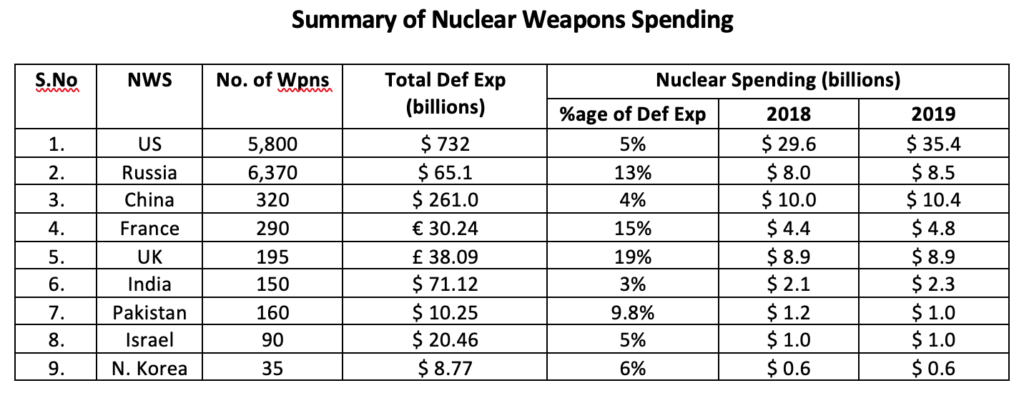
Who is Spending Less with More Dividends?        As per the report, Russia has the largest nuclear inventory of 6,370 weapons but is spending $8.5 billion, as compared to the US that spends almost four times more, i.e. $35.4 billion to maintain relatively lesser inventory of 5,800 weapons. Similarly, China has only 320 weapons but spends more than Russia, i.e. $10.4 billion. The UK has 195 weapons and spends $8.9 billion, almost equal to Russia’s and twice than the French spending of $4.8 billion to maintain their 290 weapons. The most interesting case is of Pakistan, which spends $1 billion on its 160 weapons, as compared to India which spends twice the amount, i.e. $2.3 billion to maintain almost the same number of weapons. Israel also spends the same amount as Pakistan does i.e. $1 billion but is believed to be in possession of half of Pakistan’s inventory.

Source: 2020 SIPRI and ICAN reports

These conclusions do not take into account various factors that could otherwise affect the overall nuclear spending, such as the types of national inventories. This may include delivery systems like the nuclear powered ballistic missile submarines (SSBNs); and nuclear capable aircraft that some countries are in the process of inducting, which could also be used in the conventional roles.

The Controversy Surrounding the Nuclear Numbers in South Asia.      Both India and Pakistan are believed to be in possession of an almost equal number of nuclear weapons, i.e. 150 and 160 respectively – a conclusion drawn mainly from the western reports that always put Pakistan 10 weapons ahead of India and label it as the fastest growing nuclear weapons program. If India and Pakistan are expanding with the same differential for the past several years, as per these reports, then both countries should have the fastest growing nuclear program, and not only Pakistan.

India’s inventory of 150 nuclear weapons does not take into consideration all of its unsafeguarded fissile material stockpiles that could otherwise be used in weapons development. According to a Belfer Centre report, if all of the weapons and the reactor grade Pu and the HEU stocks are taken into account, India could build between 2,261 and 2,686 weapons. It is quite possible that India has a greater number of weapons than what is commonly estimated, and is, therefore, spending twice the amount that Pakistan spends towards its nuclear weapons development and maintenance.

India started its nuclear weapons program much earlier in the late 1950s, and tested its first nuclear device as early as 1974 by diverting the fissile material from the Canadian supplied reactor. The India-US nuclear deal and the subsequent waiver by the Nuclear Suppliers Group (NSG) in 2008 permits India to use all of its eight military facilities out of the existing twenty-four, purely for military purposes. This significantly increases India’s bomb making potential, and if India decides to convert even half of its fissile material, it will emerge as the third largest inventory holder amongst all the nuclear weapon states.

The ‘Opportunity Cost’ of Maintaining Deterrence.      The ICAN report’s conclusion that nuclear spending is a wasteful expenditure that could be avoided may have some relevance for countries that enjoy significant conventional advantage and are faced with no significant external threat to their security. But, the report may have unwittingly endorsed the rationale of nuclear spending for countries like Pakistan that continues to face existential threat from its eastern neighbour, which has a disproportionate conventional advantage.

Pakistan’s current defense expenditure is $10.25 billion as compared to India’s $71.12 billion. Out of this, it is spending only $1 billion to maintain a credible deterrent to counter India’s conventional as well as nuclear threat. Without this minimal investment, Pakistan may have no other choice but to substantially increase its overall defence budget that it can ill afford due to its limited financial resources.  

The issue of resources is likely to become more acute in the post COVID-19 environment, where non-traditional security challenges will emerge as a major concern with more demands for the reduction of military expenditures. This may force countries like Pakistan to further increase its reliance on nuclear weapons to enhance the ‘opportunity cost’ of nuclear spending, while sparing its limited financial resources to be diverted for socio-economic needs.

Dangerous Indian Designs 1998 – 2020: Does the Leopard Ever Change Its Spots?

When the first shouted word of Pakistan’s nuclear tests were heard in the Indian Parliament on May 28, 1998, a communist leader, Somnath Chatterjee, interrupted a speech condemning India’s tests and turned directly to Prime Minister Atal Bihari Vajpayee, the nationalist leader who had approved the Indian tests and said, “You have started a nuclear arms race in this region.”

In subsequent decades, while Pakistan has shown all the necessary restraint and responsibility, the Indian side has been intent on instigating a nuclear as well as conventional arms race in the region with their posturing and acquisitions. Interestingly, Indian acquisitions, as well as their nuclear posturing, far outstrip their needs vis-à-vis their stated objective of countering China, and to some extent Pakistan.

The world powers ignored repeated pleas from Pakistan in those early years about the extent of Indian nuclear program developments and their nefarious designs, so they do now, despite all evidences to the contrary. The then Pakistani Prime Minister, Nawaz Sharif, said something in a speech in May 1998, very prophetically, which is relevant even today. He said that, ”The big powers have never taken us seriously and have accepted India’s falsehoods instead.” What he perhaps did not know or anticipate at the time was the active and extensive western contribution in subsequent years in the Indian nuclear and military programs, at the cost of regional stability in South Asia.

The western tilt towards India became quite apparent when the country was granted a waiver from the Nuclear Suppliers Group in 2008, despite being a Nuclear Non-Proliferation Treaty outlier state like Pakistan. The waiver allowed India all the benefits of a membership without any of the restrictions. The dozens of Indian nuclear deals with numerous countries in subsequent years is evidence enough. All these nuclear fuel deals, shrouded as they are under the peaceful uses argument, have nevertheless effectively freed up the copious Indian domestic reserves for use in their military program. There have been many studies on this aspect of the Indian nuclear program by various scholars, who suggest that the possible number of nuclear weapons which India is now capable of producing, in a very short time, ranges in the thousands. In the South Asian context however, the nuclear aspect is highly intertwined with the conventional side. Thus, one issue cannot be discussed in isolation from the other.

In this context, if one were to take a look at the recent Indian conventional military acquisitions and agreements with a plethora of countries, a clearer picture of the Indian designs begins to emerge. Some of the major countries which India has signed military deals with recently include the US, France, Russia, Israel, Japan and South Korea.

As recently as April 2020, The US Security Cooperation Agency (DSCA) has cleared the sale of ten AGM 84L Harpoon Block II air-launched missiles and related equipment; sixteen MK 54 All Round Lightweight Torpedoes (LWT) and three MK 54 Exercise Torpedoes, for an estimated cost of $155 million to India.

Earlier this year, in February 2020, the US cleared a sale of an Integrated Air Defence Weapon System (IADWS), which comprised five AN/MPQ-64Fl Sentinel radar systems, 118 AMRAAM AIM-120C-7/C-8 missiles, three AMRAAM Guidance Sections, four AMRAAM Control Sections, and 134 Stinger FIM-92L missiles. Also in February 2020, the US and India agreed on a deal for twenty four MH-60 Romeo multirole helicopters as well as six additional AH-64E Apache attack choppers.

Similar deals have also been signed in recent years with France (Dassault Rafale combat jets), Russia (advanced pyrotechnic ignition systems, ‘Strum Ataka’ anti-tank missile, Talwar class frigates), Israel (shoulder launched Spike anti-tank missile, Smart, Precise Impact, Cost-Effective (SPICE) bombs, Naval MRSAM’s) and other countries.

It is clear that in order to gain the economic benefits of a lucrative Indian market, western powers are willing to overlook the dangerous Indian designs with these weapon systems and their subsequent impact on regional strategic stability.

A third aspect, closely related to the Indian nuclear program and its military acquisitions, is that of the Indian policy, both nuclear and conventional, which has also undergone a complete transformation since 1998. While India tries to maintain that their nuclear and conventional policies are separate and distinct, one only has to take a look at the developments as well as recent changes in their posture to understand that that is not the case.

Looking at the Indian Army Land Warfare Doctrine of 2018, the BJP Manifesto of 2019 and the recent statements by the Indian leadership clearly indicates that the so-called Indian Draft Nuclear Doctrine of 1999 and the one-pager released in 2003 are no longer in effect. The three major tenets of the earlier Indian doctrine, No First Use (NFU), threat of massive retaliation and a policy of Credible Minimum Deterrence (CMD), are no longer relevant to the Indian nuclear or conventional conversations and actions of today.

The attention of the current Indian government has now shifted to punitive first strike options, renewed reliance on false flag operations, hot pursuit operations and higher alert levels with nuclear weapons being stored in mated form. 

Another alarming development is that of a ‘new normal’ which India is trying to introduce in terms of cross border hot pursuit operations to counter what they call state-sponsored terrorism in India. The Indian history of false flag operations, such as Uri, is an example of Indian use of terrorism as a bogey to malign Pakistan; something which has now become a part of their policy.

In addition, India has also launched an inhumane lockdown in Indian-occupied Kashmir since August of last year, following the political revocation of Articles 370 and 35-A. This, combined with the recklessness of the current Indian political leadership, under the extremist mindset of the Bharatiya Janata Party (BJP) and Rashtriya Swayamsevak Sangh (RSS), has further expounded the decades old aggressive Indian designs.

Keeping all of these recent and not so recent developments in mind, what Mr. Somnath Chatterjee said in 1998 about India starting an arms race in South Asia is not wrong. What he did not foresee, perhaps, was that the arms race which Mr. Vajpayee started contains only one player: India. The arms race that India currently seems to be in the grip of has only one contestant, which is they themselves. Their arms build-up and postures remain unwarranted in the South Asian region, keeping in mind the modest conventional and nuclear programs of Pakistan. While the Indians love to use the Chinese threat as a justification, a lot of their military muscle would be ineffective against China keeping in mind their border terrain.

The only explanation which makes sense here is that India is in the grips of an arms race with itself, which has nothing to do with increased security and everything to do with prestige and status.

Nidaa Shahid is an Islamabad based researcher and a former research fellow of Kings College London, UK and James Martin Center for Non-Proliferation Studies Monterey, US.

Nuclearization of South Asia: 22 years

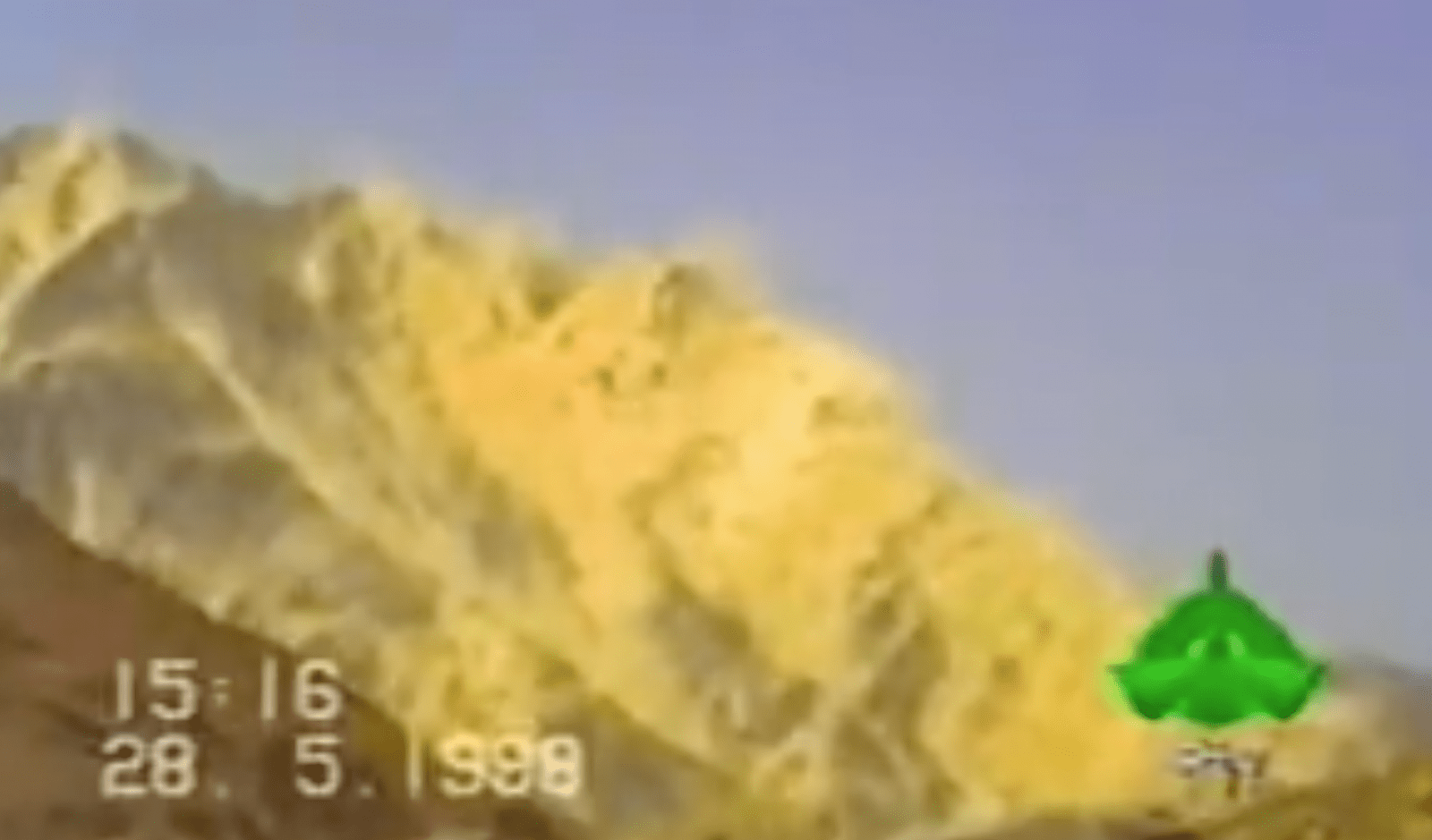
Ever since the nuclearization of South Asia, the dynamics for war and security have changed with a constant threat to regional stability. In 1974, India carried out nuclear tests under the shadow of Peaceful Nuclear Explosion (PNE) but declared itself a nuclear state in May 1998, after conducting five tests on 11th and 13th May. In response, Pakistan conducted six nuclear tests on 28th May 1998 despite the continuous pressure from the international community not to follow suit. 

Twenty-two years since nuclearization, the nuclear capabilities and doctrines of India and Pakistan have evolved through considerable alterations. On the Indian side, the country developed ‘Draft Nuclear Doctrine’ in 1999, which centrally emphasized on ‘No First Use’ policy. But a significant amendment in this doctrine came out in January 2003 stating that if India is attacked by biological or chemical weapons, it reserves the right to retaliate with nuclear weapons. Though the amendment in the doctrine was illogical, given that the biological or chemical warfare is usually conducted by nonstate actors, it ambiguously displays that India could back off from its NFU policy. 

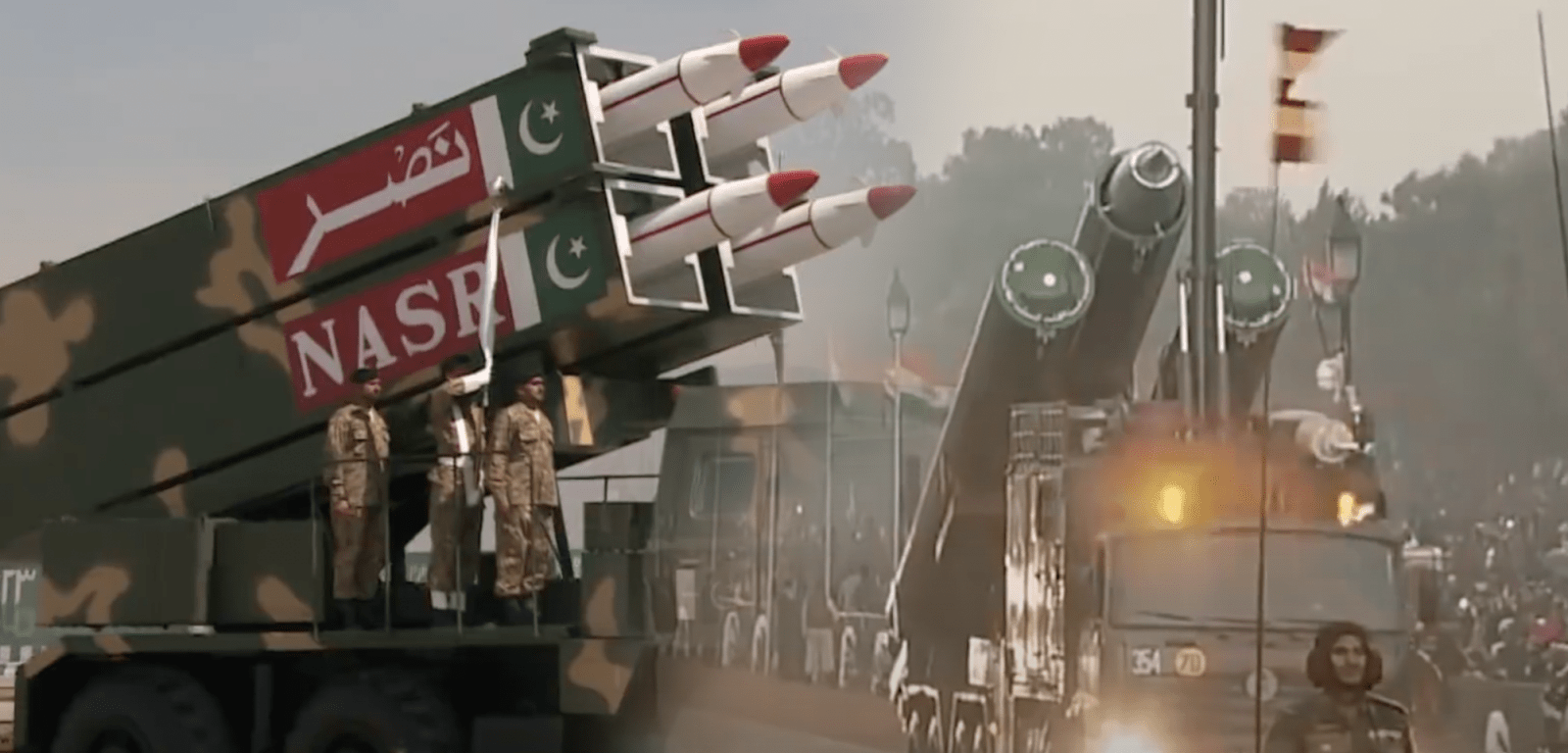
Since 2016-2017, the Indian defence and strategic community have been pivoting towards the idea of ‘splendid first strike’, according to which if Pakistan involves nuclear weapons during war, India will originate a pre-emptive ‘splendid first strike’; the perfect first strike scenario would allow India to prevent itself from the tit-for-tat engagement of nuclear escalation and attack Pakistan with full-fledged power to avoid significant retaliation. The next essential doctrine – the so-called ‘Cold Start Doctrine’ – was followed by the test conducted by Pakistan of the nuclear-powered close-range ballistic missile: Nasr. The doctrine allows the Indian military to perform offensive operations as a unified group in case of a possible conventional war with Pakistan. 

Moreover, India has increased its nuclear capabilities on land, air and sea. It contains 130-140 nuclear warheads and is likely to increase to 200 by 2025; it has four types of ballistic missiles on land, two types of nuclear-capable aircraft and three types of sea-based ballistic missiles. Hence, the deployment of nuclear-powered weapon systems negates the very idea of NFU policy and threatens the deterrence policy of Pakistan.

Pakistan, on the other hand, has developed its ‘Full Spectrum Deterrence (FSD)’ under the Credible Minimum Deterrence. It centrally states that Pakistan will use its nuclear or conventional capabilities for deterrence stability in all domains and not indulge in offensive escalation. Even in the recent Balakot airstrike, Pakistan’s response was retaliatory. However, it has expressed concerns regarding the ‘first strike’ option if India tries to cross Pakistan’s red lines. In a defensive context, Pakistan has also deployed tactical weapons on land, sea and air under FSD. Pakistan has developed National Command and Control (NCC) for nuclear authority, and it focuses on control more than the command because of its defensive doctrinal posture. 

The security dilemma has compelled Pakistan to enhance its defence build-up. The national security establishment believes that Pakistan could face two scenarios: 1) India’s pre-emptive first strike; and 2) The United States’ attack on India’s behalf. The FSD was employed to deter and retaliate a pre-emptive strike from Pakistan’s adversaries, but since February 2019’s surgical strike by India, the deterrence credibility of FSD is being questioned, albeit it was designed to deter war and not surgical strikes. 

India’s divergence from NFU, increased surgical strikes (Pathankot, Uri and Balakot) and its shift towards a pre-emptive strike doctrinal posture indicates that India is looking for a crisis-like situation to destabilize the region and thus, Pakistan. In a nutshell, India seeks to apply its vast military, and technological modernization and Pakistan seeks to prevent war through FSD and careful deterrence. 

Nuclearization made South Asia a dangerous place, given the doctrinal postures of India and Pakistan that have followed in twenty-two years. It is certain, experts argue, that even a small-scale nuclear escalation could result in an unprecedented catastrophe because of the high urban population of the two countries. On the other hand, the fear of nuclear escalation has restrained both countries from increasing conventional war on several occasions: 1999’s Kargil war, 2001-02’s Twin Peak Crisis and 2008’s Mumbai terrorist attack. But the fear of escalation is always present, given the scenario of conventional war being forced to convert into a nuclear one if the losing side has no other options left.

Although nuclearization was initially lauded by the internal establishment and populace of these countries with the escalating dispute between the two nuclear states, the threat to regional and global stability is becoming evident.

As Henry Kissinger wrote, 

“In Greek mythology, the gods sometimes punished man by fulfilling his wishes too completely. It has remained for the nuclear age to experience the full irony of this penalty. Throughout history, humanity has suffered from a shortage of power and has concentrated immense effort on developing new sources and special applications of it. It would have seemed unbelievable even fifty years ago that there could ever be an excess of power that everything would depend on the ability to use it subtly and with discrimination.” 

The questions arise with the proliferating chances of catastrophic confrontation, what can both countries do to avoid nuclear confrontation and ease tensions in the region? Can India and Pakistan reach a treaty to ease tensions in the region? 

A treaty or agreement requires cooperation from both countries. Hence, four steps can be taken to alleviate tensions. Firstly, India must rethink Pakistan’s proposal of Strategic Restraint Regime which the latter offered in 1998 for substantial peace in South Asia. It emphasizes a comparable reduction in the armed forces, stable deterrence and a peaceful resolution of all disputes between the two countries. The peaceful proposal was introduced to keep South Asia out of the nuclear arms race. Secondly, both countries must reach a Détente (period of easing tensions during the cold war) to develop treaties to control the arms race. Thirdly, they must develop a mutual Crisis Management Mechanism to prevent accidental use of nuclear weapons. Both countries have developed nuclear command and control centres, but a joint management organization could be more effective. Lastly, hold frequent mutual dialogues in good faith. 

Nuclearization does help in enhancing regional hegemony for ambitious states, but the repercussion it brings is disastrous. 

Pakistan’s Nuclear Weapons: The Guarantors of Peace in the Region

May 28th is a day of pride (Yom-e-Taqbeer) for Pakistan that placed it as a member of an exclusive club of less than ten states. 28 May, 1998 is the day when Pakistan’s nuclear tests readjusted the regional balance of power. The zealous celebrations of this day signify commendable efforts that Pakistan’s scientists placed into making Pakistan more secure. There is no doubt that nuclear deterrence is the most important strategic factor for the preservation of Pakistan’s national security.  

Unlike what many nations think, Pakistan’s weapons are primarily “weapons of deterrence”, not prestige. Pakistan always supported the idea of peaceful uses of nuclear technology that began with its participation in the US Atoms for Peace initiative. There were three main events that made Pakistan’s reluctant entrance into the nuclear club a reality. First, India’s involvement in dismembering Pakistan’s Eastern Wing, India testing its nuclear weapons in 1974 and then the 11th May Indian tests. These events left Pakistan with no other option but to opt for nuclear weapons, keeping in mind the security situation of the region and its conventional arms weakness vis-à-vis India. It cannot be disputed that Pakistan was a reluctant entrant in the nuclear weapons game as no country can overlook its security concerns.

The event presented a unique look into the prevailing dynamics of nuclear deterrence and strategic stability within the contemporary South Asian security environment. It was the Indian tests that affected the balance of power and started an arms race in the region. It was such actions that forced Pakistan to go for nuclear weapons with the sole aim to maintain deterrence stability and a balance of power. It is pertinent to note here that since Pakistan acquired nuclear weapons capability, it has not indulged in any arms race with India. Consequently, Pakistan has always shown a restrained response to Indian aggression. It cannot be disputed that as India’s nuclear programme is for prestige and an attempt to reverse the global order and regional order. Furthermore, Pakistan’s efforts for acquiring such capability were purely security driven to counter Indian belligerence. This also is a right of self-defence as enshrined in Article 51 of the United Nations Charter.

After the tests conducted by Pakistan, it faced isolation at the international stage. There were abrupt views that the development of a nation depends on its political stability, foreign policy, economic stability and providing better resources to its civilians rather than opting for nuclear weapons. There is no doubt that these factors are important for the uplift of any nation and its stability. Nevertheless, nuclear strength was a significant milestone to be achieved where you have an arch nuclear rival in the neighbourhood, which is not only conventionally superior, but also hostile enough to launch military adventurism against you in the future. 

The nuclear tests by Pakistan made it an unthinkable option for both countries in South Asia to opt for a full-scale war in the region. These tests led to the start of peace process in 1999. However, the Kargil event halted the process but it resumed again in 2004 by the name of composite dialogue. During this process, both countries agreed that the nuclear capability constituted a factor of stability in the region. Furthermore, Pakistan has offered a Strategic Restraint Regime (SRR) and many confidence building measures to India which have been turned down by the obnoxious neighbour.

The introduction of Cold Start Doctrine (CSD), also known as Pro Active Strategy, to conduct limited conventional operations under nuclear overhang has completely changed the scenario in the region. Therefore, in order to ensure the credibility of nuclear deterrence, Pakistan opted to induct Short Range Ballistic Missiles (SRBMs) as a part of its Full Spectrum Deterrence (FSD) posture. The FSD is not a quantitative shift but a qualitative response to address new the challenge posed by India’s CSD. SRBMs are the final strand in completion of deterrence and an effective defence mechanism. These Short-Range Low Yield weapon systems are meant to plug the perceived gaps that Indian planners seek to exploit, thereby, pouring cold water on Cold Start. Thus, Islamabad’s full spectrum deterrence has frustrated and upset Indian designs. Former Director General of Strategic Plans Division General Khalid Kidwai also stated that the development of FSD is to bring “every Indian target into Pakistan’s striking range” and acquire “appropriate weapons yield coverage and the numbers to deter the adversary’s pronounced policy of massive retaliation.”

Over the past two decades, whatever Pakistan achieved in nuclear field helped Pakistan in ensuring balance of power in the region. For instance, Pakistan introduced Babur III Submarine Launched Cruise Missile (Hatf VII) to counter Indian Ballistic Missile Defence (BMD) System, which, otherwise, can give India a false sense of security which can pave way to Indian military adventurism against Pakistan. Due to these Indian developments, India can also opt for a first strike or a decapitating nuclear strike against Pakistan. Pakistan also introduced Ababeel MIRV missile which is critical vis-à-vis India’s rapidly developing missile defence shield. Furthermore, Indian completion of the nuclear triad is also a case in point, because, if only one adversary acquires an assured second-strike capability, it destabilizes deterrence.

Once the international community turned a blind eye towards Indian nuclear test that eroded stability in South Asia, Pakistan had to act to ensure deterrence stability in the region. Likewise, Indian nuclear and military modernization including acquisition of BMD systems, MIRVing, cannisterization of missiles and nuclearization of Indian Ocean Region is ignored by the international community. This situates the onus of ensuring peace and stability on Pakistan once again. Pakistan will obviously stop at a point where it feels it has enough to deter India but whether the same applies to India is uncertain. Without nuclear weapons, Pakistan’s national security interests will always be in jeopardy and this is a lofty risk which Pakistan cannot take.