Can Kartarpur Corridor be the First Drop of Rain?

On November 9, 2019, Pakistan and India opened the first-ever visa-free corridor between the two countries to facilitate the pilgrimage of Sikhs – a minority community in both India and Pakistan but with major chunk of its populace settled in India – to their second holiest site located in Katarpur, a border village in Pakistan’s Punjab province.

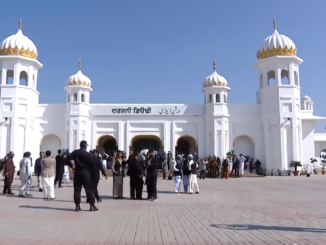
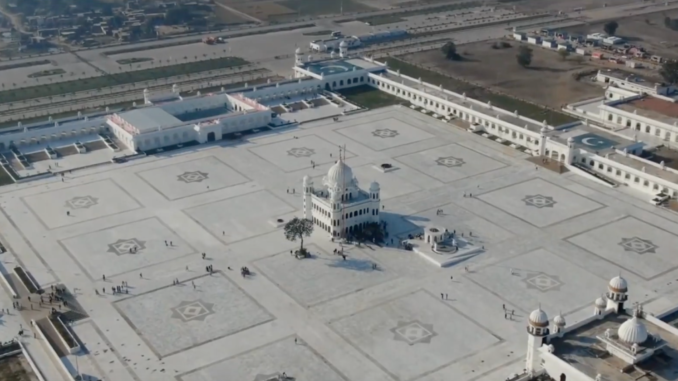
Inaugurated on the respective sides by the prime ministers of India and Pakistan, the 4.1 km long corridorconnecting­ Dera Baba Nanak Shrine in India with Gurudwara Kartarpur Sahib in Pakistan – will enable more than 5,000 devotees to visit the holy shrine every day and is widely being regarded as the first drop of rain in the decade’s long history of the desiccated and conflictual relationship between the two neighbours.

An occurrence so momentous that it effectively exalted the Prime Minister of Pakistan, Imran Khan, as the most beloved figure for Sikhs, besides actuating Prime Minister Narendra Modi to issue a rare and extraordinary message of gratitude towards his Pakistani counterpart, despite the contextual reality that later has been drawing parallels between the Indian PM and Nazi leader, Hitler, after the Indian government’s draconian venture in the disputed region of Jammu and Kashmir (J&K) steeped the relations between the two countries to an unprecedented low.

The trudge to this landmark breakthrough was as arduous and bumpy as it could have been between the two nations that share a seven-decade long history of antagonism. Although, the demand of Sikhs to be granted access to the revered shrine – located just a few kilometers away from the Radcliffe Line – is as old as the two antagonist nations, interminable strains in the relationship between the two countries proved to be an impediment in the way of this short journey across the border.

Even as Pakistan extended the olive branch and Indian politician Navjot Singh Sihdu – who attended PM Khan’s oath-taking ceremony in August last year – was apprised by Pakistani COAS about his country’s readiness to open the “corridor of peace”, cynicism and suspicion from the Indian side were axiomatic. Sidhu was barraged with denunciation back home for embracing Pakistan’s top military official, while the socialists in Indian political and strategic community tried to conjecture about the “covert designs” behind Pakistan’s apparently benevolent move. Indisputably, India was not left with any other choice except to accept the Pakistani offer as responding otherwise could have infuriated its 22 million-strong Sikh minority. Though the Modi government hesitatingly expressed its consent for the construction of the corridor, it didn’t respond positively to the successive dialogue offers made by PM Khan.

Adding to the complexity was the hyper-nationalistic and anti-Pakistan narrative adopted by PM Modi during his recent election campaign, after he had fallen short of delivering on his previous election promises regarding the transformation of the Indian economy and the improvement of people’s lives. As if Pakistan-bashing was not enough to garner votes, Modi went as far as to push the two countries almost to the brink of a nuclear exchange in February 2019, when in response to an attack – purported to be a false-flag – at Indian security forces in restive Kashmir, he ordered Indian Air Force (IAF) to bomb targets inside mainland Pakistan, provoking a daring response from Pakistan Air Force (PAF) the next day resulting in the downing of an IAF jet and the arrest of an Indian pilot by Pakistani forces, who was returned few days later.

Nevertheless, the perilous brinkmanship worked spectacularly for Modi and his right-wing BJP secured an overwhelming majority in the lower house of parliament, full credit to the shrewd manipulation of mainstream and social media – which abetted the regime’s efforts to cunningly overshadow the embarrassment of aircraft downing and capture of pilot with the celebrations of “punishing Pakistan”.

After winning elections, Modi further upped the ante in the disputed J&K and after imposing an all-out communication clampdown and enacting a security blanket over the valley of Kashmir – the state’s only Muslim majority region – unilaterally repealed the region’s decades-old semi-autonomous status.

Predictably, it evoked a strong response from Pakistan which downgraded diplomatic ties with India, cut-off trade and expelled the Indian High Commissioner while refusing to send his own to New Delhi. Then followed a long diplomatic scrimmage between the two countries with Pakistan trying to rally the support of international community against the tyrannical Indian moves in the occupied valley and India responding with countermoves aimed at hurting Pakistan diplomatically and economically, besides propagating the deceitful mantra of “all is well” for Kashmir.

Notwithstanding the reignited tensions, when Pakistan decided to move ahead with the opening of the corridor as per schedule, it was regarded as a bold diplomatic move. Though it would have earnt the country appreciation abroad, a severe backlash from the opposition at home was very much on the cards and at a time when leader of a right-wing political party Maulana Fazal-ur-Rehman was holding a sit-in in Islamabad with his thousands of zealot supporters demanding Khan’s resignation, the risk of domestic backlash had increased manifold.

Nevertheless, Khan’s government with the undisguised support of the country’s powerful military moved ahead with the decision despite criticism from opposition politicians like Maulana Fazal-ur-Rehman and Bilawal Bhutto Zardari – whose left-wing Pakistan People’s Party (PPP) frequently champions religious freedom and interfaith harmony but didn’t miss the opportune moment to ensure the “obligatory” political point-scoring.

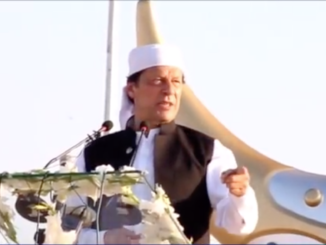
Although, Pakistan has made a landmark move despite soaring regional tensions and domestic pressure, the opening of the border corridor can be rightfully considered as the first drop of rain after decades of desiccation; the chances that a rainstorm may follow which can convert the roads into the river, remain ever more slim and the major impediment is the simmering volcano: the dispute of Jammu & Kashmir (J&K) – a sticking point mentioned by Khan in his speech on the day of the inauguration of corridor.

For more than seven decades, the outstanding issue of J&K has been instigating hostilities between the two now nuclear-armed neighbors and recent unilateral actions by India – which violate numerous United Nations Security Council (UNSC) Resolutions and various bilateral accords with Pakistan – have just added to the fire and fury. Essentially, Modi’s regime’s recent actions in J&K have taken the matters to the point of no return and the chances of Pakistan making any further peace overtures towards India or responding to any (highly unlikely) Indian peace initiatives, are slight.

The pessimism around talks has already been echoed by Khan when he made it abundantly clear that until the Indian government ends its oppressive clampdown in the valley of Kashmir and restores pre-August 5 2019 status of disputed J&K – an even distant possibility – negotiations remains out of question.

Even though, there is a remote possibility that Khan’s government – which has almost lost its initial momentum against India over Kashmir and seems to be more concerned with other domestic and regional issues – will even subtly try to normalize the relationship with India, yet a slight nuance of any such move is likely to evoke strong backlash from the country’s religious right as well as the political opposition. And given that supporting the Kashmir cause is regarded as a symbol of nationalism in Pakistan, and the country’s powerful military establishment and Khan are already facing accusations of striking a deal on Kashmir, it is unlikely that Pakistan will venture on taking any further risk of making up with India, only to spark a general enragement.

India under Modi is undergoing a massive transformation and into the 6th consecutive year of BJP’s rule, the country’s fundamental secular outlook is under threat. In 1947, while Pakistan was being founded as a country for Muslims, India’s founding fathers envisioned a secular outlook for the culturally, religiously and ethnically diverse country. Seven decades later, the Modi regime – despite publicly pledging to safeguard India’s secular constitution – has embraced a fundamentally opposite course.

The rise of the far-right may be a global phenomenon but India presents the most extreme and violent version of this imminent menace – a reality axiomatic by the rising religious intolerance, especially against Muslims; increased and generally overlooked incidents of mob-violence against minorities; cow vigilantes – which represent a militant brand of Hindu nationalism – patrolling the streets of India to impose their own version of “law” under the state’s patronage; a sudden rise in the incidents of hate speech by the leaders of the ruling party without facing any admonishment; the taming of Indian media to ally with government’s jingoistic policies and religiously incendiary rhetoric; various democratic and constitutional institutions conceding to the majoritarian impulse rather than adhering to constitution; ever-reducing political space for dissent and opposition parties; and the recently introduced Citizenship Amendment Bill, which exclusively discriminates against Muslims.

These alarming trends clearly point out that Modi’s regime, in pursuance of Hindu supremacist Hindutva ideology – is steadfastly navigating the world’s largest democracy into the abyss of fascism. Arguably, given the emerging trends in Indian society, Khan’s analogy between Modi and Hitler was not that erroneous and many Indian politicians and commentators have also expressed concerns that the early signs of fascism are already obvious in Indian society.

Narendra Modi – who came to power with an alluring economic reform and development agenda – is now totally reliant on anti-Muslim divisive politics. The democratic and constitutional institutions of the country – which were to place a hindrance in the way of this majoritarian brand of politics seem to be accomplices. With no institutional and social hindrance to Hindutva – a brand of politics kept at bay for many decades – this divisive menace is now finally engulfing India’s political and social landscape and ultimately threatens the internal cohesion of diverse Indian society.

Given the ideological and historical context, Kashmir presented a test-case for the protagonists of Hindutva. The state of J&K – a Muslim majority region that acceded to Hindu majority India – was cherished as a symbol of India’s secular identity. However, Modi’s government’s revocation of the region’s special status – which is fundamentally aimed at paving the way for introducing massive demographic changes in the region, converting Muslims into a minority, essentially following the Israeli model in the West Bank – will not only help the regime in crushing the self-determination sentiments in the valley but will also be a major milestone achievement en route to transforming India into a Hindu state.

Ironically, Muslims living in India are not the only prey of rising Hindu fascism; and expansionist Hindutva has regional and global implications. Being a homeland to the successors of those “outsiders” who ruled the Hindu majority India for more than 850 years, Pakistan becomes the major nuisance for the Hindu supremacists currently in-charge in India. February 2019 nuclear brinkmanship by Modi regime; uninterrupted Pakistan bashing by Indian media; adaptation of a well-choreographed anti-Pakistan narrative during elections campaigns by Indian politicians; vigorous Indian attempts to get Pakistan blacklisted by FATF; and continuous fomentation of subversive activities by Indian intelligence inside Pakistan point out that Pakistan’s long-held apprehensions about India plotting to weaken the country’s federation to ultimately subsume its tumbling parts, were not misplaced.

In fact, weakening Pakistan internally, disintegrating it and ultimately subsume its parts will be a step forward in the way of realization of the “Greater India” dream of Rashtriya Swayamsevak Sangh (RSS), the organization regarded as the ideological patron of ruling BJP and the major proponent of Hindu supremacist, majoritarian and expansionist Hindutva ideology with current Indian PM and most of the leaders of BJP as its life-long members.

In a nutshell, the opening of the Kartarpur corridor may be a sanguine gesture by Pakistan but India doesn’t seem to be even interested in some reciprocity. The issue of J&K – which has become further complicated due to India’s overassertive and intransigent attitude – presents an immediate stumbling block in the way of this “first drop of rain” being followed by a “downpour”, which can turn the dry and desiccated road into a river.

In the long run, as the Modi government pursues the Hindutva policies and continues on a path to hurt Pakistan internally, economically and globally, chances of any further optimistic gesture from either side become even remote. Given the aforementioned immediate and long-term hurdles, and taking into consideration the fact that the relations between the two countries have become desiccated, the Kartarpur corridor, though noteworthy, but seems a lost opportunity that may not necessarily lead to lasting peace in the region.

Kartarpur Corridor and Ayodha Judgement: A Tale of Two Events

Inauguration of Kartarpur Corridor. On 9th November, Prime Minister Imran Khan inaugurated the Kartarpur corridor which enabled Sikh pilgrims to visit their second-holiest site without a visa. The inauguration was held two days prior to the 550th birth anniversary of Guru Nanak Dev, the founder of Sikh religion. The shrine is where Guru Nanak spent 18 years of his life and is his final resting place. The opening of this corridor would enable 5000 Indian Sikhs to visit the holy place daily. Moreover, on the initial day there was no requirement of a passport, the entrance fee of $20 was waived off and the pilgrims did not need to register themselves 10 days earlier, as would be generally required. Ultimately after 72 years, the distance that originally took around 125 kilometres was reduced to 4 kilometres. Not only was the opening of the corridor special for the Sikh living in India but it also served as a morale booster for the Sikh community residing in Pakistan.

The Indian delegation that came to Pakistan included the former Indian Prime Minister Manmohan Singh, who led the Sikh delegation as they crossed into Pakistan through the Corridor. Former Indian Cricketer Navjot Singh Sidhu was also present at the ceremony and applauded this monumental initiative. Interestingly, the Bollywood actor Sunny Deol who is known for doing anti-Pakistan films also attended the ceremony. A larger number of Sikh pilgrims from different states such as the USA, UK and Canada also arrived for the event.

The Indian side tried its best to make this initiative controversial, yet circumstances resulted into Modi himself inaugurating the corridor on the Indian side. At this moment, Modi was forced to praise and thank Imran Khan for this initiative. Before the first delegation from India set off, Modi addressed the Sikh community and lauded the opening of the corridor. The Indian PM stated, “I also thank Pakistan’s Prime Minister Imran Khan for understanding India’s wishes and turning Kartarpur into reality.”

The ongoing year has marked a new low in the already strained India-Pak relations. At a time when tensions were running high with a curfew still imposed in Kashmir, Pakistan took a colossal step. The US State Department also welcomed the initiative and gave a statement on the day it was opened. “The US welcomes the opening of a new border crossing between India and Pakistan, the Kartarpur corridor, US State Department Spokesperson Morgan Ortagus said in a video posted on her official twitter handle.

Under a bilateral protocol signed in 1974, the two countries agreed to facilitate cross-border visits to holy sites. The list included 15 sites in Pakistan and 5 sites in India, yet Kartarpur was not on the list. The initial discussion for the corridor began in 1998, yet it failed to precipitate any concrete results. However, the incumbent government of PTI was determined and the structure was finished in a record time of just 12 months.

This initiative is a milestone achievement for Pakistan. Firstly, it augments the fact that Pakistan wants peace in the region. While India is doing its best to erect and spread an anti-Pakistan narrative, the corridor highlights that it is Pakistan which is undertaking measures that would propagate regional peace. Pakistan has dispatched a message of peace as the Kartarpur initiative survived, despite events that signalled that the corridor could be a victim of the India-Pak tensions.

Secondly, Pakistan reasserted its position on Kashmir. Even though Pakistan did not call off the corridor despite the strained relations yet it reinforced its stance on the Kashmir issue. Imran Khan highlighted that it’s been 100 days since the Kashmiri people were placed under curfew. The Prime Minister urged his Indian counterpart that the Kashmir issue should be resolved for the betterment of the South Asian region. Moreover, the issue should be resolved while taking into consideration their right to self-determination. The Prime Minister also signalled that lifting the curfew could pave way for a dialogue between both of the states. Ergo, it becomes evident that opening the Kartarpur does not dilute Pakistan’s stance on the Kashmir issue.

Ayodhya Verdict.       Ironically, the day Pakistan opened the door for Sikh pilgrims to visit their holy site also encompassed the verdict passed by the Indian Supreme Court in favour of Hindu hard-liners by allowing them to build a temple in place of Babri Masjid, a 16th century mosque at Ayodhya Land. The dispute over the land dates back to decades as certain Hindu segments have claimed that the mosque was built on the birthplace of Ram, a Hindu deity. The mosque was demolished by Hindu extremists in 1992, killing around 2000 people, the majority of whom were Muslims.

The Supreme Court allowed the building of a temple at that site despite acknowledging that there was no Hindu temple beneath Babri Masjid, thereby dismissing the claims that the mosque was built on a Hindu temple. Muslims on the other hand were given a 5-acre land as compensation for building the mosque. Indian right-wing militant organizations, such as Vishwa Hindu Parishad, asserted that the verdict on Babri Masjid is not the end, rather it is the beginning and we should now continue with other mosques as well.

The Babri Masjid was in possession of the Muslim community for centuries and there was no legal dimension to give it for the construction of a temple. The narrative that the mosque was built over a Hindu temple was advocated so staunchly by Hindu hardliners that people are not willing to believe that it was a myth, despite the Supreme Court stating it openly.

At a time when Pakistan extended the 5-acre land of Kartarpur to 42 acres and spent millions on the initiative, the Indian Muslims were ordered to accept the inexplicable decision given by the Indian Supreme Court. Hindu hardliners even harassed Sikh pilgrims coming back from Kartarpur at this occasion. There are chances that this precedent might invoke other extremists to further squeeze the level of toleration for minorities. Vinay Katiyar, a member of parliament for the ruling Bharatiya Janata Party (BJP), told the media, “There is not much difference between Taj and Tej [Mandir]” referring to a claim made earlier that Taj Mahal was built after demolition of a Hindu Temple. He further added, “Taj Mahal will be converted into Tej Mandir soon.” These claims reveal the level of unacceptance for Indian Muslims that is intensifying in India with every coming day. On the contrary, in April 2019, the Pakistani government announced that it would be re-opening the temples that have been closed since partition in 1947.

Such judgments will further sow the seeds of hatred and violence in India, as the decision was rejected by the Muslim community of India. In the long run it will be the focal point of the Hindu-Muslim tensions paving way for religious polarization. This can be proven from the fact that after the judgement, internet facilities were cut off in Aligarh where a large number of Muslims reside. The rationale of choosing the same date for this controversial judgment was to divert the debate towards this issue and avert attention from the Kartarpur initiative. On the contrary, this attempt did not bear any fruit and the Kartarpur initiative was appreciated widely.

Conclusion.     This corridor did not break the ice between India and Pakistan, yet it made it clear who actually wants peace in the region. Although the ceremony at the Indian side attempted to take equal credit, the actual credit goes to Imran Khan for making it possible as it could not have materialized without the firm willingness of the Pakistani government. With this initiative Pakistan has indeed manifested the statement given by its founding father Muhammad Ali Jinnah, “You are free; you are free to go to your temples. You are free to go to your mosques or to any other places of worship in this State of Pakistan. You may belong to any religion, caste or creed—that has nothing to do with the business of the state.”

Meanwhile, the so-called secular India is ostracizing its Muslim community. When prominent Muslim personalities raise their voices against this oppressive behaviour, they are labelled as Neo-Jinnah by the ruling party in order to silence them. Indeed the atrocities that have been executed on Kashmiris are now spreading towards other Indian Muslims by the Hindutva republic.

Opening of Kartarpur Corridor: A Gesture of Peace

The Kartarpur corridor was opened for Sikh pilgrims living in India and across the globe on 9th November 2019, the eve of the 550th birth anniversary of Baba Guru Nanak. It is a historic development for regional peace and intercultural exchange in South Asia. More than 5,000 Indian pilgrims will arrive in Pakistan through the visa-free Kartarpur corridor to visit Gurdwara Kartarpur Sahib, which is four kilometres from the Pakistan-India international border in the Central Punjab region of Pakistan. Gurdwara Kartarpur Sahib is a religiously sacred place of the Sikh community but was closed since 1947.

The Indian Sikh community and the Sikh diaspora living across the world had repeatedly requested Pakistan for opening this religious site for them to come and worship. This peace corridor was announced by Pakistan’s Prime minister and the COAS during last year’s oath taking ceremony of the PM as a gesture of peace toward India. The Indian civil society and the Sikh community have positively reciprocated it but Indian state authorities, especially premier Modi and the military establishment, have tried to scuttle it from its onset due to their Hindutva conformist ideology.

The Indian Sikh community’s response has been overwhelming. They have raised banners in the Indian city of Amritsar, and across Punjab and Haryana, with PM Imran Khan’s picture and with notes of thanks for opening this corridor and religious place. Pakistan has issued special tickets for this occasion.

The corridor is an important initiative, but a real challenge for Pakistan is to build on it as a soft power tool keeping in focus the sensitivities of the Sikh religion. Kartarpur is a diplomatic master stoke of Pakistan which has improved its international image as a peace-loving nation.

The 140 million strong Sikh community has reciprocated this peace gesture of Pakistan, which is a great source to further build on Pakistan’s image in India and across the globe. 86% of this Sikh community lives in India. This situation has compelled India PM Modi to thank Pakistan and PM IK for this peace overture. A challenge for Pakistan and India is to sustain this intercultural exchange.

However, the Indian national print and electronic media is propagating an extremist narrative on this development, following guidelines of Hindutva by giving negative media coverage to the opening of Kartarpur as a security risk, and projecting it as a stage managed propaganda tool of Pakistan to support Sikh centric Khalistan separatist movement. PM Imran Khan has offered peace to India through dialogue in order to settle issues through negotiations, including on Kashmir, but the Indian approach is topsy-turvy. PM IK has rightly highlighted the Kashmir issue during address at the opening of Kartarpur corridor.

It is an exaggerated narrative that the Sikh separatist Khalistan movement will get strength through opening of the Kartarpur corridor. The Khalistan movement as an ideology and social movement survives outside India, but as a political movement it has weakened inside India due to the repressive actions of India during 1980’s and 1990’s in Indian Punjab and Haryana which were once its strong support bases.

But Pakistan and India need to negotiate on hard issues in order to sustain the impact of such soft exchanges. Modi’s domestic political compulsion of getting support from the extremist Hindu vote bank in the elections do not allow him to normalize relations with Pakistan. Therefore, he will maintain tensions with Pakistan by creating false claims and stage-managed political dramas like surgical strikes and the February 2019 limited aerial combat against Pakistan.

The Indian SC decision in the Babri mosque case has vindicated the two-nation theory. India has legally settled the case, but it will flare communal violence and riots because it is not religiously and politically resolved. Those Indians who claimed a Mandar at the Babri mosque site have also claimed Mandars on the sites of many other mosques in different cities of India. The Indian SC decision as a precedent will guide verdicts of other decisions of similar cases, which will eacerbate the law and order situation in India and discredit the justice system. The timing of the SC decision in the Babri mosque case is significant. This is the decision like an Afzal Guru decision given by SC based on sentiments and conviction of a particular belief system instead of facts.

The improvement of bilateral ties depends on Indian behaviour in IOJK. The Indian role there is shameful as gruesome violations of human rights continue since the imposition of a curfew in the region after 5th August 2019. Pakistan has expressed pluralism for all other minorities while India has locked Jamia Masjid in Srinagar and does not allow Muslims to offer Friday prayers; this is a blatant violation of the right to worship which is a basic human right. The Indian SC announced the Ayodhya verdict on the historic day of the opening of Kartarpur corridor to divert attention from this event of religious tolerance and intercultural exchange. This is a manifestation of domination of majoritarianism in India under the currents of Hindutva ideology.

The Indian SC decision will lead to internal escalation. All minorities felt unprotected but there was hope in the form of Indian secular constitution and secular political party Congress which guaranteed to protect their rights; but now a state of despair is visible for minorities in India. The Indian Army works in liaison with the political agenda of BJP government, including its narrative on Kashmir and the treatment of minorities.  In such a scenario, the SC’s decision has further disappointed them. The Indian SC and judiciary, which was last hope for minorities of India, has joined Modi to give message to Muslims, Sikhs and other minorities. Such actions in India vindicate the two-nation theory and the Muslim leadership’s urge to create Pakistan.