Law vs Unilateralism: The Indus Waters Treaty in Peril

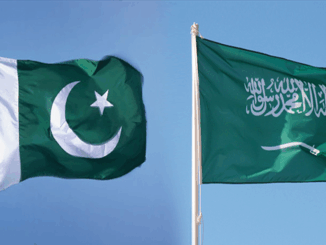
Indus Waters Treaty (IWT) signed in 1960 with World Bank as its facilitating party has been mentioned as an act of rare success of functional treaty between Pakistan and India. Even wars, political enmity, and drastic changes of dynamics in the region did not affect it since over sixty years as it ensures clear distribution of river-waters: Pakistan has been given the Indus, Jhelum and Chenab and India gets Ravi, Beas and Sutlej. For Pakistan, this is not a hypothetical framework of diplomacy, it is the basis of its agriculture economy where almost 80 per cent of the farmlands rely on the western rivers.

Such stability was seriously tested in April 2025 when India unilaterally declared the treaty to be in abeyance after the so-called terrorist attack in Indian Illegally Occupied Kashmir. The latter term of abeyance possesses no operation under the law touching treaties and flatly contravenes the provisions of the Vienna Convention on the Law of Treaties (VCLT). The VCLT only allows suspension to occur mutually, or upon evidence of material breach which is a requirement that India has not fulfilled. Since the inception of the IWT, Pakistan has been in compliance with the same.

The unilateral suspension of India in the built-in dispute resolution process and the fact that it does not intend to participate in the same is a deviation of the provisions of international law. Such moves do not only hurt bilateral relations, but also weaken the validity of treaties in the world on different levels. When this happens the integrity of international law starts to crumble because every major state may do the same with binding agreements and suffer no repercussions.

In contrast, the reaction by Pakistan has been anchored completely on legal means. Under Article 9 of the IWT, Pakistan turned towards the Permanent Court of Arbitration in The Hague. Although India boycotted the proceedings, the Court did keep New Delhi informed as the proceedings took place.

In August 2025, the PCA produced a landmark decision in favour of Pakistan where it was ruled that India has a clear obligation to permit the free flow of western rivers to run and not to change the flows due to its hydroelectric schemes at the cost of Pakistan carrying much water as downstream beneficiary. More importantly, the Court rejected the argument presented by India that its decision to suspend the treaty altered the jurisdiction of the tribunal and also the validity of the treaty.

The Pakistan government which accepted the decision of the court in a welcome move, characterized it as “a thumping re-affirmation of the rights of Pakistan as the legally lower riparian state.” It emphasized that it was binding as far as the award is concerned and that India should, as far as it is bound, comply fully with the obligations of the treaty in letter and in spirit. The same was reaffirmed as the statement highlighted that Pakistan is committed to the Indus Waters Treaty as a commitment to regional peace, and as a precedent of resolving disputes by employing peaceful legal processes.

This decision is of importance in several aspects. To Pakistan, it preserves an existential asset and justifies its patient, rules-based policy. To the international community, it proves the principle that legal systems serve as the right place of settling matters even in cases that are politically delicate.

This shows, how smaller states can protect their interests against international power politics through perseverance, clarity of law, and use of international institutions. The win also serves as a lesson that when one follows the rule of the law and does not pay off with tit for tat, things can have a concrete result.

But now the game turns into the real deal of enforcement and not legal win. India is not that compliant. Failure to respect the award, Pakistan might be forced to root it to international court, or appeal to the United Nations. These would ensure that the conflict remains within the letter of international law where Pakistan stands in an advantageous ruling.

The agriculture, food security, and livelihoods of the rural population of Pakistan can be devastated without continuous supply of the western rivers. IWT is not just another piece of paper it is a promise which ensures that millions of Pakistanis may get access to the water they rely on. There is even the threat that the collapse of it will not only damage Pakistan but destabilize the larger region taking away one of the few long-term agreements achieved between two nuclear-armed neighbours.

The question posed by recent Indian actions is a disturbing one in the sense that should one of the longest lived treaties of modern times be able to be put in abeyance at any time by one side, what should the rest of the world think of its international agreements? This is the reason why the position of Pakistan is especially important outside the South Asian region. It is wrong to argue that maintaining the IWT is only about upholding water rights, it is also about upholding the integrity of international law against the insidious influence of unilateralism.

At least, the law is presently in favor of Pakistan. The award of the PCA is binding and the treaty survives. The question that will remain to be seen is whether this results in enduring compliance due to continued diplomatic pressure as well as the desire of the international community to demand compliance with the rules based order. International law must mean something, and that means some respect must be paid to it even when it is most inconvenient to the violators.

The IWT  has survived over 60 years since it maintained the reference to mutual survival and not a zero-sum game. To save it today would mean something like renewing that allegiance, not only by India, not only by Pakistan, but by all who are concerned that law should come ahead of unilateral desire.

Operation Sindoor and India’s Defense Indigenization Effort by Lt Gen Sanjay Verma – Rebuttal

The Pahalgam attack was an Indian failure and response of the brutalities that have been happening inside Indian Illegally Occupied Jammu and Kashmir (IIOJK). The Kashmiri’s never accepted their occupation and continued to fight against the occupiers. The Kashmiri guerrilla fighters had been using different tactics to get rid of the occupied force, and continued to face forced disappearances, mass killings and other number of brutalities against the Muslims of IIOJK. It is to be noted that the attackers operated for an extended period of time, apparently questioning victims before executing them. These reports were conveyed by the Indian outlets such as Indian media reports, themselves. Considering these reports the separatists’/freedom fighters had sufficient time to execute their plan with no fear of interruption, showcasing that they were well aware of the presence and schedule of the armed forces.

The statements used by Lt Gen Sanjay Verma in his recent article, quoting, ‘Operation Sindoor’ as a ‘Watershed Response’ to the Pahalgam attack of April 22, 2025, portrays only one-side of the picture, giving the impression of the actions of the Indian armed forces positioning them as a strategic success and bold innovation in counterterrorism doctrine. This version of the story, however, is fundamentally wrong, propagating the operation as a right and successful attack without regard to the disproportionality of this action. Unfortunately, the international community completely ignored the imprudent legitimacy, and the disturbance it caused to the stability in South Asia. ‘Operation Sindoor’ was not a success story of accuracy and determination but an act of escalatory ambition that was intended to target non-military and civil installation, which did not accomplish its declared goals, and availed resilience of the Pakistani nation and its international image. Not only this but his whole argument revolved around the change in strategies to gain war goals, showing the intentions of initiating wars again against Pakistan. Other than this his article pulled special focus on two things i.e. Institutionalized and robust R&D; and Structural reform in capability building which further strengthen the fact that India’s intentions to destabilize the region won’t stop here. The amendments throughout the paper that he has suggested pay special focus on the fact that next time they execute a successful attack. Ironically, the Lt, missed including Pakistan’s response to protect the state and sovereignty of the state. It should be noted that the biggest failure was the incapability of their piolets to fly Rafael jets. This counterargument is a harsh refutation to the arguments presented in the opinion piece, pointing out the idea of Pakistan’s restraint, military performance, and support abroad and showing the strategic errors of India.

The 88-hour operation Sindoor of the calibrated strikes established a new matrix of military response to India where precision and a technological touch were featured. Nevertheless, this description overlooked important failures and exaggerations. According to reports of the Interior Ministry of Pakistan and media of the country as well as the Al Jazeera media organization, the strikes by the Indians were aimed at the civilian settlements such as the mosques and madrassa’s which included small children and killing 31 civilians. India calling itself as a biggest democracy failed to protect the basic rights and violated international law by attacking the innocent civilians yet showcasing that its image as a strong democracy and protector of human rights is actually a not true. Essentially, the deployment of BrahMos missiles and drones in populated areas such as those in Bahawalpur begs the question: could India be accurate with the said claims? India justifies its strikes against terrorist facilities by the absence of independent proof, the UN investigations for example. The fact that Pakistan calls to be investigated by Transparent International investigation which India denies implies that another country would be trying to hide civilian casualties or may be an independent unbiased investigation would expose India more.

When India was blaming JeM for the attack, the Resistance Front (TRF) claimed the responsibility of the Pahalgam attack further casting India of wrapping blame on Pakistan-based groups due to a plausible false flag operation. Moreover, the Lt Verma opinion piece poster has already presented a distorted figure of information in India, The Hindu and the fact-checking websites like Factly have revealed that Indian assertions of catching the Pakistani cities or hitting Karachi port as false. More so, there were news channels which publicized themselves with claims about taking Port at Lahore which is not geographically present, to begin with. There is a contradictory narrative and propagation of lies on the side of India which is countered by Pakistan through its own information campaign comprising a 20 pages’ document with video evidence. Moreover, Lt also interpreted a unified political support of India as an advantage, although such consideration ignores the lack of legitimate interest in the operation as well as its regional implications, whereas, on the contrary, the same gap was identified to be countered by the government regarding its future policies.

The Pahalgam attack in India is based on false intelligence interception as India blamed participation of an expelled Pakistani Army commander, Hashim Moosa, however no evidence was found against him. In the Sky News interview, Defence Minister of Pakistan Khawaja Asif insisted that the attack was a false flag operation based on the retracted claim by TRF. The fact that India rejected the call by Pakistan that an UN-led investigation to put a stop to such cases and acts of sabotage is not firming its accusations. The operation worsened the rifts between India and Pakistan necessitating the mediation of US to broker a ceasefire on May 10, 2025. The international community felt sympathy towards the diplomatic initiatives of Pakistan such as a closed-door meeting in the UN Security Council and even the Iran proposal to mediate the conflict.

The assertion of the opinion piece that there was strong international support in favor of India is exaggerated in view of the fact that the global powers did not want to support India but rather de-escalate. The opinion column goes to the extent of commending the technological prowess of India pointing to locally developed systems quoting BrahMos and Akash, but (BrahMos is based on the Russian cruise missile technology showing it is not a local technology. Nevertheless, the military actions of Pakistan portray their strength and endurance. The level of western propaganda reached new limits as according to a German daily newspaper ‘Neue Zurcher Zeitung’, blaming Pakistan quoted that “Pakistan has refuted the story of Indian impunity criticizing that Pakistani-shot down a Chinese-supplied air defense that triggered India to attack its capital, Islamabad.” However, the events of May 10 proved otherwise, Operation Bunyan al-Marsus, reputed Pakistani reprisal attacks, making the world witness Pakistan destroying Indian military infrastructure demonstrating that an inferior defense budget ($9 billion vs. India $78.7 billion) cannot preclude an ability to strike back.

The calculated measures of retaliation of Pakistan meant that there was no wholesome intervention, which is in line with its diplomatic campaign to have a ceasefire. This restraint was opposed by the aggressive stance of India, and it had threatened the stability in the region. The opinion article supports the view that R&D and acquisition reformation is necessary to counter capability shortage in India, however, the Pakistani point of view evinces that over-dependence on emergency purchases (INR 40,000 Cr) by India is an indication of taking Pakistan for granted. Pakistan uses cost effective systems, and the effectiveness of these systems against the strikes by India means that the defense ecosystem at Pakistan is stronger than the disjointed procurement process by India. The opinion writing acknowledges the fact that India had the capacity shortfalls, and emergency purchases address only a few gaps. The Operation Sindoor revealed that, India had been using imported munitions (SCALP, AASM Hammer) and therefore have delusional Atmanirbhar.

Operation Sindoor was not a watershed response, but an escalatory mistake that shed innocent civilian blood, and did not included Pakistani involvement even after their video-taped confessions against them. The fact that Pakistan has been able to provide effective military response and diplomacy, including demand of an independent probe that has allowed it to convey its narrative of resistance is a direct opposite of the Indian theme of victory. The fallout of such operation in terms of recent tensions in the region and spread of misinformation demonstrates the strategic overreach by India. The urge by Pakistan to restructure the international monitoring of such conflicts along with its demonstrated military and diplomatic capabilities makes it a responsible state that aims to establish stability in such an unstable area.

Kashmir at brink: Why Washington must act before the next crisis

Decades of U.S. crisis diplomacy have kept the peace but failed to resolve the core dispute. With regional tensions high and strategic conditions shifting, the time for a bold American initiative is now.

More than seven decades after independence, Pakistan and India are no closer to a resolution with each other on the dispute over Kashmir. India and Pakistan have fought three wars against each other since 1947, the first two of which were over Kashmir. In entirety, the two countries have been embroiled in seven military crises (May 2025 being the latest), which the U.S. has played an increasingly assertive role in managing and resolving. A chief component of recent U.S. administrations’ foreign policy goals in South Asia has been to avert any future war in the region. Attitudes in India and Pakistan are changing, and the internal situation in Kashmir is more fluid than it has been before. There can be no better time than now (after May 2025 conflict) for the resolution of the Kashmir issue where U.S – Pakistan relations are at their peak.

The state of Jammu and Kashmir occupies a strategic position in the extreme north western corner of the Indian Sub-Continent and at the southern limit of the Central Asia, where the borders of five powers; former USSR, China, Afghanistan, India and Pakistan meet.  The state areas are controlled by three countries; 78114 square kilometres with Pakistan, 37,555 square kilometres with china and remaining 101,000 square kilometres under Indian Occupation. The strategic location of the state and emanating of three major rivers which are the life lines for the economy of Pakistan greatly enhances its importance. Over the years, based on a well thought out policy, the Indians have changed the demographic structure of the state. As per the census report of 2011 issued by the Government of India, the Muslim population has decreased to 68.31% from 77% in 1947.


Pakistan’s Stand and Official view on Kashmir

Pakistan’s official position on Kashmir is based on the following premises:

  • The former princely state of J&K is a disputed territory and warrants a final resolution.
  • As parties to the dispute, Pakistan and India have equal status and the same rights and obligations in Kashmir.
  • India is in unlawful occupation of J&K since the accession of the state to India was illegal and against the wishes of the people of Jammu and Kashmir.
  • In accordance with UN resolutions, Kashmiris have the right to determine their own future by acceding through a “free and impartial plebiscite” to either India or Pakistan.

Pakistan’s official position is that the Kashmir dispute should be resolved in the light of the UN resolutions. It continues to stress that the talks between India and Pakistan in the future should center on securing the right of self-determination for the people of Kashmir. Pakistan has officially welcomed any international mediation or a third-party role to facilitate talks. The Kashmir conflict is the root cause of tensions with India. All other bilateral problems are linked to it.


Indian Stand on Kashmir

For India, J&K is its only state with a Muslim majority, so Kashmir shows that India is a secular, multiethnic nation. According to the India, the state of Kashmir is an integral part of the union of India. The official Indian position argues that the future status of the state other wise is a domestic problem. At bilateral level, India has been avoiding any meaningful dialogue with Pakistan to gain more time to crush the resistance. She wishes to maintain status-quo implying the conversion of existing cease fire line in Kashmir into an international border. At the International level, India is pursuing a three pronged strategy. Firstly deflecting Pakistan’s campaign on human rights violations in Kashmir, secondly maintaining that Simla Agreement provides the frame work to settle all bilateral issues and lastly, branding the Kashmiri resistance movement as a terrorist, fundamentalist and secessionist movement with a potential to disintegrate India. And last but not the least, abrogation of article 370 in 2019 changed the status of Jammu and Kashmir.


United Nations and Kashmir Issue

UN passed 28 resolutions since 1947 to December 1971. The resolution of 21 April 1948 was of cardinal importance. It outlined the UNSC’s stand on the Kashmir conflict, recommended the method of its solution, and became the principal term of reference for final settlement of the problem; the right of self determination was recognized by the UNSC by its resolution adopted on April 21, 1948 and even more clearly, by its resolution on 30 March 1951 which affirmed that the final disposition of the State should be “made in accordance with the will of the people through the free and impartial plebiscite”.


The U.S. Engagement in the Kashmir Issue

The U.S. involvement with the Kashmir issue has been a constant.  What has varied is the intensity and this corresponded to the prevailing security environment and U.S.-India-Pakistan equations. Chronologically U.S. engagement can be summed up as follows:

  1. The U.S. made a significant attempt to solve the issue in the ’50s. The Eisenhower Administration was deeply involved in negotiations with India and Pakistan.
  2. Later the Kennedy Administration made a major attempt to bring India and Pakistan together for dialogue on Kashmir.
  3. By 1964-65, U.S. had really given up on Kashmir and since then there’s been no significant American initiative on Kashmir till 1990.
  4. The 1990s witnessed an anti-Indian manifestation on the Kashmir question under the Clinton Administration.

What has crept in U.S. policies and being sustained by the U.S. administration is “the aspirations of Kashmiri people” and “the rising risk of nuclear flash point.”

In the 78 years, the U.S. has applied different labels to the Kashmir issue from ‘self- determination’ to ‘cross border terrorism’ to ‘aspiration of the Kashmiri people’ to being ‘a nuclear flash-point’ endangering international security’.  The constantly changing stand of the U.S. is reflective of the fact that the its stand on the Kashmir issue is flexible and can be said to be dependent on two factors at a given point in time:

  • Drift of India-U.S. relations.
  • The strategic relations with Pakistan for any intended U.S. strategic moves.
  • The S. major goals in South Asia vis-à-vis Pakistan and India are to help enhance regional stability, because what happens in South Asia matters to the U.S., and it matters to the world as well. It is the region of the world with perhaps the highest level of untapped human and economic potential and if fully exploited, could change the international economic and social landscape in fundamental ways.
  • With regard to Pakistan and India. The U.S. is today in the fortunate position of enjoying excellent and cooperative relations with Pakistan and bit tough stance on India which is very well justified due import of Russian oil by India. The U.S. hopes India and Pakistan will move forward with the implementation of the confidence-building measures that both nations have agreed over the passage of time, and to engage in serious discussions on various issues.
  • With regard to the issue of Kashmir. S. desire that, the violence must be reduced; ending violence in Kashmir remains a key goal. U.S. will continue to look for ways to encourage peace in Kashmir and it has realized that the lasting solution to this difficult issue can only come through political dialogue and negotiation, not through violence or military use.


Realistically the U.S. has a strategic objective, of using Kashmir as a “pressure-point” in the conduct of its policies in the Indian sub-continent.  Comparatively, use of Kashmir as a pressure-point is more India-intended and more India-relevant. In the wake of the Kargil conflict in 1999, after the 2001-2002 near war crisis, standoff of 2008, conflicts of 2019 and recent Pak – India conflict in May 2025, the U.S. and other major powers were deeply concerned about the outbreak of a war that could escalate to the nuclear level. For this reason, the U.S. interceded to restore the peace and played a key role in diffusing the crisis of Indian mobilising on the international border and threatening punitive action. The U.S. government successfully pressurized to end the diplomatic and military standoff and initiate a process of normalisation. Thereby, the U.S. overcame India’s traditional reluctance to accept third party involvement in its disputes with Pakistan and playing an unprecedented role of facilitator.


The U.S. has various options in South Asian politics especially with regard to Kashmir:

  • The Good Old Fashioned Policy.  It is the traditional policy of engaging and disengaging. U.S. left South Asia in 1965 after the Indo- Pak war. U.S. left in 1972 after it intervened briefly in the war of 1971. And it left it again in 1989 after the first Afghan war and finally in 2021 from Afghanistan.
  • The India Biased Option. It is to remain engaged in the region but tilting towards India. U.S. may enforce or pursue a solution to the satisfaction of India due to its economical stature but, the strategic-partnership between U.S. and India started a decade back is at low due to de-stabilizing pursuits of India in the region & tariff war; it is envisaged that the tilted option may not prevail in the region for next couple of years / at least Trump is President.
  • The “Ignore Kashmir” Option. Is to engage India and Pakistan but ignore Kashmir. As long as U.S. need Pakistan as an ally in the war against terrorism clearly there will be a military and political relationship with it. U.S. may decline to play any effective role in the resolution of the issue; however, it would continue chasing her national objectives in the region.
  • The Desired Option. It is one that has been raised periodically and it’s been rejected by successive Indian governments, and that is to add Kashmir. To attempt to bring India and Pakistan if not to the bargaining table at least to a process by which they can deal with the Kashmir issue in one form or another.


U.S. as an ‘Invisible Third Party’ in Kashmir

Despite U.S. rhetorical stand that Kashmir is a bilateral issue between India and Pakistan, the U.S. discreetly seeks a mediatory role because:-

  • It will not just raise its importance in the world community but will also confirm its status of “Sole Superpower”.
  • S. interests lie in the fact that the confrontation, between the two hostile neighbours on this issue, should not lead to a catastrophic full-fledged war.
  • Being the exponent of democracy and human freedom it realizes her responsibilities of resolving the issue at the earliest.
  • The issue is one of the oldest issue on the agenda of UN, in order to maintain the esteem of the organisation, U.S. support is deemed necessary to all UN resolutions in general and resolutions on Kashmir in particular.
  • If the threat of conflict between the two nations can be contained, the world and India and Pakistan will profit.


The reinforced U.S. interest in containing hostility between India and Pakistan could lead to progress on Kashmir. It can exploit these leverages to the full to promote goodwill between the two countries and decrease tensions. The challenge for the U.S. government will be to use a mixture of pressure, diplomacy and trade to pressurise India to have fruitful dialogue on the issues ensuring culmination on concrete out comes. The talks between Pakistan and India over Kashmir will be meaningless without some kind of U.S. involvement. Kashmir is probably of little concern to the U.S., but is an expedient strategic tool for the region. U.S can play the role of balancer by helping to ensure stability in the region as well as by urging the two sides to increase dialogue on Kashmir and on the issues that radiate from this conflict.

Kashmir is both a cause and the consequence of the India-Pakistan conundrum. It is primarily a dispute about justice and people, although its strategic and territorial dimensions are complicated enough. No solution to the Kashmir dispute has been possible in the last 78 years, yet if it is projected in a desired manner to the world community, there is a likelihood of increasing the diplomatic pressure on India to resolve the issue according to the aspirations of the Kashmiri people. Kashmir is now at the most opportune moment of history. Of course main players in the solution of the problem remain Pakistan and India but the road map to peace in the region explicitly depends upon the amount of concern prevailing in the global powers and the U.S. It is high time for the international community to understand that without the just solution of this problem the tension in the region will not die down and they can not benefit from the political, human and economic resources of the region.

Bay of Bengal’s Divide: India’s Strategic Play in BIMSTEC

In an increasingly bipolar world, where regionalism is both a shield and a sword, BIMSTEC has emerged less as a cooperative framework and more as a geopolitical battleground. Born in 1997 with the noble aim of fostering technical and economic cooperation among countries bordering the Bay of Bengal (Bangladesh, Bhutan, India, Myanmar, Nepal, Sri Lanka, and Thailand), the initiative has morphed especially in recent years into a tool of India’s hegemonic designs. As SAARC lies in deep freeze, BIMSTEC has been revived under India’s stewardship, not as a neutral alternative, but as a strategic weapon to isolate Pakistan and counter China’s expanding footprint in South and Southeast Asia.

India’s growing assertiveness in the Bay of Bengal under the guise of regional integration betrays a deeper motive. As the self-proclaimed regional stabilizer, India has maneuvered BIMSTEC into its own diplomatic orbit, using it to construct economic corridors, expand military cooperation, and propagate its narrative. Its attempts to shift the regional focus away from SAARC to BIMSTEC came soon after the 2016 Uri attack, when it boycotted the SAARC summit and cast Pakistan as the habitual spoiler of regional peace. Since then, India has actively lobbied for BIMSTEC’s elevation, hoping to create a forum where its dominance goes uncontested and Pakistan remains voiceless.

BIMSTEC’s revival cannot be divorced from the strategic competition between India and China. With countries like Bangladesh, Nepal, Myanmar, and Sri Lanka actively engaging with China’s Belt and Road Initiative (BRI), India is clearly feeling the pressure. To prevent its neighbors from leaning too far toward Beijing, New Delhi has turned to BIMSTEC as a strategic buffer. Through initiatives like the India–Myanmar–Thailand Trilateral Highway, cross-border energy grids, and maritime partnerships, India is offering its own version of connectivity. But this shift doesn’t stem from a shared regional vision. It’s more a reaction to rising geopolitical anxiety. India’s growing involvement in Indo-Pacific alliances like the Quad and the Indian Ocean Rim Association (IORA) reflects a broader strategy: to assert regional influence, push back against China’s rise, and at the same time, quietly edge Pakistan out of the regional equation.

Despite being a Bay of Bengal littoral state and a significant player in South Asia, Pakistan remains deliberately excluded from BIMSTEC. With India leading key portfolios like security, energy, and connectivity, and contributing nearly a third of the bloc’s funding, the structure tilts heavily in its favor, leaving little space for alternative voices. This imbalance becomes even more troubling when BIMSTEC is used to shape regional security narratives, often with indirect references to Pakistan, such as after the April 2025 Pahalgam attack while offering no platform for Pakistan to respond or clarify its stance.

While India touts BIMSTEC as the future of regionalism, internal frictions within the bloc tell a different story. Myanmar’s ongoing civil conflict has halted progress on key corridors like the trilateral highway. Bangladesh and India have seen periodic diplomatic tensions over water sharing and migration. Bhutan has voiced discomfort over India’s dominant role, while Sri Lanka has been quietly balancing between China and India, wary of overdependence on either.

The 6th BIMSTEC Summit in Bangkok (April 2025) showcased ambitious plans like the Bangkok Vision 2030 and a Maritime Transport Agreement, but beneath the surface, unease lingers. While smaller states benefit from India-led initiatives, many quietly worry about being pulled too closely into New Delhi’s strategic aim. BIMSTEC, it seems, is less a unified bloc and more a balancing act shaped by Indian ambition and regional caution.

In this shifting landscape, Pakistan can’t afford to remain on the sidelines. Though not a member, it must assert its relevance whether by seeking observer status, strengthening ties with key BIMSTEC states, or using platforms like the SCO and OIC to keep its regional voice heard.

Most importantly, Pakistan should champion the revival of SAARC, positioning itself as a responsible nuclear state willing to engage India in dialogue over cross-border terrorism, economic cooperation, and environmental security. South Asia cannot afford to let regional cooperation be reduced to a zero-sum game between India and its excluded rival.

For regionalism to truly work, South and Southeast Asian nations must ask: Is India pursuing regional peace, or merely redrawing the map to suit its own ambition? Until this question is confronted, BIMSTEC risks becoming a house divided, with India at the head of the table and Pakistan locked out of the room entirely.

The answer lies in rethinking the regional order, not redrawing it along artificial lines. If peace is the ultimate goal, then India must be urged to return to the SAARC framework and resume constructive engagement with Pakistan. As two nuclear-armed neighbors, both countries bear the responsibility to steer South Asia away from conflict and toward cooperation. Diplomacy, after all, is a two-way street not a one-man parade.

Digital Iron Wall: Pakistan’s Strategic Cyber Response to the Pahalgam Attack

When violence struck Pahalgam on April 22, 2025, India started blaming Pakistan within a few minutes. Neither any evidence was shared nor was any joint investigation proposed. Rather, after a couple of weeks, on 7th May, Indian jets started crossing borders, igniting four tense days that could have spiraled out of control. Pakistan had no other option but to retaliate in order to protect its sovereignty. Hence, on morning of 10th May 2025, Pakistan launched its retaliatory Operation Bunyan-al-Marsoos (Leaded wall) which combined cyber capabilities into conventional warfare. This conflict was different from what we had experienced previously in the region and what made this conflict different was that both nuclear-armed neighbours used cyber capabilities for the first time against each other.

Pakistan stood firmly in the face of this pressure. It has successfully detected and blocked suspected attacks that have been originating from India, neutralizing intrusions effectively. Critical systems stayed secure. Even during the chaos and incredibly high-stakes environment, Pakistan achieved this while refusing to escalate tensions. Pakistan’s cybersecurity teams worked to identify and block social network accounts that transmitted disproven fake news and fueled anti-state propaganda and civil disorder. Their patrolling activities included continuous monitoring of the social media accounts with a 24\7 firewall provided by the state. This design gave selective and non-misleading filtering without raising censorship. According to the police sources, after intense monitoring and detection, a massive number of 52,778 pages on social media platforms were spreading propaganda and out of these, 11,132 pages were blocked with the support of the cyber security units. It was a valuable measure to restore national narrative, popular faith and civil peace in a high tense environment.

Pakistan successfully destroyed seventy-seven “kamikaze” drones that were part of Operation Sindoor by using cyber capabilities to target waves of these drones. This prevented the Indian surveillance from completing its task and made them much less aware of the situation. This result was a huge success for Pakistan since it was the first time they were fighting with India in a drone battle.

Some of the groups that have contributed to the increasing cyber-resilience of the country include the Computer Emergency Response Team (CERT) and the Pakistan Telecommunication Authority (PTA). Similar to a digital guardian, CERT protects such vital lifelines like communication networks, financial systems, and power grids, locating and preventing any threat from hitting before it occurs. It also emphasized that the public should be conscious of potential Indian cyber strikes and not to click or open any connection, messages, or emails that appear to be suspicious. The PTA also blocked thousands of serious intrusion attempts that were targeting web servers across Pakistan. Not a single attack from India was successful. Beyond protection, PTA actively combated misinformation. The communications networks remained operational while digital assets maintained their safety. Rather than mimicking India’s escalation with aggressive and indiscriminate cyberattacks, Pakistan adopted a defense-oriented cyber strategy. Pakistan only launched targeted cyberattacks, protecting civilians and ensuring their safety. Such types of responses did not aim at civilian infrastructure or communication networks, but rather they followed international humanitarian standards in order to create disruptions without completely destroying India’s cyberspace.

Operation Bunyan-Al-Marsoos was not only a response but an important component of Pakistan’s broader cyber strategy. Their entire strategy was based on preventing crises from escalating. Pakistan has proactively exhibited its obedience to international cybersecurity regulations. This is evident in the way they adhere to the guidelines set forth in the 2021 reports of the UN Group of Government Officials. They have reflected on digital sovereignty, state responsibility and friendly dispute resolution. Notably, Pakistan is the sole country in South Asia to embrace these UN principles in proper cyber conduct. Such digital retaliation adhered to the international humanitarian regulations instead of targeting the civilian structures or communication systems. This well formulated plan proved to be successful. It assisted in preventing a larger confrontation and securing a cyber-battle in which Pakistan was significantly outmatched.

Although India has spent approximately eight times as much in defence ,delicate moves and resistance to escalation by Pakistan were sufficient to overcome the high-tech advantage of India. It was essential to adopt disruption rather than destruction. It assisted Pakistan to achieve its objectives and maintain a good reputation in the global sphere without initiating a larger conflict. These incidents revealed more about the Pakistani spirit. It extends beyond ordinary war. They even held back in retaliating when they were provoked in Pahalgam. Safeguarding valuable infrastructure, preventing drone assaults, and combatting Indian deception were things that maintained the land safe and sound. In conclusion, in today’s world where conflicts use code as well as bullets, Pakistan is ready to fight.

The Untold Role of Pakistan’s Women Diplomats in Shaping the Country’s Foreign Policy (1947–Present)

Since 1947 until this moment, Pakistan’s foreign policy has been unveiled through the sliver of window of forceful orations of male prime ministers, belligerent postures of generals, and dramatic turnarounds during international crises. But think about it: behind much of that latest turning point have been women’s rapid, hard, and revolutionary work done quietly behind closed doors, unsung by the spotlight. They were not just sitting in men’s bathrooms jotting down notes they were making decisions, bridging gaps, and rewriting the history of what it meant to be a female diplomat.

Ever since the birth of Pakistan in 1947, the country stepped into a world of complex diplomatic battles, alliances, and global Cold War politics. History books tell us about Liaquat Ali Khan’s visit to the U.S., Zulfikar Ali Bhutto’s fiery orations in the UN, or General Ayub Khan’s interactions with America and the Soviet Union but working behind the scenes were women joining this profession stealthily. Not in the form of parades and titles but in the form of brains, grittiness, and diplomacy that built the country’s foreign image. These women did not desire the limelight but were handed it. During the 1970s and 80s, Pakistani political society was largely male-dominated. Women were told to speak softly, smile, and never command but nothing could prevent some courageous ladies from venturing into the field of diplomacy. These women had to try twice as hard to make themselves heard. On international forums, they were the only lady in the room. A few nations were not used to having a lady speak on behalf of a Muslim country like Pakistan. But our lady diplomats stood firm. They spoke to people with brains, grace, and courage. Gradually, the world started hearing them out. They helped in peace negotiations, trade negotiations and cultural exchanges. Even when they were not breaking news, they were helping Pakistan determine its global standing. Pakistan made history in 2011 by appointing Hina Rabbani Khar as the first female foreign minister. She joined as Pakistan’s relations with the world, particularly America, Afghanistan, and India were pushed to the breaking point. Khar inherited a new foreign policy approach. She was lauded for her level headed, tempered demeanor and ability to negotiate diplomatically in amongst some of the most challenging circumstances. Quite possibly the most important task she had during her term was managing the Pakistan U.S. relationship after the Osama bin Laden raid in Abbottabad in May 2011. Relations were then better than ever before. Khar assisted in representing Pakistan’s interests on the global stage and keeping channels of communications open in Washington. She also exercised regional diplomacy with India. She indicated strongly during her trip to New Delhi in July 2011 that peace cooperation and dialogue were the key. She worked towards the resumption of diplomatic talks after years of tensions after the Mumbai attacks of 2008. She kept the conversation on trade and peace building with a stern but polite tone. She was also an advocate of warmer ties with neighboring countries of Pakistan such as Afghanistan and Iran. While Hina moved into the limelight, there are some women who stayed behind the scenes. Diplomats like Maleeha Lodhi, Pakistan’s diplomat to the UN, fought the cause of global justice, Kashmir, and Muslim rights with great force. She did not just attend sessions but also made them take notice. And then there are envoys such as Tehmina Janjua, who received the first woman Foreign Secretary of Pakistan’s title in 2017. She headed the country’s diplomacy with firm hands, during a period when relations were tense with other countries. Other lesser-known diplomats worked hard in Africa, Europe, and the Middle East, building confidence, preventing crises, and showing a softer, more humane image of Pakistan. It was not a glamorous career, but it was valuable. It is not an easy task to be a woman in diplomacy especially in Pakistan. These women were faced with many challenges like Cultural pressures to stay at home, get married early, or quit their job, Gender bias by male colleagues who did not think that women can be involved in diplomacy or International skepticism by countries not used to seeing a Muslim woman leading a mission. They were most assessed in terms of how they looked versus what they could deliver. They were being left out of meetings, excluded from major decisions, or given lesser postings. But they did not give up. They continued to show themselves. Their strength was not in roaring but in never giving up. Women Pakistan diplomats were far more varied in foreign policy formulation. While politics and intimidation were utilized by some men, women used listening, understanding, and empathy. That did not weaken them; it empowered them. They were focused on peace-building, education, women’s rights, and cultural diplomacy. They helped the world understand that Pakistan is not all war or politics but about people, stories, and shared dreams. Some planned art exhibitions abroad in a bid to put Pakistan’s culture in the limelight. Others started language exchange initiatives, youth conferences, and academic partnerships. These are little gestures but they built bridges instead of walls. Increasing numbers of women than ever before are participating in Foreign Service from Pakistan. They are motivated by trendsetters who made the way ahead. Social media also gave them an opportunity to voice their stories, challenges, and deeds. There is still so much to accomplish, however. Gender equality isn’t a game of numbers it’s a matter of respect, opportunity, and freedom. Women diplomats are far from taking space at the top. They are still culturally forced to “settle down” rather than reach the top. But if history is anything to be on the lookout for, such women aren’t losing. They are rewriting the script of Pakistan’s foreign policy, mission by mission.

In a country oftentimes viewed through the lens of extremism and conservatism, these women presented themselves as unexpected ambassadors of change. They presented balance to negative stories through their voice. Even at international levels they let the world know Pakistan was more than what was being told in news headlines. They did not just write for a nation they wrote for change. Why do we not hear more about them? Because history never looked at women who didn’t fit the narrative. But times have changed now. These narratives are being dug up, documented, and commemorated. A new generation of young Pakistani women entering the domain of international relations, inspired not by the names one encounters in history books but by the names who worked behind the scenes and set history upside down.

Countering Disinformation: Strategic Imperatives for Pakistan in the Age of Hybrid Warfare

Disinformation means spreading false information to harm public opinion and the state’s image, which is not the same as misinformation that is to mislead people by sharing content without the intent to deceive them. In warfare, disinformation tries to disrupt a state by using tactics from cyber, psychological and economic areas, but not by engaging in open military matters. It means sharing online information to divide groups, weaken important organisations and affect political outcomes. Social media makes it easy for adversaries to manipulate information, letting them quickly exploit possible flaws and frequently stay unnoticed. The risk to Pakistan is real and seems to be growing daily. Indian Chronicles exposed that malicious NGOs and media were used for 15 years to ruin Pakistan’s international reputation. This article examines how Pakistan should prepare a comprehensive plan to resist disinformation challenges in its response to hybrid warfare.

Different nations have very different levels of resistance against disinformation caused by fake information. Based on the Digital Quality of Life Index (2024), Pakistan is placed 95th, well behind India (60th), Germany (1st), and the United States (17th). This unequal distribution results from challenges in internet costs, lack of advanced infrastructure, and weak online security, all of which make people more easily vulnerable to disinformation.

Ser  

Country

DQL index Net affordability Net quality E-infrastructure E-security E-government
1 Pakistan 95th 60th 97th 106th 102nd 78th
2 India 60th 23rd 65th 96th 60th 37th
3 Germany 1st 1st 51st 11th 4th 9th
4 United States 17th 32nd 4th 1st 38th 2nd

Source: Digital Quality of Life Index (2024)

In addition, the EU DisinfoLab 2020 report found that Indian Chronicles is a massive disinformation network using about 750+ fake media outlets from 119 nations to promote anti-Pakistan views in different forums worldwide. They covered tricking UN-approved groups and using bogus journalists to change discussions on European policies. According to Data Reportal, Pakistan has approximately 66.9 million social media users, equating to 26.4% of the total population; among them, YouTube is used by 55.9 million, Facebook 49.4 million, Instagram 18.8 million, TikTok by 66.9 million, and X had 1.99 million users in early 2025. However, many people in the country easily fall for misleading information since literacy recently reached only 58%, and digital tools are not as standard in rural communities. The graph below depicts Pakistan’s total number of social media users over the past 3 years.

This data shows how, with a lower literacy rate, everyone is using social media without proper knowledge and is vulnerable to disinformation that is harmful to the state. The statistics reveal that Pakistan is more at risk from coordinated attacks with information and lacks key institutions to resist disinformation. Pakistan’s absence of a centralized way to handle hybrid threats puts it at a disadvantage in this era.

In the recent Pakistan-India tension, both nations spread disinformation on a wide scale. Pakistan was targeted by many false claims meant to hurt its image and create disagreement inside.

Experts have discovered various important ways in which disinformation is spread. There were many reports about Pakistan attacking, with the number of those wounded or killed being overestimated. Moreover, there were rumours that ATM and bank closures were used to scare people. Disinformation was broadcast through social media to many users using its widespread system and quick distribution. One of the most concerning misinformation developments during the Pahalgam crisis was the development of sophisticated deep fakes, which were often made using AI and featured overlay or modified video, audio, or images. One AI-generated video shows Pakistan Army spokesperson General Ahmed Sharif Chaudhary acknowledging the loss of two fighter jets. During the battle, there was widespread misinformation and disinformation.

The presence of disinformation endangers Pakistan’s security, unites communities, and erodes people’s trust in the government. Outside Pakistan, adversaries use digital platforms to spread false news that damages the nation’s reputation and internal peace. Within the country, the unchecked spread of lies makes it harder for religious groups to get along, reduces trust in the government, and makes governing less effective. The increase in fake news on social media because of money, politics, and outside threats leads to social discord and division.

In comparison, some countries are taking steps early to tackle disinformation. For example, Estonia brought together different governments, media, and civil organizations to battle false information. NATO has strongly emphasised that digital capabilities and artificial intelligence help catch and mitigate the presence of unsafe material in digital networks. India has taken measures to toughen up its online and civil defence procedures against rumours that may harm peace or the country’s safety.

Pakistan’s response mechanisms are scattered and disconnected. Even though the ISPR handles the release of public information, there is not a single centralized group fighting disinformation. The recent formation of the National Cyber Crimes Investigation Agency serves the purpose of fighting cybercrimes and monitoring propaganda spread on social media. However, malicious individuals can exploit unprotected systems without complete rules to fight digital threats.

To cope with this menace of disinformation, Pakistan’s strategy should address digital governance, educate people about media, upgrade digital tools and engage countries from around the globe. Moreover, Pakistan should also create a National Disinformation Response Unit (NDRU) within the National Security Division or the ISPR to coordinate efforts among civilian and military agencies in beating disinformation.

Media literacy must be part of the national curriculum and encouraged through special information campaigns. Using Meta and X (the former Twitter) is very important in promptly detecting and deleting disinformation organized by groups. Besides, Pakistan could develop agreements with nations and multinational organizations to handle foreign-sponsored disinformation. Additionally, creating strategic communication cells in ministries makes it possible to build narratives quickly to defend the country’s interests online.

To sum up, the rise of disinformation in Pakistan because of digital growth, international tension, and domestic weaknesses seriously threaten Pakistan’s safety, unity, and democracy. The article points out that modern warfare do not only happen in the field; now, fights are happening online and with people’s perceptions. Both state organisations and terrorist groups have used ethnic, sectarian, and political disagreements in the country to spread disinformation against Pakistan. The best way to deal with these problems is for Pakistan to prepare institutions, update its policies, and become involved with society.

India’s Democratic Façade Distorts Soft Power through Surveillance and Suppression

Powerful nations often rely on narratives more than weapons to shape their global image. These narratives are built not merely with policies but with perceptions—projected through diplomacy, soft power, and cultural influence. India, once universally celebrated as the world’s largest democracy and a cradle of pluralism, has long enjoyed this advantage. From its booming tech industry and yoga diplomacy to vibrant Diasporas and democratic traditions, the country has successfully projected an image of harmony, resilience, and global goodwill. Yet behind the polished surface, the current trajectory of India’s statecraft tells a very different story—one marked not by openness, but by coercion, surveillance, and the steady erosion of dissent, both within and beyond its borders.

In the recent years, India has become sharper in its global interaction particularly, with the leadership of Prime Minister Narendra Modi. The style that can be characterized as the end of the soft power that aimed at the cooperation appears, more frequently than ever before, to be the strategic sort of manipulative one. The government has been mobilizing the Indian diaspora in harder extending ways, its home democracy getting tighter control, and its international politics coming more in line with and narrative management than multilateral relationships. This turnaround is not only evident within the domestic trends but with the growing involvement of Indian states in Western democracies the issue of legal and ethical concerns are coming to the light.

This is especially the case in how India is dealing with its diaspora across the world. Traditionally, one of the greatest soft power resources of India has been its diaspora that has played very significant roles in business, culture, and lobbying abroad. This association however has changed hands through the appointment of the current regime. The Overseas Friends of BJP (OFBJP) is one such organization which operates in several parts of the United States, United Kingdom, Canada and Australia, but not as community organizers but ideological emissaries. These factions have been noted propagating sectarian idea especially that which is anti-Muslim and anti-Pakistan citing cultural solidification. A 2022 report summarized by Carnegie India analyst Christophe Jaffrelot explained these organizations represent an ideological shift rather than a cultural one.


More worrying perhaps is the belligerent attitude against any opposition within their diaspora, particularly by the Sikh community and Kashmiris. Canadian Prime Minister Justin Trudeau alleged in 2023 that Indian intelligence planned the murder of a pro-Khalistan activist, Canadian citizen Hardeep Singh Nijjar. Soon afterward, another Sikh leader, in New York, was targetted by an Indian national, Nikhil Gupta, who was subsequently indicted by the U.S. authorities and reported to be on assignment by an Indian government official.

Sikh and Kashmiri activists claim to be digitally monitored, stalked and intimidated in the United Kingdom. These concerns have been expressed in the UK parliament by British lawmakers urging the Indian government to stop direct involvement of their diplomatic officials in protests and events happening in college campuses. The United Nations also played its part in the game, its Special Rapporteur in 2025 stated that various countries are investigating these types of transnational repression.

Such an external approach compliments an internal trend of democratic erosion that has proved hard to ignore. A country that prided itself on having a strong democracy is gradually losing all the democratic credentials. This erosion is also shown in international indices: Freedom House has recently downgraded India to a status of merely Partly Free, referring to restrictions imposed on the freedom of the press, regular internet outages, and the abuse of anti-terrorist laws. The V-Dem Institute, in its annual global democracy report, continues to categorize India as an “Electoral Autocracy” for the fifth consecutive year.

The judicial system has turned out to be favorite weapon used in gagging opponents. The detention holds students, journalists, lawyers and civil rights campaigners on strict laws like the Unlawful Activities (Prevention) Act (UAPA) and the Prevention of Money Laundering Act (PMLA). Even prominent figures such as Umar Khalid, a vocal student activist and Sanjiv Bhatt, former police turned whistle blower are languishing in prisons without fair trial. Most arrests are carried out under the National Security Act in conflict intensified states like Kashmir and Manipur without any specific charges. These measures have been raised by various human rights groups such as human rights watch and Amnesty International that give warnings of freezing effect on both the civil society and the minority communities.

Meanwhile, the inclusive approach of India with regard to diplomacy shows that the nation makes more use of narrative management instead of intellectual interaction. Indian diplomats, especially at the United Nations, have habitually cited the country as a victim to the global menace of terrorism whereas they stave off criticism about their own record on human rights. Recently, the incident of the occasion held by India at the UN headquarters in June 2025 called the Human Cost of Terrorism. As it threatened India with the image of a state that lived under a constant state of siege, the event deftly did not refer to the concept of state controlled violence in Kashmir or police excesses amidst law and order trouble in other areas like Punjab and Manipur.

There is also the bias of even financial diplomacy. In July 2025, Amnesty International and CIVICUS in their shadow report to the Financial Action Task Force (FATF) allegedly accused India of ignoring the suspect financial activities of Hindutva-linked corporate entities and severity upon Muslim charities. Such hypocrisies prompt that there was a trend of financial governance that was more ideologically oriented towards preservations rather than being fair.

It is not only in multilateral forums such behavior is not allowed. Indian embassies have been criticized with trying to shut criticism in the west. Parliamentarians such as Tanmanjeet Singh Dhesi of Britain and Debbie Abrahams criticized the Indian government about Kashmir and human rights and were subject to delays in visas and reprimands by the Indian High Commission. Elite universities such as Oxford, SOAS, Harvard and Stanford have recorded cases of Indian officials pressuring to cancel lectures and conferences that study Indian policies, especially national treatment of the Citizenship Amendment Act (CAA), Kashmir and farmer protests.

All these trends are indicative of a larger movement in India, vis-a-vis its international position. The diplomacy of the country that was once based on the Gandhian ideals and peaceful multilateralism is more and more akin to the doctrine of strategic deflection and coercive outreach. It is an example of a combination of democratic facade and authoritarian techniques of regulation. Such a mixed model is not something new on the global scene. Such countries as China, Turkey and Russia have used the same recipes their cultural influence is developed in other countries both in Europe and Asia whereas back at home dissent and critical opinions are repressed. The peculiarity of the case of India, however, is that the country had a long history of being considered a liberal democracy. That moral eminence is being trampled on fast.

With Western democracies struggling to deal with the consequences of the shifting behavior of India, a main problem arises on whether a state can still be termed a liberal democracy in case it is actively violating the democracies that it lies outside of. It is not merely an academic question but has serious implications on human rights defenders, exiled activists as well as civil society organizations globally. In case, such countries as India are still hidden behind stereotypical views, standards of accountability and transparency will undermine everyone.

Ultimately, India’s global narrative is being rewritten—not by its leaders but by the realities they can no longer hide. What was once a celebration of pluralism is now overshadowed by a strategy of control. And until these contradictions are acknowledged by the international community, the line between diplomacy and deception will remain dangerously blurred.

Between War and Survival: Women’s Lives in Gaza

Women’s rights are considered a core value of civilized societies, where women symbolize respect, love, and care. However, severe violations of women’s rights have been reported throughout Palestine, especially in Gaza, by Israeli occupation forces. Women of all age groups have faced marginalization through killings, physical assaults, hunger, and severe psychological trauma. Women in Gaza have lost their sense of security and privacy due to displacement and home demolitions. The article discusses about the major challenges women of Gaza are facing during the war.

Since 7 October 2023, 59,000 Palestinians have died, with women and children making up more than half of all fatalities. According to 19 May 2025, UN Women’s analysis estimates that more than 28,000 women and girls have been killed in Gaza since the onset of hostilities in October 2023.

Lack of access to food in Gaza is leading to hunger and ultimately acute famine. UN officials, aid groups, and experts have warned that Palestinians in the Gaza Strip are on the brink of famine without formally declaring one. The UN World Food Program says Gaza’s hunger crisis has reached new and astonishing levels of desperation. UN World Food Program’ director for emergencies Ross Smith,, mentioned that nearly 100,000 women and children are suffering from severe acute malnutrition, and a third of Gaza’s population is going days without eating. Furthermore, the Ministry of Health, Gaza, has reported over 100 deaths due to starvation and malnutrition since October 2023. They mentioned that most of the 100 are women and children.

Due to the ongoing war between Israel and Palestine, women’s primary healthcare services have been severely impacted. UN experts described the situation as a “war on women,” citing extreme hunger, lack of clean water, sanitary products, and reproductive health services, with over 5,500 pregnant women facing high-risk conditions.

According to the UN Palestinian refugee agency (UNRWA), about 84% of health facilities in Gaza have been destroyed or damaged, leaving only a few hospitals partially operational. These facilities lack essential medicines, electricity, and water, greatly hindering the delivery of maternal and reproductive healthcare. According to a report by UN Women (May 2024), more than 540,000 women and adolescent girls lack access to essential menstrual and reproductive care. The miscarriage rate has tripled since October 2023, and many women are forced to give birth without medical assistance, raising the risk of complications and maternal mortality. This situation is not only dangerous physically but also negatively affects the psychological well-being of women during this crisis.

Living in camps or as Internally Displaced People (IDPs) is a most challenging task for women, which leads to stress and depression as well. According to the Joint World Bank, UN report released on April 2, 2024, over a million people in Gaza are homeless, and 75% of the population is displaced, including families, especially women.

According to the January 2025 United Nations Population Fund report, titled Surviving Gaza: The Silent Struggles of Adolescent Girls, young girls are facing widespread anxiety, post-traumatic stress Disorder (PTSD), nightmares, and loss of safety. The report further mentioned that one 15-year-old said, “Our life became a tragedy after enduring multiple displacements, hunger, and trauma”. It is alarming to note that 91% girls reported worsening health, and many face limited access to hygiene, which increases stress.

Moreover, a 2025 study involving 952 displaced Palestinians who fled Gaza during the 2024 war found alarmingly high rates of mental health disorders, with 84.5% experiencing moderate to severe depression, 79.3% suffering from anxiety, and 67.8% meeting full PTSD criteria (rising to 88.2% using cutoff scores alone). Women were disproportionately affected, showing significantly higher levels of anxiety and PTSD. The report further highlighted the cause of rising stress and depression, which includes repeated displacement, unemployment, the death of close family members, and exposure to detention or torture. The findings highlight a severe mental health crisis among Gaza’s displaced population and underscore the urgent need for large-scale, trauma-informed psychological support.

Keeping in view the women’s suffering in Gaza, there is a dire need to end the year-long war between Israel and Palestine because the ongoing war has more social implications on human livelihood than its political advantage. The international community must hold Israel accountable for its violation of the international rule-based order, which is following the path of its interest-based order. Israel’s direct or indirect targeting of women and children is a violation of the Geneva Conventions and goes against the established norms of the United Nations Declaration of Human Rights (UDHR).

China: The Safest Country in the World – A Model for Public Security and Justice.

In an age when nations across the globe are battling rising crime, lawlessness, and threats to public safety, China stands out as a shining example of order, stability, and security. A country of 1.4 billion people, vast territory, and global responsibilities, China has achieved what many developed countries continue to struggle with—public safety that is consistent, comprehensive, and deeply reassuring for citizens and foreigners alike.

This was once again confirmed on July 23, 2025, when Vice Minister of Public Security Qi Yanjun addressed a press conference organized by the State Council Information Office (SCIO) in Beijing. Speaking on the public security achievements during the 14th Five-Year Plan period (2021–2025), Qi reiterated that China is widely recognized as one of the safest countries in the world. This is not just official rhetoric—it is supported by data, public perception, and international acknowledgment.


Low Crime Rates: China’s Global Leadership

According to official statistics and global comparative indexes, China consistently maintains one of the lowest incidences of fatal criminal cases, one of the lowest crime rates per capita, and among the fewest cases involving firearms and explosives in the world. Violent crimes, including murder and armed robbery, are rare and swiftly dealt with. Petty crimes such as pickpocketing and theft are also minimal in public spaces, even in megacities like Beijing, Shanghai, and Shenzhen.

Contrast this with the situation in many Western countries, particularly in large urban centers of the United States, Europe, and Latin America, where gun violence, street crime, drug abuse, and organized crime remain daunting challenges. In some cities, public safety has become a daily concern, especially for women, children, and the elderly. While these countries are grappling with deteriorating law enforcement trust and legal inefficiencies, China continues to advance a public security model that combines modern governance with ancient values of social harmony and responsibility.


The Success of China’s Public Security Measures

What makes China so safe? The answer lies in a multi-layered and integrated security architecture that blends traditional policing with innovation, community engagement, and technology.

Under the Ministry of Public Security, Chinese law enforcement operates with high discipline, professionalism, and public service orientation. Police visibility in urban and rural areas provides psychological assurance to the population. Citizens and law enforcement share a cooperative relationship rooted in mutual respect and responsibility. Community policing systems, neighborhood watch groups, and civil volunteers actively participate in maintaining peace and order.

Furthermore, the country has invested heavily in surveillance systems, artificial intelligence (AI), facial recognition technology, big data analytics, and predictive policing. These technologies help monitor public spaces, detect abnormal behavior, and pre-empt crimes before they occur. China’s advanced surveillance infrastructure is not aimed at intrusion, but at protection—ensuring that citizens can move about freely and safely without fear of harm.

As Vice Minister Qi pointed out, high-level security has been a critical enabler of China’s high-quality development during the 14th Five-Year Plan. Economic growth flourishes where safety is assured, and investors have confidence in a society where law and order are guaranteed.


China’s Efficient and Fair Judiciary: Justice Delivered in Time

A cornerstone of China’s security system is its efficient judicial mechanism. The Chinese legal system adheres to the principle that “Justice delayed is justice denied.” Cases are resolved in a timely manner, and the courts focus not only on punishment but also on restoring social order and maintaining stability.

This efficient legal structure is supported by digital court platforms, online case filing, virtual hearings, and rapid legal documentation. China’s e-courts and smart court systems have revolutionized the administration of justice and are becoming a global reference point for digital judicial reforms.

Moreover, Chinese courts are deeply aware of their role in strengthening social harmony. Judges are trained not only in law but also in mediation and conflict resolution, making the Chinese judiciary both rigorous and humane. These features contribute significantly to the overall perception of safety and justice in China.


China’s Counter-Terrorism and De-Radicalization Model

China’s proactive and preventive approach toward counter-terrorism, de-radicalization, and extremism is another key pillar of its public safety success story. Over the past two decades, China has faced challenges in its western regions from separatist and extremist groups. However, rather than relying solely on brute force, China adopted a comprehensive counter-extremism strategy combining development, education, law enforcement, and community empowerment.

Through vocational training centers, public education campaigns, and employment creation, China has addressed the root causes of extremism—poverty, ignorance, and marginalization. The results speak for themselves: there has not been a major terrorist incident in China for several years, and peace prevails in regions previously considered volatile.

This model has gained global recognition, with scholars, security experts, and policymakers acknowledging that China’s approach is pragmatic, rights-based, and focused on prevention rather than reaction. It is a model rooted in realism, not ideology.


Global Collaboration and China’s Soft Power in Public Security

Recognizing the success of the Chinese model, many countries are now turning to China for assistance and collaboration in public security. China’s law enforcement institutions offer training, workshops, technical assistance, and strategic consultations to partner nations across Asia, Africa, and even Europe.

Pakistan, China’s closest and most trusted friend, is a prime example. Recently, a badge of officers from the Islamabad Police was sent to China for specialized training in AI-driven modern policing techniques. The aim is to replicate the Chinese success in predictive policing, surveillance analytics, and community security in Pakistani cities.

This cooperation is not just technical—it symbolizes the deep mutual trust and shared values between China and its partners. It also reflects China’s soft power—offering solutions based on practical outcomes, not geopolitical conditions.


A Model of Safe Development and National Harmony

As China nears the conclusion of its 14th Five-Year Plan, public security continues to underpin its high-quality development goals. Safety is not a separate objective—it is part and parcel of national progress, social harmony, and individual dignity.

Chinese citizens walk in parks at night, travel alone across provinces, and engage freely in commerce and recreation without the anxieties faced in many developed societies. Tourists in China regularly comment on the sense of security they feel in Chinese cities—a sentiment rarely echoed in cities elsewhere plagued by crime, drugs, and violence.

The country’s leadership deserves credit for placing national security, public order, and justice at the center of development planning. It is this clear-sighted governance, supported by professional institutions, that has made China the safest country in the world today.


A Global Beacon for Safe Societies

In a world where chaos and instability often dominate the headlines, China offers a beacon of calm, order, and responsibility. Its low crime rates, efficient policing, use of advanced technology, fair judicial processes, and de-radicalization efforts have created a model that many nations now seek to understand and emulate.

Public safety is the most fundamental human right. China has not only recognized this but delivered on it. As the world seeks sustainable models of peace and development, the Chinese experience in public security is not just commendable—it is inspirational.

Countries like Pakistan and others in the Global South are fortunate to learn from and collaborate with China in building safer, more just, and resilient societies. The message is clear: A safer world is possible—and China is showing the way.