India: A Teacher’s Pet

Twenty-two years ago, in May 1998, India and Pakistan carried out a series of nuclear weapons tests. India conducted nuclear tests on 11 and 13May, followed by Pakistan on 28 and 30 May. While addressing the UNGA on 23 Sept 1998, Nawaz Sharif, the then Prime Minister of Pakistan stated, “India has always perceived nuclear weapons as the key to great power status and a permanent seat on the Security Council. It tested nuclear weapons to alter the strategic balance and threatened Pakistan’s security and sovereignty, thus circumstances forced us to test and establish nuclear deterrence in self-defence.” Soon after, the U.S., European Union and other countries imposed sanctions on both states for carrying out the tests. However, in early 2000, the U.S. very publicly set aside concerns about India’s nuclear weapons to embrace India as a new political and strategic ally. Meanwhile, throughout the past two decades India and in response Pakistan have been working on building up their nuclear arsenals. According to recently released Stockholm International Peace Research Institute (SIPRI) Yearbook 2020, India currently has 150 nuclear weapons while Pakistan tally stand at 160. It is important to note that no methodology is provided by SIPRI on how they estimated these numbers.

Pakistan’s strategic community has always objected to these numbers and questioned how Pakistan could possess more nuclear weapons than India, when the latter started its nuclear programme way before Pakistan, has more nuclear reactors than Pakistan that are outside the International Atomic Energy Commission (IAEA) safeguards and has signed civil nuclear deals with 14 countries that allows it to import uranium for use in safeguarded reactors, thus leaving all the domestic uranium reserve for weapon purposes. According to a study by Kalman A. Robertson and John Carlson in 2016, ‘The Three Overlapping Streams of India’s Nuclear Power Programs’, some Indian civil nuclear facilities, even when operating under IAEA safeguards, may contribute to India’s stockpile of unsafeguarded weapons-usable nuclear material. This means that not only the unsafeguarded but even the safeguarded Indian nuclear reactors are contributing towards making fissile material for nuclear weapons, making Indian capacity of producing weapon-usable fissile material unparalleled in the region. Likewise, a study titled ‘Indian Unsafeguarded Nuclear Program’, published by the Institute of Strategic Studies Islamabad (ISSI) and co-authored by four nuclear scholars, estimated that India has sufficient material and the technical capacity to produce between 356 to 492 nuclear bombs. Another study by Dr Mansoor Ahmed for Belfer Center, estimated that India has fissile material for approximately 2261 to 2686 nuclear weapons. These studies and Pakistan’s strategic community arguments raise serious questions on the credibility of the estimates given by SIPRI Yearbook and other Western reports with similar figures.  

Most of these Western studies that put Pakistan’s nuclear weapons number slightly above India are politically motivated. In India, the West sees a potential net security provider for the region and a counterweight to China, despite the fact that Nuclear Suppliers Group (NSG) was created because India diverted nuclear fuel from Canadian reactors, supplied for peaceful use, to conduct a nuclear weapons test in 1974. Moreover, India was given the NSG waiver in 2008, which allowed it to enter civil nuclear deals with numerous countries without signing the Nuclear Non-Proliferation Treaty (NPT). Similarly, the West and especially the U.S. providing India with state-of-the-art technology and weapons without any concern for regional stability shows that India is currently a blue-eyed boy of the West and all its faults are being ignored.   Through these politically biased reports, a narrative is being created that Pakistan has the fastest growing nuclear program, thus justifying and taking all the attention away from India’s weapons acquisition and its growing nuclear program. Undue Western support for India is making it an irresponsible actor that has no regards for neighbouring countries’ security concerns, which is also visible by the fact that currently, India is involved in border disputes with almost all its neighbouring states. Furthermore, the technology and weapon acquisition by India is leading to the adoption of aggressive doctrines, such as Cold Start and pre-emption, which are highly destabilizing. The Western strategy of making India a net security provider and counterweight to China has serious implications for regional stability. It creates a security dilemma for Pakistan and puts it under immense pressure to take steps to restore regional balance.

Credibility of Accountable Nuclear Deterrents?

Recently a new arms control paradigm was proposed. The tenets of this proposition centre around two arguments. First, how much is too much? Second, what kind of changes in size of arsenal, types of warheads and nuclear doctrine could make this environmental and humanitarian disaster avoidable? The proponent of this idea, George Perkovich, analyses the nuclear non-proliferation discussion in environmental and climatic (humanitarian) perspectives in his paper titled Towards Accountable Nuclear Deterrents: How Much is Too Much? Whether the ideas put forth in this paper withstand the evolving strategic realities of the global security environment is the central inquiry of this critique.

The author goes on to explain in some detail how his suggestions combine the desirability and feasibility of minimizing a nuclear catastrophe risk. The author’s discussed premises are nuclear weapon states (NWS) and the non-proliferation and disarmament debate within the framework of NPT, the idea of deterrence works, nuclear weapons against a conventionally superior adversary, and the issue of escalation, escalation dominance and destabilizing arms race, to mention few.

George Perkovich proposes two global and multilateral initiatives for achieving his stated objective of arms control and minimizing the damage to the environment in a nuclear war. One, he recommends that NWS, along with non-nuclear weapon states (NNWS), need to conduct advanced scientific studies to precisely determine the impact on climate and environment if a nuclear exchange takes place between two states. To draw maximum benefits from such endeavours, the author suggests involving experts from computing, modelling and data sciences in those studies.

The other initiative would involve assessing all nuclear weapon states’ commitments to International Humanitarian Law (IHL) if and when to detonate nuclear weapons, and then evaluating whether their arsenals’ size and nuclear operational plans conform to their declared commitments to IHL. While discussing these two initiatives, the author introduces a new term, accountable deterrents. Accountable deterrents, according to the author, are those nuclear weapon systems which are acceptable to all countries in their strategic, legal and environmental terms. This type of deterrence, in author’s opinion, would be more credible than escalation dominance and prohibitionist models.

The author adds that the civil society, along with non-nuclear weapon states should also be included in non-proliferation discussions to make the proposed initiatives more acceptable. These proposals meet the need for nuclear deterrence on which state security hinges and helps decrease the risk of nuclear war, a fundamental concern of the society. Apart from the civil society, the author emphasizes that China could play an important role in promoting his ideas as China’s approach in terms of nuclear doctrine, nuclear force development and postures has remained restrained.

Critical Overview

The paper attempts to initiate a serious discussion on the environmental consequences of a nuclear war. Amongst the two proposed initiatives, the first initiative, to conduct scientific investigation of environmental consequences of nuclear detonation, is likely to find support among both nuclear and non-nuclear weapon states. On the other point, the author emphasizes adherence to international humanitarian law in deciding if and when to detonate nuclear weapons in the second proposal. This may be problematic for states to accept. Deterrence has been the central pillar of nuclear weapon states’ security policies since the end of WWII. Considered as non-usable weapons, the amount of damage that these may possibly cause makes them the most potent feature in a state’s deterrent structure.

For this reason, the idea would particularly be unacceptable to P-5 states. These states are signatory to NPT and as signatories they pledged to take steps towards disarmament, even though there has been no move to redeem that pledge in the last fifty years. Furthermore if moral considerations and humanitarian grounds had traction in policies of nuclear weapon states, they would have joined negotiations when the Treaty on the Prohibition of Nuclear Weapons (TPNW) was proposed by the New Agenda Coalition (NAC) countries as it presented an excellent opportunity for the NPT signatory nuclear states to develop a mechanism for universal nuclear disarmament. TPNW was rejected by not only nuclear weapon states but also the states which have nuclear security umbrella. There are two landmark judgments (though one is in advisory role) by International Court of Justice, Legality of Threat of Use of Nuclear Weapons 1996 and Marshall Island Case 2016, in which ICJ clearly iterated that there was no international law or treaty which made possession and use (and threat of use) of nuclear weapons illegal for defence purposes. If there is a need to prevent the use of nuclear weapons, major nuclear weapon states should focus on prevention of the use of force at all.

The author’s ‘accountable deterrents’ concept is totally hypothetical, unrealistic, and unachievable. Two countries in an adversarial relationship are not likely to be very considerate to others if their own national security is at risk. Nuclear weapons discussion apart, there is no evidence to support the view that a country’s operational plans including strategies that limit the damage to the climate. For the sake of discussion, if the notion of accountable deterrent is considered practical, it proposes that to avoid an environmental catastrophe, the size, yields and targets need to be reduced. If the size and yield of a nuclear weapon is reduced, it is more likely to be used against military targets, not against cities. Countries possessing small yield nuclear weapons in greater number will prioritize counter force targets over counter value targets. A nuclear strategy that aims at the destruction of counter force targets may start a fierce arms race among nuclear weapon states and look towards increasing the number of warheads in their arsenal.

Moreover, it is also unclear that which authority would verify the number, yield, and targeting capability in case one country claims to have accountable deterrence. As the author mainly focused on the environmental and climatic cost of nuclear weapons, it is really unfortunate that major countries, such as the U.S. and Russia, only use climate as a political agenda without any substantive steps in previous decade. The proposal of accountable deterrence and rationale of smaller size and lesser yield nuclear weapons is only to justify the new development of low-yield warheads by the U.S. as indicated in the 2018 Nuclear Posture Review presented by Donald Trump’s administration. The author suggests that China could extend the restraint in its nuclear force posture and play a pivotal role in building a new approach to arms control and disarmament, on humanitarian grounds. Putting the onus on China, the author overlooked the fact that UK and France also do not need nuclear weapons because of the absence of any existential threat to the two countries.

In South Asia’s context, the idea of accountable deterrent will be more destabilizing. Would it be acceptable for any country, in environmental, strategic or legal terms, to use low yield nuclear in densely populated urban or semi-urban border areas? On the issue of reduced size and low yield weapons, this kind of idea will give validation to current Indian thinking on revision of its No-First Use and targeting policy from counter value to counter force. It would serve the purpose of strategic stability in the region if a proposal on Strategic Restraint Regime, proposed by Pakistan, is endorsed rather than ideas such as accountable deterrence. The latter is nearly infeasible in practice, simply for its ability to reduce uncertainty brought through connotation of traditional nuclear deterrence and strategic stability.

On the whole, global norms are still far from being multilateral in approach, so there is a very limited role that the international civil society can play in shaping leaders’ opinions about nuclear weapons and deterrence. If multilateralism could play a role in global order, then forums such as the United Nations need to play an active role in conflict resolution.

Conclusion

The kind of modernization plan, which does not focus on nuclear disarmament, only adds to instability with regards to nuclear weapons’ possession and their use. This kind of approach gives nuclear weapon states logic to increase the number of nuclear weapons with reduced size and yield. The current debate on resumption of nuclear testing suggests that the trend is tilted towards nuclear armament instead of nuclear disarmament. Thus, the proposal pertaining to accountable deterrence is impractical and unlikely to make any impact on the thinking of nuclear weapon states.

Pakistan’s New Proposal to Develop Consensus on Nonproliferation and Disarmament

Speaking at the Conference on Disarmament (CD) Geneva, Pakistan’s Permanent Representative (PR), Amb Khalil Hashmi has outlined a roadmap that could help revive efforts to build a global consensus on arms control and disarmament, on the basis of equity, balance, restraint and cooperation among states. The CD that is in stalemate for the last many years for its failure to develop a consensus on the Program of Work (PoW) risks becoming redundant, unless new ideas are considered to help negotiate all disarmament related issues.

Pakistan’s PR, while highlighting the danger of a breakdown of the global order due to festering disputes and the emergence of the new conflicts warned that the consensus on nuclear disarmament and non-proliferation has also eroded. As a result of this deadlock, none of the major nuclear weapon states is willing to give up nuclear weapons for the foreseeable future. This has led to the weakening of arms control regime and resurgence in conventional and nuclear arms race with increased prospects of the use of nuclear weapons and resumption of nuclear testing.

The politics of granting exceptions and waivers in complete disregard of the long-held principles of the rules-based nuclear order has further eroded confidence in the nuclear nonproliferation regime. Referring to the growing trends of discrimination and double standards being followed due to strategic, political and commercial considerations, Pakistan’s PR in his statement asserted that this is not only in contrast to the claims of enforcing rule based international system but some of these developments have direct bearing on strategic stability in South Asia, where India continues to pursue a strategy of coercion, hegemony and domination over its neighbours by violating international law and UN charter principles. According to Amb Hashmi, such aggressive Indian behaviour and posture has been enabled by lack of international accountability, and by generous supply of advanced conventional and non-conventional weapons and technologies that has infused a sense of imperial hubris among the Indian ruling class.

Highlighting the past achievements of the CD, Pakistan’s PR stated that the CD had been able to deliver on its mandate and produced landmark treaties, with its existing rules of procedure or methods of work, but this was only possible when the interests of major powers so dictated or when they assessed that agreeing to treaties would be compatible with their respective national security interests. If the CD has to meet the growing challenges to multilateralism and rule of law, the member states have no choice but to go back to the fundamentals i.e. to re-commit faithful adherence to the principles and purposes enshrined in the UN Charter.

Pakistan’s Ambassador to the CD also outlined important eleven-point roadmap that could help build consensus and break the current impasse. These include:

  • First, recognition of the right to equal security for all States. The (Special Session on Disarmament) SSOD-I unanimously agreed to the principle of “equal security” for all States, both in the non-conventional and conventional fields and at regional as well as international levels. This is an essential prerequisite for progress in the areas that this Conference is seized of and can work on.
  • Two, we must address the motives that drive States to acquire weapons to defend themselves. These motives include perceived threats from superior conventional or non-conventional forces; the existence of disputes and conflicts with more powerful States; and discrimination in the application of international norms and laws.
  • Three, the nuclear weapon states must demonstrate a renewed commitment to achieve nuclear disarmament within a reasonable timeframe to revalidate the original bargain. Without this commitment, the “bargain” of the non-proliferation regime will continue to erode. The eventual objective must be the total elimination of nuclear weapons within the context of a reenergized collective security system.
  • Four, as a pragmatic step towards disarmament, the nuclear weapon states need to halt future production and eliminate all existing stocks of fissile materials through a non-discriminatory Fissile Material Treaty.
  • Five, until nuclear disarmament is achieved, non-nuclear weapon states should be given assurances that they will not be threatened with the use or threat of use of nuclear weapons. The security assurances offered by nuclear weapons states need to be translated into a universal, unconditional and legally binding treaty.
  • Six, we must evolve a universal and non-discriminatory agreement for addressing concerns arising from development, deployment and proliferation of Anti-Ballistic Missile (ABM) systems, which are inherently destabilizing, while being of dubious reliability.
  • Seven, we must strengthen the international legal regime in order to prevent the militarization of outer space.
  • Eight, an agreed, criteria-based and non-discriminatory approach must be evolved for the promotion of the peaceful uses of nuclear energy under appropriate international safeguards, in accordance with the international obligations of States.
  • Nine, the development and use of Lethal Autonomous Weapons Systems (LAWS) need to be brought under international regulation.
  • Ten, regional security issues must be addressed through dialogue and diplomacy; the creation of a WMD-free zone in the Middle East, and a denuclearized Korean Peninsula.
  • Lastly, given the direct causal relationship of conventional weapons with the continuing reliance on nuclear weapons and in view of the increasing number and sophistication of conventional weapons, it is essential to pursue balanced reduction of armed forces and conventional armaments, especially at the regional and sub-regional levels.

The fragility of global security order demands that the arms control architecture is enabled to prevent outbreak and intensification of tensions at land, sea, space and cyberspace. Global, regional and sub-regional approaches towards arms control would therefore require a mutually reinforcing framework – a framework that is anchored in the UN charter, international law and the SSOD-I final document principles.

The rules-based international order and multilateralism are not a simple aggregation of national interests. No such aggregation is possible given the varied interests of states. What is and should be possible is to shape the global order and multilateralism in our “enlightened self-interest” that fosters diplomacy, negotiations, and demonstration of political will to abide by the rule of law.

Indian Brutality in Kashmir – A Critical Visual Reflection

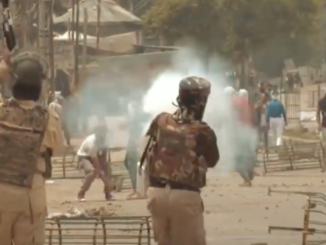
On the morning of 1 July 2020, a 65 years old person (identified as Bashir Ahmed) was shot dead in Srinagar suburbs, allegedly by the Indian Central Reserve Police Force (CRPF). Many are killed as a routine in Indian Occupied Kashmir (IOK) daily and rarely form part of the Indian media breaking news. However, this routine and “insignificant event”, instantly became viral due to the post killing images and video showing a three years old grandson accompanying his (now shot and killed) grandfather, Ahmed. Consequently, this event and the on-going Indian discourse of brutality in the IOK necessitates a critical visual reflection.

The theory of state brutality against its noncombatants accounts for multiple causes grounded in a variety of motivations including strategic, religious, and ideological reasons, is expressed in a variety of ways, and can take ingenious manifestations. The Indian discourse of brutality can appropriately be demarcated by the distribution of non-negotiable violent force employed brutally with the New Delhi-dictates of an intuitive grasp of ultra-judicial situational exigencies in IOK. Resultantly, the Kashmiris and Muslim minorities in India are overrepresented as the human targets of brutality and murder.

These images involving a child, are not the first ones to grab the attention of humanity (or whatever is left thereof, in today’s India…). Images have always been argued as the powerful means to affect change, and the presence of children in such brutal and violent images has remained the focus of attention among students of “representation”. For example, the 1972 image of a 9 years old naked Vietnamese girl named Kim Phuc, running away from the Napalm bomb attack, captured by Nick Ut, or the 1992 image of a hungry and weak Sudanese child slumped on the ground and a vulture couching behind the child, captured by Kevin Carter, and a more recent image of Syrian child Aylan Kurdi washed ashore in Turkey during 2015, captured by Nilofur Demir, instantly merited global attention. Additionally, authors have critically analyzed the images from philosophical, political,  and value addition angles, besides volumes written on the tools of image analysis. 

As argued by John Berger in his 1973 book Ways of Seeing, every image embodies a way of seeing. Similarly, a discourse constitutes ways of seeing the world and ways of being and living in the world. The discursive “world” for the residents of IOK finds nothing novel about the state brutality, bestowed upon them from the Indian military and police as a state-sponsored agenda. This, extremely harsh, bitter, and most violent treatment would prevent them from daring to think of themselves as human beings. So, the Indian security forces could kill, rape, plunder, and pillage the Kashmiri villages and cities. while humanity watches in a state of criminal silence.

The first of the three (focal) images show a child sitting and crying on the chest of the man who was shot and killed. In Image 2 the child is moving away and is being directed by a uniformed person to move away and in Image 3 the child has been shown sitting in a (military or police) vehicle and can be seen crying. Additionally, the video,  besides being outright brutal, is gruesome for anyone with little sagacity for humanity, and a true reflection of humanity at its lowest ebb. The video shows helpless, violated, and harrassed crying child, travelling in an armoured vehicle, can be seen crying to go to his mother. 

The first image reveals two contrasting realities: 1) a child sitting on the chest of a dead man (his grandfather), can be argued to have the feelings of loss of a dear one, whose chest was once his amusement abode; 2) to the contrary, it can also be argued that the photographer (CRPF in this case), made the child sit on the chest of his dead grandfather to exhibit state power as a warning against anyone who is suspected of deviation. A clear message that the state holds the unchallenged power with absolutely no regard for the dying humanity; 3) the (psychologically and common-sensically unusual) position of the child facing away from his grandfather’s face is a clear indicator of an iconoclastic indulgence, depicted by carefully placing the child on the chest by the photographer.

In Image 2, a soldier in the background has been photographed instructing the child away from the previously used frame. This is an effort in the protection of the state narrative, that his grandfather died in a crossfire and the CRPF cares and wants to save the child’s life. Image 3 is nothing but a repetition of Omran Daqneesh, who was photographed sitting in an ambulance in Allepo, to depict the Assad regime’s brutalities in Syria against its citizens. Omran’s image was later on claimed to be false and purposefully photographed by the Western media outlet. In Image 3, the toys held in child’s hand, and the “chocolate” being offered to him as an answer to his cries to go to his mother shown in the video, point to another face of Indian state narrative, depicting its atrocities to be “soft” in approach.

Contradictory stories surround the entire event. On one hand, the family of the killed has claimed that he was shot by the CRPF, whereas the police chief claims that Ahmed was killed in a crossfire between the police and the militants, who attacked the police from a nearby mosque. Regardless, the tragedy is epitomized in the entire ordeal. As if imagining a child in such a violated and inhumane space is not heart wrenching enough, that the Indian security forces went a step ahead and arranged for a photoshoot of the child on the chest of his dead grandfather. The sequential arrangement of these photos shows a pre-arranged, well planned, and to some extent a professionally mosaicked set of photographs of a three years old child, who seems psychologically harassed, confused, and terrified about what he just saw.

For the child, probably, the first experience of being an eye witness to the murder of a loved one, probably with no knowledge of human rights violations in the land which was once “heavenly”, and probably a memory which will last a lifetime for the child (that is, “if” this child is allowed to live long enough in the face of the ongoing state brutality), however, the state continues to slide to the lowest levels in human rights.

Arthur Schopenhauer, the 19th Century German philosopher posited that the pleasure in tragedy is the highest degree of feeling of sublime, and the tragic catastrophe makes us feel urged to turn our will away from life. In the case of this event, the tragic and catastrophic death of the loved one in front of his eyes is likely to have a lasting effect on the child, and the family (like many others in IOK) will certainly have their will turned away from life. The event and the entire photoshoot is an embarrassment, and humiliation for the silent humanity, and a disgrace for indignant India, Indian armed forces, and Modi’s government.

The reflection on these images exemplifies the divergent accounts and an uncanny contextual harmony between the state brutality and the visual representation. Scholars have argued that one of the major achievements of the images and visual representation is that they can significantly change the dominant ideologies. In this case, the immediate rebuttal from the police chief is the case in point, and the state narrative has been laid down by threatening prosecution against anyone (including Ahmed’s family) who claims a counter-narrative about this event.

The images were shot by the CRPF operatives, who, as per the touted instructions are not allowed to carry cameras or mobiles while on duty. Yet again, this is not the first time that the armed personnel in IOK have violated the human rights of the oppressed and marginalized population of Kashmir, and photographed the event. The image depicting a civilian human shield, tied in front of a military jeep went viral during 2018 and received a shameful amount of criticism. However, unfortunately, both shame and humanity remain in direly short supply in New Delhi ruling quarters.

Revealing a child’s identity is against Article 74 of the Indian Constitution. But the Modi government and the state agents operating in IOK seem to have lost all semblance of humanity and continue to violate the Indian constitution and the rights of its citizens with impunity. The state-sponsored inhumane treatment, brutality, violence, and terrorism are not only limited to Indian Muslims, or in IOK only, India has openly embarked upon destabilizing its neighbours as has been witnessed and confirmed by PM Imran Khan after the recent Karachi Stock Exchange Indian sponsored terror attack.

Understanding Proxy Wars: A Middle Eastern Case Study

The end of WW2 gave birth to a new concept of warfare – cold war. This new warfare was the result of the higher cost of the traditional and conventional inter-state rivalry as a handful of states became nuclear powers. Proxy wars conjure the image of cold war wherein the local combatants are supported by the external elements.

“With U.S.-made anti-tank missiles finding their way to Syrian rebels and Russian fighter jets pummelling the same rebels and supplying the Bashar al-Assad regime with antiaircraft missile systems, it might seem easy to describe the battle in Syria as a proxy war.” This is how the phrase proxy wars works. Proxy war may be triggered by the internal vulnerability to the foreign actors which are attracted by the hope of meeting their interests in the territories, states or regions which are putting forward such opportunities to them. The fragility and weaknesses of the internal combatants also invite external players to exploit the situation to fulfil their personal interests. The reason behind this is that each one of the combatants is unable to put its opposite down without the support of external actors. The face-offs of such a complicated nature can only be resolved if the external factors realize that it is in their best favour to deescalate the tensions. Moreover, installation of peace and tranquillity in the battlefield is also key in ending the stand-off. It may take place as a result of the shift in the balance of the war’s power.

Most of the conflicts in Latin America were painted in the colour of the Cold War. The local combatants were supported either by the capitalist bloc or by the USSR-led communist bloc. In modern times, the Middle East region is conjuring the picture of proxy war as the internal clashes are mainly ignited by the role of the external players. The interests of US are motivated by its energy needs and protection to its allies: KSA and Israel. Similarly, Russia is dragged into the conflict in Middle East by its motives to counter terrorism and to support its allies. The most important factor which keeps the proxy and the conflict alive is the struggle for sectarian dominance in the region and the main players here are KSA and Iran.

It must be made clear here that there is a plethora of factors which provides an opportunity to the external factors to intervene. The very beginning of the second decade of the 21st century observed some new changes in the Middle Eastern region in the shape of the Arab Spring. It was basically a compendium of the anti-government strikes, protests and rebellions as a result of the bad governance, ramshackle economy, denial to the fundamental human rights, etc. Moreover, the region is a portrayal of the ethnic, cultural and sectarian diversifications which were easily exploited by the foreign players. Most of the states in the region were fragile like their opponents and so in order to succeed, they looked for external support to crush their opponents. Thus, the proxy war was kicked off in the region.

The local combatants sometimes exploit the role of external elements like in Syria, for instance, wherein the Assad’s government has been exploiting the interests of Moscow and Tehran via setting forth his regime against the growing threat of Islamic militancy and Sunni fanaticism. The rebels, too, manipulate the KSA-led GCC block’s stake in the country while convincing it of their role against Shia dominance in the country and in the whole region. The precedent of this aspect of the proxy war was observed during the Cold War when Nicaragua and Cuba leaned towards the communist bloc after US stagnated its support for them. Somalia, too, made an instance here with its turning towards the capitalist bloc after being denied financial help by the communist bloc.

As a way out to such a conflict, it is suggested that foreign actors should realize the end to the conflict in their best favour and should pen down an accord to restrain themselves from backing any of the local combatants. This will lead the local actors to find themselves helpless, thus, unable to stretch their fights on. However, it is not the sole solution to put down the combat of such a complicated nature because the local players may continue their fight even after the conclusion of the truce among the outsiders which aims at restraining themselves from supporting the internal fighting parties. Somalia’s civil war did not come to an end notwithstanding the blockade of foreign support. Similarly, the Angolan civil war did not burn out even with the collapse of USSR. The Syrian quagmire may come to an end with the installation of an ugly stability with one-sided victory.

Thus, it is made clear here that proxy wars often take place as a result of the internal turmoil, high stakes of foreign actors, and fragile state of the local actors among others. It may be burnt out via drawing an accord among the external actors in order to halt their support to the internal actors, a shift in the local fight and the installation of peace, tranquillity, and stability, both inside the country and in the whole region.

Radiation Sterilization of COVID-19 Personal Protective Equipment (PPE)

Radiation Sterilization of COVID-19 Personal Protective Equipment (PPE)

The novel coronavirus outbreak is believed to have started in December 2019, and was declared a pandemic (COVID-19) in the first week of March 2020. Locking down more than 200 countries and affecting everyday life globally, it created a tremendous challenge in every field of medical science.

The COVID-19 pandemic created a huge demand for sterilized protective garments, large amounts of bedspreads, and other medical equipment. These medical supplies are needed in large quantities and sterilized form at the same time, removing microorganisms, bacteria, molds, and viruses to ensure the wearer and the patient’s safety. To attain a high quality of safety standards in health-care services, all developed countries emphasize the need for medical supplies to be sterilized, through different techniques such as ethylene trioxide (ETO) and ionizing radiation.

Irradiation is routinely used to sterilize single-use medical products. The IAEA helped many member states during this outbreak by providing RT-PCR machines for fast and accurate detection of COVID-19 patients.  It also organized a webinar on 21st May, 2020, for the member states on the challenges and opportunities of using radiation technology to improve the medical supplies required.  

Since the 1950s, radiation processing, mainly using a cobalt-60 source to deliver gamma radiation, has remained the most vital technology to eliminate microorganisms, fungi, and spores from medical equipment, as the demand for healthcare and sterile products has grown. Irradiation technology is used to sterilize almost half of the global supply of single-use medical products. Currently, almost 50% of healthcare products, such as gloves, syringes, and single-use medical products and devices, are sterilized using gamma rays, electron-beams, or X-rays prior to use.

In this technology, Cobalt-60 is used as a gamma irradiation source to provide radiation up to a maximum dose of 2.5 Mrads on which no microorganism can survive; the dose can be reduced and adjusted accordingly if you can calculate the bioburden (microorganism load) on the products. The irradiation technology is a well established procedure; extensive research on this method was conducted for over 30 years, from 1950 to 1980,  and regulations are approved by IAEA on this available extensive technical data.

At present, many industrial radiation facilities are working worldwide, on handling products of different dimensions and densities, requiring different irradiation doses. Pakistan also established one such commercial irradiation facility in the 1980s, in Lahore by the name of Pakistan Radiation Services (PARAS) for single-use medical products.

The outbreak of the COVID-19 pandemic suddenly created a huge demand for personal protective clothing and sheets and different types of masks. This also demanded that these items be sterilized effectively and efficiently. The usual method, for sterilization of medical products is by using Ethylene trioxide (ETO), but it takes 7-14 days to complete the procedure, whereas, irradiation can reduce this time to only one day.

The IAEA webinar held in May 2020, recommended that it might be useful to employ gamma irradiation technology to increase the available supplies of PPE and N-95 masks. The important thing was to achieve sterilization of N-95 masks by radiation, which cannot be sterilized with steam or heat sterilizers and ethylene oxide. Due to tremendous pressure of making a large number of medical supplies available, many countries requested the IAEA to look into the method of radiation sterilization. The IAEA gathered the information from five institutes located in France, Israel, Poland, South Korea, and the US, which used ionizing radiation, gamma or electron beam to sterilize PPE, masks N-95, and FFP2.  The findings were interesting and provided to the Member States; they showed that a dose of up to 24 KGy was needed to kill the virus. It was noticed that the masks N-95 and FFP2 capacity were compromised as the gamma radiation degraded their filtering capacity. Therefore, the IAEA suggested that only PPE and bedspreads were to be sterilized using Gamma radiation.

Simultaneously, the IAEA recommended the establishment of a separate irradiation facility, dedicated to COVID-19 infected materials only. The COVID-19 infected material should not be sterilized on existing operational industrial irradiation facilities as it presents many risks. Therefore, it is suggested that new industrial gamma irradiation facilities of 100,000 Ci each at Karachi, Lahore, and Peshawar, dedicated to sterilizing only COVID-19 infected material, should be established. This will help now, as well as in any epidemic or pandemic crisis in the future.

Conflict on Himalaya: Challenges and Opportunities

That they go together is by now amongst those Chinese words of wisdom, which have so often been quoted that they have lost their sheen. Even then, since the latest excitement in the Himalayas is so quintessentially Chinese; has followed so soon on the heels of what Trump called the Chinese Virus; and has alerted us to yet another threat to our Chinese Corridors – it should still make us think about the trials and tribulations that come in its wake.

As the contours of this crisis were unravelling, we obviously had to reflect over the earlier Himalayan Blunders: Indians in NEFA and Pakistanis missing their chances in Kashmir. So much must have changed in the last six decades but the lessons from the past can always be put to good use. If Ayub Khan was dissuaded by the Yanks from taking advantage of Indian troubles in NEFA, or he was getting cold feet; the American factor remains relevant in the present context as well.

Since the Chinese seem to have the Indians in a bind in Ladakh, it might be good idea to find out how they intended to play it out. In view of our higher than Himalaya ties, it should not be too difficult a proposition. In fact we should assume that the two countries had synchronized their plans. Preventing American intervention – though no longer as crucial as in the unipolar days – might well be an agreed element of our bilateral strategy.

There is however one initiative that is entirely up to us to take.

The Great Game of the 19th Century was essentially played by diplomats and spies (both actually cut from the same cloth). According to the late Yahya Effendi, probably the best military historian Pakistan has produced, it was the wisdom of the Afghan emirs that saved Afghanistan from becoming a battlefield between two imperial powers, Britain and Russia, and won the Country the status of a buffer. Afghanistan went beyond that role after Pakistan inherited the British mandate in the North-West of the Subcontinent. It protected our western borders in our wars against India. We returned the favour by helping the Afghans defend their sovereignty – and took great risks in the process.

It’s time to replicate that strategy in our North-East. There may even be an opportunity to do so.

During the early days of the present commotion in Ladakh, an old friend sent me a message that the Kashmir resolution was now on the cards. I didn’t take it seriously – we’re a wishful lot with stars in our eyes – but when reminded that only last year the Chinese President had suggested that this flashpoint at the confluence of three mighty mountain ranges needed trilateral attention – by India, Pakistan and China – many parts of the puzzle started falling in place. And that’s when my thoughts drifted to the other intersection; not only of mountains, but also of roads, rivals, and regions.

But of course the two places are not alike.

Afghanistan had more than the wisdom of its Emirs going for it – a hostile terrain and a history of resistance against forceful occupation. And then the two contending powers, Britain and Russia, preferred to keep each-other at bay, than to lock horns in a country which had mastered the art of playing one against the other. Kashmir on the other hand can be a friendly place to stay with a long history of accommodation. The problem is that both the claimants, India and Pakistan, would rather turn this paradise on earth into hell than let the archrival enjoy its forbidden fruit. Nevertheless, there are still some sane voices in the two countries who believe that since neither side was likely to get its most wishful outcome, they might look for something less fulfilling. Sounds so Chinese, but is in fact the age-old principle of compromise. Dangers inherent in glacial conflicts that never seem to melt away may have convinced some of us that denying the adversary any claim to outright victory was our least bad option.

There could be a number of ways it could be done, and in the last seven decades some have of course been mulled over. The Trieste Model came closest to a bargain that duly dressed-up, might address most of the genuine concerns of the Indians, the Pakistanis, and the Kashmiris. But such prescriptions are less important than the trio’s willingness to compromise – what now seems to be inevitable.

It would not be an easy sell in Pakistan – essentially because all the thinking here has been outsourced to the think tanks, which in the meantime cannot think out of tank. The elected lot, ignorant and long ignored, now openly defy the Country’s locus standi—a free and fair plebiscite—by shouting “Kashmir banega Pakistan” right in the Parliament. Luckily, we have a history of armed-twisting and U-Turns.

It will be harder still in India. It has been painting itself in a corner by declaring a disputed territory as its atut-ang (integral part), and bulldozing provisions that provided the occupied people a symbolic link with the Union. Their hearts and minds had already been lost as conceded by no one less than Yashwant Sinha, once an iconic figure in the BJP hierarchy. It’s now clinging to the real-estate of Kashmir, which too looks tenuous. But then what good is a hardliner like Modi if he cannot take some hard decisions to get India out of a situation, best described as “between the rock and a hard place”.

Kashmiris might not get their independence but the consolation prize of their acceptance as a bridge, though not a buffer, between the three mighty neighbours, with all the chances to play one against the other a-la the Afghans, may not be a bad incentive.

Chinese will not be gloating too much. But securing another front that could be used to prick their ambitions to provide the much-needed balance of power would be very gratifying.

Lessons From Ladakh

The military confrontation between China and India since early May this year in the Indian occupied territory of Ladakh along the Line of Actual Control (LAC) has been the most serious clash between the two countries since their border war in 1962.  At least twenty Indian soldiers have been killed and both countries have significantly increased their military presence in the area. India accused the Chinese of occupying nearly thirty square miles of ‘Indian territory’, while China has blamed the Indians for intruding into areas claimed by China across the LAC.

Over the past week talks to defuse tensions have taken place after Indian Prime Minister Modi stated that no Indian territory had been occupied and that there has been no infiltration across its ‘borders’ by China. Since this is exactly what India had accused China of doing, this claim by the Indian leader appears to be a major climbdown by the Modi government. It has led to severe criticism of the government and the army, even by the usually jingoist Indian commentators. This demonstrates that due to stiff Chinese resistance, India has been forced to back down and is making vain attempts to cover up for the loss of face.  It remains to be seen whether the de-escalation between the two sides will endure and further confrontation will be avoided. In any event, this episode in Ladakh has several lessons, not only for China and India but also for the region and the world.

Origins of The Dispute.     The Sino-Indian border dispute is a legacy of British colonialism. During British rule in India, the border with China was neither delineated on an agreed map nor demarcated on the ground between British India and China. According to Neville Maxwell, an authority on the issue and author of the book ‘India’s China War’ on the 1962 conflict between the two countries, Britain, at different times from 1899 to 1947, put forward eleven different maps to delineate the border with China. The Macartney-Mac Donald line of 1899 drew the border on the Indus watershed, ceding Aksai Chin to China but later the Johnson line included the area within British India as part of Ladakh even though actual possession remained with China. 

Accordingly, after Indian independence, the Indians claimed nearly 13000 square miles of territory in the Aksai Chin area and Ladakh. Apart from this dispute in the North West of India, New Delhi claimed about 35000 square miles in it’s North East which is India’s Arunachal Pradesh on the basis of the British delineated MacMohan line drawn up arbitrarily in 1914. The Chinese, have of course, always rejected these colonial boundaries and clearly stated their position after the success of the communist revolution and the creation of the People’s Republic of China in 1949.

At first, due to friendly relations between India and China based on ‘peaceful coexistence’,  the border dispute was set aside. In fact, Premier Zhou Enlai offered a compromise, proposing Chinese concessions in the East for Indian concessions in the West. Indian Prime Minister Nehru rejected this offer and claimed the whole of Aksai Chin. By the mid-1950s, Nehru launched his ‘forward’ policy on the border. He supported the CIA’s effort to stoke the Kampa rebellion in Tibet against China, then gave sanctuary to the Tibetian Dalai Lama and his government in exile.  Nehru then ordered military operations in Chinese claimed areas which eventually led to the1962 China-India war in which India was badly defeated. Subsequently, the two sides agreed to accept a cease fire line. While limited fighting again broke out in 1967 in the Nathu La area after India occupied Sikkim, both countries agreed in 1993 not to arbitrarily change the status quo and converted the ceasefire line into the existing LAC.   

Reasons for the Current Crisis.     In 2017, when China was in the process of conducting negotiations with Bhutan to settle their boundary, India intervened and deployed its troops on the tri-junction of this border while opposing the construction of a Chinese road on its side of the China- Bhutan border.  The Indian argument was that the Chinese road was too close in proximity to the ‘Chicken’s Neck’ that connected India to its North Eastern States. This ‘Doklam stand-off’ led to the Wuhan Summit between Indian and Chinese leaders in 2018 in which they again agreed to settle their boundary dispute through negotiations and reaffirmed their commitment not to change the situation on the ground. At this Summit the Chinese also asserted that a durable solution in the North West sector involving Ladakh should also include Pakistan – a proposition that the Indians rejected, even though Pakistan remains a concerned party to the Jammu and Kashmir dispute.

Despite this undertaking with the Chinese,  Modi launched his ’forward’ policy in August 2019, by revoking the nominal ‘autonomous status’ of Indian Occupied Kashmir (IOK), in violation not only of the relevant UN Security Council resolutions and the Simla agreement with Pakistan but also the 1993 and 2018 understandings with China. He also converted Jammu and Kashmir and Ladakh into separate Union Territories and issued maps showing Chinese Aksai Chin to be a part of Indian Ladakh and AJK and GB to be a part of India. These actions were severely condemned and rejected by both Pakistan and China. But India did not take them seriously. 

Thereafter, Indian troops began incursions into disputed areas of Ladakh, especially the Galwan Valley, together with building up the military infrastructure, such as the road from Leh, Capital of Ladakh to Daulat Beg Oldi, close to the Chinese positions in Aksai Chin. The Indian troop presence was also increased along the LAC. The Chinese made counter moves, which according to the Indians, have led to the Chinese takeover of areas in the Galwan valley, Hotsprings, Pangong Tso lake and Depsang Plains across the LAC. Though no firing has yet taken place, the hand to hand fighting has led to over twenty Indian casualties on 15 June. But last week, Prime Minister claimed that no Indian territory was under the Chinese control nor were the Chinese troops on Indian soil.  This clearly contradicts the earlier claims of the Indian side.

Lessons from Ladakh.   Several lessons emerge from the recent developments in Ladakh.  First, in the context of Sino-Indian relations, it is clear that Modi’s action of August  2019, to arbitrarily change the status of Ladakh has crossed a Chinese red line. China has, therefore, used force to assert its claim in the area and reject the Indian moves. By strengthening its defensive positions, China has signalled to India that it will no longer tolerate any Indian incursions into areas claimed by China, irrespective of the rising tensions between the two countries. In short, China has sent the message that it is ready for war with India. Judging from Modi’s statement, the Indians have, for now, obviously backed down. 

The flare-up with China along the LAC places India in a difficult military position as it now finds itself in a military confrontation with both China and Pakistan (along the LOC), which are both nuclear powers as well. Now even Nepal has started to assert its claim over the Kalapani area occupied by India since 1962. This arc of confrontation stretches from Jammu along the LOC with Pakistan up to the Siachen glacier and onwards along the LAC with China up to the Karakoram Pass.

Notwithstanding Indian plans to simultaneously fight a two and a half wars (with China, Pakistan and the Kashmiri people),  the reality is that India is hardly in a position to fight Pakistan, as the Pulwana crisis of February 2019 demonstrated, let alone fighting Pakistan, China and the Kashmir uprising at the same time. Consequently, such Indian illusions for regional domination have already been shattered. But the danger remains that Modi’s fascist government, which has raised a war hysteria among its people, would be under intense pressure to save face, following the current reversal with China. In these circumstances, it may opt to launch another ‘surgical strike’ against Pakistan, most likely after engineering a false flag operation as justification. This is a danger that Pakistan has already warned could happen and should be fully prepared to repulse. India can also step up acts of terrorism in Pakistan and its repression in IOK, both of which it has already done.  But no Indian action can now change the fact that the Kashmir dispute henceforth has four parties- the Kashmiris, Pakistan, India and China. These are the regional outcomes of the developments in Ladakh.

The repercussions at the global level are no less daunting for India. It has been the Indo-US strategic partnership and India’s participation in the quadrilateral alliance with the US, Australia and Japan against China, that has in fact encouraged the Indian belligerence against China and Pakistan as well as other neighbours.  But, while the US seeks Indian partnership to encircle and contain China, it is not ready to get involved in a Sino-India war. Not surprisingly, President Trump has offered to mediate between the two countries and has not come out openly to support India as did President Kennedy during the 1962 war. Nevertheless, the Ladakh confrontation will push India into an even closer embrace of the US, adding to their joint opposition of the Chinese BRI and CPEC with Indian support of American interference in Hong Kong, Tibet and Xinjiang. On the other hand, China will now give up its efforts to try and moderate Indian behaviour such as during the Wuhan Summit and would come out more openly to oppose India across the board. This would, in turn, serve to further deepen Pakistan-China cooperation. 

Similarly, Russia, which has had a history of close relations with India, will need to balance its relations between India and China. Owing to their increasing confrontation with the US, the Russians and the Chinese have evolved a close strategic partnership which is far more important for Moscow than its relations with New Delhi. As a result, Russia has also refrained from unequivocally supporting India against China. At most, it has called upon both sides to demonstrate restraint.

Conclusion.      These developments are a clear blow to Indian ambitions for regional hegemony and great power status. While India has been able to get away with intimidating its smaller neighbours, it is not in a position to overwhelm one, let alone two, nuclear weapon states like China and Pakistan.  India’s alliance with the US has enhanced its military capabilities but not to the extent that it can browbeat either China or Pakistan. The ongoing confrontation with both its neighbours has therefore made India more vulnerable. This could, however, propel India towards greater reliance on sub-conventional warfare tactics, such as promoting terrorism in Pakistan and joining the US to incite dissent within China. 

So, while India has been talking up a big strategic game at the global level to compete with China, it is unable to walk this talk. As Modi’s climb down signifies, India has decided that at least for now and for the foreseeable future, discretion is the better part of valour in its clash with China.

Cyber Security Threats to the Indian Strategic Organizations

Cyber threats in nuclear security have emerged as a core issue in contemporary world politics and although various threat scenarios have been developed, cyber-attacks on strategic organizations and their nuclear weapons is a most serious concern.

All states with nuclear weapons face a growing threat from these emerging capabilities, including India. The country is rapidly expanding its civil and military nuclear capabilities and infrastructures, and it is unclear if the country has paid sufficient attention to cyber threats during this expansion. India has already experienced several cyber incidents at its nuclear facilities.  For example, in 1998 an American teenage hacker broke into India’s Bhabha Atomic Research Centre (BARC) and downloaded passwords and emails.[i] Again, in September 2019, India experienced a cyber-attack on the Kudankulam Nuclear Power Plant (KKNPP) in Tamil Nadu, which was confirmed by the Nuclear Power Corporation of India Limited (NPCIL).   

Threats to Civilian Facilities

India’s NPCIL operates 22 commercial nuclear power reactors, across seven sites, and has plans for a further 21 reactors by 2031. Of these, the KKNPP is India’s largest nuclear power plant, which currently operates two Russian-designed and supplied 1,000 MWe VVER pressurized water reactors. KKNPP is adding four more reactor units of the same capacity, making the project one of the biggest partnerships between India and Russia.  While, official statements hold that the attack did not cause any operational, safety or critical damage, it has actually exposed vulnerabilities in India’s approach to cyber security; according to an article in the Washington Post, “VirusTotal, a virus scanning website owned by Google’s parent company, Alphabet, has indicated that a large amount of data from the KKNPP’s administrative network has been stolen.”

In addition to compromising information security, cyber-attacks on nuclear power plants could have severe physical outcomes, particularly if the network that operates the machines and software controlling the nuclear reactor are compromised. It can be further utilised in a blended attack to expedite sabotage, theft of nuclear materials, or, in the worst-case scenario, a reactor meltdown. In a heavily populated country like India, any radiation discharge from a nuclear facility would be a major disaster. The malware used in the KKNPP attack was known as ‘Dtrack’ which is a “monitoring and intelligence gathering tool that scans networks and systems for potential vulnerabilities that can be exploited.” Dtrack can rapidly penetrate and take benefit of the slightest breach or blind spot in security protections, such as non-secure ports, out-of-date or unpatched systems, or the latest addition, the unmanaged internet of things (IoT) devices.

To give greater confidence in its remedies, Indian officials should increase transparency in its efforts to counter such threats, both at the KKNPP and across its nuclear fleet. 

Developing Security Culture

 As India’s nuclear security culture is still developing and in its evolutionary phase, more efforts, credible human resource, training and counter measures are required to deal with cyber security threats. The expansion of both India’s civilian and military nuclear infrastructure requires enormous resources and trained and reliable manpower. 

Threats to Military Programme

In addition to the civilian nuclear industry, there are concerns that cyber operations could also affect India’s nuclear weapons complex via the country’s nuclear facilities, delivery systems and communications systems. Should these threats be realized, their impact on nuclear command, control and communications (NC3) during a time of crisis could have disastrous consequences.

According to the SIPRI Yearbook 2019, the Indian arsenal includes 130 to 140 warheads – this will increase as India enhances its nuclear triad and modernizes its forces. In addition to usable weapons, the International Panel on Fissile Materials estimates that India has a plutonium stockpile of 0.58 ± 0.15 tons and a highly enriched uranium stockpile of 4.0 ± 1.4 tons.  Not all of this will be used for weapons – for example, it will contribute towards India’s thorium-reactor program or will be used in nuclear submarines and research reactors.

Strategic Implications

Cyber security threats have already posed a major challenge to India’s civilian nuclear industry, and pose serious challenges to its strategic organisations.  The challenges seem limitless in their paradigms, such as the implications for safe, secure and reliable nuclear command and control systems; advancement in information security; nuclear signaling and the preservation of highly sensitive nuclear knowledge; strategic deterrence; and the surfacing of a cyber-nuclear security dilemma. It is a fact that nuclear weapons systems were developed even before the evolution of computer technology and slight attention was given to possible cyber exposures. Against this background, contemporary nuclear policy often observes the extensive practice of digital technology in nuclear systems.

Cyber-security for a nuclear facility can be separated into two key parts: Instrument and Control Security (ICS), and Facility Network Security (FNS). There are numerous distinctions between these fragments of security, including diverse methodologies, mechanisms, and the consequence of disaster in each sphere.  There are certain possibilities that non-state actors or rogue elements might steal sensitive data, modify software codes or critical communications links, subvert and compromise networks and computers, and/or intrude with other connected hi-tech techniques; the potential to do this in advance and perhaps without the rival knowing advances a whole new set of encounters and questions for nuclear weapons management, security and strategy.[ii]

In addition to cyber’s implication of strategic stability, cyber has the potential to impact domestic sentiment and reaction. The current Indian domestic situation is also highly volatile, and Pakistani officials perceive Prime Minister Modi to be an aggressive Hindutva-nationalist. In addition to hints that India could change its nuclear no first use policy, a series of events have happened under the Modi government which have destabilised India internally. This destabilization may have direct implications on its security culture. A country which already has a weak nuclear safety and security culture would ultimately lead to catastrophic incidents.   

Furthermore, non-state actors or rogue elements may take advantage of the current Indian situation and steal sensitive nuclear information, sabotage facilities or destabilise the nuclear reactor. A country with serious domestic issues, ethnic clashes, conflict among Hindu and non-Hindu communities, separatists and freedom movements reflects the uncertain future of India.


[i] Futter, Andrew, Hacking the Bomb: Nuclear Weapons, Cyber Threats and the Incipient Digital Age, Washington: Georgetown University Press, 2018.

[ii] Andrew Futter, “Cyberthreats and nuclear weapons,” RUSI Occasional Paper, July 2016.

Why India should not use Russian S-400 missiles against China

India is embroiled in a border skirmish with China in the Ladakh region in which, it has lost territory as well as scores of soldiers including a battalion commander. The encounter has left India red-faced and prompted its Defence Minister Rajnath Singh to seek the early delivery of the sophisticated S-400 Triumf Air Defence Missile System from Russia. The Indian Defence Minister is in Moscow to attend the 75th Victory Day Parade. He is reported to have sought the urgent supply of equipment and spares needed for the Russian-origin fighter aircraft including the Su-30MKIs and MiG-29s of the Air Force and the MiG29Ks of the Indian Navy, the T-90 battle ranks for the Army and the Kilo-class submarines of the Navy along with other warships. According to ANI, Defence Minister Rajnath Singh requested Russia to urgently supply spares and associated equipment to India for its fighter planes, submarines and battle tanks through air route to ensure their early delivery, instead of sea route using ships. The Indian news agency reported that the equipment was earlier supposed to be supplied to India through the sea route in ships but was stuck there for several months due to the COVID-19 situation.

The wire service informed that the Indian Defence Minister asked Moscow to expedite the delivery of the S-400 air defence systems. The Russians had postponed the delivery schedule by several months due to delay in payments over certain issues. Although India has made full payment of the sophisticated missile system, Moscow informed that owing to the closure of its factories, including those dealing with the defence industry, the delivery of the S-400 will not be possible before the end of next year. 

Meanwhile, BJP MP Subramanian Swamy has thrown a spanner in the works. He tweeted last weekend a warning to the Narendra Modi government to not use the S-400 missile system in a conflict with China. Swamy wrote, “The Namo (Narendra Modi) government would be well-advised not to use S400 in a possible battle with China. This is because S400 is made with Chinese electronics. Russia is today a junior partner of China”. It may be remembered that China was the first export customer for the S-400, buying the missile system in 2014 and taking delivery of the first units in 2018.

The S-400 is an integrated air defence system featuring radars, command and control equipment and four types of surface-to-air missiles. The four types of missiles used by the S-400 have ranges varying from 40km to 400km and can shoot down aircraft, drones, cruise missiles and ballistic missiles. 

Last year on 26th February, Indian Air Force had carried out a surgical strike within Pakistan territory, using Mirage 2000, which bombarded an alleged jihadist training camp at Balakot. Indian jingoistic leaders and media, in a chest-thumping exercise, claimed that they had killed 300 miscreants and annihilated the Madrassah, alleged to be a terrorist training centre.

The next morning Pakistani media visited the site and saw for itself that the Indian Air Force assailants had totally missed the madrassah; not a single soul was even injured while only a few pine trees were destroyed.

In retaliation, Pakistan Air Force fighter aircraft targeted the Command Headquarters of the Indian military but spared the building and delivered its munitions in an empty ground adjacent, just to serve a warning to India to avoid any adventurism. Indian Air Force fighters were scrambled to intercept the Pakistanis. In the ensuing melee, an Indian Air Force MiG-21 Bison and another Su-30 fighter aircraft were shot down by Pakistan Air Force in close combat. The pilot of the MiG-21, Wing Commander Abhinandan was captured alive but returned to India after interrogation. The Su-30 pilot did not survive and the aircraft debris fell in Indian occupied Kashmir.

The military might of India received a major blow and its leaders were ruing the fact that the delivery of the French combat aircraft Rafale and the Air Defence Missile System Triumf S-400 would have made a huge difference and India would have avoided the ignominy it suffered.

Now with Sino-India ties at a low ebb and Indian belligerence against Pakistan heightened, India seeks the delivery of both weapon systems. The delivery of Rafale, which had been hit by a corruption scandal, has commenced but only marginally.

The Trump administration had warned India of imposing sanctions under America’s CAATSA Act against it concerning New Delhi’s acquisition of Russian S-400 Missile Systems. In addition to its potential as a cutting-edge weapon system, the S-400 has been at the centre of international politics. In July 2019, the Donald Trump administration removed Turkey from participating in manufacturing and buying of the F-35 stealth fighter after Ankara refused to cancel a deal for the S-400. Media reports even claimed the US could offer the F-35 stealth fighter to New Delhi as an incentive to junk the S-400 missile deal with Russia. During Donald Trump’s much toted India visit, no accord to the effect took place. India escaped US wrath but now with Swamy’s warning, uncertainty and doubts have been cast on the S-400 missile system deal.

This is not the first time Swamy has warned against the S-400 missile system. In December 2019, Swamy warned the presence of Chinese electronics would make the missile system “compromised” in a war with Pakistan, in addition to the risk of US sanctions. Swamy then tweeted, “Expect a deadly US Sanctions blow early next year because of the S-400 purchase from Russia which weapon has embedded China’s electronics. S-400 is a fine weapon but compromised in a war with Pakistan. On a cost-benefit-risk analysis: Bad”.

It is yet unclear what Chinese electronics Swamy was referring to. In 2018, Russian news agency TASS reported that the S-400 deal with China is “without tech transfer or license production”. However, Chinese companies have been supplying a range of commercial electronics for aerospace programmes across the world.

Curiously, in 2012, a US senate sub-committee investigation revealed 1,800 cases of fake electronic parts being installed in US military aircraft, with nearly 70 per cent of an estimated 1 million fake parts being traced to China. The aircraft on which such counterfeit electronic equipment was used included the C-130J transport aircraft and the P-8 maritime patrol aircraft, both of which have been procured by India from the US. Such an actuality is rife with the possibility that in addition to posing a risk of failure, the counterfeit equipment could potentially be used as a means for implanting tracking and espionage systems.

It may be recalled that last year during an Israeli air attack against targets in Syria, Russian S-300 and S-400 air defence missile systems installed in Syria, failed to detect the intruders. 

Meanwhile, India is still weighing all options especially in the face of a dual theatre of war since it chose to engage both China and Pakistan simultaneously.