Troubled Path to NPT RevCon 2020

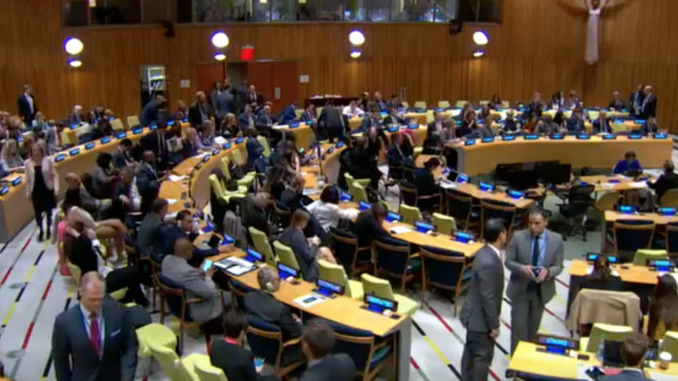
The NPT PrepCom 2019 concluded on May 10 after two weeks of deliberations on nonproliferation challenges, aiming to pave the way for the NPT Review Conference (RevCon) in 2020. The PrepCom ended without adopting consensus recommendations as states parties failed to reach an agreement on the second draft recommendations, exposing growing polarization within the NPT community.  Previously, the 2015 RevCon had failed due to lack of consensus and a growing frustration among states parties over failure of nuclear weapon states (NWS) to move forward on disarmament pledges and keep their side of the bargain. While this failure should have served as a wakeup call, the global nonproliferation norms have only been declining since then. Despite the optimism displayed by the president-designate of the 2020 Review Conference, Rafael Mariono Grossi of Argentina at the end of the conference, the discussions and differences during the two weeks of PrepCom 2019 indicated growing challenges for the next few months leading up to the NPT RevCon in 2020. Following are some of those challenges that are bound to impact result of NPT RevCon, if remained unresolved.

  • First and foremost, the collapse of US-Russian cooperation on bilateral non-proliferation issues is setting all the wrong precedents. President Trumps decision to pull out of Intermediate-Range Nuclear Forces (INF) Treaty in 2019 ended a decades-old agreement to eliminate an entire class of nuclear delivery systems. It not only increased the risk of a new cold war between US and Russia, but also indicated a probable failure to start negotiations to renew Strategic Arms Reduction Treaty (START) that is expiring in 2021. The START agreement has been a successful tool in significantly capping each side’s strategic deployed arsenals to no more than 1,550 warheads and 700 strategic delivery systems. Failure to start negations to renew the treaty would not only put a serious blow to the global disarmament and nonproliferation efforts, growing dissent between the US and Russia will significantly reduce the cooperative environment among nuclear weapon states at the NPT RevCon. In addition, new US intelligence reports are alleging that Russia is conducting very low yield nuclear tests to advance its nuclear weapons. Despite strong Russian denial, such allegations run the risk of reversing existing nonproliferation achievements as US may use it as an excuse to further delay CTBT ratification or even worse, withdraw its signature from the test ban treaty, leading to escalation of tensions and adding to the existing nonproliferation challenges.
  • The issue of the Middle East Nuclear Weapon Free Zone/Weapons of Mass Destruction Free Zone (NWFZ) was one of the primary reasons that led to the failure of 2015 RevCon when the US, the UK and Canada blocked consensus on the final document due to language on the Middle East. Lingering since 1995 NPT Review and Extension Conference, the issue of WMD Free Zone in Middle East continued to stir heated debates during the recent PrepCom sessions and likely to affect the RevCon in 2020. While Russia agreed to follow-up on the issue, the US has already refused to attend the UN conference in upcoming November to discuss this matter. Failure to atleast set the ground for negotiations prior to the RevCon, is bound to impact the overall environment of the conference.
  • Iran and North Korean nuclear crisis following the US rejection of the JCPOA and imposition of sanctions is likely to worsen in the coming months. During the NPT PrepCom 2019, Despite European Union’s unequivocal support to the JCPOA, the issue led to heated exchanges between Iran and the US officials. Iran has given a 60 days ultimatum to other parties to the JCPOA (France, Germany, the United Kingdom, the European Union, Russia and China) to prevent American sanctions on Iranian oil sales and banking transactions. In case of failure, Iran has threatened to not only end its commitments under the JCPOA, but according to some media reports also the NPT.
  • North Korea is the only country that withdrew from the NPT in order to resume its nuclear weapon programme and continues to challenge the efficacy of this nuclear agreement. Although the states parties are unanimous in their condemnation of the DPRK, their inability to engage the Korean leadership in a meaningful dialogue for nuclear disarmament, exposes the weakness of the treaty. Inability of the international community to reach a breakthrough to contain North Korea before the NPT RevCon 2020 that coincides with the 75th anniversary of nuclear bombing on Japanese cities Hiroshima and Nagasaki, may add up to the challenges and further weaken the nonproliferation regime.

Conclusion

While NPT is celebrated as a successful treaty in containing the spread of nuclear weapons, it certainly stands at a crossroad on its 50th anniversary due to the challenges it faces. Frustration to deal with those challenges gave impetus to the humanitarian initiative and conclusion of the ban treaty by an overwhelming number of states. Although the ban treaty is touted as a complementary arrangement to enhance the NPT agenda, the very need to create a separate treaty for nuclear disarmament indicates the failure of NWS to fulfil their commitments. In this regard, the NPT RevCon 2020 will be decisive in determining future trajectory of the nonproliferation treaty.


Kautilya’s Influence on India’s Regional Domination Strategy

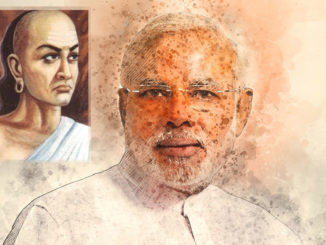
Kautilya, also known as Chanakya, has been recognized as a statesman and classical Indian philosopher of political realism. He presented a comprehensive theoretical framework of inter-state relations and foreign policy, knowns as the Mandala Theory in his work Arthashastra, which has deeply influenced contemporary Indian strategic culture and regional domination strategy. Written around 300 BC, it explains the entire course of state formation and the conduct of foreign policy through war and diplomacy to maximize the power of the conducting state.

Kautilya explicated maximization of national power through material economic strength gained by conquering territories adjacent to the ambitious state; this was seen as a prerequisite for regional domination, the ultimate foreign policy objective of a state. He was advisor and minister to Indian king Chandragupta Maurya who established a vast centralized Hindu kingdom in India on the former’s advice. Kautilya explained that the best strategy for protection and defence of state was regional expansion, and saw neighbouring states as perpetual enemies because of conflicting geopolitical interests. This article is written from the historical perspective and looks at how Kautilya’s classical realist thought has influenced contemporary Indian strategy?

As a political advisor and minister of Indian king Chandragupta Maurya, Kautilya sought unification of India through the acquisition of military might and economic strength. He advocated merciless political decision-making to confront the challenges of the given period. India was facing severe attacks and military encroachments from the descendants of Alexander the Great and the Persian Kings during his reign. Adhering to Kautilya’s philosophy, he unified India into a strong centralized state through the conduct of muscular foreign policy.

Under the Mandala framework, Kautilya projected kingdoms or states as a series of adjacent or interconnected circles and described their relationship to each other. He classified these states into four categories. The ambitious state was Vijigishu, which was placed at the centre of the circle. The others were Ari (the natural enemy state with a contiguous territory to the former), Madhyama (the regional power having adjacent borders with both Vijigishu and Ari), and Udasina (the extra-regional superpower, lying outside the circle of states). Based on this classification, states were categorized as enemies, friends, allies and neutral states in an international system. War, diplomacy and foreign policy were conducted accordingly.

Enemy states, Ari, were divided into two categories, the natural and the artificial, on the basis of geography and psychological perception. Ari-Mitra and Ari Mitra-Mitra were considered as natural allies of the enemy, thereby making them natural enemies as well. Further, Parshnigrah and Parshnigrahasara were identified as potential enemies which could attack Vijigishu from the rear flank as the latter expanded; thus, both the former were classified as its artificial enemies.

Kautilya categorized friendly states as natural allies and artificial ones; these, known as Mitra and Mitra-Mitra, were geographically adjacent to the natural enemies and were considered friendly to Vijigishu. Akranda and Akrandsara were conceived as potential allies and friends of Vijigishu, owing to their geographic proximity to Parshnigrah and Parshnigrahasara.

To protect the interest of Vijigishu and establish a favourable regional order, Kautilya advocated pursuing a balance of power by means of both self-help and alliances. If we apply the Mandala framework onto current Indian strategic thinking and foreign policy behaviour, what is seen is revealing. Similar to the Kautilyan conception, India has conceived Pakistan as its natural enemy and tried to sabotage it by using strategies of conventional military preponderance, nuclear deterrence, limited war Cold Start, and surgical strikes; all are coercive security policy mechanisms.

Under Modi’s government, this coercive approach intensified towards Pakistan. India tried to isolate the latter by cancelling foreign secretary-level bilateral talks in 2014. It also boycotted the SAARC Islamabad summit 2016, attempting to postpone it by influencing regional states to abstain from participation in it. Militarily, India increased skirmishes across the Line of Control to engage Pakistan in a two-front war. The arrest of Kulbushan Yadav, a serving Indian Navy officer from Pakistan, is another manifestation of India’s sub-conventional warfare.

Historically, India has tried to coercively manoeuvre its neighbours in South Asia either by use of force or its projection. It perceives Afghanistan and South East Asia as its natural allies while it sees the Middle East as a potential ally region. India had asserted itself in the neighbouring states through the invasion of Kashmir in 1948, the annexation of Sikkim in 1975, and aggression against Nepal, Sri Lanka and Bangladesh during the 1980s. India forced Bangladesh for a border settlement treaty immediately after its independence in 1971. During the post-Cold War era, India tried to military suppress freedom movement in Kashmir through the use of force, using a counterinsurgency (COIN) strategy under AFSPA which backfired.

After 9/11, the ongoing military role of India in Afghanistan has created debilitating security implications for Pakistan. India signed a strategic partnership agreement with Afghanistan in 2011, which allowed it the privilege to have military bases operating near the Pakistan-Afghanistan border.

Domination of the regional order has become the cornerstone of Indian security and foreign policy. India has signed a number of strategic partnership agreements with important countries in non-contiguous regions, including Afghanistan in South Asia, the UAE, Qatar, KSA and Iran in the Middle East, and Vietnam in South East Asia. Indian expansion in SCO and ASEAN, along with SAARC, is another manifestation of the geographic expansionist approach towards securing its national interest, and which is the core theme of Kautilyan foreign policy. India’s strategic interest for the establishment of a favourable regional order in its neighbourhood has dire security implications for Pakistan as it is an existential challenge to the latter’s security and territorial integrity.

The author is an independent researcher and South Asian affairs analyst.

Pakistan FM boycotts 46th OIC session due to Indian invitation


ISLAMABAD: Foreign Office of Pakistan announced that it will boycott the 46th session of the Organization of Islamic Council (OIC), taking place in Abu Dhabi on 1-2 March 2019.


The Foreign Office in a statement, issued on Friday, said Foreign Minister Shah Mehmood Qureshi will not participate in the OIC Council of Foreign Ministers since “India has been invited to the inaugural plenary.”

After the current tension between India and Pakistan and the dispute of Kashmir, Pakistan has always blocked India ( a non-Islamic state to become a part of OIC )

“India has consistently rejected OIC resolutions on the Jammu & Kashmir dispute, adopted at the OIC Foreign Ministers and Summit levels. Only last year, India rejected the OIC resolutions on Jammu & Kashmir by stating that “India dismisses it with the contempt it deserves.”

Pakistan believes that with such a record India has no legal or moral grounds to be present at the meeting, the FO asserted.

Earlier today, addressing the joint session of the parliament, FM Qureshi said that he wrote two letters to the OIC secretary general and requested the OIC to reconsider its invitation to India’s Minister of External Affairs Sushma Sawaraj of attending the meeting or adjourn the session.

Qureshi noted with regret that despite Pakistan’s protest, the OIC’s invitation to Swaraj was not rescinded.

“I have [therefore] decided not to attend OIC Council of Foreign Ministers meeting in Abu Dhabi,” the foreign minister stated.