Why India has deployed S-30 MKI at Tamil Nadu?

India has recently deployed Sukhoi-30MKI fighter aircraft equipped with BrahMos supersonic Cruise missiles at Thanjavur, Tamil Nadu as per threat analysis, says Indian Air Force Chief, Air Chief Marshal Bhadauria. Sukhoi Su-30MKI fighter aircraft armed with BrahMos air-launched supersonic cruise missiles were inducted into Indian Air Force’s 222 Tigersharks Squadron at the Thanjavur Air Force Station in Tamil Nadu earlier this year. A water salute was given to the Sukhoi Su-30MKI fighter at the induction ceremony at Thanjavur.

At present, the Tigersharks Squadron has six Su-30MKI fighters, but it will have 18 combat aircraft by the end of 2020, making it a full-fledged IAF fighter squadron.

The Sukhoi-30MKI fighter aircraft with a combat radius of 1,500 kilometres equipped with BrahMos supersonic Cruise missile can hit targets at around 300 kilometres with precision. The air-launched version of BrahMos is about 500 kilograms lighter than its land and ship-launched cousins. Weighing almost 2,500 kgs, the BrahMos arming Su-30MKIs can destroy targets on sea flying at a speed of almost Mach 3 (over 3704 km/ hr). ACM Bhadauria claimed that the decision to deploy the Su-30MKI at Thanjavur was taken due to its strategic location. He elaborated that Su-30 with BrahMos is a lethal maritime combination that Indian Air Force (IAF) has in terms of weapon capability. For that Thanjavur is an ideal location because of the access to the IAF and ensuring its ability to patrol the Bay of Bengal, the Arabian Sea and vast areas of the Indian Ocean Region (IOR).

India’s rationale for the strategic deployment appears to be based upon the perception that China is flexing its muscle in the IOR in the last few years, IAF’s move to station the Tigersharks Squadron with Su-30 MKIs in Thanjavur will reportedly ensure that all China’s moves are under scrutiny.

China’s entry in the Indian Ocean region, through economic investments, political influence, and military presence along the Maritime Silk Road, an integral part of Chinese President Xi Jinping’s Belt and Road Initiative (BRI) has significantly altered regional dynamics. China’s ties with regional states have deepened, including the influx of Chinese capital into construction projects in Bangladesh, Myanmar, Pakistan, and Sri Lanka. It has spurred Sino-Indian rivalry, which overlaps with Sino-US competition. Japan, Australia and other regional actors are also increasingly concerned. India and the US believe China’s acquisition of strategically located deepwater ports in Myanmar, Pakistan, Sri Lanka, and the Maldives could eventually serve a military purpose.

India and China continue to build up military capabilities in the ocean region. China continues to deploy greater numbers of naval forces in the western Indian Ocean and invests and build up the defence capabilities of India’s neighbours by selling arms, including tanks, frigates, missiles, and radars, which has highly disturbed Indians.

More than the economic reasons, Sri Lanka’s strategic location has inspired Beijing to develop a strategic relationship with Sri Lanka. China is also concerned with the growing US presence in the region and Indo-US naval cooperation in the Indian Ocean.

Prima facie, the Indian Ocean may be calm but, on the strategic front, it is a potential conflict zone. With the US seeking future control with its new Indo-Pacific strategy, China and India are not lagging. India has clearly displayed its regional hegemonic ambitions. Both China and India have acquired strategic assets across the ocean and hope to monitor and control movements in future.

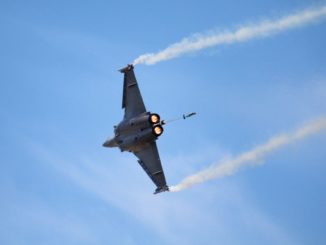
Currently, the Su-30MKIs are the mainstay of IAF till the rather belated induction of French Rafale fighter aircraft, which were marred by kickbacks controversy is complete. Initially, the Indo-French deal was for the acquisition of 126 Rafales but owing to charges levelled by the Indian political opposition, the deal was scaled down to 36. The first batch of which has been delivered to India. As for the Su-30s, India had initially contracted with Russia for 272 Sukhoi, but that number has swelled up to 300.

With multiple squadrons of older MiG-21 interceptors and MiG-27 ground attack jets being retired in quick succession, the IAF fighter fleet is set to decline to a low of 32 squadrons – or around 576 aircraft. It is a pity that IAF has not been able to place confidence into the indigenously produced Light Combat Aircraft (LCA) Tejas, which became obsolete even before induction because of the delays in production and failures at various stages.

The much-touted Su-30MKIs of IAF are yet to achieve a kill against Pakistan or China apart from the Helium Filled Balloon which was shot down by Su-30MKI in 2016. The balloon strayed in from Pakistan and was detected and tracked by IAF Ground Radars on Republic Day, 2016. Due to security concerns, a Su-30MKI was deployed within a few seconds to shoot down the ‘friendly’ balloon with a ‘Happy Birthday’ slogan written on it. Since the payload was unknown and could be destructive, the Su-30MKI pounded some 97 rounds from its GSh-301 autocannon as per Standard Operating Procedure and brought down the target which was later inspected and was declared ‘Harmless’.

In the melee with Pakistan Air Force (PAF) on 27 February 2019, following its failed surgical strike against an alleged terrorist training camp at Balakot in Pakistan on 26 February, a Su-30 of IAF was shot down by PAF along with an IAF MiG-21. The debris of the IAF Su-30 fell in Indian territory thus IAF never acknowledged the loss but PAF aired video clips confirming the kill and demise of the pilot. Wing Commander Abhinandan, the pilot of a MiG-21, which was also shot down in the same encounter, was captured alive. He was paraded on Pakistani TV Channels but returned to India in a gesture of goodwill.

IAF continues to rely heavily on the Su-30, describing it as an “air dominance fighter”. Its marriage with the Indo-Russian Cruise missile BrahMos after modifications carried out by Hindustan Aeronautics Limited (HAL) to reduce the weight of the missile have made it a potent weapon. The lethality of the BrahMos can be gauged from the factor that it has the capability of cutting an enemy warship in two.

India’s obsession with Pakistan developing the strategically located deep seaport of Gwadar with Chinese assistance has raised alarm bells in New Delhi. Gwadar overlooks the Arabian Sea from where the bulk of India’s oil supply is transported. On 4 March 2019, an Indian Navy (IN) submarine attempted to enter the territorial waters of Pakistan. It was detected by the vigilant Pakistan Navy (PN) anti-submarine, maritime surveillance aircraft P-3C Orion, which localized and blocked the would-be intruder from entering Pakistan’s maritime zone. The submarine could have been easily engaged and destroyed had it not been Pakistan’s policy to exercise restraint in the face of Indian aggression and to give peace a chance to prevail. However, the submarine was kept under watch along with monitoring of other Indian Navy units.

Apparently, India had learnt no lessons from its previous misadventure on 14 November 2016. According to an official report, PN, ever alert and using its extreme professional skill, had prevented the Indian submarine from entering Pakistani waters. Reportedly, the unsuspecting submarine was detected, localized south of Pakistani coast and forced to flee. Seemingly, the IN sub was detected when it came up to the surface to recharge its batteries which may have become exhausted. Subs are required to rise to periscope depth to recharge their batteries.

It is no coincidence that the IN sub was caught lurking in Pakistani waters on the same date that the first cargo ships were setting sail from Gwadar, carrying a shipload, which had been brought in the shape of a convoy from Kashgar. Now India seems to have placed its reliance on the aerial platform of Su-30MKIs to look after its maritime interests.

India’s ASAT Test – A Threat to Global Commons

Many of us might remember the 2013 film Gravity by Director Alfonso Cuaron starring Sandra Bullock and George Clooney. While it was less of a film containing the story of space survival and more of an experience to watch because of its realistic space effects; the film also silently conveyed few important messages for the general public: the importance of space security, dangers of space debris, and most importantly the need for responsible behaviour in outer space.

Outer space, like oceans and seas, is a global common, i.e. it is a common heritage of mankind, free from territorial demarcations down below. Ideally, it is supposed to be free from all conflicts and wars between clans, nations, and states; which, humanity has been witnessing since its advent. Although there were strong trends of ‘militarization of space’ in both USA and USSR in the first decade of the space-age; however, measures like Outer Space Treaty, Moon Agreement, Strategic Arms Limitation Talks (SALT-I and -II) etc. receded the military usage of space and opened up avenues for its socio-commercial utilization aimed at the greater benefit of a common man. The result is that the modern-day living is highly dependent on technologies based in space or services passing through space.

Thus, by and large; we can say that space has been used for peaceful purposes as nations have been showing restraint and acting responsibly in the medium of space. Especially in this century, more and more nations continued to field their satellites in space without worrying for space debris or space weapons; although the three superpowers (i.e. USA, Russia and lately China) had Anti Satellite (ASAT) capabilities.

On 27 Mar 19, Prime Minister Modi proudly announced the attainment of ASAT weapon capability as the Indian Defense Research and Development Organization (DRDO) missile destroyed one of the country’s own military satellites in ~300 km high orbit. Dubbed as “surgical strike in space”, it was more of a direct cover-up of the failure of Indian Air Force (IAF) to perform against much smaller air force. In other words, after failing to bully Pakistan, the BJP’s election campaign made use of creating an issue of outer space insecurity. The aforesaid notion was reflected in criticism at the international front as well as in domestic circles in India (for instance by Rahul Gandhi, Chief Minister of Bengal Mamata Banerjee, etc.).

The test also brings the ethical values and real aims of Indian Space Research Organization (ISRO) as well as its political masters in question. India initiated its space program for socio-economic development and had been resisting military applications until the end of the last century. This approach (of the civilian space program) directly benefited India in the form of “access to advanced technologies” through international collaboration.

Thus, in the present century, as ISRO worked to garner a commercially viable, largest civilian space program in the world; DRDO continued to tap benefits in the form of ballistic and hypersonic missiles, anti-ballistic missiles, and the ASAT weapons. The aforesaid approach is analogous to the “peaceful nuclear explosion” in 1974 and depicts precedence of obtaining sensitive technologies in name of civilian use and then diverting them towards the creation of offensive military capabilities.

From the perspective of strategic studies, it is worth mentioning that satellites are directly related to strategic stability; legalized as “national technical means of verification” in SALT. Destroying a satellite is highly provocative as it interferes in the ability of a country to detect a nuclear strike. Thus, ASAT can have direct consequences in escalating towards nuclear war.

The nature of space security trilemma between Chia-India-Pakistan is quite different from its terrestrial dimension.  There is a considerable imbalance of power between China and India whereas the presence of the rest of the neighbours of India in space is insignificant. Against whom Indians are intending to fight in the medium of space, remains beyond logical comprehension. Thus, the space facilities of India need to be monitored through international agencies to obviate problems for the international community in space.

While ASAT may still be a new word for many of Pakistanis, the fact is that the drive for ASAT capability was not new in India. The development of “weapons platforms for space” by Aerospace Command of Indian Air Force (and not by DRDO or ISRO) was announced by the then Chief of Air Staff of IAF, ACM Srinivasapuram Krishnaswamy in 2004; three years before Chinese ASAT test. After the Chinese ASAT weapon test in 2007, pressure mounted from civil and military circles in India for demonstration of similar capability.

In 2010, the Indian Ministry of Defence also declared to develop hard and soft kill ASAT capability for destruction of satellites in its “Technology Perspective and Capability Roadmap” document. In 2011, the Institute for Defence Studies and Analyses (IDSA) held a conference in New Delhi to deliberate on issues of space security where the speakers unanimously agreed for ASAT test by India. The presented papers were published under the title of “Space Security: Need for Global Convergence” in 2012. In the present decade; the threat, doctrine and policy-related aspects of (Indian) space were regularly appearing in literature and the facets of counter space operations, in an overall offensive posture, conspicuously formed part of the solution to many of these discussions and proposals. Thus, the capabilities achieved over time were duly utilized by BJP as a desperate, face-saving measure to garner political support in the 2019 general elections. The aforesaid approach also highlights the placement of sensitive technology in hands of the BJP government; who, for their own election campaign, first resorted to an unnecessary military action, and then went on to create a space security dilemma to cover up its failures.

This event will have global implications; it was not just another routine test of a ballistic missile or a surface to air missile in territorial airspace. This test, although a technology demonstrator even in its primitive form has been carried out by a developing country having more than half of its population living well below the poverty line. It clearly shows that days of “weapon-free space” are over and “space insecurity” is now a reality for all countries to worry for. Many states will now seriously consider incorporating defensive measures (of some degree) in their space programs, so as to ensure protection during crises or war. This event has also reinstated the need for incorporation of the domain of space into tactical and operational calculus of militaries. Thus, along with increased involvement of the military in otherwise civilian space programs, it will be entailing additional economic implications as well. This one irresponsible act for winning elections may also lead to curtailing of collaboration (particularly in the pretext of dual-use of space technologies) at global level, thus affecting the growth of space programs of technologically inferior nations.

Lastly, what is the effect on Pakistan and what should we do? The answers lie towards developing a prior understanding of counter-space operations. While this whole development was lightly taken in Pakistan, not even being reported by some of print and electronic media, the fact remains that the aforesaid questions are very important requiring thorough deliberation at all levels. All the more, there remains a need to react in a careful, well-deliberated manner that can ensure protection without affecting the growth of our space program.

This article is based on his research work titled “Counterspace Operations and Nascent Space Powers”, published in 2018 in the International Journal of Space Politics & Policy.

Learning from Others: COVID-19

When a nation observes strength in unity, cohesion, and resilience, it can conquer any calamity that comes its way; people, abreast their leaders, unveil treasures of courage and resilience to convert adversity into prosperity. As the unprecedented pandemic paves its way into 196 countries and territories across the world, there is no uncertainty, given the soaring number of cases and deaths, regarding the catastrophic intensity and extremity of the deadly pathogen, COVID-19.

Where the resource-less, developing and economically developed countries are struggling to tackle the pandemic, some countries have succeeded to control and curb the infection. For instance, China has reported zero new cases from the epicentre of the pandemic, Hubei province, for four consecutive days, 19th March to 22nd March. In contrast, on 13th February, China had recorded 15,000 cases. Another such example is of South Korea: from 919 cases in one day to 64 cases a day, the country has flattened the curve of new COVID-19 patients.

Hence, the world is applauding the efforts and deliberately scrutinizing the strategies and policies these countries have taken to curtail the spread. At the time of writing, the world has reported 402,384 cases and 17,507 deaths; Pakistan has confirmed 956 infected patients and 7 deaths. Therefore, it is imperative for Pakistan and other countries to thoroughly analyse and adopt the unprecedented measures taken by these two countries to mitigate the extremity of the pandemic.

The lessons Pakistan can learn and the measures it can take are fourfold. Firstly, the main strategy Pakistan should adopt is to prevent the import and export of the virus from the walls of isolation centres, hospitals, cities, and the country; it should block transmission completely. In Hubei, China locked down the entire province to avoid further escalation of the virus and focused on maximum diagnosis; almost 60 million people were put under a stringent lockdown.

The government of Pakistan has redlined mass gatherings in public but implementation is not exceptional. Whether it is the Friday prayer or a political gathering, health should not be compromised at any cost. Hence, it is imperative to impose a curfew, but on the contrary, shops for basic necessities and their transportation should remain open.

Secondly, within two weeks of the pandemic, sufficient detection kits were accessible in both countries – South Korea and China, and South Korea is now producing 100,000 kits per day. Moreover, separate clinics should be set up for coronavirus detection to avoid the spread, just as China re-established the fever clinics used in the 2002-03 epidemic of SARS. The testing should be made free and easily accessible for the populace. Early and swift diagnosis is the focal point. One diagnostic machine in China tests up to 200 people and South Korea has conducted over 3 lacs tests. According to a senior member of the World Health Organization, Dr Bruce Aylward, a country can beat and contain the pathogen by quickly and swiftly responding to the implementation of these strategies.

Thirdly, contact tracing has been one of the most crucial tools for China. The main aim was to trace every single individual that has been in the contact of an infected person. In the Sichuan province of China, as of 17th February, 23,178 people were tested under medical observation out of 25,347 traced cases and among those, 0.9% were found to be infected by the pathogen. The use of big data and artificial intelligence in surveillance systems also played a critical role: facial recognition cameras and mobile tracking technologies were deployed to enhance contact tracing. The cameras were also used to check the temperature of people in crowded areas. In the Zhejiang province, QR codes were established based on the health performance of an individual.

Last but not least, centralized and authentic national guidelines should be provided by the government to educate the public. For example, in China, national knowledge has increased by six times and the Cyberspace Administration of China (CAC) has introduced a new regulation to counter the spread of fake information. The government has collaborated with tech giants like ten-cent and Weibo to block disinformation and provide reliable information to the masses. Misleading information could cost lives, for example, a Chinese woman ate two kilograms of garlic because of fake rumours she heard on social media and woefully, she was admitted to the hospital for two weeks. The guidelines on how to take care of an infected patient are necessary on a national level.

Furthermore, the government of Pakistan should develop an online system comprising a team of expert doctors and consultants for non-urgent medical cases, and it should initiate an active and efficient food delivery system for citizens at home so that food items and supplies keep flowing through organized forums. As Dr Aylward said in an interview, “the food delivery service in China is as efficient as if fifteen million people had needed its services, the food was delivered without any interruption.”

Moreover, other provinces of China provided assistance to the Hubei province for containing the virus. Individually, the people of China have also helped a great deal and taken up relevant jobs, for example, highway workers were testing temperatures and delivering food. Thus, Pakistan must coordinate within itself and with other countries to reach a common front on the first pandemic the world is witnessing after a century.

The exemplary and unprecedented response China and South Korea have taken to curb the pandemic is unforeseen. Several laboratories and programs have been developed in these countries, while Pakistan has also made a committee for developing vaccines and related medical antidotes. However, times are tough, especially for Pakistan with the ongoing economic deficits and there might be a long way to go before the world finds a cure. Hence, the foremost approach Pakistan needs to adopt is to prevent and contain the virus and impose strict countrywide restrictions.

RA’AD-II: Enhancing Pakistan’s Deterrence Posture

Over the past few years, the South Asian region has witnessed profound developments and enhancements of cruise missiles.  This is primarily because of India’s aspirations for supersonic and hypersonic weapons. Evidence comes from how India has been carrying out an extensive cruise missile development program along with its prospective enhanced air defence shield. It has developed and operationalized advanced cruise missiles, such as the short-range Nirbhay, and the most advanced recently operationalized short-range cruise missile BrahMos which has land, sea and air launch versions with incredible supersonic speed. This adds to the spectrum of threat and compels Pakistan to follow suit, despite serious financial constraints, while staying within its existing doctrinal posture of credible deterrence.

Pakistan’s cruise missile inventory includes short-range land and sea-launched Babur, and short-range air-launched Ra’ad missiles. These missiles are aimed at providing credible deterrence against a wide spectrum of threats from India that include supersonic cruise missiles, acquisition of advanced air defence systems and conventional superiority as well. In a recent development, Pakistan successfully test-fired Ra’ad-II air-launched cruise missile (ALCM) on February 17, 2020, with a reported range of 600 km and capable of delivering multiple types of warheads. The Ra’ad-II cruise missile, which is an advanced version of the Ra’ad-I, is believed to be a ‘stealth’ with pinpoint accuracy. It is described as terrain hugging as well as a highly maneuverable missile. At present, the Ra’ad-II is attachable to Pakistan’s Air Force’s (PAF) Mirage-III aircraft with a provision to be integrated with the JF-17 thunder jets as well.

It is worth mentioning here that cruise missiles, unlike ballistic missiles, fly an essentially horizontal cruise path for most of the duration of their flights and can maneuver like a fighter jet through various waypoints. They are difficult to be located and provide a distinct advantage over ballistic missiles. Moreover, due to their varying altitudes during the flight, they are believed to be complex as far as their detection and interception are concerned, with the provision of air defence systems. This has been evident in how Iran’s cruise missiles reportedly penetrated the US Patriot surface-to-air system (PAC-2) – one of the most advanced air defence systems in the world, in September 2019. The PAC-2 has spectacularly failed to deter and defend against the reported cruise missiles attacks by Iran. The lapse was such that even the US Secretary of State Michael Pompeo had to justify it by admitting that some of the finest air defence systems do fail sometimes when it comes to providing defence shield against the cruise missiles.

Coming to the relevance of air defence systems vis-à-vis cruise missiles in the South Asian context, it would be significant to highlight some prevalent factors. India is investing heavily in the provision of a sophisticated air defence shield aimed at deterring Pakistan. In this regard, at present, India possesses and intends to acquire some advanced air defence systems in its missile defence inventory that would likely cover a broad range of spectrums including cruise missiles. These include indigenously developed ballistic missile defence systems such as the Prithvi Air Defence (PAD) missiles, the Advanced Air Defence (AAD) Ashwin missiles and the Barak-8 missile defence system which has been jointly developed with Israel. Furthermore, to enhance its future capabilities which would also cover the spectrum of cruise missiles, India had also signed an agreement with Russia for the acquisition of the S-400 anti-missile system back in October 2018, the delivery of which will start by the end of 2021. In another significant development, India reportedly intends to acquire the medium-range ‘National Advanced Surface to Air Missile System-II (NASAMS-II) from the US. This system once acquired, would be an addition to India’s air defence inventory specifically focused on cruise missiles.

In the same vein, India’s development and operationalization of advanced cruise missiles such as the Nirbhay and the BrahMos would likely destabilize the pre-existing deterrence framework in the South Asian region. Simultaneously, India’s provision of Air Defence Systems would encourage it to counter Pakistan’s existing range of warhead delivery systems, including cruise missiles. However, the inadequacies of some of the battlefield tested advanced air defence systems, such as the Patriot system, vis-à-vis cruise missiles are also evident from recent examples. Moreover, given such inadequacies, India’s acquisition of S-400 would not solely guarantee the non-penetrability of India’s air defence shield by Pakistan’s cruise missiles in the foreseeable future. In this regard, Pakistan’s cruise missiles, especially the Ra’ad-II as a standoff weapon with its extended range and pinpoint accuracy, would likely remain a key determinant of the deterrence posture in years to come.

Hence, at present, Pakistan is being threatened by the Indian offensive military aspirations of enhancing the cruise missiles and a non-penetrable air defence shield. Pakistan still holds a principled stance of working for peace and stability in the entire region. However, being a responsible nuclear weapons state and having huge economic constraints, it does not want to deal with India on a tit for tat basis with regards to the provision of supersonic and hypersonic cruise missiles. Pakistan’s response against the backdrop of severe threats from India is aimed at assuring its security and preserving its sovereignty. In this regard, Pakistan’s credible air-launched cruise missile capability i.e. Ra’ad-II within its existing doctrinal posture seems a plausible way out, at least for the time being.

Is COVID-19 a Biological Weapon?

Since time immemorial, the world has been inflicted by various calamities; some were natural while others were manmade. They include floods, earthquakes, world wars and epidemics like the plague, cholera, typhus, flu, Cocoliztli, HIV-Aids and now the coronavirus, which has been named COVID-19. Many of the pandemics, which occurred in biblical times, took a heavy toll on the human population since medical science was not advanced enough.

The outbreak of COVID-19, despite the medical breakthroughs of the twenty-first century, has taken the whole world by storm. With over 140 countries afflicted, over 225,252 cases, and 9,276 deaths, the COVID-19 outbreak has caused global panic. The epicentre of COVID-19 is the Chinese metropolis of Wuhan. China responded boldly, locking down entire cities and erecting numerous emergency hospitals in less than ten days, it managed to control the deadly virus, and for the last week or so, no new cases have been reported. Unfortunately, despite the suspension of travel to and from China, COVID-19 crossed international borders. The worst hit places are Italy and Iran, while the whole of Europe, Middle and Far East, Africa and the USA are being affected. Since the actual cause of the outbreak has not been identified yet, nor a preventive vaccine developed, although some breakthrough is expected soon, fear and panic has caused the US to blame China for the outbreak, calling it a biological weapon which went out of control, while the Chinese are casting aspersions on the Americans, insinuating that they released the novel coronavirus as a weapon against China.

With stock markets crashing, economies in a meltdown, hospitality, tourism and travel industries coming to a standstill, all kinds of conspiracy theories are floating around. As soon as the outbreak began, some political pundits started pointing out that a passage from the 1981 book The Eyes of Darkness by Dean Koontz eerily predicts the coronavirus outbreak. A character named Dombey narrates a story about a Chinese scientist who brought a biological weapon called “Wuhan-400” to the United States:

“To understand that,” Dombey said, “you have to go back twenty months. It was around then that a Chinese scientist named Li Chen defected to the United States, carrying a diskette record of China’s most important and dangerous new biological weapon in a decade. They call the stuff ‘Wuhan-400’ because it was developed at their RDNA labs outside the city of Wuhan, and it was the four-hundredth viable strain of man-made microorganisms created at that research centre.”

Perhaps influenced by such intriguing hypotheses, Lawyer Larry Klayman and his Freedom Watch non-profit want China to pay for creating the COVID-19 virus as “an illegal biological weapon” in an “illegal and internationally outlawed bioweapons facility.” The Florida based attorney filed a class-action federal lawsuit in Dallas against the People’s Republic for causing “massive damage.” The lawsuit seeks “an award in excess of $20 trillion US dollars.” The lawsuit, however, is likely to be thrown out by the US judiciary.

The defendants in Klayman’s suit are listed as the People’s Republic of China; the People’s Liberation Army, the official military of China; the Wuhan Institute of Virology; Shi Zhengli, the institute’s director; and Major General Chen Wei of China’s Liberation Army.

Wuhan reportedly houses a level 4 bio lab also known as a BSL4 lab. A BSL laboratory is designed to study the most dangerous pathogens known to man. BSL-4 is the highest level of biocontainment: its criteria include filtering air and treating water and waste before they leave the laboratory, stipulating that researchers change clothes and shower before and after using lab facilities.

According to the Economic Times story titled ‘Is COVID-19 A Bioweapon? Five Conspiracy Theories Around Coronavirus That Will Shock You’, appearing in its 28th February 2020 issue, China constructed the Wuhan National Biosafety Laboratory (Level 4) of the Chinese Academy of Sciences, in 2015. The aim was to prepare for and respond to future infectious disease outbreaks.

Scientists had warned in 2017 that a dangerous virus could escape the lab. According to Nature, some scientists outside China were worried about pathogens escaping and the addition of a “biological dimension to geopolitical tensions” between China and other nations.

Let us examine the obverse side of the coin. Apparently basing his accusation on a story published in The Independent on 6th August 2019, titled ‘Research into deadly viruses and biological weapons at US army lab shut down over fears they could escape’, a Chinese Foreign Office spokesperson questioned if the US was responsible for the outbreak. According to the story quoted above, the virus originated in the US biological warfare lab at Fort Detrick. It was forced to shut down when viruses leaked in August 2019 and US soldiers were infected. The conspiracy gets murkier when it is claimed that 300 US soldiers were sent to participate in the world military competition. Some of them were infected but they spread out in Wuhan, even visiting the wet market, alleged to be a source of COVID-19. Reportedly, weeks later COVID-19 erupted in Wuhan. In November 2019, the Chinese press reported that five athletes who had suffered from the infectious disease had been discharged from the hospital.

According to Healthline and a video from New China TV, in January 2020, the US CDC reported that the US is gearing up for one of the worst flu seasons ever, with 12,000 deaths. On 12th March 2020, the CDC director admitted that some COVID-19 deaths were misdiagnosed as the flu because COVID-19 were found when they did posthumous tests. In September 2019, a “state-wide outbreak” of a mysterious ailment emerged in the US, causing severe respiratory diseases in a few hundred people. This was blamed on vaping, although people had been vaping for more than a decade without such outbreaks. Officials were unable to find any relation to a specific vaping device.

Delving deeper, one notices that according to The Guardian, it had been stated that Italian labs confirmed that the strain of COVID-19 in Italy is different from the one circulating in China, and that the circulation of the virus is not so recent and had been spreading undetected for weeks. Another article highlights Daniel Lucey, an infectious disease specialist at Georgetown University, claim that because there was an incubation time between infection and symptoms surfacing, and the presence of infected people with no links to a wildlife market, the virus could not have originated from the wildlife market. Kristian Andersen, an evolutionary biologist at the Scripps Research Institute, agreed with the assessment.

Thus Zhao Lijian, the Chinese Foreign Ministry spokesman, asserted: “It might be the US army who brought the epidemic to Wuhan. Be transparent! Make public your data! The US owes us an explanation!”

Whatever may be the origin, the severity of the pandemic demands a collective response to control the outbreak, find a cure and vaccine to keep the outbreak from wiping out humanity.

India’s Naval False Flag Operations

A couple of weeks ago, Indian Customs officials claimed that they had detained a Karachi-bound ship bearing a Hong Kong flag, and declared that the vessel carried an autoclave, which could be used in the launch process of ballistic missiles. Indian authorities left no stone unturned to make the incident a global crisis, giving an angle of illicit missile technology proliferation. India’s Defence Research and Development Organisation (DRDO) experts immediately rushed to inspect and investigate the vessel at Kandla Port, Gujrat. After the hysteria, a lengthy silence from Indian authorities followed, who refused to comment on further developments; instead, they quietly released the ship after thorough investigation. However, later on, Indian authorities conveyed their concerns, saying that the autoclave was meant for military purposes. India’s futile attempt to malign Sino-Pak maritime trade met a strong reaction from both China and Pakistan, who strongly rejected Indian accusations, saying that it was a heat treatment furnace shell system and not a dual-use item classified under the non-proliferation and export regime.

Initially, Indian authorities had claimed that the ship was detained after they found suspicious cargo on board. Later on, they stated that the object of suspicion was an autoclave machine, which is used in the aerospace industry specially to make high-performance composites, however, according to India, this equipment was used to make the front section of ballistic missiles. Factually speaking, autoclaves are large vessels, designed to hold items including both healthcare and industrial material, that are placed inside and the lid is sealed. The autoclave protects the items inside from environmental degradation. That means, the autoclave, which Indian authorities alleged to be used for the front section of missiles, is merely a machine used to protect items loaded inside it, which is also a routine practice in maritime trade; vessels carry such autoclaves and this does not violate any kind of maritime laws.

This isn’t the first incident in India’s history of naval aggression. Earlier in June 1999, India seized a DPRK Cargo Ship called Ku Wol San at same Kandla Port in Gujrat. India claimed that the ship was on its way to Pakistan and carried missile components and metal casings. However, through a strong official démarche, North Korea refuted the Indian claim and asserted that the consignment was headed for Malta. Again in 2010, India detained Pakistan-bound ship, accusing it of carrying explosives and ammunitions. Yet again, Indian authorities couldn’t provide plausible evidence to support their accusations.

From an empirical assessment of these accusations of illicit transfer of material through maritime trade, it appears that India has long been planning to stage a maritime false flag operation against Pakistan. For that, India has operationalized a vast network of maritime infrastructure to keep a close watch on Pakistan’s maritime trade activities. Despite such false flag operations, India hasn’t been able to provide enough evidence showing Pakistan’s involvement in illicit maritime activities. Every time India detains a Pakistan-bound ship, its investigations always end up in a rather murky manner, showing no substantial proof.

The recent incident can also be a part of India’s malicious plan to pressurize China to compromise on its principal stance regarding India’s quest for membership into the elite Nuclear Suppliers Group (NSG). India is not signatory to the Non-Proliferation Treaty (NPT) which is a primary prerequisite for NSG membership, and India intends to enter the elite group without signing the NPT.

There is no second thought on the fact that India has been developing its naval capabilities just to counter Pakistan’s naval capability. Even though India claims to be a net-security provider in Indian Ocean Region (IOR), its naval developments appear to be Pakistan-centric. The social construct of “net-security provider” in IOR is just to attract the latest American weapons and war-fighting machinery. Subsequently, with this US-made weaponry, India would be flexing its muscles to threaten, coerce and intimidate Pakistan in the maritime domain. Indian hardliners have been trying to create space to indulge an armed conflict with Pakistan; as a result, over the period of time, they have staged various terrorist activities at home, killing hundreds of their own citizens, just to blame Pakistan. From the Pathankot incident to attacks on Parliament House, Indian authorities have not only staged terror activities at home but also facilitated terrorists to openly operate on Indian soil.

Keeping Indian authorities’ malicious activities in mind, one can argue that India under Modi government can go to any extent to initiate a military conflict with Pakistan, as such a move has always helped Modi stay in power and divert public opinion at home. Therefore, its equally crucial for Pakistan to not fall in BJP’s trap. Despite the fact that Pakistan has to deal with a hawkish and aggressive neighbour, there is a need of extreme cautiousness and responsibility to not provide Modi and his bloodthirsty brigade an excuse for initiating an all-out war.

Of Words, Media and Psychological Warfare – Challenges for Pakistan

The 21st century is characterized by media revolution, technological advancement, and power politics central to specific narrative formation and streamlining of popular discourses such as “weapons of mass destruction”, “terrorism”, and,  “Islamophobia”. This has contributed greatly to the evolution of warfare. International societal construct has become a conflict zone brewing the global crisis by manipulating perceptions through media and digitalised deception, thus, contributing to the social psychology of the global community at large. This can be considered in view of Kurt Lewin’s Life Space Theory which comprises the individual and his psychological or behavioral environment as facts that affect the behaviour or thoughts of the individual at a certain point in time. Since globalisation has engaged the nation-states at all levels of interaction in the social hierarchy, media has become the driving force of the global society. For this purpose, the influence of media in general and social media in particular over the world populace in the present-day psychological and behavioural setting is unmistakable. This is being done by exploiting language to manufacture favourable perception. Words, in general, having diverse shades in the context of their usage, have the ability to intensify or shrink the impact of what is being conveyed. Along these lines, language weaponization takes place in the social media space in conjunction with the use of technology, artificial intelligence and cyber propaganda as instruments of strategy, which has been observed as a recent phenomenon to streamline designed cognitive deception.

Changing Nature of Warfare and Socio-Cognitive Manipulation

This transformation of the nature of warfare based on ‘narrative formation’ and ‘popular discourse’ using media gives birth to a socio-cognitive phenomenon. This can be seen in the aftermath of the ‘war on terror’ in the 2000s that set the foundation of a global conflict based on deception and propaganda-driven narratives, stimulating the emotional state of people to produce prejudiced beliefs towards each other. This can be regarded in the context of the world in binary terms during and after the 2000s, in which the divide between the ‘self’ and the ‘other’, as well as the ‘Muslims’ and the rest of the world, can be observed. For this purpose, media, politics, and language are being used as means to influence the structure of societies, to shape the social-pulse towards a particular process, pattern or phenomenon in the social realm. This has been done by exploiting the socially victimised ‘soft-targets’ using Non-Government Organizations (NGOs) in general and media in particular to empower the narratives of feminism, freedom of speech, progressive liberalism, and the right to democracy, on one hand and ‘ethno-religious extremism’ on the other, to trigger civil unrest. When such intently designed narratives develop hegemony in the public discourse, they provide fertile ground to sow the seeds of socio-cognitive deception. This has been a success and it can be estimated through the comparison of the anti-war movement against the United States’ invasion of Iraq and Afghanistan; and with the protests against the wars in Libya, Syria, and Yemen, which are hardly recorded.

Psychological Warfare – Challenges for Pakistan

Pakistan, a victim of the war on terror, has been countering psychological warfare for decades. Media empowerment followed by ‘disinformation overload’ or ‘fake news’ is becoming a stimulus, inciting internal conflicts. For instance, the prevalent tactics are constructing ‘frames of reference’ and ‘narratives’ streamlining and prioritizing rather passive and pessimistic projections by presenting issues more than solutions concerning mainly the domestic state of affairs. In Pakistan’s socio-political setting, this can be determined in view of the absence of the ‘fact-checkers’ in the Pakistani newsrooms. Moreover, lack of objectivity and ‘hint-dropping’ practices quoting ‘sources’ to compete in the mad-race of ratings have been observed to be contributing to the socio-cognition of the audience. Similarly, the role of masses cannot be excluded in this process. With easy excess to social media, a frequent downpour of disinformation and misinformation may help to construct certain ‘frames of reference’, which if ascertained in some way or another in the context of developing events, attract support. In this way, certain influences can be asserted by such trends in the social media space. Along these lines, electronic media gets affected and becomes a key player in constructing narratives by ‘popularizing’ trendy discourse in social media. In consequence, media in general and social media in particular ultimately contribute to the construction of the ‘narratives’ of uncertainty, frustration, and confusion among the masses. This is threatening in the backdrop of national security because of the fact that social media played a significant role to involve people in the mass protests of 2019 around the globe.

Of Language and Media

Since social media employs language as a form of social practice, therefore, it is the contributors’ linguistic expressions that can be regarded as an impediment to the receptive ability of the masses. However, it is alarming that the sensitivity of this issue has not been observed to be in focus. Years ago, Benjamin Whorf and Edward Sapir, through the Linguistic Relativity Hypothesis, discussed linguistic manipulation in relation to the cognitive aspects of language use and the way it is being interpreted by the receiver. This has been ascertained by psycholinguistics that language and its usage influence our brain significantly in innumerable ways. In line with this, in a country like Pakistan, where reliable information sources are scarce, public reliance on electronic media comes up with an interesting observation that words are not solely the manifestation of different notions pertaining to socio-politics, socio-economics and socio-cultural settings attempting to communicate, but depending on language use, more attention is placed towards certain ‘facts’ versus others. This can be deliberated in the context of the same news reported by different television channels using diverse linguistic expressions with varied range of intensifiers alongside wide-ranging interpretive explanatory analysis. These subtle tones in word usage cause considerable perceptive transformations, eventually leading to various uncalled for engagements in a societal construct.

Language, inherent to social cognition, formulates the receptive ability of its users and influences decision-making, interactions, choices, and assessments. Besides, it is interesting that psychological warfare involves the human faculty specifically by streamlining the specialised content on media, in line with a strategic goal to influence the collective national perception. Thus, linguistic choices in word usage are significant contributors to developing or generating socio-cognitive preferences.

For all intents and purposes, this issue must be addressed by the concerned authorities. They must recognise that psychological warfare has not only entered our socio-cognition, it has also started working to alter the neural mechanism of the social fabric. This needs to be tackled by re-examining our priorities and by prioritising our ideological survival by using ‘fact-checkers’ in all media outlets in addition to devising policies in support of the ‘image building of Pakistan’. Moreover, qualitative and quantitative perspectives regarding media linguistics can be sought after to standardise language-use in media. Likewise, the initiation of a solution-based discourse centralizing Pakistan’s potential must be encouraged. Last but not the least, the prevalent situation necessitates the adoption of a legal standpoint concerning media in general and social-media in particular to counter the dis/misinformation phenomenon. This calls for drastic measures, realising the impact of linguistic manipulation through media, alongside its impact on psychological and social conduct.

Afghan’s New Episode: Implications for Pakistan

The US and the Taliban have finally inked the historic peace deal that aims to end the long-standing animosity between the two. All regional and extra-regional pacifists have welcomed this agreement, moreover, they have advised all the concerned parties to abide by all the clauses of this momentous agreement. But unfortunately, Afghanistan President Ashraf Ghani has categorically rejected the prisoner swap with the Taliban and argued that, the US doesn’t have any authority to intervene in the intra-Afghan negotiations, rather it was just a facilitator. Consequently, the Taliban fighters have started attacking the Afghan forces, which have not only affected the nascent peace process, rather it has multiplied the worries of all concerned facilitators, including Pakistan. Pakistan should keep a vigilant eye over all the changing dynamics of the region, in order to avoid untoward circumstances and safeguard its territorial integrity.

After a long period of conflict, both the US and the Taliban have signed an agreement for bringing peace to Afghanistan, in order to close the chapter of long-standing rivalries between them. It is important to highlight that the peace deal was inked by US special envoy Zalmay Khalilzad and Taliban political chief Mullah Abdul Ghani Baradar, in the presence of US Secretary of State Mike Pompeo as an eyewitness. While addressing the audience, Mr. Pompeo urged that the insurgents should keep their promise to cut their ties with Al-Qaeda . Similarly, on that auspicious moment, Mr. Baradar told the audience that the withdrawal of all foreign troops from Afghanistan, would bring the Afghan nation under the Islamic regime, consequently according to him, it would guarantee a prosperous life for Afghans. As per the peace agreement, within the first 135 days of the peace deal, the US would reduce its forces in Afghanistan to 8,600, while on the other hand, both parties were expected to exchange 5,000 Taliban prisoners and 1,000 Afghan security force prisoners respectively by the 10th of March.

Importantly, the Afghan President Ashraf Ghani publicly rejected the proposed timeline for a prisoner swap with the Taliban, moreover, he was of the view that the US doesn’t have the authority to publicize a prisoner swap with the Taliban without developing a consensus with Kabul. Furthermore, he told reporters that the mutual release of prisoners could be part of intra-Afghan negotiations, but it couldn’t be a precondition to negotiations. Moreover, he categorically stated that the Kabul government has made no commitment to free 5,000 Taliban prisoners before the commencement of the proposed intra-Afghan dialogue by the 10th of March. Also, he argued that the government of Afghanistan would take care of the perspective and self-will of the people of Afghanistan while developing any confidence building measure before the commencement of the intra-Afghan dialogue among different stakeholders of Afghanistan.

Meanwhile, after Ghani’s rejection to prisoner swap with the Taliban, the latter insurgent group started attacking the Afghan forces and killed at least 20 soldiers and policemen in Imam Sahib District of Kunduz. Similarly, the insurgents also attacked police in central Uruzgan province, where 6 police were killed and 7 wounded. Also, the Taliban had carried out 43 attacks at checkpoints in Helmand, throwing the nascent peace process into grave doubt. In order to disrupt the attacks, the US launched an airstrike against the Taliban fighters and defended the Afghan forces. In this regard, US Forces-Afghanistan Spokesman, Sonny Leggett tweeted that, “we call on the Taliban to stop needless attacks and uphold their commitments. As we have demonstrated, we will defend our partners when required.”

Also, in the wake of resuming attacks in the northeast of Afghanistan by the Taliban, Pakistan called on the Afghan government to abide by the prisoner swap clause in the US-Taliban peace deal. In the light of these new developments after inking the peace deal, Pakistani Foreign Minister Shah Mehmood Qureshi called on both the US and the Taliban to come to the negotiating table for the scheduled intra-Afghan dialogue, to be held later this month. Moreover, he advised and added that, “the US-Taliban agreement says that there will be an exchange of prisoners. Afghan President Ashraf Ghani should ask the US for an explanation of the agreement. According to my knowledge, Zalmay Khalilzad has been keeping the Afghan leadership updated on the negotiations. There has been an exchange of prisoners in the past as well. When you move from war to peace, you need to do these things to generate goodwill.”

It is important to take into consideration that inking the peace deal fuelled a power struggle among different factions inside Afghanistan. The Taliban started fighting against the Afghan forces, which not only created different hiccups to the nascent peace process, but also multiplied the concerns of all facilitators regarding the future administrative setup of Afghanistan. It is also important to highlight that Pakistan played a very crucial role of facilitator, in order to restore the peace in the region. Pakistan warned the US and Afghanistan to keep a vigil over the internal and external spoilers, who in one way or the other, would try to sabotage the peace process in Afghanistan. On one hand, Afghan President Ashraf Ghani rejected the proposed prisoner swap with the Taliban, while on the other hand, the Taliban declared war against the Kabul government. As mentioned earlier, being an immediate neighbour to Afghanistan and facilitator to the peace process, Pakistan should play a key role in bringing both sides (Taliban and Kabul government) on the negotiating table. If the spoilers succeed in sabotaging the intra-Afghan negotiations, it would be a massive distress to Pakistan in a way that would quadruple Pakistan’s countering measures in the region. In the light of these likely new developments, Pakistan should keep a sharp eye on all these dynamics in the region, which directly or indirectly affect the security architecture of Pakistan. Moreover, Pakistan should be alert enough to counter all destructive intentions of spoilers against it.

US-Afghan Taliban Peace Agreement and Complexities of Peace Building in Afghanistan

The US and Afghan Taliban have signed an agreement for the withdrawal of US forces from Afghanistan on the Taliban’s commitment of no-use of Afghan soil against US and its allies. Conflicting parties have also agreed to the participation of the Taliban in the intra-Afghan dialogue with other stakeholders including Ashraf Ghani government and Afghan parliamentary opposition. This peace accord is a major breakthrough to end a two-decade US military engagement in Afghanistan with the mechanism for future peace building processes in the country. However, it needs to be understood that “ending war” and “peace building in a conflict-ridden country” are two different processes.  The US and President Zia ul Haq’s administration were able to oust the Soviet Union from Afghanistan in the 1980s but they could not develop any future peace building mechanism for Afghanistan in the post-war period. It resulted in the outbreak of post-war Afghan civil war and the rise of the Taliban regime (1996-2001) from its ashes in Afghanistan.

Now, it is possible to foster peace in Afghanistan because the US-Taliban agreement is a detailed document which has outlined an intra-Afghan dialogue as a mechanism for future peace building in Afghanistan. This agreement has laid out a process for an intra-Afghan dialogue but not a vison for peace in the country. President Trump’s administration wants to withdraw forces from Afghanistan while leaving peace building to the Afghan nation and its neighbors, which could be a serious regional security issue in the absence of regulatory and enforcement mechanisms to implement the outcomes of the intra-Afghan dialogue. In any case, Pakistan will be the most affected nation after the Afghans from the outcomes of the intra-Afghan peace building process. This article will look into the details of this US-Taliban accord and future peace building exercises in Afghanistan.

Because peace in Pakistan is conditioned with peace in Afghanistan, the security situation in Afghanistan has critical implications for the security and stability of Pakistan. The absence of a central government with overarching writ over the state and intra-Afghan factional rivalries over the last many decades have created a peculiar strategic culture in the country. Afghanistan lacks an indigenous economic base to support the economic viability of its state apparatus which increases its dependence on external actors and creates rooms for power play of regional actors in the internal politics of Afghanistan. This scenario adds intricacies to peace building efforts in Afghanistan. The understanding of this strategic environment is important in order to analyze challenges in the commencement and working of the intra-Afghan dialogue as a peace building exercise in Afghanistan.

The Afghanistan peace process is a series of dialogue efforts, seeking political settlement of this problem, carried out by national, regional and global powers involved in this conflict. The most decisive and conclusive among these peace dialogues is the US-Taliban Doha dialogue series which spanned over more than a year. It has culminated in the signing of a landmark peace agreement on 29 February, between the US and Afghan Taliban, for future peace building in Afghanistan. Conflict parties, mainly Taliban and the US, have agreed on four important points which include:

  1. Guarantees and enforcement mechanisms that will prevent the use of the soil of Afghanistan by any group or individual against the security of the United States and its allies
  2. Guarantees, enforcement mechanism and announcement of a timeline for the withdrawal of all foreign forces from Afghanistan.
  • On March 10, 2020, Taliban will start intra-Afghan negotiations with Afghan sides
  1. The participants of Intra-Afghan negotiations will discuss the date and modalities of ceasefire

This is an agreed upon workable formula for future peace building in Afghanistan. Earlier, the US and Taliban agreed on a violence reduction mechanism as a confidence building measure for the peace accord. This agreed upon violence reduction understanding has served as a starting point for future peace building efforts in Afghanistan. Successful implementation of the US-Taliban agreement will be a positive development for Pakistan and the region because it will pave the path for the end of trillion dollars’ war economy and protracted conflict in Afghanistan. The next and most challenging phase of this process will be the intra-Afghan dialogue.

Internal political tussle among different Afghan factions is main impediment in the commencement of this process. The US needs to take the lead role in settling the affairs of rival Afghan factions for long-term peace because the current Kabul regime is dependent on the US for financial assistance. Regional influences that have leverage on Taliban will have to play their role in facilitating this process. Recent violent terrorist attacks in Afghanistan, after the signing of the agreement by the US and Taliban, have raised shadows of concern on the implementation of this agreement. It has redrawn the attention of the Afghan nation by putting peace agreement in a limbo between fear and hope about future of this peace process.

Since 9/11, Taliban and the US are the two most potent actors involved in the armed struggle in Afghanistan. This agreement shows the seriousness of both sides to conclude this conflict on a mutually agreed workable formula to give the impression of a win-win situation about future peace building in Afghanistan. However, the Taliban demanded the release of the 5,000 Taliban warriors before the commencement of the intra-Afghan dialogue, which was resisted by Afghan President Ashraf Ghani.

US President Donald Trump concluded this peace accord with the Taliban to fulfill his election manifesto promise of the forces’ withdrawal from Afghanistan after coming to power and ending the longest US war which was a financial burden on US economy. The Taliban signed this agreement after the US’ guarantee of the withdrawal of its forces from Afghanistan, which they consider as their victory in a war of resistance to foreign occupation. However, the real challenge for the Taliban will be of reconciliation with Afghan society, which has greatly transformed during the last two decades.

Commencement of the intra-Afghan dialogue after developing a minimum consensus agenda would be a daunting task for rival Afghan factions. Afghans have suffered huge losses and casualties in the intra-Afghan wars, but they have not agreed on a common workable rules-based order in their society. An Afghan Jirga, having representation of all vital domestic actors, can be created and empowered to formulate future strategy for peace in Afghanistan.

The US, China and Russia all have convergence of perspective over the Afghan peace process, despite stark differences at the global political level. Pakistan also played a constructive role in facilitating the US-Taliban peace process. Iran did not try to sabotage this peace process despite its animosity with the US. However, India remained problematic in the ongoing peace efforts in Afghanistan, because the status quo situation suits India’s Afghanistan policy.

India has invested in Afghanistan to use the Kabul regime as a proxy against Pakistan. Afghan leadership needs to take ownership of the political process in Afghanistan in order to avoid spoilers who want to derail it. Now, they need to convince the neighbouring countries and global powers involved in this conflict that they (Afghans) will lead the intra-Afghan dialogue process. Pakistan needs to support the intra-Afghan peace process in the next phase as a facilitator but should not intervene because of intricacies attached to this process.

The US has increased the significance of Afghan Taliban as compared to other Afghan factions by signing a peace accord with them. Afghan President Ashraf Ghani has announced the release of Taliban prisoners despite his early opposition towards the decision. The real challenge for Afghan leadership is to navigate through the intra-Afghan dialogue to arrive at a rules-based social order in the conflict-ridden country to formulate future power sharing and transfer of power mechanisms for Afghanistan.

Pakistan has played an important role in facilitating the Doha dialogue series between the US and Afghan Taliban which resulted in the peace accord between them. This was the first concrete step toward peace building in Afghanistan. Peace among Afghans will benefit Pakistan in the form of the repatriation of millions of Afghan refugees from Pakistan and the promotion of trade with Afghanistan which had reduced in recent years. Although the Afghan conflict is too complex to be resolved simply through a smooth dialogue process, this accord can play a decisive role in strengthening the dialogue process for future peace building in Afghanistan, if it is fully implemented by both sides with the commitment and guarantees provided in the peace agreement.

Is Pakistan’s US-Centrism Ceding Regional Power to India?

The present Pakistani government’s attempts to jockey the US for support have been met with constant affirmation of the Indo-US alliance. The US has clearly shown preference for a regionally stronger India and a weaker Pakistan.

For example, the US’ top South Asian diplomat, Alice Wells, during her January Pakistan visit, raised the claim that CPEC included contracts to Chinese firms blacklisted by the World Bank. This came days after Pakistan’s Foreign Minister Shah Mahmood Qureshi asked for US support on FATF to spare Pakistan from being blacklisted for ‘terror financing’ and facilitate its exit from the greylist.

CPEC, the centerfold of Pakistan’s regional economic integration, was thus brought under the shadow of the FATF – another joint Indo-US means of pressuring Pakistan. For India, the prospect of the FATF extending its politicized scrutiny of Pakistan to include CPEC is a bright one, given India’s antipathy toward CPEC.

Pakistan, however, shows no signs of considering options to hedge its bets in response to this Indo-US dynamic. Maintaining an increasingly precarious dependency on the US support which never materializes, Pakistan’s US-centrism has led it to take what defence analyst Lt General (retd) Naeem Lodhi describes as a ‘plunge’, which rids it of opportunities for strengthening its regional posture.

Meanwhile, several opportunities for Pakistan to effectively compete with India for regional power are self-squandered and not so much as even discussed in the policy-making community as a caveat of its US-centric approach.

To expand discourse regarding Pakistan’s prospects on hedging its bets against the Indo-US alliance and countering Indian, the Indo-US regional bonhomie versus Pakistan and the squandered opportunities for Pakistan to counter it warrant closer inspection.

India, US and the Chabahar Corridor

Recently, Indo-Iran ties lost their main binding factor. US sanctions on Iran re-applied in November 2018 ensured that India greatly reduced Iranian oil imports – the main source for Iran’s state revenue. However, the US made an exception regarding Indo-Iran economic ties, which Pakistan paid little attention to: the sanctions-waiver for Chabahar Port’s operation by India and also a planned railway connection from Chabahar to Iran’s Afghanistan border by Indian contractors.

The corridor is tasked with receiving Indian goods via sea for land transport onward through Iran, Afghanistan and onward to Central Asia. However, in the context of the true nature of its importance to India, the USA’s waivers constitute the utmost significance for Pakistan’s strategists and policymakers.

The corridor is not purely economic, but geostrategically-oriented; sanctioned Iran and war-torn, state corruption-riddled Afghanistan are not ideal trade partners – and certainly not ideal venues for India’s foreign direct investment (FDI). Yet India invested massively there because the prize at hand is the encirclement of Pakistan. Afghanistan bears prime importance for this endeavour: India spent heavily in constructing and running dams, countrywide roads, power stations and more in Afghanistan.

Indeed, one might say that the Chabahar Corridor’s slated objective of tapping Central Asia’s market, while important due to the special allure of its energy and raw material to Indian manufacturing, is second-fiddle to India’s encircle-Pakistan objective. If connectivity with Central Asia was the foremost goal, why include dangerous Afghanistan in the corridor instead of an Iran-Turkmenistan route? The answer lies in the utility of Pakistan-bordering Afghanistan to India for supporting anti-Pakistan groups such as Baloch secessionists (BLA) and the Pakistani Taliban (TTP).

US regard for its Indian ally was enough to make it relent in its economic warfare against Iran, even if the major blow in the form of the hydrocarbons and shipping industry sanctions remained. Iran earns less through the India-operated Chabahar Port compared to hydrocarbon export earnings.

The US waiver for India, on the other hand, represented a win-win situation whereby India’s Chabahar Corridor and ‘encircle Pakistan’ project was resuscitated. Moreover, and also with key US interventions, India has managed despite its ever-expanding economic-military ties with the US – and its special relationship with Iran’s primary adversary across the Middle Eastern theatre of conflict Israel – to occasionally signal seriousness toward Chabahar to prevent Iran losing patience with its slow progress.

Indeed, India slashed Chabahar’s funding in July 2019 from 1.5 billion Indian Rupees to 450 million, showing Chabahar’s lack of momentum. However, timely assurance from the US in December 2019 to India of US help in securing investments from global banks to purchase $85 million worth of equipment for Chabahar Port allowed India to compensate for the aforementioned slashing of Chabahar’s funding in July. India followed by increasing Chabahar’s funding steeply and thus giving the slowed-down project the appearance of momentum for Iran’s ‘reassurance’.

The danger India averts here is, of course, Iran opting to join CPEC. However, this US-enabled Indian manoeuvring enabled to keep Iran from ‘abandoning’ Chabahar, by not renewing India’s December 2018 Chabahar lease once it expires or similar measures, contributes less to propping up the Chabahar Corridor than does Pakistan’s lack of initiative in recognizing the opportunity to comprehensively sway Iran to its side.

The Politics of CPEC

Pakistan can utilize a powerful option at its disposal towards this end in including Iran into CPEC, something Iran has expressed increasing interest in. The incentive in CPEC for Iran is arguably greater than it ever had vis-a-vis the Chabahar Corridor, i.e. a land link via Pakistan to China. Notably, Iran’s ambassador to India in September 2019 mentioned, while decrying Chabahar’s slow progress, Iran’s desire to build an LNG pipeline to China a running parallel to CPEC. China maintains noteworthy trade and defence ties with Iran despite US sanctions, continuing to import Iranian oil as well.

Additionally, the project bears an especially strategic dimension as it would save Iran the need to use its sanctioned tankers traversing highly militarized maritime trade routes in and beyond the Persian Gulf for its hydrocarbon exports to China. China, the world’s most energy-hungry market, would itself favour such a direct linkage with Iran parallel to CPEC.

More recently, in lectures from Iran’s Ambassador to Pakistan, Ali Hosseini, Iran’s CPEC interest was re-emphasized. Hosseini called for Pakistan’s Chinese-operated Arabian Sea port, Gwadar, to be connected to Chabahar and CPEC via Iran to thus connect to Central Asia and Europe for trade. In this context, he called for an alliance between Iran, China, Turkey, Pakistan and Russia as well. Given India’s zero-sum attitude toward CPEC, Hosseini’s statements are apparent as a signal of Iran’s willingness to leave India behind.

Moreover, further advantages accrue to Pakistan vis-a-vis countering India’s broader geo-economic plans for Eurasia through Iran joining CPEC if one accounts for the prospects for an expanded CPEC courtesy of Iran joining it.

These pertain to India’s North South Transport Corridor (NSTC). It is a Eurasian project starting in India, connecting to Iran’s Bandar Abbas Port, crossing Azerbaijan and terminating in Russia near Russia’s Baltic Sea coast proximate to Western Europe. It seeks to enhance India’s trade with Russia and Europe while the Chabahar Corridor taps into Central Asia.

With Iran connecting the more stable, efficient CPEC – backed by a trading power in China larger than that of India driving the NSTC – to Central Asia (via Turkmenistan as the rational choice, not Afghanistan) and Europe via Turkey, the NSTC would be out-done. These expanded axes of CPEC constitute shorter and thus more cost-effective trade-routes to Europe and Central Asia than India’s NSTC and Chabahar corridors.

With traders utilizing the expanded CPEC for accessing Europe and Central Asia benefiting off shorter-distance transit than Indian traders using the NSTC and Chabahar corridor, their appeal to the Eurasian market will be greater than that of the latter.

Most notably, India’s Chinese rival would be closer to the Eurasian market than Indian traders. India’s zero-sum opposition to and non-participation in BRI and CPEC would be rendered self-defeating by an Iran-connected CPEC, as Indian traders would not have the option to relocate industry to optimize proximity to Europe and Central Asia as would Indian rival China.

A CPEC connected to Europe (via Iran-Turkey) and Central Asia (via Iran-Turkmenistan) would specifically grant western Chinese provinces such as Xinjiang, whose economic growth China eagerly seeks, a special bonus in shortened distance to these two markets. The option of industry relocation from these provinces to Pakistan to further shorten their export distance to Eurasia would also subsequently yield greater gains through overall reduced costs, provided complimentary policies to oversee this from Pakistan and China.

India’s zero-sum rejection of CPEC and BRI will be rendered self-defeating as its traders will lack such a comparable boost, restricted to within India while their Chinese rivals profit more. Additionally, whatever India built as part of its anti-China NSTC and anti-Pakistan Chabahar Corridor in Iran would also suddenly become a pre-existing cog in the expanded CPEC, defeating India’s purpose again.

For Central Asia, the expanded CPEC serves as a closer direct-link to the substantially populous, nearby markets for its energy-and-raw-materials export-led economic growth as opposed to the tenuous and longer Chabahar Corridor to India’s vast market. This would entail a greater share of Central Asia’s coveted resources going to India’s rivals.

The export-led economic growth India invested in the NSTC and Chabahar Corridor to further boost would be hampered. With this, so would India’s capacity to maintain its prolific defence imports and give India second thoughts about brinkmanship with Pakistan.

The Utility of Iran Sanctions

The risk of secondary sanctions through connectivity with Iran would be incurred by Pakistan, but with China’s potential gains from Iran connecting to CPEC, Pakistan may possess a bargaining chip against getting sanctioned. Given the extensive ties of Western corporations to China, the US would face powerful domestic pressure to desist from sanctioning a China-backed transnational connectivity project that includes Iran.

The off-shore production of US corporate giants in China, whose top export customer is the US, being sanctioned-off from utilizing international financial systems for receiving their export earnings would spell disaster. Lower wages for their US employees, job lay-offs and worse could result as their revenue plummets.

This off-shore US industry, moreover, produces half of China’s exported goods and services and benefits heavily from CPEC’s trade distance-reduction and more efficient access to foreign markets. However, at this juncture closer consideration of the history of unilateral US sanctions and Iran’s specific case is required prior to asserting optimism on the durability of an Iran-connected CPEC vis-a-vis sanctions.

In the case of punishing Iran, such positive lobbying by Western businesses against sanctions on foreign states has been defeated before. Western oil and gas companies in the 1990s seeking to develop and market newly discovered Iranian fields pushed against sanctions on Iran, but could not rival the power of the Israeli interest seeking the sanctions.

The American Israeli Public Affairs Committee’s (AIPAC) pressure produced White House executive orders cancelling ongoing US contracts in Iran’s hydrocarbon industry while it drafted the Congressional Iran Libya Sanctions Act passed in 1996. The Act was extended in 2001, with AIPAC again out-doing lobbying by firms such as Exxon Mobil and has continued in adjust forms since then.

Thus, analysts may point out how connectivity with Iran may draw to Pakistan the ire of these sanctions-wielding interests powerful enough to override the interests of big businesses. However, Iran alone with its hydrocarbon and shipping industry being sanctioned and Iran in a China-led regional connectivity corridor being sanctioned are two different scenarios. The volume of international trade and commerce at stake whose movement requires interaction with these sanctioned Iranian industries would be far greater, making the extent of lost opportunities for international, West-based businesses greater if sanctions are imposed.

Additionally, US Treasury Secretary Steve Mnuchin last year blocked attempts by other federal departments to sanction China over its policies toward Muslims in Xinjiang, citing potential disruption by sanctions of trade tariff negotiations with China.

Considering Mnuchin’s usual appetite for sanctions to coerce states, notably versus Iran, Mnuchin’s stance on China showed cognizance of the fact that China being sanctioned would yield economic disaster for the US.

Furthermore, Israel’s high regard for China, who it leased its Haifa Port in 2018 and who constitutes both a growing market for Israeli tech companies and major source of investment in Israeli start-ups, may well see Israel and thus its powerful sanctions-obsessed lobbyists ‘accept’ the reality of CPEC. This would make China’s corporate friends promoting a soft stance on it easier.

Overall, utilizing Iran to expand CPEC bears less risk than pessimistic analysts may suggest. The reward of a region economically and strategically structured to Pakistan’s favour and not India’s remains an appealing one and worth considering.

Without Pakistan’s Regional Manoeuvring, India’s Designs Go Unchallenged

Ultimately, India continues furthering its geo-economic endeavours, knowing that Iran will not abandon them, despite their slowness. Pakistan neglects to commit to this countering of India’s West Asian hegemony designs to avoid upsetting states which hold India in higher regard than Pakistan, i.e. the US and GCC.

India can thus keep the NSTC, the Chabahar Corridor and with them Iran dangling by a thread rather than joining CPEC, while India itself accelerates economic and strategic ties with Iran’s enemies. This win-win equation for India is enabled by Pakistan’s inactivity.

How Pakistan’s US-Centric Orthodoxy Accepts Rather than Challenges India

The contours of Pakistan’s US-centrism find accurate description in a May 2018 analysis for Pakistan Politico by Moeed Yusuf, who in August 2019 became Prime Minister Imran Khan’s de facto national security advisor.

In it, Yusuf describes the global unipolar-to-multipolar transition but emphasizes that the US faces no challenge to its military preponderance of any comparison to the economic challenge it sees in China. In this context, Yusuf suggests a Pakistani policy of seeking to extract benefits from both the US and China while not committing to becoming part of any camp, be it pro-US or anti-US.

Yusuf then suggests that CPEC with its north-south axis be connected to an east-west corridor connecting Central Asia to India, citing Pakistan’s opposition to Indian trade via Pakistan with Afghanistan as the main reason India’s Chabahar corridor was developed. Yusuf posits that the subsequent importance of Pakistan as transit for Central Asian energy supplies going to India would make India rethink its hostility due to the enhanced importance to its energy security of a stable Pakistan.

The clearly dominant Hindu nationalist factor and its overriding of such mutually beneficial connectivity is ignored altogether. This is curious, given that at bare minimum, every analyst is aware of India’s zero-sum stance on CPEC based on Indian antipathy toward Pakistan (shrouded by India under ‘sovereignty concerns’ vis-a-vis Gilgit Baltistan).

Just as is the case with Pakistan’s current outreach to the US, the analysis shows cognizance of the Indo-US alliance. However, it also downplays it by not accounting for the continuous partisan US backing of India in periods of heightened tensions and concurrently prescribes greater US-Pakistan interconnectedness instead of Pakistan finally hedging its bets and ensuring it mitigates the brunt of the Indo-US alliance.

A strictly-economic rationality is afforded to India’s US-backed geo-economic endeavours by the suggestion that Pakistan embracing them – and the notion that zero-sum mentality India would oblige such an embrace – can bear ‘peace dividends’. The aspect of the Indo-US alliance seeking to subdue Pakistan is ignored despite its frequent practical manifestation.

With such an approach, Pakistan cannot so much as even contemplate the strategies discussed in the previous section to counter Indian designs which involve strengthening its capacity to launch various forms of aggression against Pakistan.